
Selecting the right costume for a child isn’t just about appearance—it’s about comfort, mobility, and confidence. When it comes to dressing up as Mulan, one of Disney’s most beloved heroines, getting the fit just right ensures your child can move freely, stay comfortable, and truly embody the character. Unfortunately, many parents overlook precise measurements and rely solely on age-based size labels, which often leads to ill-fitting costumes that bunch, restrict movement, or fall off during play.
Costume manufacturers use different sizing standards, and children grow at varying rates. A 6-year-old might wear a size small in one brand but need a medium in another. To avoid last-minute disappointments—especially before Halloween, school plays, or themed parties—accurate measurement and informed selection are essential.
Why Accurate Sizing Matters for Kids’ Costumes
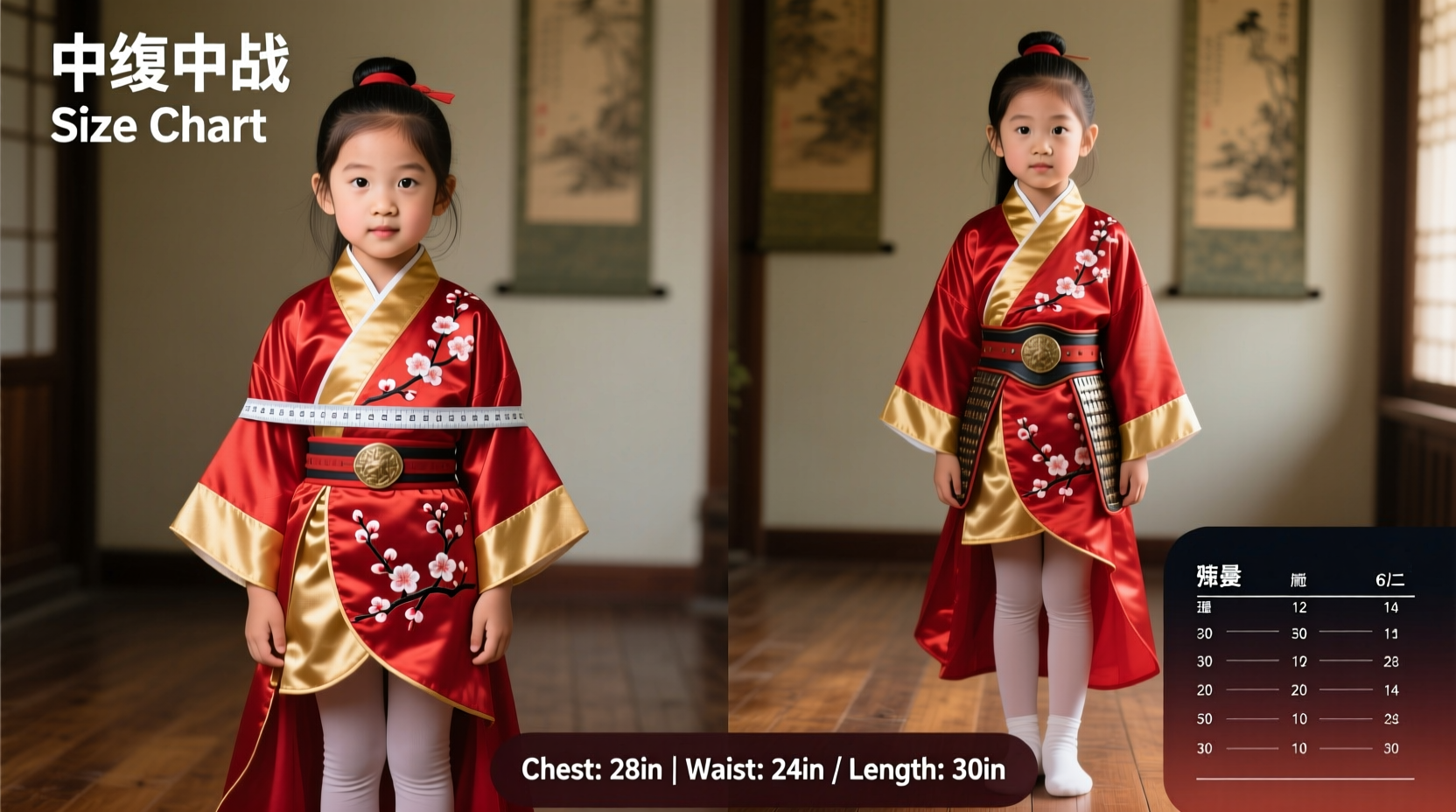
A poorly fitting costume can ruin an otherwise magical experience. If a Mulan costume is too tight, it may chafe or restrict arm and leg movement, making it hard for a child to run, dance, or even sit comfortably. If it's too loose, sleeves may drag on the floor, pants may trip them, and the top could slip off the shoulders.
Beyond physical discomfort, an ill-fitting costume can affect a child’s self-esteem. A sagging tunic or overly long skirt might make them feel embarrassed or less confident in social settings. On the other hand, a well-fitted Mulan outfit enhances their sense of identity with the character, encouraging imaginative play and joyful participation.
Step-by-Step Guide to Measuring Your Child for a Mulan Costume
To ensure precision, follow this five-step measurement process using a soft fabric tape measure. Have your child wear thin clothing (like a T-shirt and leggings) to avoid adding bulk.
- Chest: Wrap the tape around the fullest part of the chest, just under the arms. Keep the tape parallel to the floor. Don’t pull too tight—allow room for a finger to slide underneath.
- Waist: Measure around the natural waistline, typically just above the hip bones. This is crucial for costumes with fitted sashes or belts.
- Hips: Measure around the widest part of the hips and buttocks. Important for bottom pieces like pants or skirts.
- Height: Have your child stand straight against a wall. Mark the top of their head and measure from the floor to the mark in bare feet.
- Inseam: For pants-style Mulan costumes, measure from the crotch down to the ankle. This ensures the pants aren’t too long or short.
Record all measurements in inches or centimeters and keep them handy when shopping online or comparing size charts.
Understanding Costume Size Charts: What to Look For
Most reputable retailers provide detailed size charts, but not all are created equal. Here’s what to check before buying:
- Does the chart include actual garment measurements (e.g., chest width, length), or only body measurements?
- Is there a clear distinction between toddler, youth, and child sizes?
- Are international sizes included if ordering from overseas?
- Does the product description mention stretchable fabric or adjustable features?
Garment measurements are more reliable than body-only data because they account for design elements like tailoring, seam allowances, and layering.
| Age Range | Chest (in) | Waist (in) | Height (in) | Typical Costume Size |
|---|---|---|---|---|
| 3–4 years | 21–23 | 20–22 | 37–41 | Small (S) |
| 5–6 years | 23–25 | 22–24 | 42–46 | Medium (M) |
| 7–8 years | 25–27 | 24–26 | 47–51 | Large (L) |
| 9–10 years | 27–29 | 26–28 | 52–56 | Extra Large (XL) |
Note: These are general guidelines. Always compare your child’s actual measurements to the specific brand’s size chart.
Key Features to Consider Beyond Size
Sizing isn’t the only factor. The design and materials of the Mulan costume impact both fit and wearability.
- Fabric Stretch: Costumes made with spandex blends offer more flexibility and forgiveness in fit.
- Adjustable Elements: Elastic waists, drawstrings, or Velcro closures help customize the fit as your child grows.
- Layering Potential: In cooler months, consider whether the costume allows room for thermal wear underneath without becoming tight.
- Accessories Fit: Check if boot covers, hats, or belts are sized separately or included in one-size-fits-most designs.
“Always prioritize mobility and safety over aesthetics. A child should be able to move, breathe, and see clearly in any costume.” — Dr. Lena Patel, Pediatric Development Specialist
Real Example: Choosing the Right Mulan Costume for Emma
Emma, age 7, is 48 inches tall with a 26-inch chest and 24-inch waist. Her parents initially considered a size L based on her age, but upon reviewing the manufacturer’s size chart, they noticed that size L required a 27-inch chest. Emma was right on the borderline.
They decided to measure the actual garment dimensions listed online and found that the Medium had a chest span of 25 inches (unstretched) and was made of non-stretch polyester. The Large offered 28 inches with slight stretch. Opting for the Large ensured comfort and allowed room for light layering during a chilly October evening event. The decision paid off—Emma danced and played all night without adjusting her costume once.
Checklist: How to Choose the Perfect Mulan Costume Size
- Measure your child’s chest, waist, hips, height, and inseam.
- Compare measurements to the brand’s official size chart—not age recommendations.
- Look for stretchable or adjustable features in the design.
- Check if the costume includes realistic garment measurements.
- Avoid relying on “one-size-fits-most” options for critical events.
- Read customer reviews for insights on fit accuracy.
- Order early to allow time for exchanges if sizing is off.
Frequently Asked Questions
Can I use my child’s clothing size to determine costume size?
Not reliably. Children’s clothing brands vary widely in sizing, and costumes are often cut differently than everyday wear. Always refer to the costume-specific size chart and use actual body measurements for accuracy.
What if my child is between sizes?
If measurements fall between two sizes, choose the larger one—especially for non-stretch fabrics. You can always add a belt or sash to tighten the fit, but you can’t stretch a too-small costume safely.
Do Mulan costumes come in toddler sizes?
Yes, many retailers offer toddler versions (ages 2–4) with simplified designs, softer fabrics, and easier fasteners. These often feature elastic waists and shorter hems for safety and comfort during active play.
Final Thoughts: Confidence Starts With the Right Fit
Choosing the perfect Mulan costume size goes beyond numbers on a tag. It’s about empowering your child to step into the role with pride, freedom, and joy. By taking precise measurements, understanding size charts, and considering fabric and fit details, you ensure the costume enhances—not hinders—their experience.
Whether it’s for a school performance, birthday party, or holiday celebration, a well-fitting Mulan costume becomes more than just clothing. It transforms into a symbol of courage, identity, and imagination. Take the time to get it right—and watch your little warrior shine.




 浙公网安备
33010002000092号
浙公网安备
33010002000092号 浙B2-20120091-4
Comments
No comments yet. Why don't you start the discussion?