
Dog sweaters aren't just seasonal fashion statements—they're functional garments that help keep pets warm during cold weather, especially for breeds with short coats or small body mass. But a poorly fitting sweater can cause discomfort, restrict movement, or even lead to chafing. The key to a cozy, safe, and stylish fit lies in accurate measurements. Unlike human clothing, dog apparel isn't standardized across brands, so relying on breed or weight alone is risky. Taking precise measurements ensures your dog stays warm without sacrificing comfort or mobility.
Why Accurate Measurements Matter
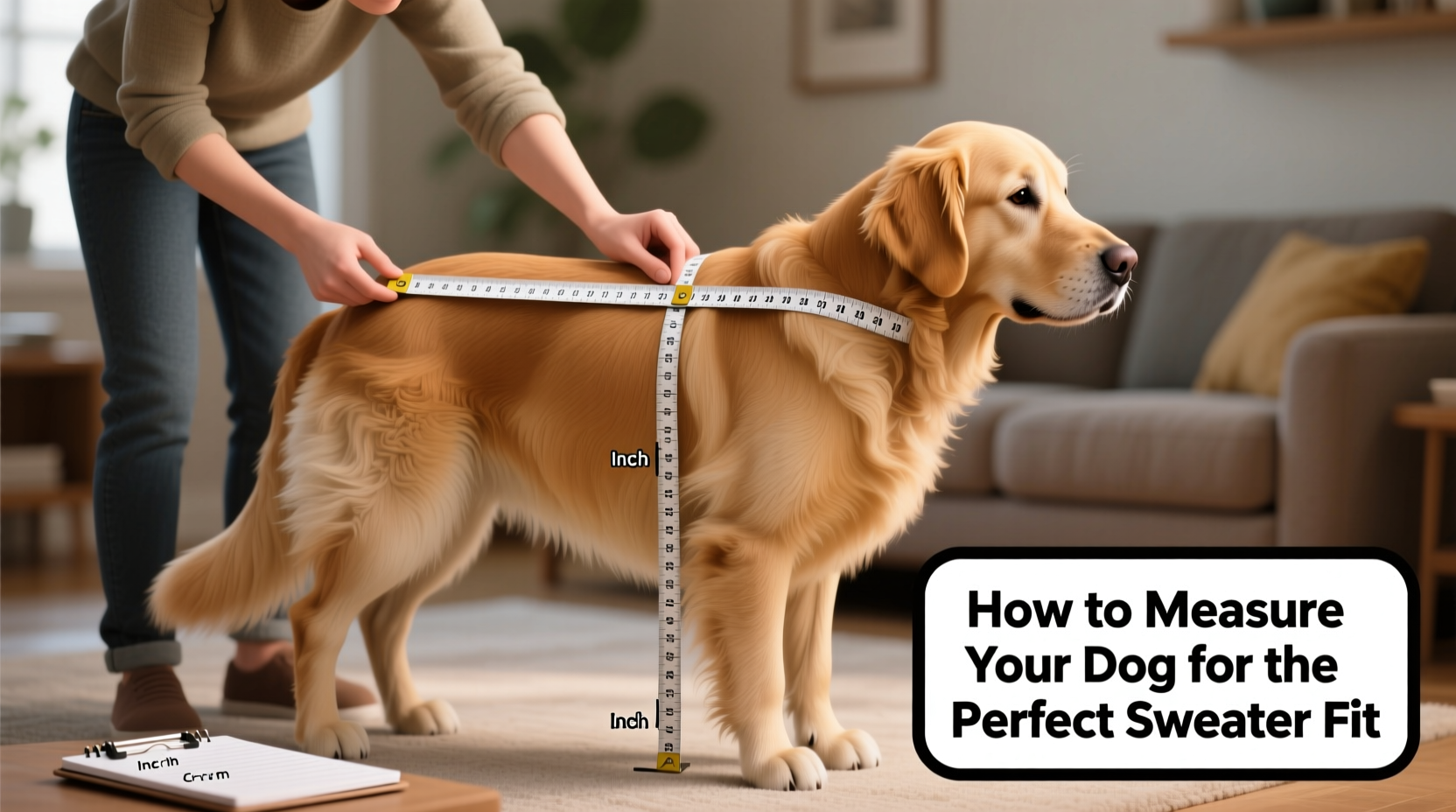
A dog sweater that's too tight can limit shoulder movement, dig into the armpits, or constrict breathing. One that's too loose may slip over the head, bunch up at the rear, or catch on furniture. Ill-fitting garments also increase anxiety in dogs unaccustomed to wearing clothes. Properly measured sweaters align with the natural contours of your dog’s body: snug enough to stay in place but loose enough to allow full range of motion.
Veterinarians and pet product designers emphasize that fit directly impacts both function and safety. As Dr. Lena Reyes, a veterinary behaviorist, notes:
“Clothing should never compromise a dog’s ability to move, breathe, or regulate body temperature. A well-fitted sweater supports comfort and confidence.” — Dr. Lena Reyes, DVM, Veterinary Behavior Specialist
Essential Tools for Measuring Your Dog
Before you begin, gather the following tools:
- A soft, flexible measuring tape (sewing or tailor’s tape)
- A pen and notepad to record measurements
- Treats to keep your dog calm and cooperative
- A helper, if your dog is wiggly or large
Rigid rulers or string (unless marked and transferred to a ruler) are less accurate. Always measure your dog while they’re standing on a flat surface, ideally on a non-slip mat, to ensure consistency.
Step-by-Step Guide to Measuring Your Dog
Follow this five-step process to collect all necessary dimensions for a perfect sweater fit.
- Neck Circumference: Measure around the base of the neck where the collar sits. Leave enough space to fit two fingers between the tape and skin for comfort. This prevents choking and allows room for layering.
- Chest Girth (Broadest Point): Wrap the tape around the widest part of the chest, usually just behind the front legs. This is often the largest measurement and the most critical for fit. Ensure the tape is horizontal and not twisted.
- Back Length (Withers to Tail Base): Start at the base of the neck (the withers, where the neck meets the shoulders), then follow the spine to the top of the tail. This determines how long the sweater should be—too long and it covers the hindquarters excessively; too short and it leaves the belly exposed.
- Shoulder to Tail Base (Optional but Helpful): For longer-backed dogs like Dachshunds or Corgis, measure from the front leg crease along the side to the tail base. This helps determine side length and ensures the sweater doesn’t rub against the legs.
- Sleeve/Openings (If Applicable): Some sweaters have armholes. Measure from the armpit to the elbow to ensure openings aren’t too tight. Most pullover styles don’t require this, but it’s useful for active dogs needing freedom of movement.
Size Chart Comparison and Brand Variability
Once you’ve recorded your dog’s measurements, compare them to brand-specific size charts. Never assume that “Medium” means the same thing across labels. Below is a general reference guide based on common breed profiles:
| Breed Example | Neck (in) | Chest (in) | Back Length (in) | Recommended Size |
|---|---|---|---|---|
| Chihuahua | 8–10 | 12–14 | 9–11 | XS |
| Beagle | 14–16 | 20–22 | 15–17 | M |
| Labrador Retriever | 18–22 | 28–32 | 20–24 | L–XL |
| Dachshund | 10–12 | 16–18 | 14–16 | S |
This table serves as a starting point only. Always refer to the specific brand’s sizing chart, which should list exact garment dimensions—not just breed or weight recommendations.
Common Fitting Mistakes and How to Avoid Them
- Mistake: Using weight instead of measurements.
Solution: Weight varies widely within breeds. A muscular Border Collie and a stocky Bulldog might weigh the same but need vastly different fits. - Mistake: Measuring over thick fur.
Solution: Part the fur lightly to get skin-level accuracy, especially in double-coated breeds like Huskies. - Mistake: Ignoring back length.
Solution: Long-bodied dogs need longer sweaters, not just larger chest sizes. A sweater that ends mid-back offers little warmth. - Mistake: Assuming one size fits all seasons.
Solution: Consider layering. If your dog wears a harness underneath, add ½ inch to chest and neck measurements.
Real-World Example: Measuring Bella the Poodle Mix
Bella is a 25-pound rescue poodle mix with a narrow chest but a long torso. Her owner initially bought a Medium sweater based on weight, but it was too tight across the chest and restricted her stride. After measuring properly—finding a chest girth of 21 inches and a back length of 16 inches—she switched to a brand with extended sizing. The new sweater, labeled “Tall Small,” fit perfectly: roomy in the chest, full coverage along the back, and no armpit pinching. Bella now walks confidently in winter, showing no signs of irritation.
Printable Measurement Checklist
Use this checklist before purchasing any dog sweater:
- ☐ Measured neck circumference (two-finger rule applied)
- ☐ Measured chest girth at widest point
- ☐ Measured back length from withers to tail base
- ☐ Verified measurements against brand’s size chart (not breed/weight guide)
- ☐ Accounted for layering (e.g., harness or undercoat)
- ☐ Double-checked each measurement for consistency
- ☐ Considered breed-specific traits (long back, broad chest, etc.)
Frequently Asked Questions
Can I use a piece of string if I don’t have a measuring tape?
Yes, but transfer the string to a ruler immediately. Mark where the ends meet, then measure the length. Be careful not to stretch the string, as this can distort results.
My dog falls between two sizes. Which should I choose?
Opt for the larger size, especially if your dog has a deep chest or thick coat. You can adjust a slightly loose sweater with adjustable straps or elastic, but a tight one cannot be made looser.
How often should I re-measure my dog?
Puppies should be measured every 4–6 weeks during growth phases. Adult dogs need re-measuring only if there’s significant weight gain or loss, or if switching brands with different cut patterns.
Final Tips for Long-Term Fit Success
Even the best-fitting sweater may need adjustment over time. Monitor your dog for signs of discomfort—excessive scratching, reluctance to move, or trying to remove the garment. Wash care instructions matter too: some materials shrink after laundering, altering the original fit. Always air-dry wool or cotton blends unless specified otherwise.
Keep your dog’s measurements recorded in your phone or a pet care journal. That way, future purchases become faster and more accurate, whether you're buying online or in-store.
Conclusion: Fit Equals Comfort and Safety
Measuring your dog for a sweater isn’t just about fashion—it’s an act of care. Accurate sizing ensures your pet stays warm, mobile, and stress-free during colder months. With the right tools, technique, and attention to detail, you can eliminate guesswork and find a sweater that fits like it was made just for them—because, in effect, it should be.




 浙公网安备
33010002000092号
浙公网安备
33010002000092号 浙B2-20120091-4
Comments
No comments yet. Why don't you start the discussion?