
As holiday traditions evolve, so do the ways we celebrate them. A visually stunning Christmas light display can captivate neighbors and passersby, but when paired with ambient sound, it transforms into a full sensory experience. The soft jingle of sleigh bells, distant carolers, or the crackle of a fireplace can elevate your outdoor setup from impressive to unforgettable. The key lies in integrating sound without disrupting the aesthetics—using discreet speakers that blend seamlessly into your landscape. This guide walks you through selecting, placing, wiring, and programming audio systems that enhance your holiday display while preserving its charm.
Why Ambient Sound Enhances Holiday Displays
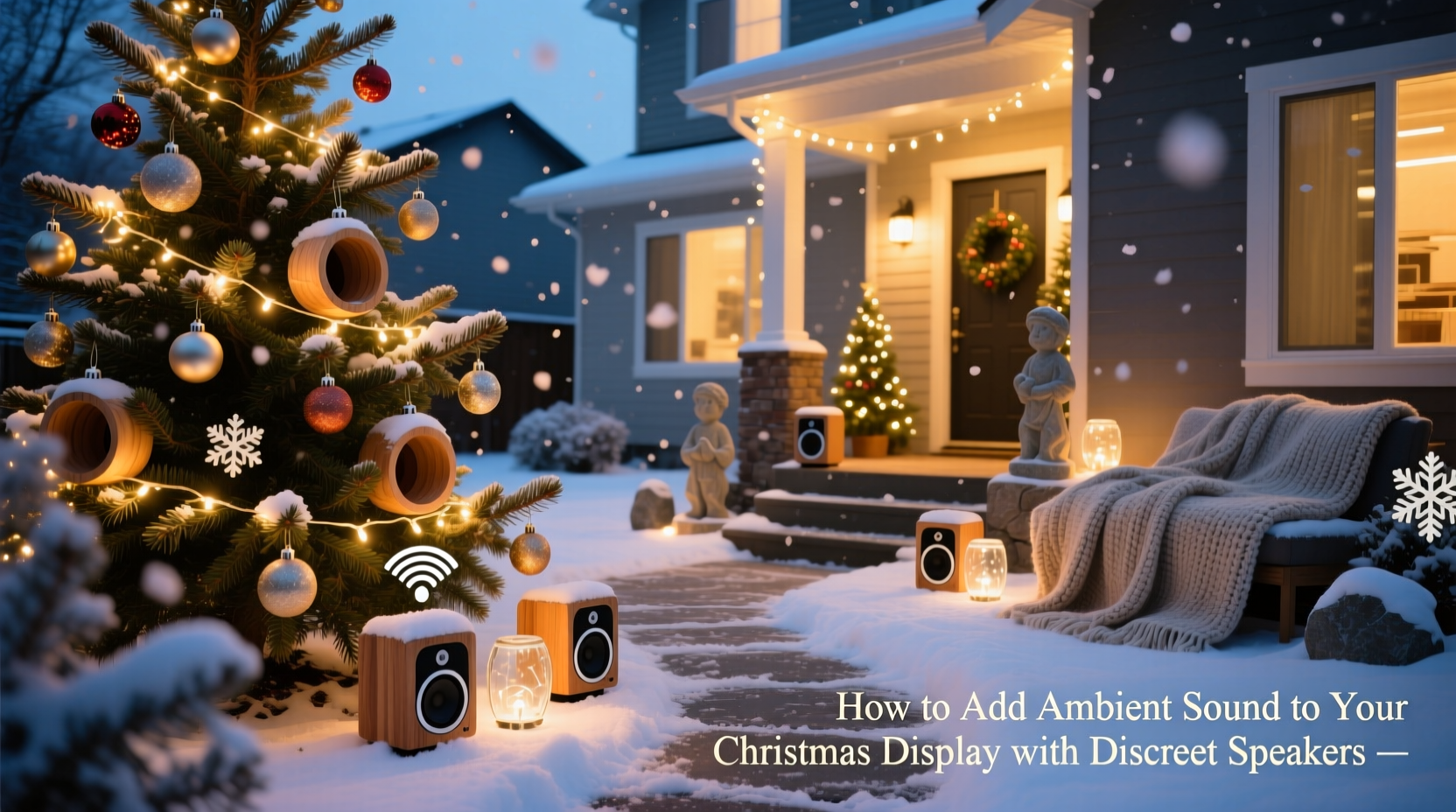
Visuals dominate most Christmas decorations, but sound adds emotional depth. When visitors hear \"Carol of the Bells\" as they approach glowing reindeer, or gentle snowfall sounds beneath twinkling icicle lights, the experience becomes immersive. Studies in environmental psychology show that multisensory environments increase engagement and emotional connection. In practical terms, music and ambient effects help set the tone, guide movement through your yard, and create memorable moments—especially for children.
However, not all sound solutions are created equal. Large outdoor speakers can overpower the ambiance or clash with neighborhood noise ordinances. That’s where discreet audio technology comes in. Modern compact, weather-resistant speakers allow you to deliver rich, directional sound at appropriate volumes, blending acoustics naturally into your environment.
“Sound doesn’t just complement light—it completes the story of your display. It turns decoration into narrative.” — Marcus Bell, Audio Designer for Public Holiday Installations
Selecting the Right Discreet Speakers
The first step is choosing speakers designed for outdoor use and subtle integration. Look for models labeled as weatherproof (IP65 or higher), with neutral colors like black, brown, or gray to minimize visibility. Size matters: smaller speakers (2–4 inches) are easier to conceal but may lack bass response. Consider using multiple units instead of one powerful speaker to distribute sound evenly.
Popular options include:
- Rock speakers: Molded to resemble natural stones, these blend into garden beds or near walkways.
- Shrub-mounted speakers: Compact units designed to clip onto branches or hide behind foliage.
- In-ground directional speakers: Installed flush with the ground, aimed upward to project sound over specific zones.
- Lantern-style audio units: Dual-purpose designs that emit both light and sound, doubling as decor.
Comparison: Speaker Types for Christmas Displays
| Type | Visibility | Weather Resistance | Best For | Limitations |
|---|---|---|---|---|
| Rock Speakers | Very Low | High (IP66) | Garden areas, pathways | Fixed orientation; limited range |
| Shrub Speakers | Low | Moderate to High | Foliage-heavy yards | Vulnerable to animal interference |
| In-Ground Speakers | Nearly Invisible | High | Driveways, open lawns | Requires excavation; higher cost |
| Lantern Audio Units | Visible but decorative | High | Porch, entryway displays | Balances function and form |
Strategic Placement for Immersive Audio
Where you place your speakers affects more than volume—it shapes the listener’s journey. Avoid clustering all speakers near the street. Instead, think in zones: entry, focal point, transition, and exit. Each zone can feature slightly different audio cues to create a sense of progression.
For example, begin with faint wind chimes and rustling pine sounds near the driveway entrance. As guests move toward the centerpiece—a lit nativity or Santa’s workshop—layer in classic carols at moderate volume. Near the end of the path, fade into softer instrumental tracks or a recording of children laughing.
Elevation also plays a role. Mounting speakers 3–5 feet off the ground helps direct sound toward ear level. Placing them too low risks muffled output; too high causes sound to disperse before reaching listeners. Angle speakers slightly inward if covering a walkway, creating a “sound tunnel” effect.
Wiring and Power Solutions
While wireless speakers offer convenience, they often struggle with signal dropouts during peak usage hours or in areas with heavy Wi-Fi congestion. For reliability, especially in synchronized light-and-sound displays, wired systems are preferable. Use direct burial-rated cable (such as 16/2 UF) when running lines underground, and protect above-ground connections with conduit.
Power sources should be GFCI-protected and located within reach of extension cords or hardwired circuits. Solar-powered speaker systems are emerging as an eco-friendly alternative, though they require sufficient daylight exposure and may need backup batteries for extended evening operation.
If using amplifiers, place them in a weatherproof enclosure near a power outlet—garage eaves or utility sheds work well. Label all cables during installation to simplify troubleshooting next season.
Step-by-Step: Installing Your Ambient Sound System
- Map your display zones: Sketch your yard and mark where lights, props, and viewing paths are located. Assign audio themes to each area.
- Choose speaker locations: Based on the map, select 3–5 spots for speakers, ensuring even coverage and minimal visibility.
- Test equipment: Temporarily connect speakers and play sample tracks. Adjust positions until sound feels balanced from key viewpoints.
- Run wiring: Trench shallow channels (6–8 inches deep) for cables or use surface-grade conduit along fences. Avoid gas, water, or electrical lines.
- Mount and secure speakers: Use UV-resistant brackets or embed rock speakers in soil. Ensure no part blocks the speaker grille.
- Connect to amplifier or controller: Match impedance ratings (typically 4–8 ohms) and secure all terminals.
- Program audio sequences: Use media players with scheduling features to start playback at dusk and stop at bedtime.
- Conduct a final walkthrough: Listen from the sidewalk, driveway, and adjacent rooms to confirm clarity and volume are appropriate.
Programming Realistic Ambient Experiences
Ambient sound isn’t just about playing Christmas music on loop. To feel authentic, layer multiple audio elements:
- Background textures: Wind, distant church bells, or soft snowfall.
- Mid-layer melodies: Looped orchestral carols at low volume.
- Foreground effects: Occasional reindeer grunts, Santa’s “ho ho ho,” or train whistles for animated scenes.
Use audio editing software like Audacity or professional controllers such as the Light-O-Rama Audio Director to mix tracks. Fade transitions between songs to avoid abrupt changes. Schedule dynamic shifts—softer sounds after 9 PM to respect neighbors.
“We once added a looping ‘train departure’ announcement to a model railway display. People would wait by the track just to hear it. Small details make big memories.” — Diane Reyes, Community Display Organizer
Mini Case Study: The Silent Lane Transformation
The Thompson family in Portland, Oregon, had a modest light display for years. After receiving feedback that it felt “static,” they decided to integrate ambient audio. They installed four rock speakers along their front path and two shrub-mounted units near a mechanical snowman.
Using a simple MP3 player connected to a small amplifier, they programmed a 45-minute loop featuring soft piano carols, occasional sleigh bells, and a minute-long “Santa landing” sequence at the top of each hour. Volume was set to 60 dB at the curb—clear but not intrusive.
Within a week, foot traffic increased noticeably. Neighbors reported feeling “transported” during evening walks. Local news featured the display, citing its “cinematic quality.” Most importantly, nearby residents didn’t complain—proof that discretion and volume control made the difference.
Common Mistakes and How to Avoid Them
Even well-intentioned installations can go wrong. Here are frequent pitfalls:
- Over-amplification: Loud audio travels far and can violate local noise regulations. Keep levels below 65 dB at the property line.
- Poor speaker orientation: Facing grilles into walls or dense plants muffles sound. Always aim toward open space.
- Ignoring power needs: Extension cords overloaded with lights and speakers can overheat. Use separate circuits or surge protectors.
- One-size-fits-all playlists: Playing the same song repeatedly causes fatigue. Rotate tracks daily or weekly.
- Skipping weather protection: Even “weatherproof” speakers need shelter from direct downpours. Use overhangs or custom enclosures.
Checklist: Ambient Sound Installation Readiness
- ☐ Selected weather-resistant, low-profile speakers
- ☐ Mapped speaker locations aligned with display zones
- ☐ Confirmed power access and GFCI protection
- ☐ Purchased proper gauge wiring and outdoor-rated connectors
- ☐ Tested audio files for volume, clarity, and transitions
- ☐ Programmed automatic on/off times (e.g., dusk to 10 PM)
- ☐ Conducted neighbor courtesy check (optional but recommended)
- ☐ Scheduled mid-season maintenance check (clean grilles, inspect wires)
Frequently Asked Questions
Can I use Bluetooth speakers outdoors?
You can, but with caution. Most consumer Bluetooth speakers aren’t fully weatherproof and suffer from range limitations beyond 30 feet. Signal interference from other devices can cause dropouts. For reliable performance, opt for wired or dedicated outdoor wireless systems with mesh networking.
How loud should my display audio be?
Aim for 55–65 decibels at the edge of your property—about the level of a normal conversation. Use a free decibel meter app on your phone to measure output. If people must raise their voices to talk nearby, it’s too loud.
Will adding sound increase my electricity bill significantly?
Typically, no. Most compact outdoor speakers draw 5–15 watts each. A system with six speakers and a small amplifier uses less than 100 watts—comparable to a single strand of incandescent lights. Over a month, this adds roughly $2–$5 to your bill, depending on usage and rates.
Conclusion: Bring Magic to Life—Thoughtfully
Adding ambient sound to your Christmas display isn’t about being the loudest house on the block—it’s about creating moments of wonder. With discreet speakers, strategic placement, and thoughtful programming, you can craft an experience that lingers in memory long after the lights come down. The goal is harmony: between sight and sound, innovation and tradition, celebration and consideration.
This holiday season, go beyond sparkle. Invite your community into a world where every bell chime and whispered carol feels like part of a larger story. Done right, your display won’t just be seen—it will be felt.




 浙公网安备
33010002000092号
浙公网安备
33010002000092号 浙B2-20120091-4
Comments
No comments yet. Why don't you start the discussion?