
A minimalist Christmas tree stands as a quiet celebration of form, space, and intentionality. Stripped of excess ornamentation, it invites attention not through clutter but through balance and atmosphere. One of the most effective ways to elevate this refined aesthetic is with carefully applied glow effects. When done well, these luminous touches don’t shout—they whisper. They enhance without dominating, creating warmth, depth, and seasonal magic in the most understated way.
The goal isn’t brightness for its own sake, but ambiance: a gentle radiance that draws the eye, softens shadows, and turns your tree into a focal point of calm elegance. Whether your tree is a slender spruce in a corner, a sculptural faux pine, or even a wall-mounted silhouette, subtle lighting can transform it from simple to sublime.
Understanding Subtlety in Holiday Lighting
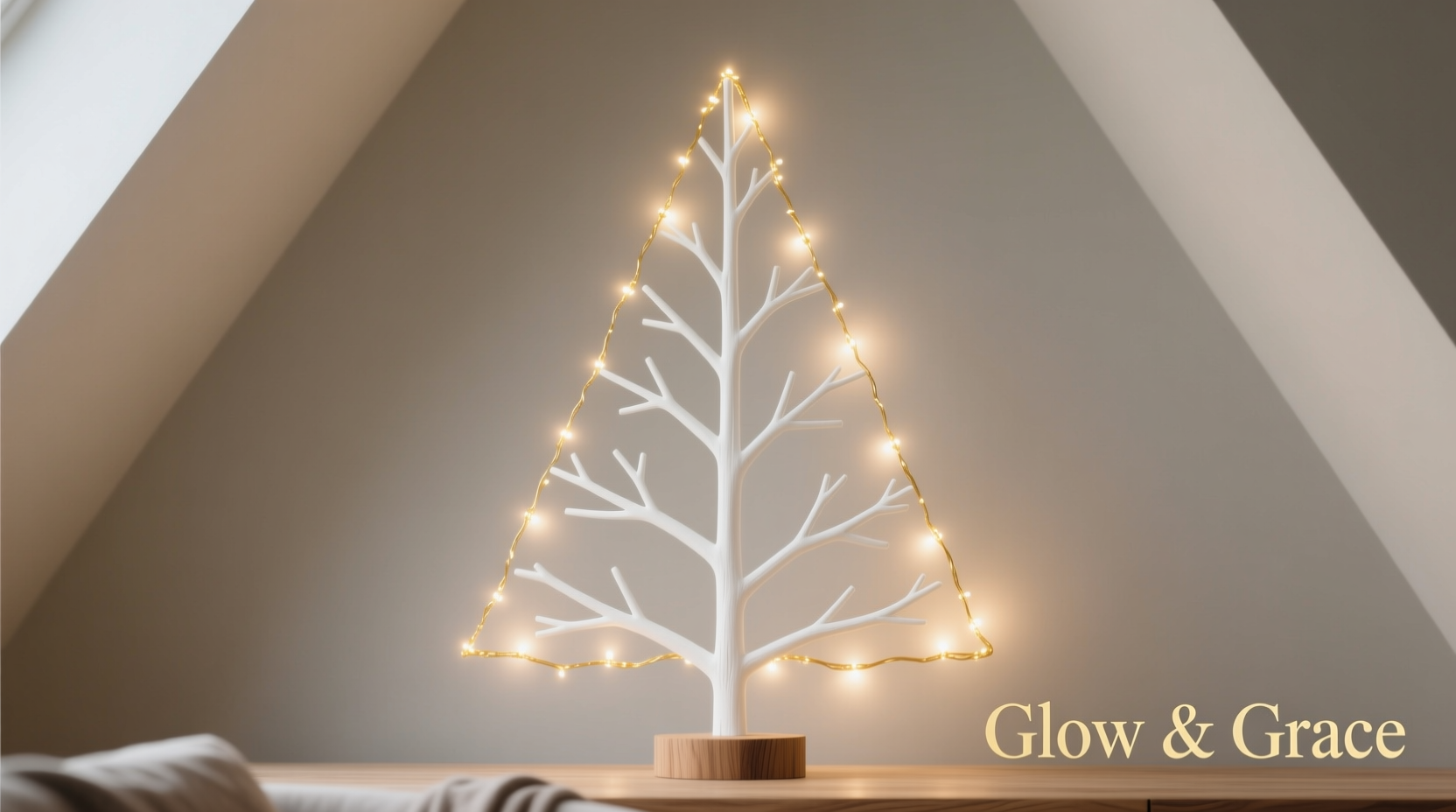
Subtle glow effects differ fundamentally from traditional holiday light displays. While festive strands often aim to dazzle, subtle lighting seeks harmony. It complements the room’s existing mood rather than overriding it. This approach aligns perfectly with minimalist design principles—less is more, and every element must serve a purpose.
Key characteristics of subtle glow include:
- Low lumen output: Lights should be dimmable or inherently soft, avoiding harshness.
- Warm color temperature: Opt for lights between 2200K and 2700K—the range closest to candlelight.
- Strategic placement: Glow should emerge from within or beneath the tree, not wrap it aggressively.
- Natural diffusion: Use materials like frosted glass, fabric, or reflective surfaces to scatter light gently.
The challenge lies in achieving visibility without glare. A well-lit minimalist tree shouldn’t require sunglasses—it should invite you to sit nearby with a book or a cup of tea.
Selecting the Right Light Sources
Not all lights are created equal when pursuing subtlety. The type, scale, and quality of your light source will make or break the effect.
Fairy Lights (Micro LED Strings)
These are the gold standard for delicate illumination. Modern micro LEDs consume little energy, emit minimal heat, and come in warm white or soft amber. Look for battery-powered options with timers for effortless control. Avoid cool white or multicolored sets—these disrupt the minimalist tone.
Candle Simulation Bulbs
Some specialty bulbs mimic the flicker of real candles without the fire risk. These are ideal if you’re using vintage-style lamp bases near the tree or incorporating small illuminated decor pieces around the base.
Fiber Optic Elements
Fiber optic tips emit pinpoint glows that resemble distant stars. They work beautifully when woven sparingly into branches or placed at the tree’s apex. Because they generate no heat, they’re safe for both real and artificial trees.
Integrated Base Lighting
Consider placing a low-profile LED strip or puck light beneath the tree stand. Mounted on the underside of a wooden tray or inside a translucent planter, this creates a halo effect that lifts the tree off the floor visually.
“Lighting should feel like it belongs to the space, not like it was plugged in for the season.” — Lena Torres, Interior Lighting Designer
Step-by-Step Guide to Installing Subtle Glow Effects
Follow this methodical process to achieve a professionally balanced glow:
- Assess your tree’s structure: Note branch density, height, and where natural gaps occur. Sparse areas may benefit from slightly more strategic lighting.
- Choose your primary light source: Start with one type—usually micro LED strings—to maintain consistency.
- Plan the wiring path: For plug-in sets, ensure the cord can run discreetly down the trunk and along the floor to an outlet. Use adhesive clips to secure it invisibly.
- Begin at the core: Instead of wrapping the outer branches, weave lights inward, starting near the trunk. This creates depth and prevents a “lit-from-the-outside” flatness.
- Use the three-point rule: Place lights so that no two bulbs are equidistant from each other. This avoids a mechanical, repetitive pattern.
- Add secondary glow sources: Introduce a single fiber optic tip at the top or a small under-base ring for dimensional interest.
- Test in ambient light: Turn off overhead lights and observe how the glow interacts with surrounding surfaces. Adjust spacing or brightness as needed.
- Secure and conceal: Tuck loose wires into branches and use matching tape or paint to blend visible hardware.
Advanced Technique: Layered Dimming
For ultimate control, use multiple circuits with separate dimmers. One set can remain always-on at 10% brightness for a constant ambient hum, while a second set activates only in the evening at 30–40%. This mimics natural shifts in daylight and keeps the tree feeling alive throughout the day.
Material Pairings That Enhance the Glow
The right decor elements can amplify subtle lighting without adding visual noise. Choose items that interact with light—refracting, reflecting, or diffusing it.
| Material | Effect on Light | Recommended Use |
|---|---|---|
| Mirror balls (1–2 inch) | Scatters pinpoint reflections | Hang one deep within upper branches |
| Frosted glass ornaments | Diffuses light softly | Place near bulbs to create glowing nodes |
| Raw crystal clusters | Refracts warm tones into rainbows | Sit on base or tuck into lower boughs |
| White linen ribbon | Reflects ambient glow | Drape loosely in vertical lines |
| Matte ceramic pots | Enhances shadow play | Use as base; pair with underlighting |
Avoid shiny metallics, glitter-coated items, or large mirrored ornaments—these reflect too aggressively and break the serene mood.
Real Example: A Brooklyn Loft Transformation
In a converted warehouse apartment in Brooklyn, interior stylist Mira Chen faced a challenge: a 7-foot artificial tree in a vast, concrete-floored living space with high ceilings. The tree risked looking lonely and artificial. Her solution?
She used 18 feet of warm micro LEDs, weaving them inward from the backside of the trunk to keep wires hidden. At the base, she placed the tree on a matte white stone coaster embedded with three recessed LED pucks. These cast a faint upward wash, making the trunk appear to float. She added two frosted glass orbs—one near the top, one mid-level—positioned directly behind bulbs to act as secondary emitters.
The result? From across the room, the tree appeared softly illuminated, as if lit from within. Up close, the interplay of glass and light revealed itself, but never competed with the clean lines of the design. Neighbors remarked, “It feels like the tree is breathing light.”
Checklist: Achieving Subtle Glow Success
Before finalizing your setup, go through this checklist:
- ✅ All lights are warm white (2200K–2700K)
- ✅ Wires are concealed or neutral-colored
- ✅ Lights are placed deeper in the tree, not just on the surface
- ✅ No more than 3–5 decorative elements that interact with light
- ✅ Base lighting (if used) does not create a harsh ring on the floor
- ✅ Total setup looks balanced when viewed from main seating areas
- ✅ Timer or smart plug is configured for automatic operation
Avoiding Common Mistakes
Even with good intentions, subtle lighting can go wrong. Here are frequent missteps and how to avoid them:
- Over-lighting: Using too many strands overwhelms the minimalist intent. Stick to one string per foot of tree height as a maximum.
- Poor bulb spacing: Bulbs clustered too closely create hotspots. Maintain at least 4–6 inches between points of light.
- Visible power bricks: These disrupt clean lines. Hide them behind the tree or inside a decorative box.
- Ignoring room context: A softly lit tree looks out of place in a brightly lit room. Lower ambient lighting elsewhere to let the tree shine quietly.
- Using cool-toned LEDs: Blueish light feels clinical. Always verify color temperature before purchasing.
“The most memorable holiday spaces aren’t the brightest—they’re the ones that make you want to stay.” — Julian Reed, Architectural Lighting Consultant
Frequently Asked Questions
Can I use smart bulbs for a minimalist tree?
Yes, but only if you limit their functionality. Set them to a fixed warm white and disable color-changing modes. Smart bulbs offer excellent dimming control and scheduling, which supports subtlety—but resist the temptation to cycle through colors.
How many lights do I need for a 5-foot minimalist tree?
Aim for 50–100 bulbs total. For subtlety, lean toward the lower end. Quality matters more than quantity—fewer high-efficiency LEDs often outperform dense, cheap strands.
Are real candles ever appropriate?
While real flames create the most authentic glow, they pose safety risks, especially around dry trees and curious pets. Flameless candles with flicker simulation are a safer, equally atmospheric alternative. Place them around the base, not in the branches.
Final Thoughts: Let the Glow Serve the Silence
A minimalist Christmas tree is not incomplete because it lacks ornamentation—it is complete because it embraces restraint. Adding subtle glow effects isn’t about filling emptiness, but about enhancing presence. It’s the difference between noise and resonance.
When you step back and see your tree glowing like a quiet ember in the room, you’ve succeeded. You’ve created not just a decoration, but a moment—a pause in the rush of the season. That soft light becomes an invitation: to slow down, to reflect, to appreciate simplicity.
Start small. Test one strand. Observe how it changes the room at different times of day. Refine until the light feels inevitable, like it was always meant to be there. In doing so, you honor both the spirit of minimalism and the warmth of the holidays.




 浙公网安备
33010002000092号
浙公网安备
33010002000092号 浙B2-20120091-4
Comments
No comments yet. Why don't you start the discussion?