
Transforming a bookshelf into a festive centerpiece during the holiday season doesn’t require elaborate decorations or tangled cords. Subtle lighting can elevate your display with warmth and charm while maintaining a clean, minimalist aesthetic. The challenge lies in illuminating ornaments, books, and seasonal accents without exposing unsightly wires that disrupt visual harmony. With thoughtful planning and modern lighting solutions, it’s entirely possible to achieve a wire-free look—even when using powered lights.
The goal isn’t just concealment; it’s integration. Lighting should feel like a natural extension of the display, drawing attention to curated items rather than technical components. Whether you're working with a traditional wooden bookcase or a floating wall unit, these strategies focus on discretion, safety, and elegance. From selecting the right light types to mastering cable management, this guide walks through every step needed to create a seamless glow.
Choose the Right Type of Lighting
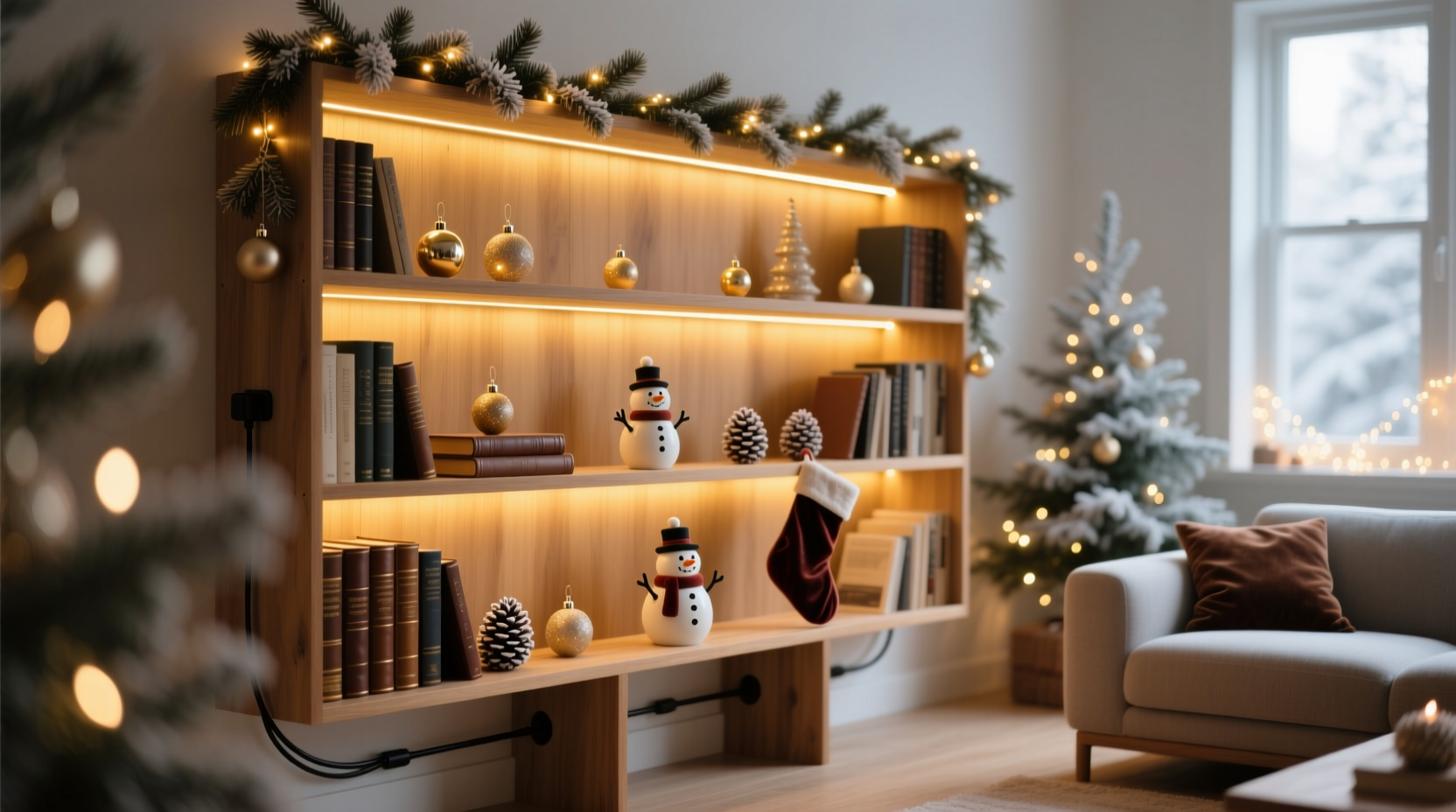
Not all lights are created equal when it comes to hiding wires. The first decision determines how much flexibility you'll have later: power source. There are three primary categories—battery-powered, plug-in with discreet cord routing, and solar-rechargeable (for near-window placements). Each has advantages depending on your shelf layout and access to outlets.
- Battery-powered LED string lights: Ideal for total wire concealment. These come in warm white, cool white, or multicolor options and often include timers and remote controls. Because they don’t need to reach an outlet, placement is flexible.
- Plug-in micro LED strips: Offer brighter, more consistent illumination but require careful wire management. Best used when the back of the shelf allows behind-the-scenes routing.
- Magnetic or clip-on puck lights: Battery-operated and directional, perfect for spotlighting specific objects like figurines or holiday cards.
For bookshelves against interior walls far from outlets, battery-powered lights are the most practical. Modern versions last 40–100 hours on a single set of batteries and some even feature USB-rechargeable compartments, reducing long-term waste.
Strategic Placement and Wire Concealment Techniques
Even if you’re using plug-in lights, invisible wiring is achievable with strategic placement. The key is leveraging existing architecture: the back panel of the bookshelf, adjacent furniture, baseboards, and wall surfaces.
- Begin by identifying the nearest power source. If it's behind a sofa or entertainment center, consider routing the cord along the floor beneath rugs or along base molding using adhesive cord clips.
- Use the bookshelf’s depth to your advantage. Most standard shelves extend 10–12 inches from the wall, creating enough space to run thin cords vertically down the back before turning toward the outlet.
- If your bookshelf backs onto a hallway or less-visible wall, route the cord straight down and across the floor using low-profile cord covers painted to match the wall or floor.
| Technique | Best For | Visibility Level |
|---|---|---|
| Behind-shelf routing | Deep or recessed bookshelves | Low – only visible from side angles |
| Baseboard cord cover | Floor-level outlets | Minimal – blends with trim |
| Furniture draping | Shelves near sofas or cabinets | Low – hidden under fabric edges |
| Adhesive clips + paint-matched wire | Wall-mounted floating shelves | Very low – nearly invisible |
For painted walls, use white or beige flat cables and secure them with paintable plastic cord covers. Once painted, the cover disappears into the wall surface. This method works especially well for vertical runs from top shelves to base outlets.
Step-by-Step Guide: Installing Hidden Lights on a Bookshelf Display
Follow this sequence to install subtle lighting with no visible wires, whether using battery or plug-in systems.
- Plan your layout. Decide which shelves will feature lighting. Typically, alternating shelves work best to avoid overcrowding. Mark where lights will begin and end.
- Select lighting type based on outlet access. No nearby outlet? Choose battery-powered strings or rechargeable tape lights. Outlet accessible? Use plug-in micro LEDs with thin gauge wires.
- Test placement before securing. Drape lights loosely across shelves, wrapping gently around bookends or tucking behind taller items. Adjust until the glow feels balanced and highlights key decor.
- Conceal power sources. For battery packs, place them inside hollow ornaments, behind thick books, or within decorative boxes with small access holes. For plug-ins, route the cord down the back of the shelf and along the wall using adhesive clips every 6–8 inches.
- Secure lights discreetly. Use clear mounting dots or museum putty to affix light bases. Avoid tape or glue that could damage wood finishes. Never staple or nail into shelves.
- Final check. Step back and view the shelf from multiple angles. Ensure no wires peek out from corners or reflect in glass cabinet doors. Turn off room lights to assess glow intensity and coverage.
Real Example: A Living Room Bookshelf Transformation
Sarah, a graphic designer in Portland, wanted to highlight her curated collection of vintage novels and handmade ornaments each December. Her mid-century walnut bookshelf stood proudly in the living room but lacked nearby outlets. She opted for two sets of 33-foot battery-powered fairy lights with built-in 6-hour timers.
She placed the battery packs behind a row of oversized art books on the top shelf, drilling a tiny hole in the back cover of one book to allow the switch to remain accessible. The lights were woven horizontally behind sprigs of faux pine, then looped vertically down the sides of the middle shelf where small ceramic deer and snow globes sat. By keeping the bulbs facing inward and slightly downward, the glow illuminated the figures without washing out nearby artwork.
To complete the illusion, she added mirrored backing cut from adhesive film on the rear panel. This doubled the perceived depth and scattered light evenly, making it appear as though the entire shelf emitted a soft radiance. From any viewing angle, not a single wire was visible.
“Lighting should invite curiosity, not reveal its mechanics.” — Marcus Tran, Interior Lighting Designer at Lumina Home Studios
Checklist: Achieving Wire-Free-Look Lighting
Use this checklist before finalizing your display:
- ☐ Determine proximity to electrical outlets
- ☐ Choose between battery-powered or plug-in lights based on location
- ☐ Test light color temperature (preferably 2700K–3000K for warmth)
- ☐ Plan wire path for plug-in models (behind shelf, along baseboard, etc.)
- ☐ Hide battery packs inside books, boxes, or décor
- ☐ Use adhesive clips or cord covers for any exposed sections
- ☐ Secure lights with non-damaging mounts (museum putty, clear dots)
- ☐ Check visibility from all common viewing angles
- ☐ Confirm timer or remote functionality for convenience
- ☐ Inspect monthly for battery life or wear during extended use
Avoid Common Mistakes
Even well-intentioned setups can go wrong. Here are frequent pitfalls and how to avoid them:
- Over-lighting: Too many strands create glare and distract from decor. Stick to one or two lighted shelves unless the unit is very large.
- Poor battery placement: Storing packs on cold floors or near heat sources reduces lifespan. Keep them in insulated, dry spots.
- Using thick cords: Standard holiday lights have bulky wires. Instead, select “micro” or “bare wire” LED strings that blend into shadows.
- Ignoring scale: Miniature shelves look cluttered with large bulb strings. Use rice-sized LEDs for proportionate lighting.
- Forgetting maintenance: Dust accumulates on bulbs and diffusers. Wipe gently with a dry microfiber cloth weekly.
Frequently Asked Questions
Can I leave battery-powered lights on overnight?
Modern LED string lights generate minimal heat and are generally safe to leave on. However, for maximum safety and longevity, use models with automatic timers (on for 6 hours, off for 18). This also preserves battery life and reduces fire risk.
How do I replace dead bulbs in a string?
Most quality LED strings are wired so that one dead bulb doesn’t kill the whole strand. Identify the faulty bulb by visual inspection (darkened lens) or use a continuity tester. Replacement bulbs are often included in packaging or available online by model number. Always disconnect power before attempting repairs.
What if my bookshelf is made of glass or has open backs?
Open-back shelves make wire concealment harder but not impossible. Use double-sided tape to attach ultra-thin copper wire LED strips along the underside of shelves. For glass panels, apply transparent static-cling LED tapes designed for windows. These adhere without residue and can be removed easily after the holidays.
Final Thoughts and Next Steps
A beautifully lit bookshelf doesn't need to sacrifice elegance for function. With the right combination of lighting technology, placement strategy, and attention to detail, you can create a magical holiday focal point that appears effortlessly glowing. The absence of visible wires enhances the sense of wonder, letting the display speak for itself.
Start small—test one shelf first. Observe how light interacts with textures, colors, and reflective surfaces in your space. Refine your approach year after year. Over time, you’ll develop a signature style that guests remember and anticipate.




 浙公网安备
33010002000092号
浙公网安备
33010002000092号 浙B2-20120091-4
Comments
No comments yet. Why don't you start the discussion?