
Christmas lights bring warmth and magic to the season, but even the most meticulously arranged strands can feel flat when they lack movement. A gentle flicker or sway mimics the natural dance of candlelight or wind-blown tinsel—something our eyes instinctively find comforting and festive. While many turn to programmable LEDs or motorized props, there's a simpler, quieter, and more elegant solution: using silent DC fans to animate static light displays.
This method introduces subtle motion without altering the lights themselves. By gently agitating the air around strings of lights, small fans create soft oscillations that enhance depth and realism. The result? A display that feels alive, without the buzz of traditional AC motors or the complexity of smart lighting systems. This approach is especially effective for indoor mantles, window displays, tree accents, and outdoor eaves where silence and reliability matter.
The Science of Subtle Motion in Decor
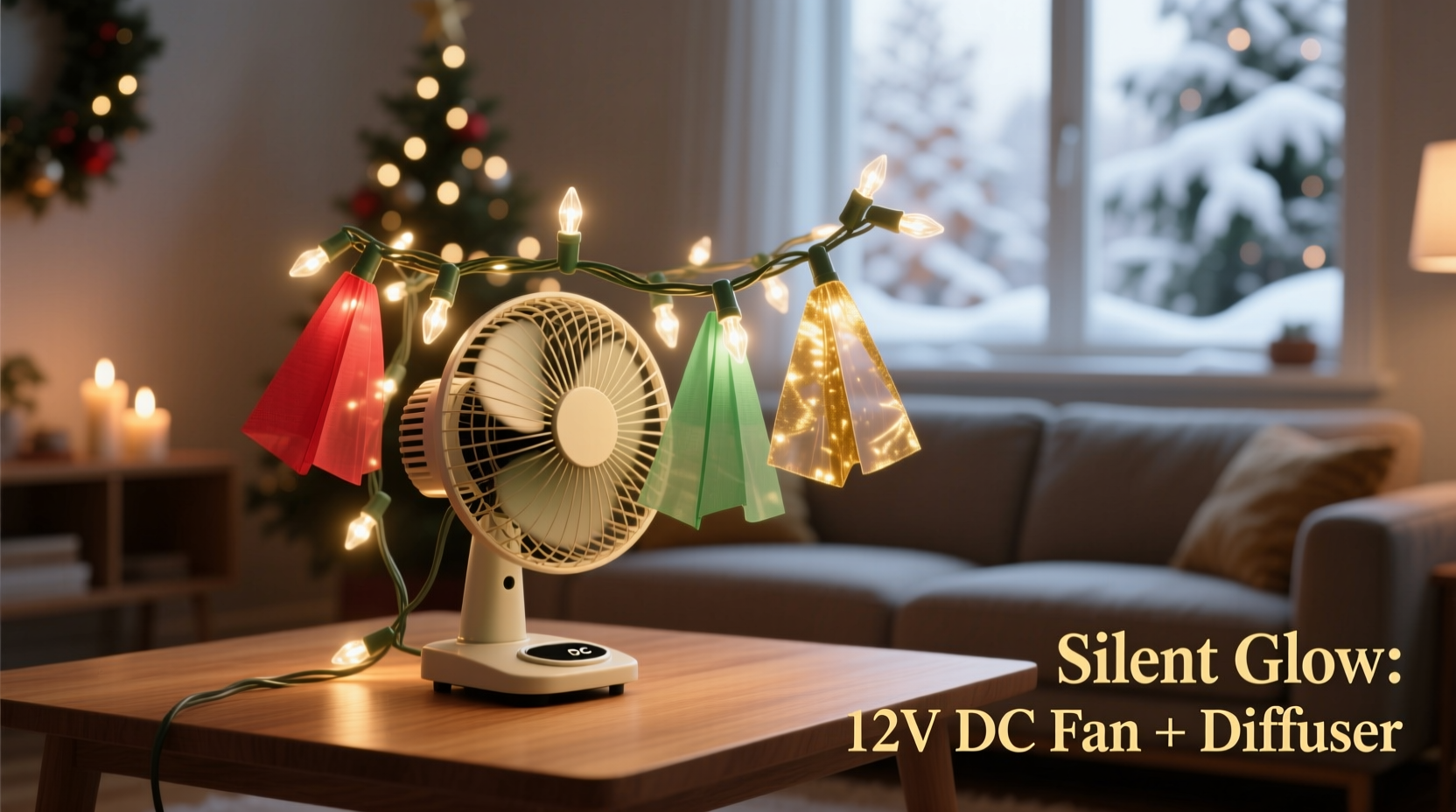
Movement captures attention. In visual design, kinetic elements trigger peripheral vision responses, making static scenes feel more engaging. When applied to holiday lighting, even minimal motion can simulate firelight, snowfall, or a breeze through pine branches—evoking nostalgia and wonder.
Unlike strobing or chasing LED effects, physical motion affects how light reflects off surfaces and casts shadows. This creates organic variation in brightness and pattern, which the human brain interprets as natural rather than artificial. Silent DC fans provide this motion without introducing audible distractions, preserving the peaceful ambiance often desired during the holidays.
DC (direct current) fans operate at lower voltages—typically 5V, 12V, or 24V—and are commonly used in electronics cooling. Their key advantages include energy efficiency, long lifespan, and near-silent operation. When mounted strategically behind or beside light strands, these fans generate just enough airflow to cause delicate swaying without overpowering the display.
Selecting the Right Components
Not all fans are suitable for this application. The goal is imperceptible airflow—not a winter gale across your living room. Below is a breakdown of what to look for when sourcing equipment.
| Feature | Recommended | Avoid |
|---|---|---|
| Fan Type | Silent DC axial or centrifugal fans (e.g., Noctua, Sunon) | Standard AC box fans or high-RPM computer fans |
| Voltage | 5V–12V DC (compatible with USB or wall adapters) | 110V/220V AC-powered units |
| Noise Level | Under 20 dBA (inaudible in quiet rooms) | Fans rated above 30 dBA |
| Size | 40mm–80mm diameter for targeted effect | Larger industrial fans (>120mm) |
| Speed Control | PWM or variable voltage input support | Fixed-speed models without regulation |
For most residential applications, an 80mm 12V DC fan with PWM (pulse-width modulation) control offers ideal balance between airflow and discretion. These are widely available from electronics suppliers and often come with mounting brackets or adhesive pads.
“Physical motion adds dimensionality that digital effects can’t replicate. A softly swaying string of lights tricks the eye into seeing depth and warmth.” — Liam Tran, Lighting Designer & Holiday Display Consultant
Step-by-Step Installation Guide
Adding motion to static lights requires careful placement and testing. Follow this sequence to achieve a convincing, maintenance-free setup.
- Map Your Light Layout: Identify areas where motion would have the greatest impact—such as vertical curtain lights, garlands draped over railings, or horizontally strung icicle lights.
- Choose Fan Locations: Position fans so airflow moves parallel to the length of the lights, not directly at them. Direct blasts cause erratic flailing; glancing airflow produces smooth undulation.
- Test Airflow Direction: Power the fan briefly and observe how nearby objects react. Use tissue paper or smokeless incense to visualize airflow patterns before installing lights.
- Mount the Fan Securely: Use zip ties, adhesive mounts, or magnetic bases depending on surface type. Ensure no wires will be pinched or strained during operation.
- Integrate Power Source: Connect the fan to a regulated DC adapter. For outdoor use, ensure all connections are weatherproofed and GFCI-protected.
- Add Speed Control (Optional): Install a potentiometer or inline dimmer switch to adjust fan speed based on ambient conditions or time of day.
- Conceal Equipment Visually: Hide fans behind foliage, within faux chimneys, or inside decorative enclosures painted to match surroundings.
- Final Test Under Dark Conditions: Observe the lit display at night to confirm motion enhances rather than distracts from the overall aesthetic.
Real-World Application: A Front Porch Transformation
In suburban Connecticut, homeowner Sarah Mendoza struggled with her porch light display looking “like plastic spaghetti” every December. Despite investing in premium LED mini-lights and professional-grade extension cords, she felt something was missing.
After researching alternatives, she installed two 60mm silent DC fans—one behind each column wreath and another beneath a canopy of net lights over the entryway. Using flexible gooseneck mounts, she directed airflow laterally across the strands. She powered the system via a single 12V transformer hidden in a sealed junction box.
The result transformed her curb appeal. Neighbors reported feeling like “there was a breeze even when it was perfectly still.” Local news featured her home in a segment titled *The Secret Behind the Dancing Lights*, drawing over 50,000 views online. Most importantly, Sarah achieved the effect without any humming or vibration—her toddler could sleep peacefully in the adjacent bedroom.
She now uses timers to activate fans only during peak viewing hours (5–9 PM), extending motor life and conserving energy. Her total investment: under $75 in parts, most of which were reusable from previous projects.
Best Practices and Common Pitfalls
To ensure longevity and visual success, adhere to these field-tested guidelines.
- Use lightweight wire forms—heavier gauge wiring resists movement. Opt for thin, flexible strands designed for draping.
- Secure anchor points loosely—allow lights to pivot slightly at mounting clips or hooks. Over-tightening inhibits motion.
- Monitor seasonal humidity—in damp environments, condensation can affect fan bearings. Choose IP-rated fans for outdoor installations.
- Avoid placing fans near thermostats—continuous airflow may interfere with temperature readings indoors.
- Don’t overdo it—too much motion breaks immersion. The goal is subtlety: if people notice the movement before the lights, you’ve gone too far.
“Less is more. One well-placed fan doing 10% of its capacity beats three roaring ones fighting each other.” — Marcus Lee, DIY Holiday Innovator & YouTube Creator (180K subscribers)
Checklist: Pre-Installation Preparation
- ✔ Measure distance between lights and potential fan locations
- ✔ Confirm power availability (indoor outlet, outdoor GFCI, battery option)
- ✔ Select fan size and voltage compatible with environment
- ✔ Acquire mounting hardware (zip ties, brackets, silicone adhesive)
- ✔ Test fan operation outside packaging
- ✔ Plan cable routing to minimize visibility
- ✔ Verify weather resistance needs (indoor vs. outdoor)
- ✔ Purchase speed controller if desired
FAQ
Can I use USB-powered fans for this project?
Yes, especially for small-scale indoor displays. Many silent 5V USB fans produce sufficient airflow for mantle garlands or desk trees. However, USB ports typically max out at 500mA, limiting continuous performance. For larger setups, use dedicated DC adapters.
Will the fan damage my lights over time?
Not if installed correctly. There’s no mechanical contact—only air movement. The primary wear factor remains normal thermal cycling from turning lights on/off. Fans actually reduce stagnant heat buildup by promoting airflow, potentially extending LED lifespan.
Are there safety concerns with running fans near electrical wiring?
Minimal, provided you use low-voltage DC fans and keep connections insulated. Never splice fan wires into household AC lines. Always power fans through isolated transformers or certified power supplies. For outdoor use, employ waterproof connectors and ground-fault protection.
Conclusion: Elevate Your Display with Thoughtful Motion
Adding subtle motion to static Christmas lights isn’t about spectacle—it’s about storytelling. It’s the difference between a photograph and a memory. Silent DC fans offer a refined, reliable way to introduce that narrative quality without noise, complexity, or risk.
Whether you're enhancing a cozy window scene or refining a neighborhood-famous yard display, consider how gentle movement can deepen emotional resonance. With careful planning and attention to detail, you can transform ordinary illumination into something that breathes, pulses, and feels truly alive.




 浙公网安备
33010002000092号
浙公网安备
33010002000092号 浙B2-20120091-4
Comments
No comments yet. Why don't you start the discussion?