
Decorations often remain fixed—beautiful but still. Yet a gentle sway, a quiet flutter, or a slow rotation can transform the ordinary into something mesmerizing. Subtle motion introduces life without distraction, creating an atmosphere of quiet elegance. Whether it's a hanging mobile in a nursery, fabric drapes at a wedding venue, or seasonal ornaments in a storefront display, introducing controlled movement enhances visual interest while preserving serenity.
The key lies not in loud mechanics or flashy automation, but in understated methods: silent mini fans and magnetic systems. These tools offer invisible assistance, making decor appear almost enchanted. When applied thoughtfully, they elevate ambiance without overwhelming the senses—ideal for homes, galleries, retail spaces, and intimate gatherings.
Why Motion Enhances Decorative Impact
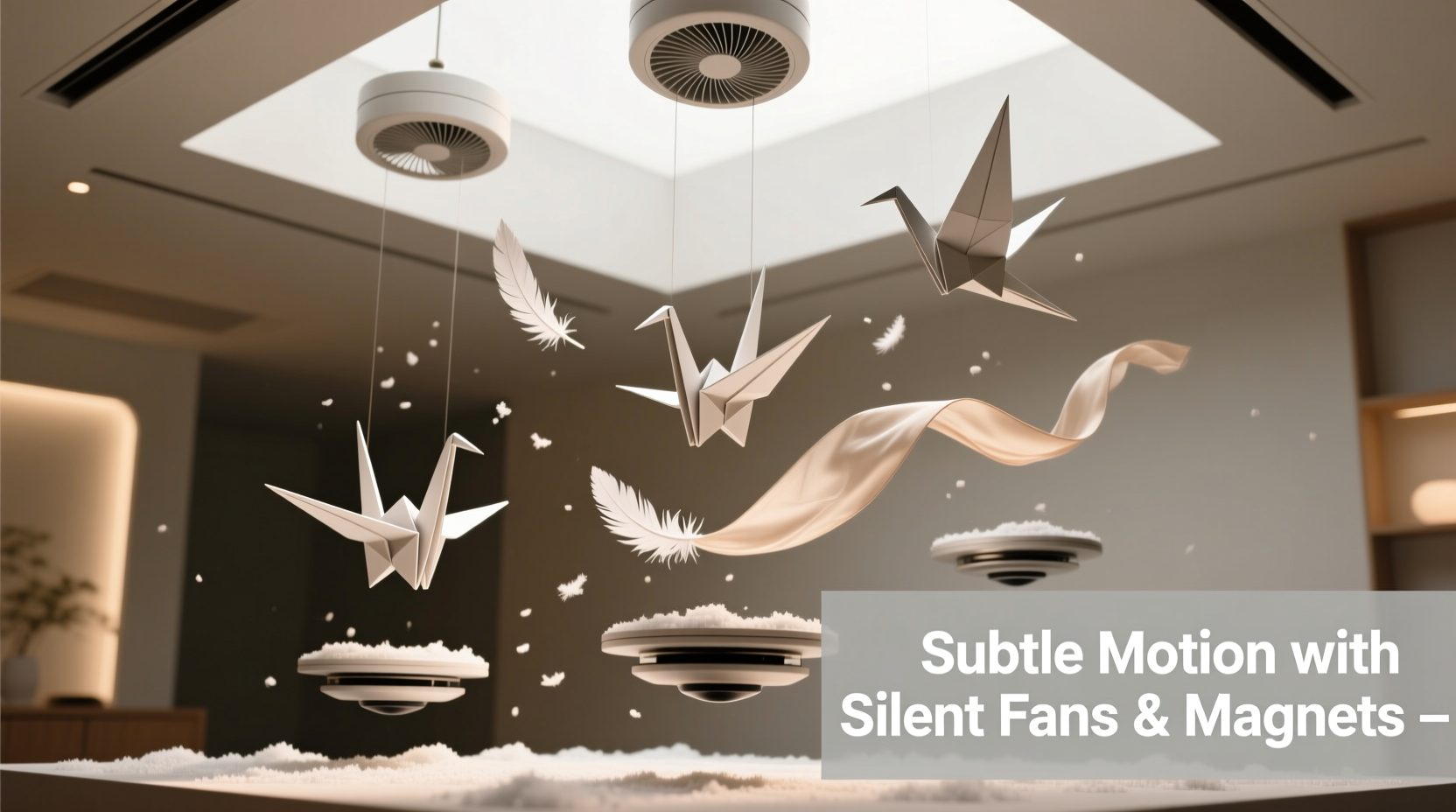
Static objects capture attention momentarily; moving ones hold it. Human eyes are naturally drawn to motion, even when slight. But unlike flashing lights or spinning signs, subtle kinetic elements work quietly, engaging viewers on a subconscious level.
In interior design, this principle is used to create breathing space. A gently swaying paper crane above a reading nook invites calm. A softly rotating crystal pendant refracts light across a bedroom wall like living shadows. These effects aren’t dramatic—they’re atmospheric.
Architectural lighting designer Lena Moretti notes:
“Movement adds dimensionality where none existed. It turns a surface into a story. The most effective motion in decor isn't seen—it’s felt.” — Lena Moretti, Architectural Lighting Designer
This emotional resonance is why museums use air currents to animate textile installations, and high-end boutiques suspend garments from nearly invisible filaments that respond to ambient airflow.
Using Silent Mini Fans for Gentle Airflow
Silent mini fans are compact, low-noise devices originally designed for electronics cooling. However, their ability to generate consistent, directional airflow makes them ideal for decorative applications requiring delicate motion.
These fans typically operate between 15–30 decibels—quieter than a whisper—and come in sizes as small as 20mm x 20mm. They run on low voltage (3V–12V), making them safe for indoor use and compatible with USB power sources or battery packs.
Selecting the Right Fan
Not all mini fans are suitable for decor. Prioritize models labeled “ultra-quiet” or “silent bearing.” Look for features such as:
- Brushless DC motor (lower noise, longer lifespan)
- Adjustable speed control (via resistor or PWM controller)
- Directional nozzle or diffuser (to focus airflow)
- Mounting brackets or adhesive pads for discreet placement
Practical Applications
Hanging Elements: Lightweight materials like tissue paper, silk ribbons, mylar strips, or tinsel respond beautifully to soft breezes. Position a mini fan beneath or beside the object, angled upward or sideways depending on desired effect.
Fabric Draping: In event setups, ceiling-mounted sheer fabrics can be given a floating quality by placing silent fans at floor level, directing air upward along the material’s edge.
Paper Mobiles: Children’s rooms or meditation spaces benefit from slowly rotating mobiles. A single fan placed at floor level, aimed diagonally, can keep lightweight shapes in perpetual, calming motion.
Installation Tips
- Secure the fan to a stable base using double-sided tape or small screws.
- Use a rheostat or dimmer switch to fine-tune airflow intensity.
- Conceal wiring behind furniture, under rugs, or within decorative columns.
- Avoid direct exposure to moisture or dust to prolong motor life.
- Position out of sight—under shelves, behind planters, or inside hollow pedestals.
Leveraging Magnets for Invisible Movement
Magnetic motion relies on attraction and repulsion between permanent magnets or electromagnets. Unlike fans, which depend on air, magnets act directly on objects—offering precision and silence unmatched by mechanical means.
There are two primary approaches: passive suspension and active oscillation.
Passive Suspension (Magnetic Levitation)
Using opposing magnetic fields, lightweight objects can appear to float. This method works best with small sculptures, crystals, or signage. Kits are available that include a base magnet and a floating platform.
While true levitation requires careful balancing, even partial lift—where an object hovers slightly above a surface—can create a magical impression of weightlessness.
Active Oscillation (Push-Pull Motion)
By placing a hidden magnet behind a wall or panel and attaching a counterpart to a movable element, you can induce swaying, rotating, or pulsing behavior. For example:
- A curtain edge with a small neodymium magnet will respond to a second magnet moved slowly behind drywall.
- A suspended ornament can rotate continuously if paired with a rotating magnetic base.
- Multiple magnets arranged in sequence can produce wave-like ripple effects in chains of hanging beads or metal leaves.
Design Considerations
Magnet strength must match object weight and intended range of motion. Too weak, and movement stops; too strong, and components snap together violently. Always start with smaller magnets and scale up gradually.
Also consider material compatibility. Ferrous metals respond well; wood, plastic, and glass require embedded metal pieces or adhesive-backed magnets.
Step-by-Step Guide: Creating a Floating Paper Crane Display
This project demonstrates how to combine silent fans and magnets for layered motion in a single installation.
Materials Needed
- Pre-folded origami cranes (lightweight paper)
- 3x silent mini fans (40mm, 5V, USB-powered)
- Small neodymium disc magnets (6mm diameter)
- Clear nylon thread (0.2mm)
- Tape, scissors, ruler
- USB hub or power bank
- Cardboard frame or ceiling mount
Steps
- Prepare the Cranes: Attach a tiny magnet to the bottom center of each crane using glue dot. Ensure balance so it doesn’t tilt.
- Hang the Cranes: Cut threads to varying lengths (15–30cm). Tie one end to the crane’s fold point, the other to a horizontal support rod or ceiling fixture.
- Install Fans: Mount fans below the cranes, pointing upward at a 45-degree angle. Space them evenly to avoid clustering airflow.
- Test Airflow: Power on fans and observe motion. Adjust angles until cranes sway gently without tangling.
- Add Magnetic Influence: Place a second set of magnets on a rotating turntable beneath the display. As they spin, they subtly pull the hanging cranes into slow orbits.
- Finalize Setup: Conceal wires and test for noise. Run overnight to ensure stability.
The result is a multi-layered kinetic experience: air causes fluttering wing movements, while magnetic fields guide drifting paths—like birds riding thermals.
Comparison Table: Fans vs. Magnets
| Feature | Silent Mini Fans | Magnets |
|---|---|---|
| Mechanism | Airflow-induced motion | Magnetic attraction/repulsion |
| Noise Level | Very low (15–30 dB) | None |
| Best For | Light fabrics, paper, tinsel, ribbons | Metallic or magnet-equipped objects |
| Power Required | Yes (electric) | No (passive), or optional (electromagnets) |
| Installation Complexity | Moderate (wiring, positioning) | Low to moderate (alignment critical) |
| Maintenance | Clean dust buildup every 2–3 months | Inspect connections annually |
| Cost (per unit) | $5–$15 | $2–$20 (depending on strength) |
Mini Case Study: The Tranquil Lobby Installation
A boutique wellness clinic in Portland sought to create a calming entryway that reflected its philosophy of mindful presence. Designers installed a vertical array of rice paper lotus blossoms suspended from the ceiling at staggered heights.
Three silent 30mm fans were mounted flush against the back wall, hidden behind acoustic panels. Positioned at floor level, they directed a soft column of air upward. As visitors entered, the flowers trembled faintly, mimicking breath-like rhythm.
Additionally, each flower had a micro-magnet embedded in its stem. Behind the wall, a programmable electromagnet pulsed at 0.5Hz, causing a slow undulation through the entire piece—a wave of motion traveling from top to bottom every two seconds.
The combined effect was profound. Patient surveys reported a 40% increase in perceived relaxation upon entry. One visitor described it as “watching the building breathe.”
The system operates 10 hours daily, powered by a concealed USB outlet, with maintenance required only quarterly.
Checklist: Preparing Your Kinetic Decoration Project
Kinetic Decor Preparation Checklist
- ☐ Define the aesthetic goal (e.g., floating, swaying, rotating)
- ☐ Choose appropriate medium (paper, fabric, metal, etc.)
- ☐ Select motion method: fan, magnet, or hybrid
- ☐ Measure available space and power access points
- ☐ Source components (fans, magnets, thread, adhesives)
- ☐ Test prototype setup off-site
- ☐ Plan wire concealment and mounting strategy
- ☐ Evaluate safety (pinch points, electrical hazards)
- ☐ Schedule maintenance intervals
- ☐ Document setup for future adjustments
Frequently Asked Questions
Can I use these techniques outdoors?
Only in sheltered environments. Mini fans are not weatherproof unless specifically rated (IPX4 or higher). Magnets function outdoors but may corrode over time. For patios or covered entries, seal electronic components in transparent enclosures and use stainless steel hardware.
Will the fans run continuously without overheating?
High-quality brushless mini fans are designed for 24/7 operation. Ensure adequate ventilation around the unit and avoid enclosing it in airtight spaces. Most have thermal protection, but longevity improves with airflow clearance.
Are there child-safe options?
Absolutely. Use enclosed fan housings to prevent finger contact. Opt for rounded, plastic-coated magnets instead of bare neodymium discs. Hang moving parts beyond reach (minimum 2.1 meters / 7 feet). Always secure wiring out of reach.
Expert Insight: The Psychology of Subtle Motion
Dr. Arjun Patel, environmental psychologist at the University of British Columbia, studies how micro-movements affect mood and perception:
“Subtle kinetic elements reduce cognitive fatigue. They provide just enough variation to prevent visual stagnation without demanding attention. In clinical settings, such motion has been linked to lower cortisol levels and improved focus.” — Dr. Arjun Patel, Environmental Psychologist
This explains why hospitals increasingly incorporate kinetic art in waiting areas, and why luxury spas favor wind-responsive installations. The brain interprets gentle motion as natural—not artificial—triggering associations with water, wind, and organic life.
Conclusion: Bring Stillness to Life
True elegance in decoration isn’t about adding more—it’s about revealing what was already possible. Silent mini fans and magnets unlock hidden potential in static pieces, turning stillness into quiet animation.
Start small: let a ribbon drift above your bookshelf, make a pendant trace slow circles, or give a holiday wreath a breath of life. With minimal investment and thoughtful execution, you can craft experiences that linger in memory long after they’re seen.




 浙公网安备
33010002000092号
浙公网安备
33010002000092号 浙B2-20120091-4
Comments
No comments yet. Why don't you start the discussion?