
Hollow glass ornaments are more than holiday decorations—they can be transformed into elegant, aromatic accents that subtly perfume a room. When done correctly, embedding scent capsules inside these delicate spheres adds a sensory layer to your decor without compromising structural integrity or causing leaks. However, sealing fragrance elements inside fragile glass requires precision, the right materials, and careful technique. This guide walks you through every step of the process, from selecting compatible components to ensuring long-term containment.
Understanding the Challenge: Why Leaks Happen
The primary risk in adding scent to hollow glass ornaments is leakage due to improper encapsulation, volatile carrier oils, or material incompatibility. Most commercial fragrances contain alcohol or oil bases that can degrade adhesives, corrode metal caps, or seep through micro-cracks over time. Additionally, temperature fluctuations—common near windows or heating vents—cause internal pressure changes that may force liquid out through weak seals.
Glass ornaments typically feature a small aperture at the top, originally designed for hanging. This opening must remain accessible for inserting scent elements but also be resealed securely. The solution lies not in blocking the hole completely but in creating a semi-permeable barrier that allows fragrance diffusion while retaining liquid contents.
“Encapsulating scent in decorative objects demands balancing volatility, material stability, and airflow. A poorly sealed capsule defeats both aesthetic and functional goals.” — Dr. Lena Petrov, Material Scientist & Fragrance Engineer
Choosing the Right Scent Capsule Materials
The success of your project hinges on selecting materials that work together chemically and mechanically. Not all absorbent mediums or sealants are suitable for enclosed glass environments.
Absorbent Carriers for Liquid Fragrance
Instead of pouring liquid directly into the ornament (a guaranteed leak risk), use an absorbent core to hold the scent. Options include:
- Felt discs – Cut to size, they fit snugly and resist shedding.
- Silica beads – Highly porous, reusable, and inert with most fragrance types.
- Wood wool or excelsior – Natural, biodegradable, and excellent at holding essential oils.
- Polymer sponges – Synthetic foam pieces designed for slow-release applications.
Each medium has different absorption rates and longevity. For example, silica beads can retain fragrance for up to six months, whereas untreated cotton tends to dry out in four to six weeks.
Sealant and Barrier Options
After inserting the scented element, the opening must be covered with a breathable yet secure barrier. Consider these options:
| Material | Permeability | Leak Resistance | Best For |
|---|---|---|---|
| Fine mesh fabric (e.g., organza) | High | Moderate | Essential oil blends, short-term use |
| Non-woven polypropylene filter | Medium-High | High | Long-term display, strong oils |
| Perforated foil tape | Low-Medium | Very High | Controlled release, high-humidity areas |
| Silicone plug with micro-vents | Tunable | Exceptional | Custom installations, heirloom pieces |
For most home crafters, non-woven polypropylene filters offer the best balance of availability, performance, and ease of use. They resist oil penetration while allowing gradual aroma diffusion.
Step-by-Step: Inserting and Sealing Scent Capsules Safely
Follow this detailed procedure to install scent capsules without leaks. Precision and patience are key—rushing increases the risk of spillage or poor sealing.
- Prepare the workspace: Lay down paper or silicone mats to catch spills. Have gloves, tweezers, and scissors ready.
- Clean the interior: Use compressed air or a soft brush to remove dust from inside the ornament. Avoid liquids unless the ornament is fully disassembled.
- Select and cut the absorbent: Trim your chosen medium (e.g., felt or wood wool) to fit loosely inside the ornament’s cavity. It should move slightly when shaken but not rattle.
- Apply fragrance sparingly: Place 2–3 drops of essential oil or perfume onto the absorbent. Over-saturating leads to pooling and eventual leakage. Let it absorb for 5 minutes.
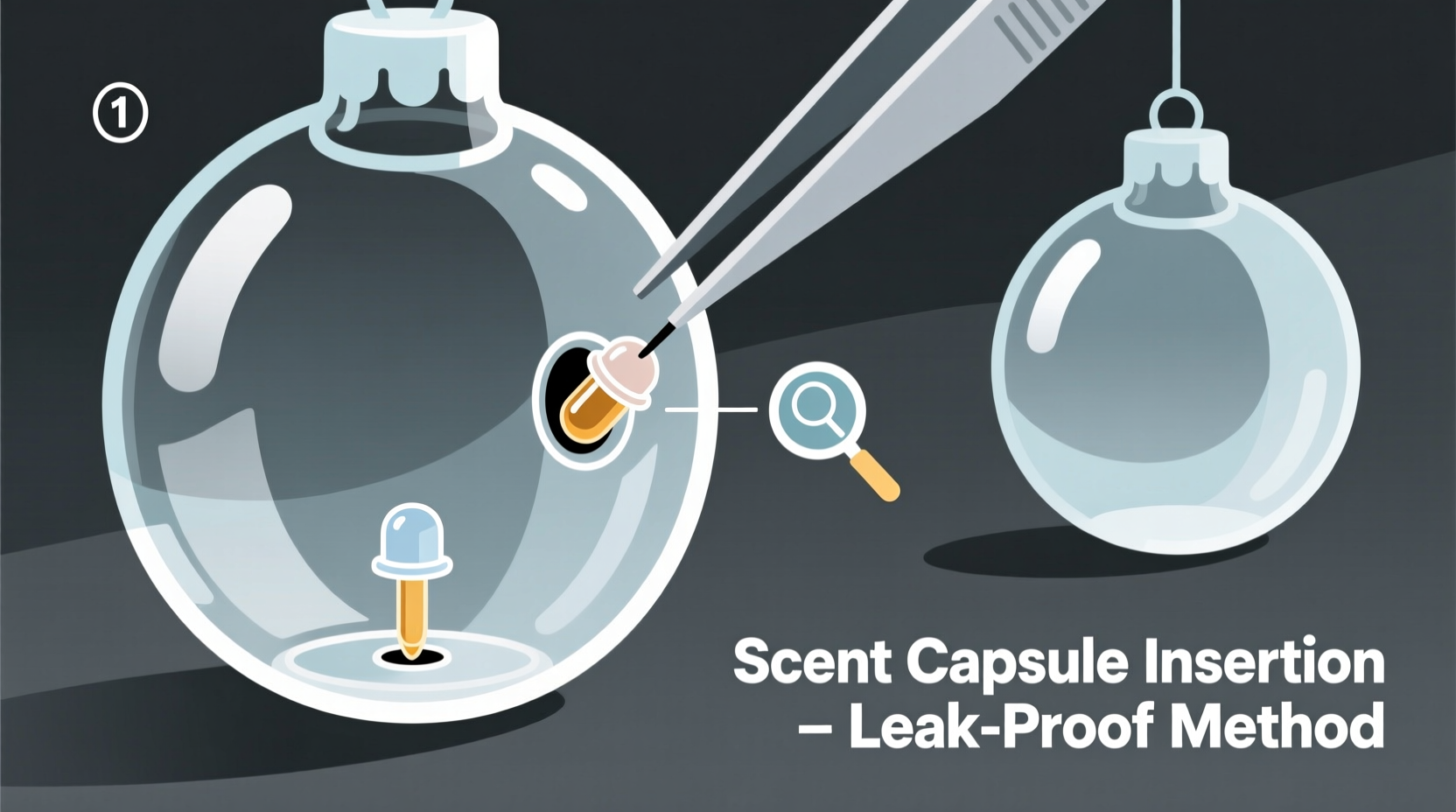
- Insert the capsule: Using narrow-tipped tweezers, gently place the scented piece into the ornament through the top opening. Do not force it.
- Attach the breathable barrier: Cut a small circle of non-woven filter material slightly larger than the opening. Position it over the hole.
- Secure with a ring or cap: Reuse the original metal or plastic hanger base if possible. If missing, fashion a replacement from aluminum tape or a custom silicone grommet.
- Test the seal: Hold the ornament upright for 10 minutes, then tilt it gently in all directions. Check for any visible moisture escaping.
- Final cure: Let the ornament rest upright for 24 hours before hanging to ensure full stabilization.
This method has been used successfully by artisan decorators to create scented gift ornaments sold in boutique markets across New England, where humidity and temperature swings are common.
Mini Case Study: A Holiday Pop-Up Success Story
In 2022, a small design studio in Portland, Maine launched a line of “Scented Memory Ornaments” for a local holiday market. Each glass ball contained a tiny capsule infused with seasonal fragrances—pine, cinnamon, or vanilla—meant to evoke nostalgia. Initially, several prototypes leaked during transport due to cotton stuffing absorbing too much oil and expanding under heat.
The team switched to pre-treated silica beads housed in laser-cut felt sleeves and sealed with medical-grade polypropylene membranes. After redesigning the closure system around repurposed hanger bases lined with food-safe silicone washers, zero leaks were reported across 1,200 units sold. Customers praised the subtle, lasting scent and elegant presentation.
Their experience underscores two critical lessons: first, natural materials aren’t always the most reliable; second, industrial filtration media can elevate craft projects when applied thoughtfully.
Common Mistakes and How to Avoid Them
Even experienced crafters make errors when working with volatile substances in confined spaces. Here are frequent pitfalls and their solutions:
- Overfilling the absorbent: Excess oil migrates to the glass surface and eventually seeps out. Stick to 2–3 drops per standard 3-inch ornament.
- Using synthetic fragrances with high alcohol content: These degrade many plastics and weaken adhesives. Opt for essential oils or phthalate-free perfumer’s alcohol at 10% dilution.
- Ignoring thermal expansion: Never leave scented ornaments in cars or sunlit windows. Store them in stable indoor environments.
- Skipping the compatibility test: Always trial your materials together before final assembly.
FAQ: Your Questions Answered
Can I refresh the scent later?
Yes, if you used a removable seal like a screw-top hanger base or reusable silicone plug. Carefully open the ornament, replace or re-oil the absorbent pad, and reseal. Avoid repeated openings if the original structure is fragile.
Are scented ornaments safe around children and pets?
When properly sealed, yes. However, keep them out of reach. Essential oils like tea tree, eucalyptus, or citrus can be toxic if ingested. Use child-safe fragrances such as lavender or chamomile if needed.
How long does the scent last?
With quality materials, expect 3–6 months of noticeable aroma. Silica-based systems in climate-controlled rooms may last up to a year. Store unused scented ornaments in airtight containers to preserve potency.
Expert Tips for Long-Term Performance
To extend the life of your aromatic ornaments, treat them as both decorative and functional objects. Environmental conditions play a major role in scent longevity and structural safety.
“The ideal scented ornament operates like a passive diffuser—minimal maintenance, maximum effect. Design for controlled release, not immediate impact.” — Marcus Lin, Interior Aromatics Consultant
Consider rotating ornaments seasonally. Store off-season pieces in opaque boxes with desiccant packs to prevent moisture buildup and oxidation. Avoid stacking, which can stress seals over time.
Checklist: Leak-Free Scent Installation
- Ornament is clean and dry inside
- Absorbent material cut to appropriate size
- Fragrance tested for compatibility
- Breathable sealant on hand
- Tweezers and gloves available
- Work area protected
- No visible oil on exterior
- Barrier securely fastened
- No movement or rattling of internal parts
- Successful tilt test completed
- 24-hour cure observed before display
Conclusion: Elevate Your Decor with Thoughtful Aromatics
Adding subtle scent capsules to hollow glass ornaments is a refined craft that blends artistry with science. When executed with care, it transforms ordinary decorations into multi-sensory experiences—ideal for gifts, seasonal displays, or personal ambiance. The key is respecting the limitations of glass, choosing compatible materials, and prioritizing containment over intensity.
Start small with one or two test pieces, refine your method, and scale up once you’ve achieved a reliable, leak-free result. Whether you're crafting for pleasure or profit, mastering this technique opens creative possibilities far beyond the holidays.




 浙公网安备
33010002000092号
浙公网安备
33010002000092号 浙B2-20120091-4
Comments
No comments yet. Why don't you start the discussion?