
Christmas lights bring warmth and joy to homes during the holiday season, but not all displays come with built-in twinkle or flicker effects. If your current string of lights is static—burning steadily without any sparkle—you don’t need to replace them. With a few clever tricks and inexpensive tools, you can transform ordinary, steady bulbs into a dynamic, twinkling display that mimics the charm of vintage fairy lights or falling stars.
The key lies in understanding how light modulation works and applying accessible solutions that alter the current flow or perception of brightness over time. Whether you're working with incandescent or LED strings, there are multiple safe, effective ways to introduce movement and rhythm into your lighting setup—all without purchasing a single new strand.
Understanding Static vs. Twinkling Lights
Static lights remain constantly illuminated because they receive a continuous electrical current. In contrast, twinkling lights achieve their shimmer by rapidly interrupting that current, either through internal circuitry (in pre-made sets) or external control devices. The human eye perceives these rapid on-off cycles as flickering or sparkling, especially when staggered across multiple bulbs.
For older incandescent strands, thermal fluctuations in filaments once naturally created slight variations in brightness. Modern LEDs, however, are engineered for consistency, which eliminates accidental flicker—but also removes organic charm. Fortunately, we can reintroduce controlled variation manually.
“Adding a twinkle effect isn't about replacing what you have—it's about enhancing it creatively. A simple controller can breathe new life into years-old light sets.” — Marcus Tran, Holiday Lighting Designer & DIY Specialist
Method 1: Use an External Flasher Unit or Controller
One of the most reliable and widely used methods to add twinkle to static lights is using an external flasher device. These small plug-in modules sit between your light string and the wall outlet, modulating the power supply to create rhythmic pulses, fades, or random blinking patterns.
Flashers come in several varieties:
- Thermal flashers: Common in older incandescent setups; use a bimetallic strip that heats up and breaks the circuit, then cools and reconnects it.
- Solid-state controllers: Electronic units with adjustable settings for speed, pattern (wave, fade, random), and intensity—ideal for both LED and incandescent.
- Digital timers: Often sold as \"multi-function\" light controllers, allowing selection from 6–8 different effects including slow glow, chasing, and twinkle.
To install:
- Unplug your existing light string.
- Plug the string into the output socket of the flasher unit.
- Plug the flasher’s male end into the wall outlet or extension cord.
- Turn on the power and select your desired mode.
Method 2: Integrate a Dimmer Switch with Flicker Mode
Advanced users can achieve more nuanced effects by connecting their lights to a smart dimmer switch equipped with a candlelight or flicker setting. While typically designed for indoor fixtures, certain plug-in smart dimmers can be adapted for decorative lighting.
Smart dimmers like the Lutron Diva or TP-Link Kasa offer programmable scenes via smartphone apps. You can set a “twinkle” scene where brightness fluctuates randomly between 10% and 100%, simulating natural flame-like movement.
Steps to implement:
- Ensure your lights are dimmable (most LEDs specify this on packaging).
- Use a plug-in smart dimmer module compatible with your bulb type.
- Pair the device with its app and create a custom animation profile.
- Schedule activation times or control remotely.
This method offers precision and automation but requires a higher initial investment and technical familiarity. However, once configured, it allows seasonal reuse year after year.
Method 3: Create Manual Blink Sequences Using Relay Modules
For tech-savvy decorators, building a custom blink sequence using relay modules or microcontrollers like Arduino opens limitless creative possibilities. This approach gives full control over timing, randomness, and synchronization.
A basic setup involves:
- An Arduino Nano or ESP32 board
- A relay shield or optocoupler module
- Jumper wires and a 5V power source
- Programming software (Arduino IDE)
By writing a simple script, you can program individual relays to switch sections of lights on and off at randomized intervals, creating a scattered starfield effect. For example:
void loop() {
  int randLight = random(0, 4); // Choose one of four circuits
  digitalWrite(relayPins[randLight], HIGH);
  delay(random(100, 600));
  digitalWrite(relayPins[randLight], LOW);
  delay(random(50, 300));
}
This code randomly activates one of four connected light segments, producing an unpredictable twinkle across the display. While more complex than plug-and-play options, this solution scales well for large outdoor installations.
Method 4: Optical Illusion Techniques
If modifying electrical components feels too involved, consider visual tricks that simulate twinkling without altering the lights themselves.
One effective technique is placing sheer, moving fabric—like tulle or organza—between the lights and the viewer. As the material drifts in a breeze (indoors near a vent or outdoors), it casts shifting shadows and diffractions, making steady lights appear to shimmer.
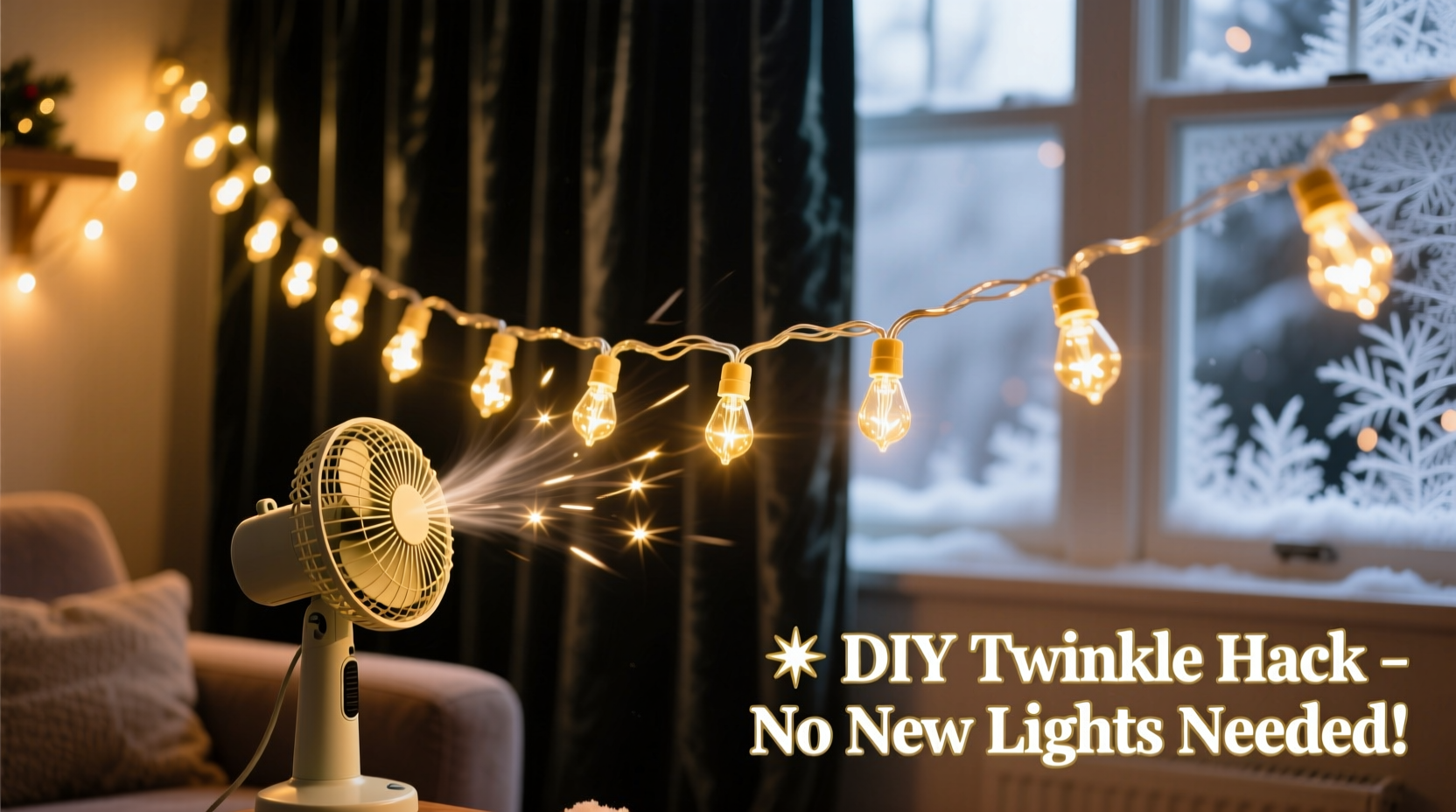
Another idea: mount static lights behind textured glass, frosted panels, or rotating reflective objects such as disco balls or motorized prisms. Even a slowly spinning fan with mirrored blades can scatter light dynamically, giving the illusion of pulsation.
Comparison of Methods: Pros, Cons, and Costs
| Method | Cost Range | Difficulty | Best For | Lights Compatibility |
|---|---|---|---|---|
| External Flasher Unit | $8–$20 | Easy | Indoor/outdoor quick fix | Most incandescent/LED |
| Smart Dimmer + App | $25–$50 | Moderate | Precision control & scheduling | Dimmable LEDs only |
| Relay/Arduino Setup | $30–$70 | Advanced | Custom animations, large displays | All types (with proper drivers) |
| Optical Illusions | $0–$15 | Easy | Temporary decor, renters | All lights |
Mini Case Study: Transforming a Front Porch Display
Sarah M., a homeowner in Vermont, had used the same set of warm-white LED net lights on her front bushes for five years. While functional, she felt the display lacked excitement compared to neighbors’ twinkling arrangements. Instead of buying new lights, she purchased a $12 multi-mode controller online.
She plugged her two net light strings into the controller, mounted it in a weatherproof box under the eaves, and selected the “slow fade” setting. The result? A gentle breathing effect that made the bushes appear alive with soft pulses of light. Neighbors noticed immediately, and Sarah received compliments throughout the season—all while reusing her original lights.
“It cost less than a coffee shop gift card,” she said, “and now I can switch effects depending on the mood—sparkle for parties, steady for quiet nights.”
Step-by-Step Checklist to Add Twinkle Effect
Checklist: How to Add Twinkle to Static Lights
- ✅ Identify your light type (incandescent or LED) and check if dimmable.
- ✅ Choose a method based on budget and skill level (flasher, dimmer, DIY electronics, or optical trick).
- ✅ Purchase necessary equipment (e.g., flasher unit, smart plug, or materials for illusions).
- ✅ Test the setup indoors before final installation.
- ✅ Ensure all connections are secure and protected from moisture (especially outdoors).
- ✅ Mount the controller or modify placement to maximize visual impact.
- ✅ Enjoy your newly animated display—and adjust timing or pattern as needed!
Frequently Asked Questions
Can I damage my lights by adding a twinkle effect?
No—if you use compatible equipment. Avoid using old-style thermal flashers with non-dimmable LEDs, as they may overheat or fail to function. Always verify compatibility before connecting.
Will this work with battery-powered lights?
Limited options exist for battery-operated strings. Most external controllers require AC power. However, some specialty DC flasher modules are available for 3V–12V systems. Alternatively, use optical techniques like moving reflectors.
Is it safe to leave twinkle-modified lights on overnight?
Yes, provided all devices are UL-listed and used according to instructions. Never daisy-chain too many strings beyond the manufacturer’s rating, and inspect cords regularly for wear.
Final Thoughts and Encouragement
Transforming static Christmas lights into a twinkling spectacle doesn’t require a full replacement or expert electrician skills. With thoughtful planning and accessible tools, you can elevate your holiday ambiance while staying within budget and reducing waste.
Reusing existing lights not only saves money but also supports sustainable decorating practices. Each year, tons of discarded light strings end up in landfills—extending the life of what you already own is both economical and environmentally responsible.
Your home deserves a magical glow, and now you have the knowledge to create it. Start small—a single flasher unit, a piece of flowing fabric, or a programmed sequence—and build from there. Let your creativity shine as brightly as your lights.




 浙公网安备
33010002000092号
浙公网安备
33010002000092号 浙B2-20120091-4
Comments
No comments yet. Why don't you start the discussion?