
Traditional steady-burn LED Christmas lights create a warm and inviting glow, but they often lack the dynamic charm of twinkling strands. While many opt for pre-programmed twinkling sets, most standard LED strings are designed to remain uniformly lit. What if you could transform your static lights into a gently flickering display without purchasing new bulbs or modifying wiring? The answer lies in an underused feature: dimmer control.
By leveraging household dimmers and understanding the electrical behavior of LEDs, it’s possible to simulate a twinkle effect on otherwise steady lights. This method is cost-effective, reversible, and ideal for renters or decorators who want seasonal flexibility. More importantly, it maintains safety standards while delivering visual impact. This guide walks through the science, tools, techniques, and real-world applications of using dimmer tricks to animate your holiday lighting.
The Science Behind Twinkling and Dimming
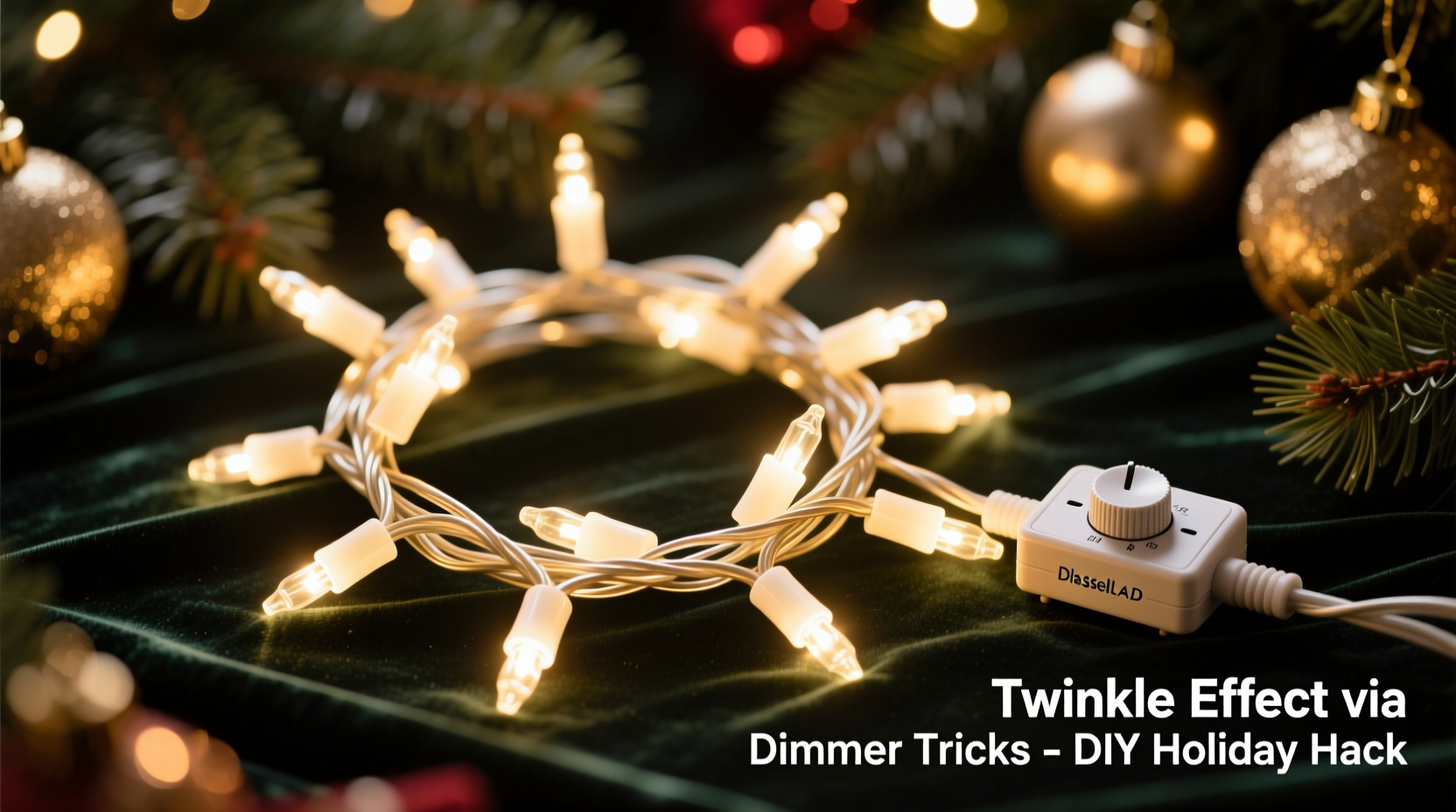
Twinkling lights mimic the random flicker of candlelight or stars by rapidly turning individual bulbs on and off in a non-uniform sequence. Most commercial twinkling strings use built-in microcontrollers that cycle specific LEDs at staggered intervals. In contrast, steady LED lights operate on constant voltage, producing a uniform output across all bulbs.
Dimmers work by altering the voltage supplied to the lights over time. Traditional incandescent dimmers use phase-cutting (TRIAC-based) technology, which chops parts of the AC waveform to reduce power. However, most modern LED lights require compatible electronic low-voltage (ELV) or trailing-edge dimmers because their internal drivers respond differently to modified waveforms.
When a dimmer modulates power to an LED string not designed for dimming, it doesn’t always result in smooth brightness changes. Instead, inconsistent current delivery can cause brief dropouts, micro-flickers, or pulsing patterns—effects that, when carefully controlled, resemble natural twinkling.
“LEDs are highly responsive to voltage fluctuations. With the right dimmer, even a basic string can exhibit organic-looking flicker.” — Dr. Alan Reeves, Electrical Engineer & Lighting Designer
Choosing the Right Components
Not all dimmers and LED lights are created equal. Success depends on compatibility between the dimmer switch, transformer (if applicable), and the LED string’s driver circuitry. Using mismatched components may lead to flicker noise, buzzing, reduced lifespan, or complete failure.
To achieve a reliable twinkle effect, consider these factors:
- Dimmable vs. Non-Dimmable LEDs: Only use LED strings labeled as “dimmable.” Non-dimmable LEDs may flicker erratically or fail prematurely under variable voltage.
- Dimmer Type: Choose a trailing-edge (electronic) dimmer compatible with low-wattage LED loads. Leading-edge (TRIAC) dimmers often struggle with small LED arrays.
- Minimum Load Requirements: Many dimmers require a minimum wattage (e.g., 25W) to function properly. A single string of 20 LED bulbs (~4W) may fall below this threshold. Consider grouping multiple strings or using a dummy load.
- Power Supply: Plug-in light strings powered through wall adapters must be paired with dimmers placed before the adapter (on the AC side), not after.
Recommended Equipment Checklist
- Dimmable LED Christmas light strings (check packaging)
- Trailing-edge dimmer switch or plug-in dimmer module
- Multi-outlet power strip (for combining strings)
- Voltmeter or multimeter (optional, for measuring output)
- Extension cords rated for indoor/outdoor use (if needed)
- Surge protector (to safeguard against voltage spikes)
Step-by-Step Guide to Creating a Twinkle Effect
Follow this process to safely convert steady LED lights into a softly twinkling display using only dimmer modulation.
Step 1: Prepare Your Lights
Ensure all LED strings are rated as dimmable. Inspect each strand for damage and test them independently. Group multiple strings together using a power strip so their combined wattage meets the dimmer’s minimum load requirement.
Step 2: Install the Dimmer
If using a wall dimmer, turn off power at the breaker before installation. Connect wires according to manufacturer instructions. For temporary setups, use a plug-in rotary dimmer like the Lutron CTCL-153P or Leviton 6674. These screw into a standard bulb socket and allow plug-through for lamps or light strings.
Step 3: Connect the Lights
Plug the power strip (with connected LED strings) into the dimmer output. Ensure all connections are secure and located away from moisture or foot traffic.
Step 4: Adjust the Dimmer Gradually
Turn the system on and slowly lower the dimmer knob. As voltage decreases, observe the lights. At certain thresholds—typically between 20% and 40% brightness—you may notice irregular flickering or pulsing. This instability is the key to simulating twinkling.
Avoid settings where lights fully shut off or buzz audibly. The goal is subtle, intermittent dropout across different sections of the string, creating a randomized sparkle effect.
Step 5: Fine-Tune and Stabilize
Once you find the optimal flicker zone, mark the dimmer position with tape or a marker. Some advanced dimmers offer memory functions or preset scenes—use these to save the setting. If flickering is too aggressive, slightly increase brightness until the effect softens.
Comparison Table: Standard vs. Dimmer-Induced Twinkle Effects
| Feature | Standard Twinkling Lights | Dimmer-Induced Twinkle (Steady LEDs) |
|---|---|---|
| Control Method | Internal controller | External dimmer modulation |
| Pattern Type | Fixed sequence (e.g., every 3rd bulb) | Random, chaotic flicker |
| Installation | Plug-and-play | Requires compatible dimmer |
| Cost | Moderate (pre-built) | Low (uses existing lights) |
| Customization | Limited (fixed pattern) | Adjustable via dimmer level |
| Lifespan Impact | Normal | Potential reduction if over-stressed |
Note: While dimmer-induced flicker lacks the precision of programmed twinkling, its unpredictability often appears more natural and atmospheric, especially in outdoor or ambient settings.
Real Example: Transforming a Porch Display
Karen, a homeowner in Vermont, had three strands of warm-white LED icicle lights mounted along her eaves. The lights were bright and efficient but felt flat compared to her neighbors’ animated displays. She didn’t want to replace them, nor did she wish to deal with tangled controllers.
She purchased a $18 plug-in dimmer module and connected all three strands to a single surge-protected power strip. After plugging the strip into the dimmer, she turned the dial down to about one-third brightness. To her surprise, the lights began to pulse unevenly—one section dimming momentarily while another held steady, then shifting again.
At night, the effect was striking: a gentle, star-like shimmer cascading down the roofline. Neighbors asked if she’d bought new lights. Karen reset the dimmer each season and now uses the same setup annually. Her solution cost less than a new string and preserved her original investment.
Common Pitfalls and How to Avoid Them
While dimmer tricks can yield impressive results, improper application risks damaging lights or creating hazards. Be aware of these common issues:
- Buzzing or Humming: Caused by incompatible dimmer-waveform interaction. Switch to a trailing-edge model or add a bypass capacitor.
- Flicker Without Dimming: Some dimmers cause rapid on-off cycling instead of smooth fade. This stresses LED drivers. Opt for high-quality dimmers with LED-specific firmware.
- Overheating: Running LEDs at unstable voltages increases heat in drivers. Ensure adequate ventilation and avoid enclosing transformers in tight spaces.
- No Effect: If lights remain steady at all dimmer levels, the LED string likely has a stable driver that suppresses voltage variation. Try a different brand or accept limitations.
“The illusion of movement in lighting often comes from imperfection—not perfection.” — Lena Torres, Architectural Lighting Consultant
FAQ
Can I use this method with outdoor Christmas lights?
Yes, provided the dimmer and all electrical connections are rated for outdoor use. Use weatherproof enclosures for plug-in modules and ensure GFCI protection is active on the circuit.
Will this void my warranty?
Possibly. Modifying power input—even via a dimmer—may be considered misuse by manufacturers. Proceed at your own discretion and retain original packaging if returns are a concern.
Is it safe to leave dimmer-modified lights unattended?
If using UL-listed components, proper load matching, and surge protection, yes. Always inspect cords and connections periodically and turn off when leaving home for extended periods.
Advanced Tip: Layering for Depth
For professional-grade ambiance, combine dimmer-twinkled lights with static ones. Place steadily lit strings as a base layer (e.g., outlining windows) and overlay dimmer-flickered strands in trees or railings. This creates visual hierarchy—stable zones anchor the scene while flickering areas draw the eye.
You can also pair this technique with smart plugs that schedule on/off times, allowing automated daily operation without manual adjustment.
Conclusion
Transforming steady LED Christmas lights into a twinkling display doesn’t require expensive upgrades or technical expertise. By understanding how dimmers interact with LED drivers, you can unlock hidden animation potential in ordinary light strings. The resulting effect—organic, subtle, and elegant—often surpasses mass-produced twinkling sets in charm and realism.
This method celebrates resourcefulness: extending the life and utility of what you already own. Whether enhancing a porch, wrapping a tree, or framing a doorway, a well-tuned dimmer can turn simplicity into spectacle.




 浙公网安备
33010002000092号
浙公网安备
33010002000092号 浙B2-20120091-4
Comments
No comments yet. Why don't you start the discussion?