
LED Christmas lights bring warmth and cheer to the holiday season, but their constant glow can sometimes feel too static. If you’ve ever wished your steady-burn LEDs had that charming flicker of traditional twinkling lights, you’re not alone. The good news? You don’t need to replace your entire string. With a few clever, low-cost modifications, you can transform unblinking LEDs into sparkling displays that mimic the cozy randomness of candlelight or falling snow.
These hacks are accessible to anyone with basic household tools and a willingness to experiment. Whether you're decorating a tree, framing windows, or lighting up your porch, adding movement to your lights enhances visual interest and creates a more dynamic atmosphere. Below, discover practical methods—ranging from mechanical tricks to simple electronic mods—that breathe life into your existing light strings.
Why Twinkling Lights Enhance Holiday Displays
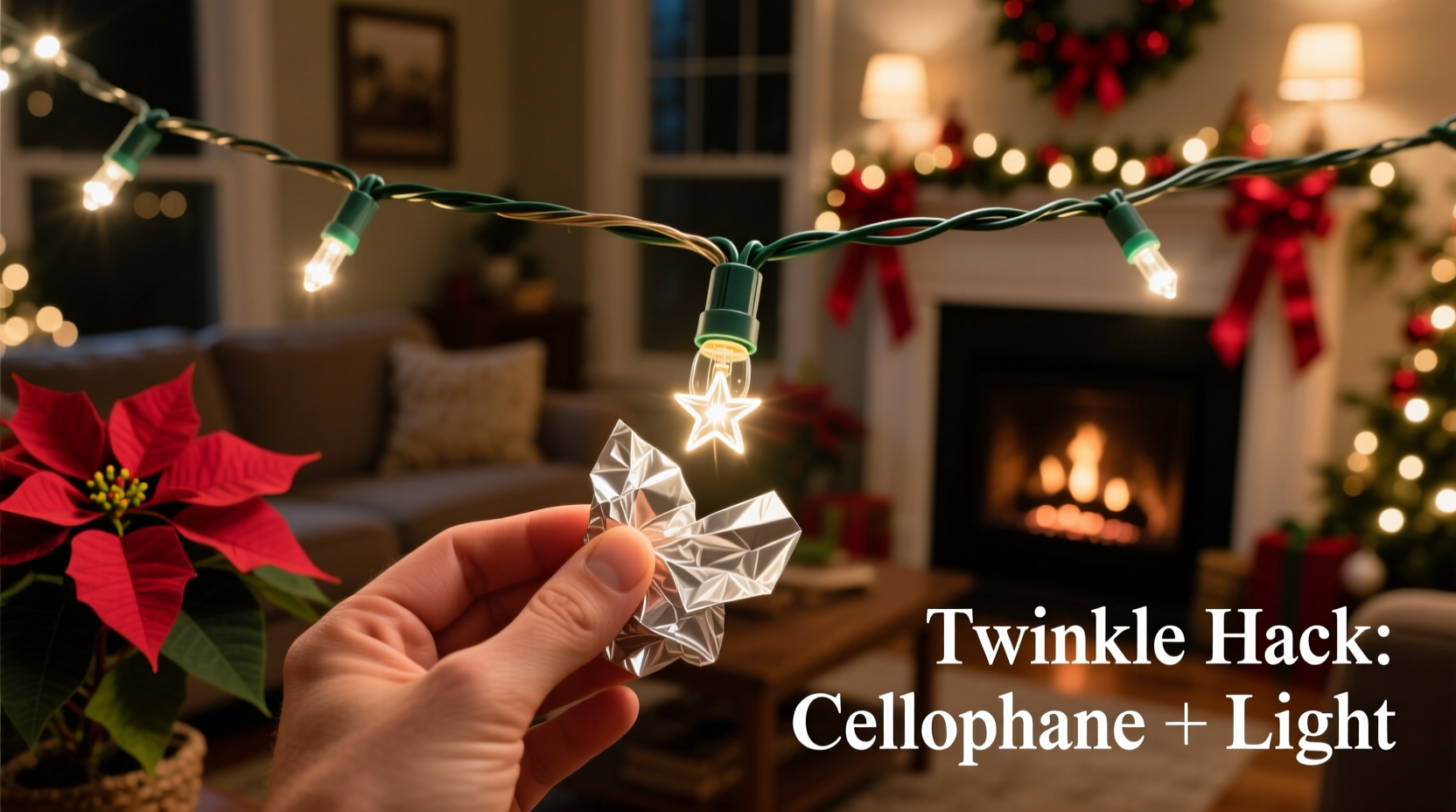
The human eye is naturally drawn to motion. In a sea of static illumination, even subtle changes in brightness or timing create focal points. Twinkling lights simulate natural phenomena—like stars in the night sky or fireflies at dusk—evoking nostalgia and wonder. Unlike older incandescent bulbs, most modern LED strings are energy-efficient and long-lasting, but they often lack built-in variability unless specifically marketed as “twinkle” or “chase” style.
According to lighting designer Marcus Bell, “The psychological impact of flickering light during holidays cannot be overstated. It introduces rhythm and surprise, making spaces feel alive.” This principle applies whether you're aiming for romantic ambiance or playful festivity. By retrofitting standard LED strings, you retain their efficiency while gaining the aesthetic benefits of dynamic lighting.
“Even small variations in light output can dramatically shift the mood of a space. A steady glow feels formal; a gentle flicker feels welcoming.” — Marcus Bell, Lighting Designer & Architectural Consultant
Understanding Your LED Lights: AC vs. DC and Constant Current
Before attempting any modification, it's essential to understand what type of LED string you're working with. Most plug-in holiday lights operate on alternating current (AC), stepping down household voltage (120V in North America) to a safer range via an internal transformer or external power adapter. Battery-powered sets typically run on direct current (DC) at 3V, 6V, or 12V.
Steady LED strings use constant current drivers that maintain uniform brightness across all bulbs. There’s no built-in oscillator or timer chip to vary output. That means creating a twinkle effect requires either interrupting the circuit periodically or manipulating how the light is perceived visually—without damaging the delicate electronics.
Five Proven Hacks to Add Twinkle Effect Without Rewiring
You don't need advanced electronics knowledge to achieve twinkling effects. These five methods rely on physics, optics, or minimal circuit interruption—all designed to preserve your lights’ integrity while enhancing their charm.
1. The Spinning Diffuser Hack (Mechanical Flicker)
This method uses motion to create the illusion of blinking. Attach a motorized fan blade or rotating disc in front of your light string. As the spinning surface intermittently blocks and reveals the bulbs, viewers perceive a random twinkling pattern.
Materials needed:
- Small DC motor (e.g., from an old toy or computer fan)
- Battery pack matching motor voltage
- Cardboard or plastic cut into uneven petal shapes
- Clips or tape to secure components
Mount the shaped disc onto the motor shaft and position it between your eyes and the lights. Run the motor separately from the lights. For outdoor use, enclose the motor in a weather-resistant housing.
2. Aluminum Foil Interrupter (Circuit Pulse Trick)
A low-tech way to pulse lights involves briefly breaking the circuit using conductive material. This works best with battery-powered LED strings where voltage is low and safe.
Cut two small strips of aluminum foil and attach one to each terminal inside the battery compartment. Then, insert a non-conductive shim (like folded paper) between them so contact is nearly made—but not quite. Mount this assembly on a vibrating surface (such as a phone with vibrate mode enabled). When activated, vibrations cause momentary connections, turning the lights on and off rapidly.
Adjust the gap until flickering occurs without full disconnection. Secure everything with rubber bands or heat-shrink tubing.
3. Mirror Ball Reflection (Kinetic Glinting)
Leverage reflection instead of altering the lights themselves. Place a rotating mirror ball or disco ball near your steady LED string. As it spins, tiny mirrored tiles reflect flashes of light across walls and ceilings, simulating individual stars winking on and off.
This technique excels in indoor settings like living rooms or dining areas. Pair with dim ambient lighting to maximize contrast. No electrical work required—just strategic placement and a small motorized base.
4. Pulsed Power Source Using a Flashing LED Circuit
For those comfortable with basic soldering, repurpose a flashing LED keychain or broken twinkle light string to control your steady LEDs.
Extract the small circuit board containing the flasher chip (usually labeled YX8018 or similar). These chips emit pulsed current at irregular intervals. Wire this module in series with your LED string’s power source. The pulsing signal will cause your entire string to blink in a twinkling rhythm.
Note: Ensure voltage compatibility. Most flasher modules run on 3–6V. Use only with corresponding low-voltage LED sets.
5. Layered Light Strings (Visual Staggering)
Create the perception of twinkling by layering multiple steady-light strings and powering them through separate switches or timers. Turn each layer on and off manually or with staggered outlet timers.
Example: Set three identical strings behind garland. Plug each into a timer set to turn on at :00, :20, and :40 minutes past the hour. As they cycle independently, overlapping on/off phases produce shifting brightness—mimicking randomness.
“The brain interprets partial darkness and sudden highlights as motion—even when none exists. Layering exploits this perceptual quirk beautifully.” — Dr. Lena Torres, Cognitive Psychologist specializing in visual perception
Step-by-Step Guide: Adding a Flasher Module to a 6V LED String
If you choose the electronic route, follow this safe procedure to integrate a flasher circuit:
- Unplug and disassemble: Remove batteries and open the end cap of your LED string to access the wiring.
- Identify polarity: Locate positive (+) and negative (−) leads. They’re often color-coded red/black or marked on the PCB.
- Obtain a flasher module: Salvage one from a blinking decoration or purchase online (search “YX8018 flashing LED driver”).
- Test connections: Temporarily connect the module between the battery pack and LED string. Reinsert batteries. Confirm flashing behavior.
- Solder permanently: Once verified, solder the connections and insulate with electrical tape or heat shrink.
- Reassemble: Close the housing and test again. Mount securely.
Caution: Never attempt this with mains-powered (AC) strings unless you have proper training and isolation transformers. Safety first.
Do’s and Don’ts: Quick Reference Table
| Do | Don’t |
|---|---|
| Use these hacks only on low-voltage (battery-powered) systems unless experienced | Modify AC-powered light strings without proper insulation and safety gear |
| Start with temporary setups to test effectiveness | Permanently alter lights before confirming desired effect |
| Label modified strings clearly to avoid confusion later | Mix modified and original strings on the same power strip without checking load balance |
| Store modified strings separately with instructions | Leave exposed wires or conductive materials unprotected |
Real Example: Transforming a Porch Garland Display
Jessica Rivera, a homeowner in Portland, Oregon, wanted to upgrade her front porch for the holidays. She already owned four 20-foot warm-white LED strings wrapped around her railing, but found them too uniform compared to her neighbor’s twinkling display.
Rather than buying new lights, she tried the layered-timing hack. She plugged two strings into a timer set to operate from 5–10 PM, and the other two into a second timer offset by 30 minutes. She also placed a small rotating mirror ball beneath the railing, aimed upward.
The result? Passersby commented on the “magical shimmer,” unaware it came from steady lights. Jessica saved over $40 and extended the life of her existing decor. “It looks like the lights are breathing,” she said. “Soft, rhythmic, not jarring.”
Frequently Asked Questions
Can I make my permanent outdoor LED fixtures twinkle?
Yes, but caution is required. For hardwired landscape lighting, consider installing a programmable LED controller compatible with your system. Avoid mechanical hacks outdoors due to moisture risks. Smart lighting hubs like Philips Hue or Lutron offer remote-controlled twinkling modes with weatherproof ratings.
Will these hacks void my warranty or damage the LEDs?
Any physical modification likely voids manufacturer warranties. Soldering or inserting foreign objects may cause overheating if mismatched. Stick to non-invasive methods like reflection or layering when preserving warranty matters. Always monitor modified strings during initial use.
Is there a way to get random twinkling (not all lights blinking together)?
True random twinkling requires individual bulb control, which consumer-grade hacks can’t achieve. However, combining multiple techniques—like using a diffuser on one section and a flasher on another—creates varied rhythms that appear less synchronized. For maximum realism, mix different types of modified strings within the same display.
Final Checklist Before You Begin
- Confirm your LED string runs on safe, low voltage (battery-powered preferred)
- Gather necessary tools: wire cutters, tape, motor, foil, etc.
- Plan placement—will the effect be visible from key viewing angles?
- Test modifications temporarily before permanent installation
- Label all modified cords for future reference
- Inspect for exposed wires or fire hazards after assembly
Bring Magic to Your Lights This Season
Transforming steady LED Christmas lights into twinkling displays doesn’t require expensive upgrades or technical mastery. With creativity and attention to safety, you can elevate your holiday decor using everyday items and smart optical illusions. These hacks honor sustainability by extending the usefulness of existing products, reducing waste, and encouraging inventive reuse.
This year, let your lights do more than glow—let them dance. Try one method, then combine others for richer effects. Share your results, inspire neighbors, and rediscover the joy of handmade holiday charm. The simplest flicker can spark the biggest wonder.




 浙公网安备
33010002000092号
浙公网安备
33010002000092号 浙B2-20120091-4
Comments
No comments yet. Why don't you start the discussion?