
Applying fake eyelashes can be intimidating, especially when you're new to the process. One of the most common frustrations is accidentally poking or touching your eyelid during application, which leads to discomfort, misalignment, or even eye irritation. The good news? It’s entirely possible—and surprisingly simple—to apply falsies without ever letting the lash band or tweezers graze your sensitive lid skin. With the right tools, technique, and mindset, even complete beginners can achieve a seamless, professional-looking result.
This guide breaks down a foolproof method that prioritizes precision, comfort, and cleanliness. You’ll learn not only how to avoid touching your eyelids but also how to build confidence in your application so it becomes second nature.
The Problem with Touching Your Eyelids
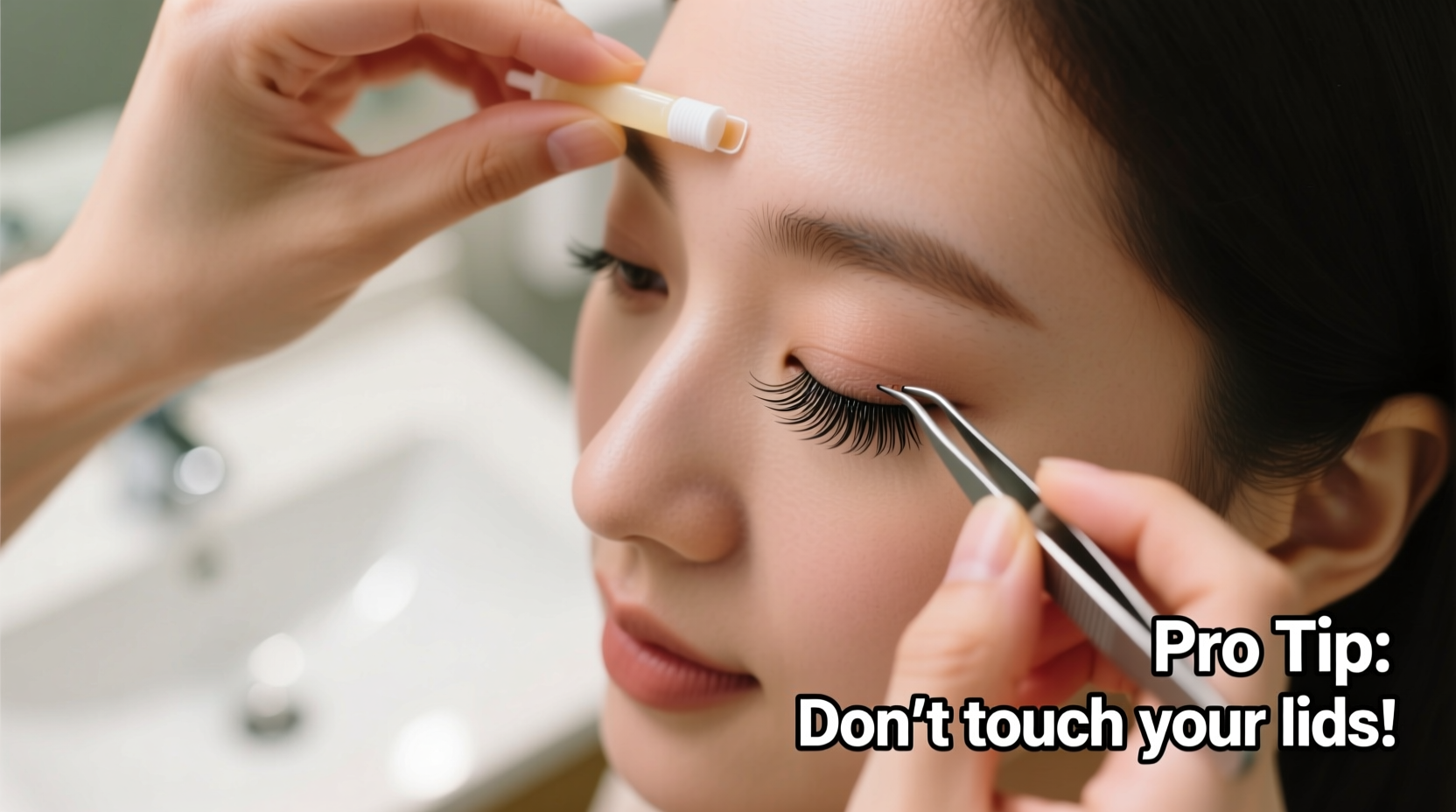
Many beginners press the lash band directly onto their lids using tweezers or fingers, thinking they’re securing the lashes in place. In reality, this often results in:
- Increased risk of infection from bacteria on tools or hands
- Pain or reflex blinking that disrupts placement
- Lash band shifting due to uneven pressure
- Irritation or redness, especially for those with sensitive eyes
When you touch your eyelid, you introduce variables that make precise alignment nearly impossible. The goal isn’t just to avoid discomfort—it’s to improve accuracy by relying on vision and control rather than tactile feedback.
“Most eyelash mishaps happen because people rely too much on feeling where the lashes go. The key is visual precision.” — Lena Tran, Professional Makeup Artist & Lash Technician
Essential Tools for Touch-Free Application
You don't need an elaborate kit, but having the right tools makes all the difference. Here’s what you should gather before starting:
- Faux mink or flexible-band strip lashes: These are lightweight and easier to position accurately.
- Small-tipped lash adhesive: A fine nozzle allows controlled application without excess glue.
- Tweezers with flat or curved tips: Precision tools give better grip and reduce hand wobble.
- Mirror (preferably magnifying): A well-lit, close-up view is essential for accuracy.
- Concealer or eyeshadow brush: For adjusting lashes post-application without touching them.
Step-by-Step Guide: Applying Lashes Without Touching Your Lid
Follow this timeline-tested method to keep your fingers and tools away from your eyelid while achieving flawless placement.
- Prep your natural lashes: Curl your real lashes and apply one coat of mascara. This helps your natural lashes grip the false ones later and creates a smoother base.
- Trim if necessary: Hold the lash strip up to your eye and trim from the outer edge if it extends past your lash line. Never cut from the inner corner—it can damage the band’s integrity.
- Apply glue to the band: Squeeze a thin line of adhesive along the entire lash band. Wait 30–60 seconds until the glue turns slightly sticky (not wet).
- Position your gaze: Look straight ahead into a mirror. Tilt your chin slightly down. This exposes your lash line without requiring you to pull your eyelid open.
- Pick up the lash with tweezers: Grip the center of the band gently. Avoid squeezing too hard, which can warp the shape.
- Align visually: Focus on the space just above your natural lash line—the exact spot where the black of your pupil ends when looking straight. That’s your target zone.
- Lower the lash from above: With tweezers held steady, lower the lash straight down so the band lands parallel to your natural lashes. Do not angle inward toward the lid.
- Release and adjust: Let go of the lash once it makes contact. Use the handle of your concealer brush to nudge the inner or outer corners into place—never your fingers.
- Repeat for the other eye: Work one eye at a time to maintain focus and symmetry.
- Blend with mascara: Once both lashes are secure, lightly coat your natural and false lashes together with another layer of mascara to fuse them seamlessly.
This technique relies on gravity and visual alignment instead of pressure. By approaching the lash line from directly above, you eliminate the need to stretch or touch the eyelid.
Do’s and Don’ts: A Quick Reference Table
| Do’s | Don’ts |
|---|---|
| Wait for glue to get tacky before applying | Apply lashes immediately after gluing |
| Use a mirror placed below eye level | Look down into the mirror while applying |
| Adjust with a clean spoolie or brush | Use fingers or tweezers to push lashes into place |
| Start with shorter, wispy styles for ease | Begin with dramatic, full-volume lashes |
| Practice positioning without glue first | Rush the first-time application |
Real Example: From Frustration to Flawless in One Week
Sophia, a 24-year-old office worker, had tried fake lashes three times before giving up. Each attempt ended with sore eyes, crooked bands, and glue stuck to her eyelid. After reading about touch-free techniques, she decided to try again—this time with a focus on visual alignment and patience.
She started by trimming her lashes to fit, then practiced positioning them with tweezers while looking straight ahead. On day three, she applied glue and waited the full minute for tackiness. When she lowered the lash from above, it landed perfectly on the first try. By day seven, she was applying both lashes in under four minutes—without touching her lids once.
“I realized I was pressing too hard because I couldn’t see clearly,” she said. “Once I adjusted my mirror and stopped trying to ‘feel’ the placement, everything changed.”
Expert Tips for Long-Term Success
Mastering touch-free application isn’t just about one successful try—it’s about building habits that make the process reliable every time. Consider these advanced insights:
- Use a double-sided mirror: Position one mirror in front and another below. The reflection from underneath gives a clear view of your lash line without tilting your head.
- Invest in magnetic lashes (optional): While traditional strips require glue, magnetic versions snap into place using liner with iron particles. They reduce handling and eliminate glue mess.
- Keep tweezers clean: Wipe them with alcohol between uses to prevent buildup that can cause slipping.
- Store lashes properly: Place used lashes back in their case to maintain shape. Reusable pairs can last up to 20 wears with care.
“The best lash artists never touch the client’s eyelid. They work entirely off sight and steady hands. That’s the standard to aim for.” — Jamal Reyes, Celebrity Makeup Artist
FAQ: Common Questions Answered
Can I apply fake lashes if I have small or hooded eyes?
Absolutely. In fact, avoiding contact with the eyelid is even more important for hooded eyes, as excess pressure can shift the skin and distort placement. Use shorter lashes focused on the center and outer corners to create lift without overcrowding.
What if the lash shifts after I let go?
Wait 10–15 seconds for the glue to set slightly before adjusting. Then, use the end of a clean brush or toothpick to gently slide the lash into position. Never grab it with tweezers mid-set—that can break the seal.
Is it safe to reuse fake lashes with this method?
Yes, and doing so improves results over time. As you reuse a pair, you memorize their shape and flexibility, making visual placement faster and more accurate. Just clean them with micellar water after each use and store them flat.
Final Checklist for Beginner Success
Before your next attempt, run through this quick checklist:
- ☑ Natural lashes curled and lightly coated with mascara
- ☑ Lashes trimmed to fit your eye shape
- ☑ Glue applied and allowed to become tacky (30–60 sec)
- ☑ Mirror positioned for optimal visibility (slightly below eye level)
- ☑ Tweezers ready, clean, and easy to hold
- ☑ Brush or tool nearby for adjustments
- ☑ Calm mindset—no rushing
Conclusion: Master the Method, Not the Pressure
Applying fake eyelashes without touching your eyelids isn’t a trick—it’s a disciplined approach rooted in precision and patience. Once you stop relying on touch and start trusting your eyes, the entire process becomes cleaner, safer, and more effective. This beginner-friendly hack removes one of the biggest barriers to wearing falsies regularly: discomfort.
With consistent practice, you’ll find yourself reaching for false lashes not just for special occasions, but as part of your everyday routine. The confidence that comes from mastering a skill like this extends beyond makeup—it’s about knowing you can achieve something once thought difficult, simply by changing your technique.




 浙公网安备
33010002000092号
浙公网安备
33010002000092号 浙B2-20120091-4
Comments
No comments yet. Why don't you start the discussion?