
False eyelashes can transform your look in seconds—adding volume, length, and drama that mascara alone can’t achieve. But for beginners, the process often ends in frustration: glue globs, misaligned lashes, or worse, lashes peeling off halfway through the day. The culprit? Poor technique, not poor products. With the right approach, even first-timers can apply falsies smoothly and confidently. This guide breaks down every step to avoid common glue-related mishaps and achieve salon-quality results at home.
Choose the Right Lashes and Glue
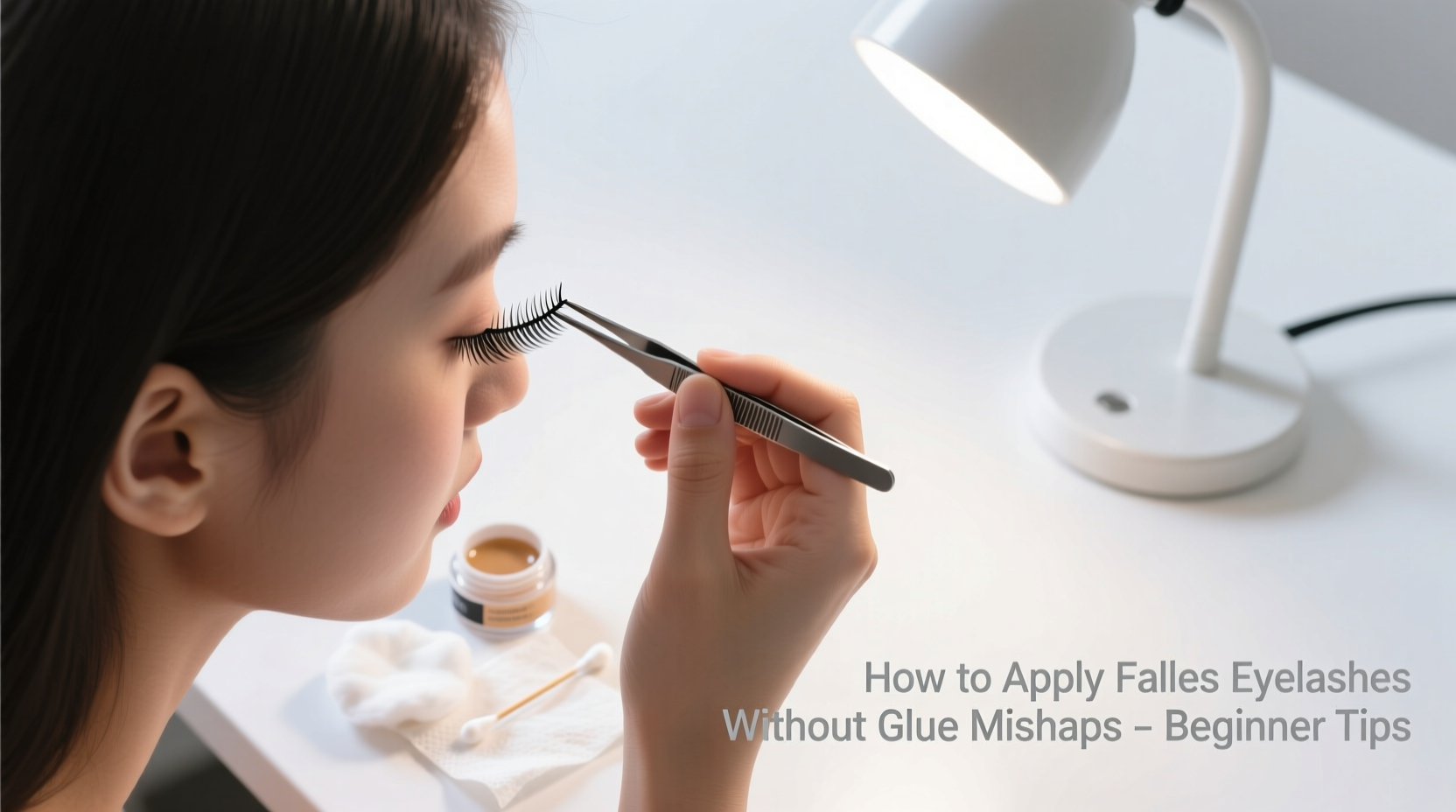
The foundation of a successful lash application starts before you even pick up tweezers. Selecting compatible materials is crucial to minimizing glue issues. Not all lashes or adhesives are created equal, and mismatched choices lead to slipping, clumping, or irritation.
For beginners, opt for lightweight, strip lashes with a flexible band. Thicker, dramatic styles may look stunning on models, but they’re harder to position accurately and require more glue—which increases the risk of overflow. Look for “natural” or “beginner-friendly” labels when shopping.
Equally important is your adhesive. Clear glue dries faster and is easier to adjust during application, making it ideal for learning. Black glue offers a bolder look by disguising any gaps along the lash line, but it sets quickly and leaves visible residue if applied too thickly. Choose a latex-free formula if you have sensitive eyes.
Prep Your Natural Lashes and Eyelids
Clean, dry eyelids are essential for proper lash adhesion. Any oil, moisturizer, or leftover makeup creates a barrier between the glue and skin, causing premature lifting. Begin by removing all eye makeup with an oil-free micellar water or cleanser. Avoid petroleum-based removers—they leave residue that repels adhesive.
After cleansing, lightly pat the area dry and refrain from applying serums or primers near the lash line. If you wear eyeshadow, set it with translucent powder to reduce slip. Let everything dry completely; damp skin weakens glue bond strength.
Next, curl your natural lashes and apply a thin coat of waterproof mascara. This helps your real lashes blend seamlessly with the falsies and provides a base for better alignment. Skip regular mascara—it tends to smudge when layered under false lashes.
“Proper prep accounts for 70% of a successful lash application. Skipping it is like painting a wall without sanding first.” — Dana Reyes, Professional Makeup Artist & Lash Educator
Step-by-Step Guide to Flawless Application
Now that your tools and skin are ready, follow this precise sequence to minimize glue mishaps and ensure symmetry.
- Trim the lashes to fit your eye shape. Hold the strip against your lash line to measure. Most falsies are designed for larger eyes and need shortening at the outer edge. Cut small sections from the outer end, not the center, to preserve the band’s integrity.
- Apply a thin layer of glue to the lash band. Squeeze a rice-grain-sized amount onto the back of your hand. Use the applicator or a toothpick to spread an even layer along the entire band. Focus on the corners and center—these areas tend to lift first.
- Wait 30–45 seconds before applying. This allows the glue to become tacky, which improves grip. Applying too soon leads to sliding; waiting too long means the glue dries out.
- Use tweezers or a lash applicator tool. Pinch the lash strip at the center and place it as close to your natural lash line as possible—just above where your lashes grow, not on top of them. Press the center first, then secure the inner and outer corners.
- Press and hold each section for 10 seconds. Use a clean fingertip or the tool to gently press the band into place. Don’t rush this step. Rushing causes uneven bonding and later separation.
- Optional: Apply a second thin layer of glue over the dried band. Once the initial glue has set (after about two minutes), seal any visible gaps with a micro-dab of glue. This reinforces longevity without adding bulk.
Common Mistakes and How to Avoid Them
Even with preparation, beginners often repeat errors that lead to messy glue outcomes. Recognizing these pitfalls early prevents frustration and wasted product.
| Mistake | Why It Happens | Solution |
|---|---|---|
| Using too much glue | Excess glue oozes out when pressed, creating white blobs and stiff bands. | Use a toothpick to apply a paper-thin layer. Less is more. |
| Applying immediately after gluing | Glue is still wet and slippery, causing misplacement. | Wait until the adhesive turns tacky (30–45 seconds). |
| Not trimming lashes to size | Lashes extend past the outer corner, lifting and folding. | Always measure and trim before gluing. |
| Touching or rubbing eyes after application | Dislodges weak bonds before they fully set. | Avoid touching for at least 5 minutes post-application. |
| Reusing old glue | Dried or clumpy glue doesn't adhere properly and clogs the nozzle. | Replace adhesive every 4–6 weeks; store upright in a cool, dry place. |
Real Example: From Frustration to Confidence
Sophia, a 26-year-old office worker, had given up on false lashes after three failed attempts. Her first try ended with glue stuck to her eyelid, the second with one lash curled upward like a question mark, and the third with both falling off during a Zoom meeting. Discouraged, she assumed falsies weren’t for her.
After watching a tutorial emphasizing glue timing and lash trimming, she decided to retry with a beginner-friendly kit. She prepped her lids thoroughly, trimmed the lashes to match her eye width, and used a toothpick to apply a whisper-thin glue layer. She waited 40 seconds, placed the center first, and gently pressed each end. For the first time, the lashes stayed put for eight hours—and no one noticed they weren’t her real lashes.
Her breakthrough wasn’t due to expensive tools, but precision and patience. “I realized I was rushing,” she said. “Once I slowed down and followed each step, it clicked.”
Essential Checklist for First-Time Application
Before starting, gather and verify these items to prevent mid-process hiccups:
- ✔ Lightweight strip lashes (trimmed to fit)
- ✔ Fresh tube of lash glue (clear or black, depending on preference)
- ✔ Tweezers or lash applicator tool
- ✔ Toothpick or bobby pin for glue control
- ✔ Oil-free makeup remover (for corrections)
- ✔ Clean face with dry, makeup-free eyelids
- ✔ Well-lit mirror (preferably magnifying)
- ✔ Patience—set aside 10–15 distraction-free minutes
Frequently Asked Questions
How do I fix glue bubbles or excess without removing the lashes?
If you notice a small blob of dried glue, don’t pull the lash off. Instead, wait until fully set, then gently roll the bump with a clean cotton swab. For wet glue, carefully wipe the excess with the tip of a bobby pin wrapped in tissue. Prevention—using less glue—is always better than correction.
Can I wear false lashes every day?
Yes, but with caution. Daily wear increases stress on natural lashes and eyelid skin. To minimize damage, choose ultra-lightweight styles, remove them gently with oil-based remover, and give your eyes a break at least two days a week. Always remove lashes before sleeping—overnight wear can cause traction alopecia over time.
Why do my false lashes keep lifting at the corners?
This is usually due to insufficient glue in high-movement zones or improper placement. The outer corners naturally produce more oil and move more with blinking. Ensure you apply extra attention (not more glue) to sealing the ends. Press and hold the outer third for at least 10 seconds. Consider using a slightly shorter lash style if your eyes taper outward.
Final Tips for Long-Lasting, Mishap-Free Wear
Mastering false lashes isn’t about speed—it’s about consistency and attention to detail. Even experienced users encounter occasional slips, but the pros know how to recover quietly and effectively. Beyond the initial application, maintain your look by avoiding oily eye creams, skipping waterproof mascara on top (it weighs lashes down), and never tugging to remove them.
To remove, soak a cotton pad with oil-based makeup remover and hold it against the lash band for 30 seconds. This dissolves the glue gradually. Then, gently slide the lash off from the outer corner. Clean the band with gentle soap and water if you plan to reuse them—most quality strips last 5–8 wears with care.
“The key to flawless falsies isn’t perfection on the first try—it’s learning what went wrong and adjusting. Every mistake teaches you more about your eye shape and rhythm.” — Lena Choi, Celebrity MUA and Lash Line Creator
Conclusion
Applying false eyelashes without glue mishaps is entirely achievable—even for absolute beginners. By choosing the right products, preparing your eyes properly, and following a deliberate, patient process, you can enjoy dramatic, long-lasting lashes without the mess. Remember, precision beats speed. Each attempt builds familiarity, turning what once felt intimidating into a seamless part of your routine.




 浙公网安备
33010002000092号
浙公网安备
33010002000092号 浙B2-20120091-4
Comments
No comments yet. Why don't you start the discussion?