
For those with sensitive eyes, traditional lash adhesives can be a source of discomfort, redness, or even allergic reactions. The chemicals in many glues—such as formaldehyde-releasing preservatives or latex—often trigger irritation, making the pursuit of dramatic lashes a painful trade-off. But achieving voluminous, fluttery lashes doesn’t require compromising eye health. With thoughtful alternatives and precise techniques, it’s entirely possible to wear false lashes safely—without glue. This guide explores proven non-adhesive methods, compatible lash types, and practical routines that prioritize comfort without sacrificing style.
Understanding Eye Sensitivity and Lash Glue Risks
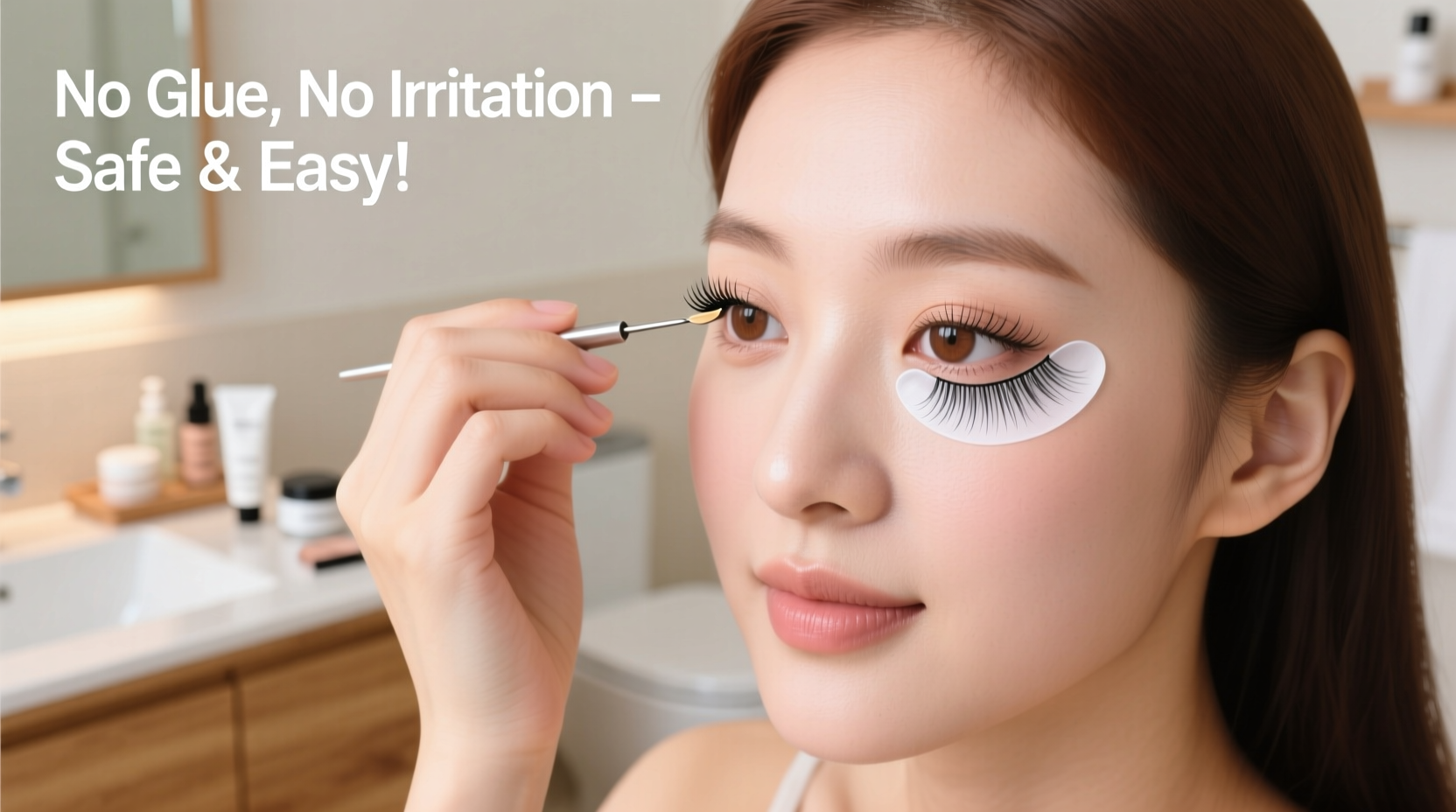
Eye sensitivity varies widely among individuals. Some may experience mild dryness or itchiness, while others face full-blown allergic reactions when exposed to common lash glue ingredients. Formaldehyde, cyanoacrylate, and parabens are frequent culprits. Even “hypoallergenic” labels don’t guarantee safety, as formulations can still contain trace irritants.
Ophthalmologists caution against repeated exposure to adhesive fumes and residue near the delicate ocular area. Dr. Lena Tran, a board-certified optometrist specializing in cosmetic eye health, explains:
“Repeated use of chemical-based adhesives can compromise the tear film and lead to chronic dry eye or contact dermatitis. For patients with pre-existing sensitivities, I recommend exploring mechanical or magnetic alternatives.” — Dr. Lena Tran, OD, FAAO
The good news is that advancements in beauty technology have introduced several glue-free options that are both effective and gentle on sensitive eyes.
Glue-Free Alternatives for False Lash Application
Several innovative solutions allow you to skip traditional lash glue altogether. These methods rely on physical attachment rather than chemical bonding, reducing the risk of irritation.
1. Magnetic Eyeliner and Lashes
Magnetic lashes use tiny magnets embedded in two strips—one applied to the eyelid via special liner, the other integrated into the lash band. When aligned, they snap together securely over the natural lash line.
Benefits:
- No direct skin contact with adhesive
- Reusable for up to 30 wears with proper care
- Quick application and removal
- Free from latex and formaldehyde
How to Choose: Opt for brands certified by dermatologists and ophthalmologists. Look for iron oxide-based liners instead of carbon-heavy formulas, which can smudge more easily.
2. Clip-On Lashes
Clip-on lashes feature small silicone or plastic clips that fasten onto natural lashes. They work like mini hair barrettes, gripping the lash base without touching the skin.
Ideal for occasional wear, clip-ons eliminate all chemical exposure. However, they require some practice to position correctly and may not suit very sparse natural lashes.
Best practices:
- Choose lightweight designs to avoid tugging
- Trim clips slightly if they press against the brow bone
- Use only on clean, dry lashes to maximize grip
3. Heat-Activated Lash Bands
A newer innovation, heat-activated bands soften with warm fingers or a heated tool, allowing them to mold gently over the lash line. Once cooled, they retain their shape and stay in place.
These bands are typically made from medical-grade thermoplastic elastomers—materials used in skin-contact devices—and are free from allergens.
While less common than magnetic options, they offer a seamless look and are ideal for people who dislike the visible liner streaks of magnetic systems.
Step-by-Step Guide: Applying Magnetic Lashes Safely
Magnetic lashes are the most accessible and reliable glue-free option. Follow this detailed process for secure, comfortable wear:
- Prep your lids: Cleanse your eyelids thoroughly with a fragrance-free wipe. Remove any oils or moisturizers that could interfere with liner adherence.
- Apply first layer of magnetic liner: Using the wand, draw a thin, even line as close to your lash roots as possible. Focus on the center and outer corners—the areas that bear the most weight.
- Let dry for 30 seconds: The liner must be tacky but not wet. Rushing this step reduces magnetic strength.
- Apply second coat: A second layer enhances hold and ensures full magnet contact.
- Position the bottom lash strip: Using tweezers or an applicator, place the lower magnetic lash (the one without fibers) directly on top of the liner. It should sit flush along your natural lash line.
- Place the upper lash: Align the fibered lash strip over the bottom one, letting the magnets attract and snap together. Start from the outer corner and adjust inward.
- Blink test: Close your eyes slowly. If you feel pressure or pinching, reposition the lashes slightly outward.
- Blend with mascara: Lightly coat your natural lashes and the base of the falsies to create a seamless look.
Choosing the Right Lash Style for Sensitive Eyes
Not all false lashes are created equal—especially when avoiding glue. Weight, material, and band design significantly impact comfort.
| Lash Type | Weight | Comfort Level | Best For |
|---|---|---|---|
| Feathered Strip (Magnetic) | Light | High | Daily wear, office settings |
| Dramatic Winged (Magnetic) | Medium | Moderate | Evening events |
| Individual Minis (Clip-On) | Very Light | High | First-time users, minimal look |
| Fringe-Style (Heat-Activated) | Medium | Good | Photography, stage |
| Full Strip (Traditional w/ Glue) | Heavy | Low (for sensitive eyes) | Not recommended without patch testing |
For sensitive eyes, prioritize ultra-lightweight styles with flexible bands. Avoid thick, stiff bases that can rub against the lid or disrupt blinking mechanics.
Mini Case Study: Sarah’s Transition to Glue-Free Lashes
Sarah, a 32-year-old teacher with seasonal allergies, had worn false lashes for years using standard latex-based glue. After developing persistent itching and morning swelling, she visited an eye clinic. Her allergist identified a reaction to cyanoacrylate.
“I thought I’d have to give up falsies completely,” Sarah said. “But my esthetician suggested trying magnetic lashes. I started with a basic set from a dermatologist-tested brand. At first, I struggled with alignment, but within a week, I got the hang of it. Now, I wear them three times a week—no redness, no burning. It’s been life-changing.”
She now uses a two-coat liner technique and stores her lashes in a ventilated case. Her favorite style is a wispy, natural-looking magnetic strip that lasts over 20 wears with careful cleaning.
Care and Maintenance for Glue-Free Lash Systems
To extend the life of your magnetic or clip-on lashes and protect your eyes, proper hygiene is essential. Residual makeup and bacteria can accumulate on lash bands, leading to irritation or infections.
Weekly Cleaning Routine:
- Remove lashes gently at night using downward pressure to release magnets or unclip.
- Wipe the band with a cotton swab dipped in micellar water (fragrance-free).
- For deeper cleaning, soak the band in a solution of lukewarm water and one drop of baby shampoo for 5 minutes.
- Rinse under cool water and air-dry on a tissue, away from direct sunlight.
- Store in a closed container to prevent deformation.
Do’s and Don’ts for Sensitive Eye Users
| Do’s | Don’ts |
|---|---|
| Do patch-test new products behind the ear or on the inner arm | Don’t share lash tools or liners (risk of bacterial transfer) |
| Do remove lashes before sleeping or swimming | Don’t force clips onto weak natural lashes |
| Do replace magnetic liners every 3–4 months | Don’t use expired or dried-out products |
| Do consult an eye specialist if irritation persists | Don’t apply heavy eyeshadow over magnetic liner (can interfere with bond) |
FAQ
Can I wear magnetic lashes every day?
Yes, provided you choose lightweight styles and maintain proper hygiene. Daily use is safe for most people, but give your eyes a break at least one day per week to prevent strain or follicle stress.
Are there vegan and cruelty-free magnetic lash options?
Many brands now offer vegan-certified lashes made from synthetic silk or PBT fibers, paired with animal-free liners. Check labels for Leaping Bunny or PETA certification to confirm ethical standards.
What if the magnets lose strength over time?
Magnet degradation is rare but can occur with improper storage or exposure to moisture. Store lashes in a dry, flat case and avoid dropping them—impact can misalign internal magnets. Most manufacturers offer replacement bands.
Final Checklist: Glue-Free Lash Success
- Before Buying:
- ☐ Confirm product is labeled latex-free and ophthalmologist-tested
- ☐ Read reviews from users with sensitive eyes
- ☐ Choose a return policy in case of incompatibility
- Before Wearing:
- ☐ Cleanse eyelids and perform a patch test
- ☐ Charge magnets by snapping strips together before use
- ☐ Trim lashes to fit your eye shape
- After Wearing:
- ☐ Remove carefully to avoid pulling natural lashes
- ☐ Clean and store properly
- ☐ Monitor for any signs of irritation
Conclusion
False lashes shouldn’t come at the cost of comfort or eye health. With thoughtful alternatives like magnetic systems, clip-ons, and heat-activated bands, those with sensitive eyes can enjoy enhanced beauty safely and confidently. The key lies in selecting the right products, mastering application techniques, and maintaining a clean, consistent routine. As cosmetic technology evolves, the future of glamor is increasingly inclusive—designed not just to impress, but to respect the body’s limits.




 浙公网安备
33010002000092号
浙公网安备
33010002000092号 浙B2-20120091-4
Comments
No comments yet. Why don't you start the discussion?