
False lashes can elevate your look from everyday natural to red-carpet glam in minutes. But for many, the experience comes with drawbacks: stinging eyes, redness, swollen lids, or noticeable lash bands that defeat the purpose of seamless enhancement. The good news is that irritation and visible strips aren’t inevitable. With the right products, tools, and technique, you can achieve flawless, comfortable false lash wear—every time.
The key lies in understanding your eye sensitivity, choosing non-toxic adhesives, preparing your natural lashes properly, and mastering a precise application method. Whether you're a beginner or have struggled with discomfort in the past, this guide delivers practical, dermatologist-backed strategies to help you enjoy dramatic eyes without the downside.
Understanding Lash Glue Irritation: Causes and Prevention
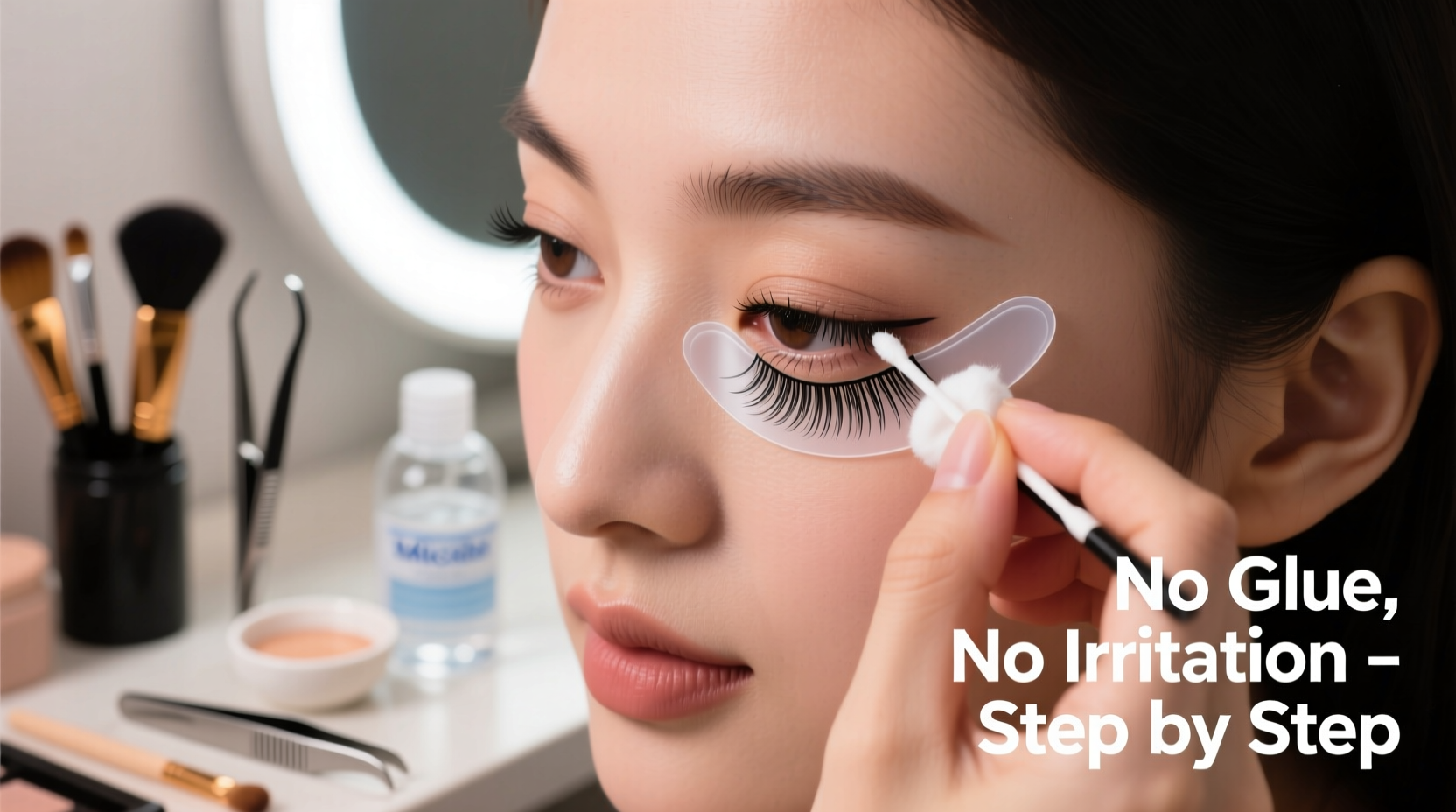
Lash glue irritation isn't just uncomfortable—it can lead to chronic inflammation, lash loss, or even allergic reactions if ignored. The root causes often stem from chemical composition, improper use, or individual sensitivities.
Most traditional lash glues contain formaldehyde-releasing preservatives, latex, or cyanoacrylate—the same compound found in superglue. While effective at bonding, these ingredients can trigger reactions in sensitive individuals, especially when applied too close to the tear line or used excessively.
To minimize risk, always patch test new adhesives. Apply a small amount behind your ear or on your inner forearm and wait 24 hours. If redness, itching, or swelling occurs, avoid using the product near your eyes.
“Many patients come in with periorbital dermatitis caused by repeated exposure to harsh lash adhesives. Switching to hypoallergenic, medical-grade formulas makes a significant difference.” — Dr. Lena Torres, Board-Certified Dermatologist
Choosing the Right False Lashes and Adhesive
Not all falsies are created equal—and neither are their glues. The foundation of a comfortable, invisible application starts with smart product selection.
Look for These Features in False Lashes:
- Invisible band: Transparent or thin-stemmed lashes blend seamlessly with your natural lash line.
- Feather-light weight: Lightweight synthetic or silk fibers reduce strain on your lids and lower the chance of slippage.
- Flexible band: A pliable band conforms to your eye shape, reducing gaps where glue might show.
Adhesive Selection Guide:
| Glue Type | Best For | Risks | Recommended Brands |
|---|---|---|---|
| Latex-based (black) | Durability, dramatic looks | High allergy potential | DUO Classic, Kiss Precision |
| Latex-free (clear or white) | Sensitive eyes, daily wear | Slightly weaker hold | DUO Sensitive, House of Lashes Adhesive |
| Medical-grade (cyanoacrylate-free) | Extreme sensitivity, post-procedure wear | Pricier, limited availability | Secure Medical Adhesive by Ardell |
Clear glues dry transparent and are ideal for avoiding visible residue, but they typically take longer to set. Black glues offer instant drama by mimicking eyeliner but must be applied thinly to prevent a thick, obvious line.
Step-by-Step Application Without Irritation or Visible Bands
Perfect placement begins before the glue touches your lid. Follow this timeline for irritation-free, invisible results.
- Remove contact lenses (if worn): This prevents accidental glue transfer and reduces eye dryness during application.
- Cleanse your eyelids: Use a gentle, oil-free makeup remover to eliminate oils, residue, or leftover mascara. Avoid moisturizers or serums near the lash line—they weaken adhesive grip.
- Trim lashes to fit your eye shape: Hold the lash strip against your lid. If it extends past your outer corner, snip small sections from the outer end—not the inner—to maintain proper flare.
- Pre-curl natural lashes: Use an eyelash curler to lift your own lashes. This creates space for the false lash and prevents a \"stacked\" look.
- Apply a thin layer of glue to the band: Squeeze a rice-grain-sized dot onto the back of your hand. Use tweezers or a toothpick to spread an even, translucent layer along the lash band. Wait 30–45 seconds until tacky—this reduces sting and improves adhesion.
- Position with precision: Using tweezers or a lash applicator, place the center of the lash strip on your natural lash line’s midpoint. Then secure the inner and outer corners. Avoid pressing down too hard—let the glue set naturally.
- Blend with mascara (optional): Once fully dry (after 1–2 minutes), lightly coat both natural and false lashes with a smudge-proof formula to fuse them visually.
- Line the upper waterline (if desired): Use a soft brown or black pencil to fill any tiny gaps between the band and your lash roots. This hides the strip completely.
Avoiding Common Mistakes That Cause Visibility and Discomfort
Even experienced users fall into traps that compromise comfort and aesthetics. Steering clear of these errors transforms your false lash game.
- Using too much glue: Excess adhesive seeps out, dries white, and irritates the eye. A thin, even coat is stronger than a glob.
- Applying on oily lids: Oil breaks down adhesive. Always start with clean, dry eyelids.
- Skipping the tackiness wait: Applying too soon means the glue slides; too late, and it won’t stick. The 30–45 second window is critical.
- Ignoring lash direction: Falsies should follow your natural lash curve. Flipping the inner or outer edge upward creates an unnatural, lifted appearance.
- Reusing dirty lashes: Old glue and bacteria buildup increase infection risk. Clean after each use with micellar water or diluted alcohol.
“Most ‘irritation’ cases I see are due to poor hygiene or overuse of adhesive. The eyelid is one of the thinnest skin areas—we need to treat it with care.” — Dr. Naomi Reed, Oculofacial Specialist
Mini Case Study: From Chronic Irritation to All-Night Comfort
Sophie, a 29-year-old event planner, loved wearing false lashes for client meetings and evening events—but consistently experienced redness, itching, and had to remove them within two hours. She assumed she was simply “allergic to falsies.”
After consulting a dermatologist, she discovered her reaction wasn’t to the lashes themselves, but to the latex-based glue she used daily. Switching to DUO Sensitive Strips (which include latex-free adhesive) and adopting a strict pre-application cleansing routine eliminated her symptoms entirely.
She also began trimming every pair to match her wide-set eyes and waiting for the glue to become tacky before applying. Now, she wears falsies up to 12 hours without discomfort—even during outdoor summer weddings.
Sophie’s turnaround wasn’t about giving up falsies; it was about refining her process.
Checklist: Irritation-Free False Lash Routine
- Remove contacts
- Wash eyelids with oil-free cleanser
- Trim lashes to fit eye width
- Curl natural lashes
- Apply thin glue layer with tool (not finger)
- Wait 30–45 seconds for tackiness
- Place center first, then corners
- Avoid touching eyes until dry
- Check for gaps; line waterline if needed
- Use waterproof mascara to blend (sparingly)
- Carry removal wipes in case of emergency
Frequently Asked Questions
Can I use magnetic lashes instead to avoid glue altogether?
Yes. Magnetic lashes attach via tiny magnets sandwiched between two lash strips, eliminating the need for adhesive. They’re excellent for sensitive eyes, though some find them heavier and less secure for long wear. Ensure the magnets don’t pinch your natural lashes during application.
Why do my eyes water when I apply false lashes?
Watering can result from fumes (especially from strong glues), improper placement too close to the tear duct, or minor irritation. Work in a well-ventilated area, avoid inner corner overflow, and switch to a low-fume, clear adhesive if the problem persists.
How do I remove false lashes without damaging my natural ones?
Soak a cotton pad in oil-free micellar water or specialized lash remover. Hold it over your closed eye for 20–30 seconds to dissolve the glue. Gently slide the lash off from the outer corner—never pull downward. Clean the band afterward for reuse.
Expert Tips for Long-Term Lash Health
Repeated false lash use shouldn’t come at the cost of your natural lashes. Protect your lash line with these habits:
- Give your eyes rest days: Avoid wearing falsies more than 4–5 days a week to let follicles breathe.
- Condition natural lashes: Apply a peptide-rich lash serum nightly to strengthen roots and prevent fallout.
- Replace old glue: Most adhesives expire after 6 months. Old glue loses elasticity and harbors bacteria.
- Store lashes properly: Keep them in their original tray to maintain shape and cleanliness.
Conclusion
Flawless false lashes aren’t reserved for makeup artists or those with ironclad tolerance. By selecting the right products, respecting your skin’s sensitivity, and perfecting your technique, you can enjoy bold, beautiful eyes without redness, discomfort, or telltale strips.
The secret isn’t hiding the fact that you’re wearing falsies—it’s making them indistinguishable from naturally lush lashes. With patience and practice, irritation-free, invisible application becomes second nature.




 浙公网安备
33010002000092号
浙公网安备
33010002000092号 浙B2-20120091-4
Comments
No comments yet. Why don't you start the discussion?