
Books are more than just reading material—they're personal artifacts, reflections of taste, and powerful design elements in any room. Whether you have a single bookshelf in your living room or an entire home library, the way you organize your books impacts both usability and aesthetics. A well-arranged shelf invites engagement, makes finding titles effortless, and elevates your interior decor. The challenge lies in balancing visual appeal with functionality. Too much emphasis on style can bury your favorite novel under a pile of decorative objects; too little attention to order turns your shelves into cluttered storage units.
The ideal book arrangement is intuitive, inviting, and sustainable. It allows you to locate a book at a glance while creating a curated display that reflects your personality. This guide explores proven methods for organizing your collection so it’s as easy to use as it is beautiful to look at.
Assess Your Collection and Space
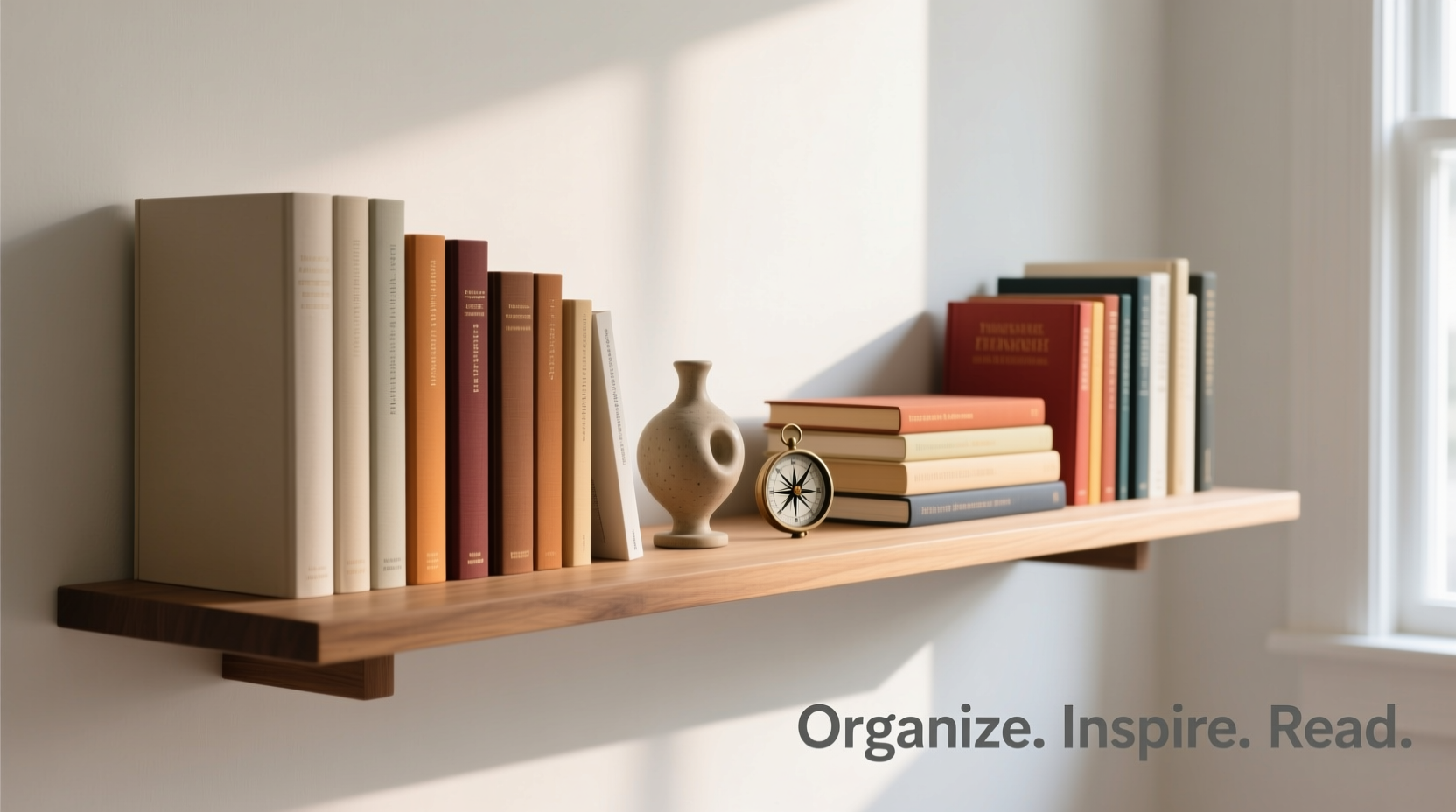
Before placing a single book on a shelf, take stock of what you own and the space available. Begin by removing all books from your shelves. Sort them into categories: fiction, non-fiction, reference, coffee table, travel, cookbooks, etc. This process reveals patterns in size, color, and usage frequency.
Next, evaluate your shelving unit. Consider its height, depth, number of shelves, and location. Is it in a high-traffic area? Is lighting sufficient? Will children access it? These factors influence how you’ll organize and display your books.
Measure the dimensions of your tallest and largest books. Oversized art books may require horizontal stacking or dedicated lower shelves. Thin paperbacks can be grouped together for visual balance. Understanding your inventory and constraints prevents overcrowding and ensures long-term usability.
Choose an Organizing System That Works for You
There is no universal \"best\" way to sort books. What matters is choosing a system that aligns with how you use them. Some readers prioritize alphabetical order; others prefer thematic grouping. The key is consistency within your chosen method.
Here are four widely used organizational systems, each suited to different lifestyles and preferences:
- By Genre or Subject: Group fiction, biographies, history, science, and self-help into distinct sections. Ideal for readers who browse by interest.
- Alphabetically by Author: Offers maximum retrieval efficiency. Best for large collections where quick access is essential.
- By Color: Creates a striking visual effect, often seen in modern interiors. Works well in living rooms or media spaces where aesthetics matter most.
- Chronologically or by Series: Useful for complete works (e.g., Shakespeare), multi-volume sets, or series like Harry Potter, where reading order matters.
You don’t need to stick to one system across all shelves. Mix approaches based on function. For example, keep frequently used cookbooks sorted by cuisine type on accessible shelves, while displaying hardcover classics color-coordinated in a formal study.
“Organization isn’t about perfection—it’s about creating a system that supports your habits.” — Sarah Lin, Interior Organizer and Author of *Calm Spaces*
Design Principles for Visually Appealing Shelves
A beautifully arranged shelf functions like a gallery wall: balanced, layered, and thoughtfully composed. Apply these design principles to enhance visual harmony without sacrificing accessibility.
- Vary Orientation: Alternate between vertical and horizontal stacks. Laying a few books flat adds dimension and creates platforms for small decor items like plants or framed photos.
- Create Focal Points: Use standout volumes—such as bold art books or leather-bound editions—as anchors. Place them symmetrically or at eye level to draw attention.
- Use Bookends Wisely: Choose minimalist metal or sculptural bookends that complement your decor. Avoid oversized or novelty styles that dominate the shelf.
- Incorporate Negative Space: Leave some breathing room between groupings. Overfilled shelves feel chaotic and make individual titles harder to identify.
- Layer with Objects: Introduce vases, candles, or artwork sparingly—no more than one decorative item per shelf—to maintain focus on the books.
| Design Element | Do | Don't |
|---|---|---|
| Spacing | Leave 1–2 inches between clusters | Cram every inch of shelf space |
| Height Variation | Mix tall and short books intentionally | Group only by exact height |
| Decorative Items | Add one small object per shelf | Stack multiple knick-knacks |
| Color Flow | Transition gradually between hues | Scatter bright colors randomly |
Real Example: A Home Office Transformation
Jamie, a freelance writer in Portland, struggled with a cluttered bookshelf that mixed novels, notebooks, and office supplies. She wanted a professional-looking space but found herself wasting time searching for reference materials. After sorting her collection, she adopted a hybrid approach: lower shelves held frequently used writing guides and industry books alphabetically, while upper shelves displayed fiction organized by color. She added a single ceramic bookend and placed a small succulent atop a stack of photography books.
The result was transformative. Clients noticed the tidy, intentional aesthetic during video calls, and Jamie reported spending 70% less time looking for resources. “It feels like my workspace finally supports me,” she said. “I actually want to spend time there now.”
Ensure Easy Access with Smart Layouts
No matter how beautiful your shelves look, they fail if you can’t easily reach what you need. Prioritize ergonomics and usage patterns when arranging your books.
Follow this step-by-step layout strategy:
- Map Usage Frequency: Identify which books you access daily, weekly, or rarely. Keep daily-use titles at eye and waist level—the most accessible zones.
- Zone Your Shelves: Divide shelves into functional areas. Bottom shelves suit heavy or oversized books. Top shelves work for display-only or archival items.
- Face Out Key Titles: Rotate select spines outward to highlight favorites or frequently referenced works. This mimics bookstore displays and increases visibility.
- Use Stackable Trays or Boxes: For small paperbacks or magazines, consider fabric bins or low trays that pull out like drawers.
- Label Sections (Optional): If you have a large or shared collection, discreet labels (on small tags or adhesive strips) help others return books correctly.
For households with children, place picture books on lower shelves in open baskets or upright slots so kids can independently choose and return them. Adults benefit from similar logic—reduce friction by minimizing steps required to retrieve and reshelve.
Checklist: How to Arrange Books for Style and Function
Use this checklist to implement a balanced bookshelf system in under an hour:
- ☐ Remove all books from shelves
- ☐ Sort by genre, author, or subject (choose one primary system)
- ☐ Discard or donate unread or outdated titles
- ☐ Group books by size to prevent tilting and instability
- ☐ Decide on a color scheme or focal point for visual cohesion
- ☐ Place most-used books at eye level
- ☐ Alternate vertical and horizontal stacks for texture
- ☐ Add one decorative object per shelf (optional)
- ☐ Install bookends to secure arrangements
- ☐ Step back and assess balance—adjust until visually pleasing
Frequently Asked Questions
Should I organize books by color or by category?
It depends on your priorities. If you value quick access and logical navigation, categorization by genre or author is more functional. If your shelf is primarily decorative—such as in a living room or entryway—color coordination offers a clean, artistic look. Many people use a hybrid: category-based sorting with subtle color grouping within sections.
How do I prevent books from leaning or falling over?
Use sturdy bookends and avoid mixing drastically different book heights in one section. Group similar-sized books together and ensure shelves are level. For lightweight paperbacks, place them behind larger hardcovers or use a small tray to contain them.
Can I mix books with other items on the same shelf?
Yes, but with restraint. Combine books with objects like plants, photo frames, or sculptures to add personality, but limit decor to 20% of shelf space. Overcrowding distracts from your collection and reduces usability. Always ensure books remain the focal point.
Final Thoughts: Create a Shelf That Serves and Inspires
Arranging books on a shelf should never be an exercise in rigid rules or fleeting trends. The most effective systems blend personal meaning with practical structure. When done well, your bookshelf becomes more than furniture—it becomes a reflection of your intellectual journey, a tool for daily life, and a centerpiece of thoughtful design.
Start small. Reorganize one shelf using both aesthetic and functional criteria. Notice how it feels to interact with it. Does it make finding books easier? Does it bring you joy when you walk by? Refine your approach over time. Remember, a living collection evolves—so should its display.




 浙公网安备
33010002000092号
浙公网安备
33010002000092号 浙B2-20120091-4
Comments
No comments yet. Why don't you start the discussion?