
Floating shelves have become a staple in modern interior design—not just for their space-saving appeal, but for the clean, minimalist aesthetic they bring to any room. When styled well, they transform from mere storage into a curated gallery of your personality, interests, and taste. Books are often the centerpiece of these displays, but stacking them haphazardly can disrupt the harmony of a space. Achieving visual balance isn’t about perfection; it’s about creating rhythm, contrast, and cohesion that feels intentional. Whether you’re arranging a single shelf or an entire wall unit, understanding the principles of visual weight, alignment, and composition will elevate your display from cluttered to captivating.
Understanding Visual Balance in Shelf Styling
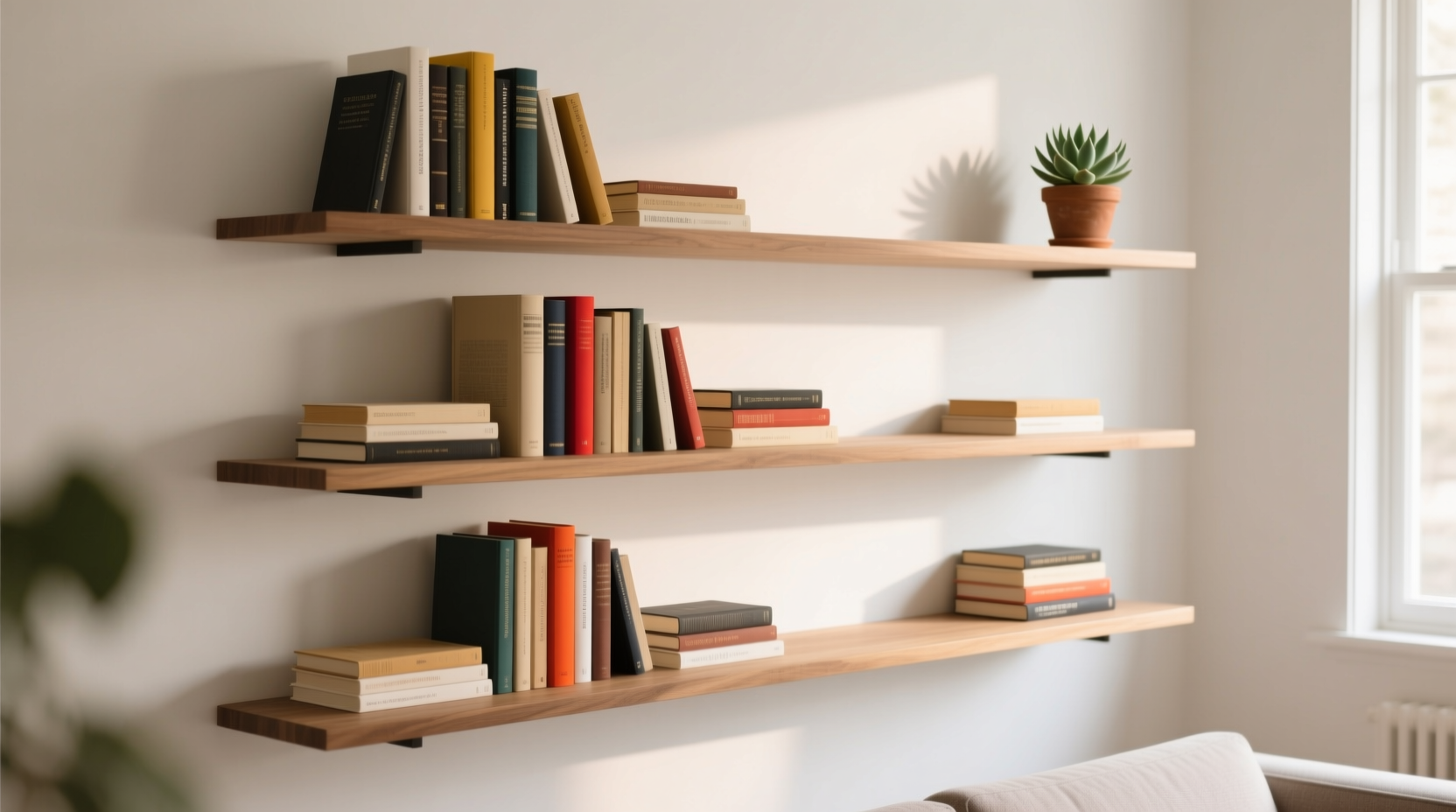
Visual balance refers to how elements are distributed across a space so that no one side feels heavier or more dominant than the other. In the context of floating shelves, this means arranging books and objects so the eye moves naturally without being pulled too hard in one direction. There are three main types of visual balance: symmetrical, asymmetrical, and radial. While radial is less common on linear shelves, symmetrical and asymmetrical arrangements are both effective—depending on your design goals.
Symmetrical balance involves mirroring items on either side of a central point. This creates a formal, orderly look ideal for traditional or minimalist interiors. Asymmetrical balance, on the other hand, uses different objects of varying sizes, colors, and shapes to achieve equilibrium through contrast. This approach feels more dynamic and organic, perfect for eclectic or contemporary spaces.
The key is not to mistake balance for uniformity. A balanced shelf doesn’t need to be identical on both sides—it needs to feel harmonious. For example, a large coffee table book on one end might be balanced by three smaller paperbacks paired with a ceramic vase on the opposite side. The visual \"weight\" is equivalent even though the items differ.
Step-by-Step Guide to Arranging Books for Balance
Creating a visually balanced arrangement takes planning and iteration. Follow this structured process to build a display that feels cohesive and intentional.
- Clear and Sort Your Books: Remove everything from the shelf. Group books by size (height and thickness), color, genre, or frequency of use. This makes it easier to assess what you’re working with.
- Determine a Focal Point: Choose a central anchor—this could be a large art book, a framed photo, or a decorative object. Position it slightly off-center for asymmetry or dead center for symmetry.
- Start with Larger Books as Anchors: Place taller or thicker books toward the ends or near the focal point. These act as visual anchors and prevent the shelf from feeling top-heavy in the middle.
- Vary Orientation for Rhythm: Mix vertical stacks with horizontal layers. Laying a few books flat creates platforms for small decor and breaks up monotony.
- Add Non-Book Elements Strategically: Introduce objects like plants, candles, or sculptures to break up blocks of text and add depth. Keep them proportional to the shelf size.
- Step Back and Adjust: View the shelf from different distances and angles. Make micro-adjustments—swap a blue book for a green one, shift a vase slightly left—to fine-tune the balance.
This method ensures that each decision serves the overall composition rather than individual aesthetics.
Color, Scale, and Spacing: The Design Trinity
Three core elements govern how a shelf is perceived: color, scale, and spacing. Mastering their interplay is essential for visual balance.
Color influences mood and attention. A shelf dominated by dark spines can feel heavy, while pastel covers may get lost. To create balance, distribute colors evenly. For instance, if you have several black-covered books, scatter them rather than grouping them together. Alternatively, embrace color-blocking—arrange books in rainbow order or by tonal family—for a bold, artistic statement that still feels organized.
Scale refers to the size of objects relative to one another and the shelf itself. A massive encyclopedia next to a tiny poetry chapbook can throw off balance unless counterweighted. One solution is to place the small book atop the larger one, creating a layered effect that stabilizes the composition. Similarly, avoid overcrowding narrow shelves with oversized books—they should occupy no more than 70–80% of the shelf length to allow breathing room.
Spacing is often overlooked but critical. Consistent gaps between objects guide the eye smoothly across the shelf. Aim for 1–2 inches between groupings. Too much space feels sparse; too little feels chaotic. Use negative space intentionally—leave a small section empty to draw attention to a standout item.
| Design Element | Do | Avoid |
|---|---|---|
| Color | Distribute bold colors evenly; use neutral backs to ground bright spines | Clustering all dark or all light books on one side |
| Scale | Mix tall and short items; layer small books on larger ones | Placing the largest book at one end with nothing to counterbalance it |
| Spacing | Leave 1–2 inch gaps between clusters; use empty space purposefully | Cramming every inch or leaving random isolated items |
Real Example: Balancing a Living Room Bookshelf
Consider Sarah, who installed two floating shelves above her sofa. Her initial attempt featured all books standing upright, sorted alphabetically. The result felt rigid and uninviting. After reassessing, she followed a new strategy.
She began by selecting a wide-format photography book on travel as her focal point, placing it horizontally in the center of the upper shelf. On either side, she arranged novels vertically, alternating between dark and light covers to create rhythm. She stacked two smaller books flat beneath a potted succulent on the right, balancing it with a brass candleholder on the left. On the lower shelf, she grouped coffee table books by color family—earth tones on one end, jewel tones on the other—with a vintage camera placed asymmetrically to add character.
The transformation was immediate. The shelves now drew compliments for their curated, magazine-worthy appearance. More importantly, they reflected Sarah’s love of travel and design without looking staged. Her secret? She didn’t aim for perfection—she aimed for intentionality.
“Styling shelves isn’t about hiding your life—it’s about highlighting it with clarity and calm.” — Naomi Chen, Interior Stylist & Author of *Curated Spaces*
Tips for Maintaining Long-Term Balance
Even the most thoughtfully arranged shelf can deteriorate over time as books are borrowed, replaced, or added. To maintain visual balance, adopt a few simple habits.
- Reserve a “holding zone” on a less visible shelf or nearby surface for books you’re actively reading. This prevents temporary disruption of your main display.
- Reassess your arrangement seasonally. Swap out heavier winter reads for lighter summer titles, adjusting decor accordingly.
- Photograph your ideal setup. This visual reference makes re-styling faster after cleaning or rearranging.
- Limit additions to one new object per month. This prevents clutter and forces mindful curation.
- Dust regularly. A clean shelf maintains its impact—dirt and smudges distract the eye and dull colors.
Checklist: Creating a Balanced Book Display
Use this checklist before styling or refreshing your floating shelves:
- ☐ Clear all items from the shelf
- ☐ Sort books by size, color, or theme
- ☐ Identify a focal point or anchor object
- ☐ Place larger/thicker books at strategic points for balance
- ☐ Mix vertical and horizontal book placements
- ☐ Add 1–3 non-book decorative items (vase, plant, frame)
- ☐ Ensure even visual weight across the shelf
- ☐ Leave intentional negative space
- ☐ Step back and view from multiple distances
- ☐ Take a photo for future reference
Frequently Asked Questions
Should all books face the same direction?
No. Uniform orientation can make a shelf look like a storage unit rather than a styled display. Mixing vertical and horizontal placements adds dimension and interest. Just ensure the variation follows a pattern or purpose—random flipping can appear messy.
How do I balance a shelf with mostly small books?
Small books can be grouped tightly into neat stacks or laid flat to form a base for taller decor. Consider using a bookend with visual weight—a metallic sculpture or thick ceramic piece—to anchor the arrangement. Alternatively, pair them with a single large object on the opposite side to create counterbalance.
Can I include frequently used books in a styled shelf?
Yes, but selectively. Integrate one or two favorites that also contribute to the aesthetic—either through cover design or sentimental value. For high-use books, consider dedicating a separate functional shelf below or beside the styled one to preserve the display’s integrity.
Conclusion: Turn Shelves Into Statements
Arranging books on floating shelves for visual balance is both an art and a practice in mindfulness. It’s not about achieving a Pinterest-perfect image, but about crafting a space that reflects your identity while maintaining peace and order. By applying principles of symmetry, color distribution, and thoughtful spacing, you transform utilitarian storage into a narrative display—one that welcomes conversation and calms the eye.
Your shelves don’t need to be full to be impactful. Sometimes, the most powerful statement is made with fewer items, carefully chosen and precisely placed. Start with one shelf. Experiment. Step back. Adjust. Let it evolve. Over time, you’ll develop an instinct for what feels right.




 浙公网安备
33010002000092号
浙公网安备
33010002000092号 浙B2-20120091-4
Comments
No comments yet. Why don't you start the discussion?