
Inflatable holiday and event decorations bring instant charm and visibility to any outdoor or indoor display. From towering snowmen to giant reindeer, their bold shapes command attention—especially at night. But when it comes to lighting them up, many people make the mistake of stapling, taping, or puncturing the seams, which can lead to slow leaks, irreparable damage, and shortened lifespans. The good news: there are smart, effective ways to illuminate inflatables without compromising their structural integrity.
The key is understanding both the materials used in inflatables and the physics of light diffusion. Most inflatables are made from lightweight, flexible vinyl or polyester fabrics sealed with high-frequency welding. These seams are strong but vulnerable to punctures. Once compromised, even a tiny hole can grow over time due to wind pressure and temperature changes. This guide covers proven techniques that protect your investment while delivering maximum visual impact.
Why Avoid Puncturing Inflatable Seams?
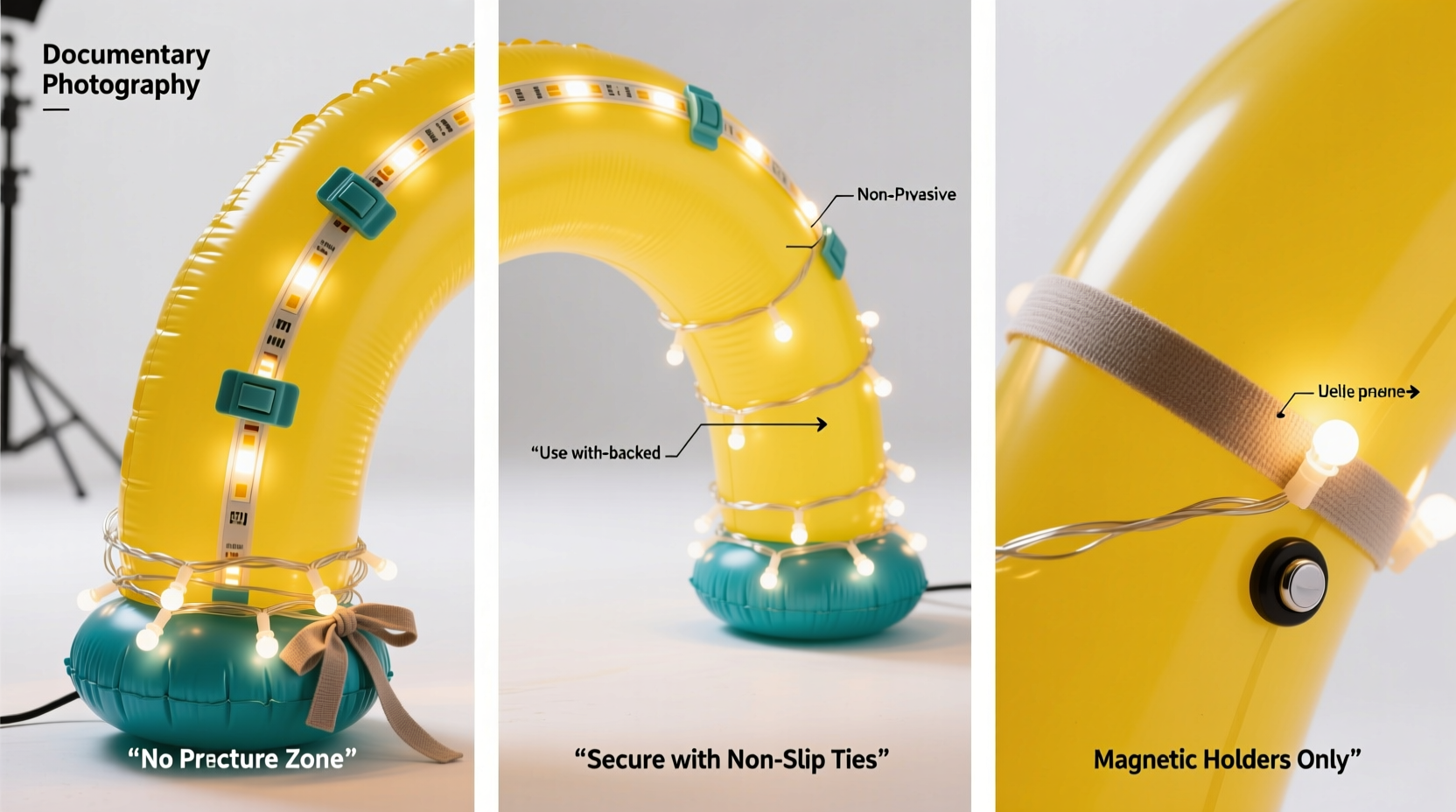
Puncturing an inflatable decoration—even slightly—can have long-term consequences. Unlike fabric tents or tarps, inflatables rely on continuous air pressure to maintain shape. A small hole near a seam may seem negligible at first, but constant inflation and deflation cycles cause stress in that area, leading to cracks or tears. Over time, this can result in:
- Reduced inflation efficiency (longer pump run times)
- Uneven shape or partial collapse
- Increased energy use and noise from the blower
- Premature failure of the unit
Manufacturers often void warranties if damage results from user modifications like drilling or nailing. Additionally, exposed wiring from makeshift attachments poses tripping hazards or electrical risks, especially in wet conditions.
“Never compromise the integrity of a welded seam for temporary lighting. There are always safer alternatives.” — Daniel Ruiz, Outdoor Display Engineer, HolidayTech Systems
Safe & Effective Methods to Attach Lights
The goal is secure illumination that enhances visibility without direct contact with vulnerable areas. Below are five professional-grade strategies tested across residential and commercial displays.
1. Use Mesh Net Lights with External Frame Support
Net lights—pre-strung strands arranged in a grid—are ideal for draping over large inflatables. Instead of anchoring them directly to the surface, build a lightweight external frame using PVC pipes or fiberglass rods. Assemble a hoop or cage slightly larger than the inflatable, drape the net lights over it, then position the entire assembly around the decoration.
This method allows full coverage while keeping all hardware away from the vinyl surface. It also makes storage easier since the frame can be disassembled and reused annually.
2. Employ Weighted Clip Systems with Foam Padding
Specialized decorative clips with soft rubber grips and weighted bases can hold string lights along the base or sides of an inflatable. Place thin foam pads (like mousepad scraps or yoga mat pieces) between the clip and the surface to prevent abrasion.
These clips work best on vertical surfaces where gravity helps maintain tension. Choose models rated for outdoor use and ensure they’re designed for plastic/vinyl protection. Avoid metal spring clamps—they can pinch and weaken material over time.
3. Utilize Magnetic Light Holders (for Metal Supports)
If your inflatable uses a metal support rod or ground stake system, magnetic light holders offer a clean, no-contact solution. Attach small, weatherproof LED puck lights or strip segments to magnetic bases and position them strategically around the base or adjacent structures.
While not suitable for all inflatables, this method excels in commercial setups where metal infrastructure is already present. The lights reflect upward, creating a halo effect that outlines the figure without touching it.
4. Apply Adhesive Hooks Designed for Delicate Surfaces
Use removable adhesive hooks rated for outdoor use, such as those made with 3M Command™ technology. These hooks bond securely to smooth vinyl without residue and release cleanly when removed.
To minimize risk:
- Clean the surface with isopropyl alcohol before application
- Avoid placing hooks directly over seams or weld lines
- Limited to lightweight mini lights (not heavy C7/C9 bulbs)
Hang strings loosely between hooks, allowing some slack so wind movement doesn’t pull on the adhesive.
5. Illuminate from Within (When Possible)
Some modern inflatables feature internal lighting compartments or translucent panels. If your model supports it, insert battery-operated fairy lights or fiber-optic strands through the air intake vent (with proper mesh covering to prevent debris entry).
Ensure any inserted lights are cool-running LEDs only. Incandescent bulbs generate heat that can degrade vinyl over time. Also, never block airflow—the blower must circulate freely to prevent overheating.
Step-by-Step Guide: Installing External Frame Lighting Safely
Follow this timeline to install lights using a PVC frame method—ideal for large yard inflatables like Santa figures or snow globes.
- Day 1 – Measure and Plan: Measure the height and width of your inflatable. Add 12–18 inches to each dimension for clearance.
- Day 1 – Gather Materials:
- ½-inch diameter PVC pipe (flexible enough to bend into arcs)
- PVC connectors (T-joints, elbows, cross fittings)
- Weatherproof net lights or string lights
- UV-resistant zip ties
- Stakes or sandbags for anchoring
- Day 2 – Build the Frame: Cut PVC into curved arches and connect with joints to form a dome or rectangular cage. Ensure stability by adding cross-braces at the base.
- Day 3 – Install Lights on Frame: Drape net lights over the frame or zip-tie string lights evenly spaced. Test connections before final placement.
- Day 4 – Position Assembly: Place the inflated unit inside the frame. Adjust light positioning to eliminate dark spots.
- Ongoing – Monitor Conditions: Check after strong winds or rain. Re-tighten zip ties if needed; inspect for wear monthly.
Do’s and Don’ts: Attaching Lights to Inflatables
| Do | Don't |
|---|---|
| Use soft, flexible ties like cloth ribbons or silicone straps to gently secure light cords to stable anchor points away from seams. | Nail, staple, or screw into any part of the inflatable—this creates irreversible damage. |
| Choose LED lights for low heat output and energy efficiency, reducing fire and melt risks. | Use hot-running bulbs like incandescent or halogen, which can warp vinyl over time. |
| Inspect lights annually for frayed wires, cracked insulation, or loose connections before installation. | Leave damaged cords in place—even minor faults increase shock and fire hazards outdoors. |
| Anchor lights independently using stakes or weights rather than relying on the inflatable for support. | Wrap cords tightly around the inflatable body—tension causes friction wear and seam stress. |
Real Example: A Home Display That Lasted Five Seasons
Mark T., a homeowner in Minnesota, has maintained a 12-foot inflatable reindeer display every winter since 2019. Rather than attaching lights directly, he built a semi-circular PVC frame using schedule-40 piping and secured icicle lights along the top curve with nylon zip ties. He anchors the frame with rebar stakes driven into the ground and positions the reindeer just inside the arc.
“The lights hover above and beside the reindeer,” Mark explains. “At night, it looks like it's glowing from within. I’ve never had a leak, and the blower still runs quietly.” His display has become a neighborhood favorite—and more importantly, the reindeer shows no signs of wear despite harsh winters.
His total cost was under $75, mostly for the initial frame and lights. Now, he simply unpacks and reassembles each season, saving hours compared to previous years when he repaired punctures weekly.
Checklist: Safe Light Installation on Inflatables
Before powering up your display, go through this checklist to ensure safety and longevity:
- ✅ Confirm no staples, nails, or screws are piercing the inflatable
- ✅ Verify all lights are LED and cool to the touch after 10 minutes of operation
- ✅ Inspect extension cords for cracks, kinks, or exposed copper
- ✅ Ensure GFCI protection on all outdoor circuits
- ✅ Double-check that lights are anchored separately from the inflatable
- ✅ Clean attachment surfaces before applying adhesive hooks
- ✅ Test the blower runs unobstructed with lights installed
- ✅ Set a monthly reminder to inspect for wear or shifting components
Frequently Asked Questions
Can I use tape to attach string lights to my inflatable?
No—most tapes, including duct tape and packing tape, lose adhesion quickly in cold or wet weather. Worse, they leave sticky residues that attract dirt and can degrade vinyl coatings over time. If you must use an adhesive, opt for outdoor-rated removable hooks instead.
Will internal lights void my warranty?
It depends on the manufacturer. Some brands explicitly prohibit inserting foreign objects through vents. Always consult the owner’s manual first. When in doubt, use external lighting methods to stay compliant.
How many lights do I need for a large inflatable?
A general rule is 100 mini LED lights per foot of height. For example, a 6-foot snowman would look best with at least 600 lights. However, net lights covering the front plane often provide better coverage than linear strings. Prioritize even spacing over sheer quantity.
Conclusion: Light Up Smart, Not Hard
Attaching lights to inflatable decorations doesn’t require tools that pierce or permanent modifications. With thoughtful planning and the right accessories, you can achieve stunning nighttime effects while preserving the durability of your display. Whether you choose a DIY frame, magnetic mounts, or strategic adhesive hooks, the principle remains the same: keep hardware off the seams and heat away from the surface.
Your inflatables are designed to impress—not to serve as mounting boards for electrical fixtures. By adopting non-invasive lighting techniques, you extend their usable life, reduce maintenance headaches, and create a safer environment for family and neighbors alike.




 浙公网安备
33010002000092号
浙公网安备
33010002000092号 浙B2-20120091-4
Comments
No comments yet. Why don't you start the discussion?