
Displaying plush anime characters in natural settings—such as on tree branches indoors or in garden installations—has become a popular way for fans to bring their favorite characters to life. Whether for photography, seasonal decor, or immersive room setups, positioning these soft figures on branches adds depth and whimsy. However, one persistent challenge arises: how to secure them safely without distorting their shape or bending delicate limbs.
Many traditional attachment methods rely on clips, wire, or direct pressure, which can stretch seams, misalign joints, or leave permanent creases. For collectors who value both presentation and preservation, this creates a dilemma. The solution lies not in stronger fasteners, but in smarter, gentler techniques that distribute weight and leverage support without compromising the plush’s integrity.
This guide explores proven, non-invasive strategies to mount lightweight plush anime figures on branches while maintaining their original form. From material selection to structural anchoring, each method prioritizes minimal contact and maximum stability.
Understanding the Challenge: Why Limbs Bend and How to Prevent It
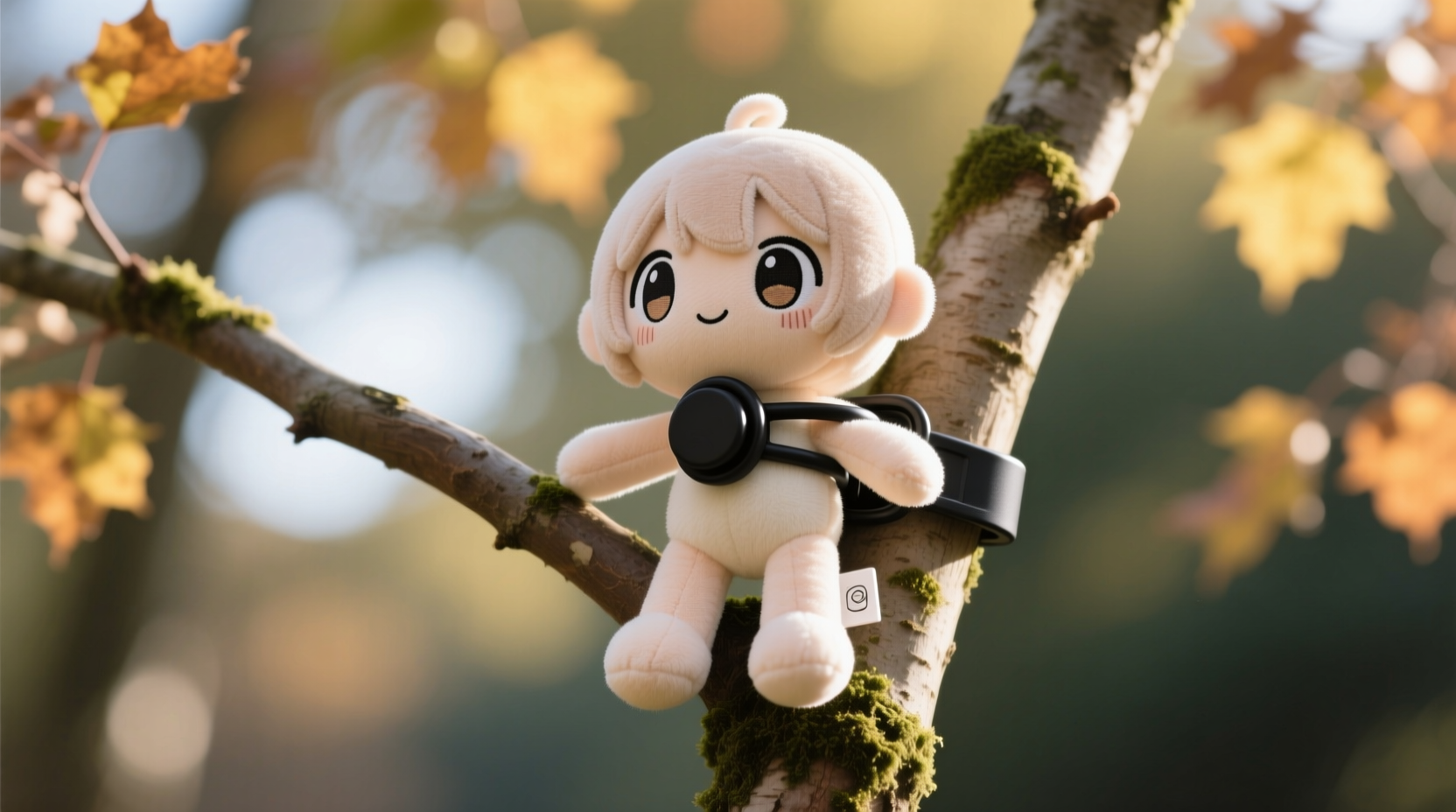
Plush toys, especially those designed with articulated limbs or soft stuffing, are structurally vulnerable when suspended or perched at odd angles. Gravity pulls down on the body, concentrating force on limb joints and shoulders. When a plush is clipped or tied haphazardly to a branch, the resulting torque can:
- Stretch stitching along arm or leg seams
- Cause permanent joint deformation
- Create unsightly bulges or sagging in the torso
- Lead to stuffing displacement over time
The key to avoiding these issues is redistributing mechanical stress away from limbs and onto broader support points. Instead of treating the plush as something to be “hung,” think of it as being “cradled.” This shift in perspective opens up creative possibilities for mounting that prioritize ergonomics over brute-force attachment.
“Preservation begins the moment you decide how to display. A well-supported plush lasts generations; one held by its wrist may never recover.” — Lila Tran, Soft Sculpture Conservator & Display Specialist
Step-by-Step Guide: Secure Attachment Without Damage
Follow this five-phase process to safely mount any lightweight plush anime character (under 500g) on a natural or artificial branch.
- Assess the plush’s structure: Identify sturdy areas such as the base of the torso, back panel, or seat area. Avoid relying on arms, legs, or ears for support.
- Select an appropriate branch: Choose a forked or gently curved section where the plush can sit naturally. Diameter should allow for snug fit without squeezing.
- Prepare a hidden support platform: Use thin, flexible plastic (like from a report cover) cut into a U-shape to slide under the plush’s bottom and wrap slightly around the branch. This creates a shelf effect.
- Anchor discreetly: Attach clear fishing line or micro Velcro dots from the back of the plush to the underside of the branch. Keep tension low—just enough to prevent forward tipping.
- Test and adjust: Gently nudge the plush to simulate wind or vibration. Ensure no part bears excessive load. Re-position if limbs begin to droop.
Best Materials for Invisible Support
Success depends heavily on using the right tools. The following materials offer strength without visibility or rigidity:
| Material | Use Case | Why It Works |
|---|---|---|
| Clear fishing line (2–5 lb test) | Tethering back or sides to branch | Invisible from a distance, flexible, minimal surface contact |
| Magnetic tape (self-adhesive) | Pairing internal/external magnets across branch and plush | No penetration, adjustable hold, easily repositioned |
| Foam-backed fabric dots | Non-slip base between plush and bark | Prevents sliding without adhesives or clamping |
| Flexible plastic strips (e.g., binder inserts) | Under-seat support brackets | Conforms to shape, supports weight evenly |
| Micro hook-and-loop patches (Velcro Dots) | Securing base to flat branch tops | Reusable, low-profile, distributes force |
Avoid metal wires, clothespins, or rubber bands—these concentrate pressure and mar fabric. Even strong adhesives like hot glue can degrade polyester fibers over time, leading to brittleness and tearing.
Real Example: Mounting a Sailor Moon Plush on a Birch Branch Display
Sophie, a collector in Vancouver, wanted to create a moonlit forest scene featuring her 30cm Usagi (Sailor Moon) plush seated on a birch branch mounted to her bedroom wall. Initial attempts using alligator clips bent the plush’s arms outward, giving her an unnatural posture.
She revised her approach using the cradle method:
- Cut a curved strip of transparent plastic to match the contour of the branch.
- Slid it beneath Usagi’s skirt, letting it rest on the branch and support her lower back.
- Used two small pieces of foam-backed fabric dot on the back of the plush and the branch to prevent backward tilt.
- Ran nearly invisible fishing line from the top of the plush’s ponytail holder to a discreet anchor point above the branch, eliminating forward lean.
The result was a lifelike, balanced pose that preserved the plush’s original shape. After three months, no seam wear or limb deformation was observed. Sophie now uses this system for rotating seasonal displays.
Checklist: Safe Plush-to-Branch Attachment
Before finalizing your display, go through this checklist to ensure long-term safety and visual appeal:
- ✅ Confirm plush weighs less than 500g (heavier items require custom armatures)
- ✅ Choose a stable branch location with natural contours for seating
- ✅ Use only non-abrasive, non-adhesive support materials
- ✅ Distribute weight across torso or base—not limbs
- ✅ Test stability with light shaking or air movement (e.g., fan)
- ✅ Inspect weekly for signs of strain, especially after temperature/humidity changes
- ✅ Remove during prolonged absence or high-traffic events
Do’s and Don’ts: Common Mistakes and Better Alternatives
| Action | Why It’s Harmful | Better Alternative |
|---|---|---|
| Clipping plush by the arm or leg | Causes joint stretching and seam splitting | Use a cradle support under the seat or back |
| Using thick string or twine | Leaves deep grooves and restricts movement | Switch to thin fishing line or elastic-free ribbon |
| Hot-gluing directly to plush | Melts fabric and traps moisture | Use removable adhesive putty for temporary holds |
| Mounting in direct sunlight | Fades colors and weakens fibers over time | Choose shaded or UV-filtered locations |
| Ignoring humidity levels | Promotes mildew in stuffed interiors | Display in climate-controlled spaces; add silica gel nearby |
One often-overlooked factor is micro-movement. Even slight vibrations—from footsteps or HVAC systems—can cause friction between plush and branch over time. To mitigate this, place a barrier layer such as a narrow strip of soft flannel or felt between contact points.
FAQ: Common Questions About Plush Display Safety
Can I use magnets to hold my plush in place?
Yes—but cautiously. Small neodymium magnets paired with fabric-covered counterparts can provide secure, invisible holding power. Place one inside a sewn pocket on the plush’s back and another beneath the branch. Never attach magnets directly to fabric, as they can pull threads and create bald spots. Limit use to short-term displays unless magnets are fully encapsulated.
What if my branch is too thin to support a cradle?
For slender or vertical branches, shift from “seated” to “leaning” poses. Position the plush so its back rests against the trunk or a larger limb, then use nearly invisible fishing lines anchored above and below to stabilize. You can also build out the support area using a small wooden disc glued to the branch, painted to match, creating a flat stage for the plush to stand on.
Are there commercial products designed for this?
While no mainstream product targets anime plush specifically, museum-grade display supplies offer excellent solutions. Look for:
- Archival tackets (reusable, residue-free putty)
- Mini display easels with padded cradles
- Conservation-grade Velcro (used in textile exhibits)
These are available through art supply and preservation retailers and are engineered for long-term, damage-free use.
Conclusion: Preserve Form, Enhance Display
Attaching lightweight plush anime characters to branches doesn’t have to mean sacrificing their condition for aesthetics. With thoughtful planning and the right materials, it’s entirely possible to achieve dynamic, engaging displays while keeping every stitch and seam intact. The goal isn’t just to hang a toy—it’s to honor the character’s design and the emotional connection fans hold.
By embracing low-impact supports, distributing weight wisely, and inspecting regularly, collectors can enjoy imaginative arrangements that last for years. Whether crafting a quiet forest shrine or a playful indoor scene, remember that the most beautiful displays are those that respect the object as much as the vision.




 浙公网安备
33010002000092号
浙公网安备
33010002000092号 浙B2-20120091-4
Comments
No comments yet. Why don't you start the discussion?