
Dressing up a pet with a stylish collar can be a joyful way to express their personality—or match your own aesthetic. Many pet owners love adding small charms, beads, or decorative elements to collars for holidays, fashion statements, or special occasions. However, the addition of tiny ornaments introduces real safety concerns, particularly the risk of choking if an item breaks loose. Pets chew, scratch, play roughly, and explore with their mouths, making secure attachment essential.
The goal isn’t to discourage creativity but to promote safe customization. With thoughtful materials, proper techniques, and regular maintenance, you can enhance your pet’s look without compromising their well-being. This guide covers tested strategies for attaching small decorations securely, choosing safe materials, inspecting accessories, and recognizing warning signs before they become emergencies.
Understanding the Risks of Decorative Collar Add-Ons
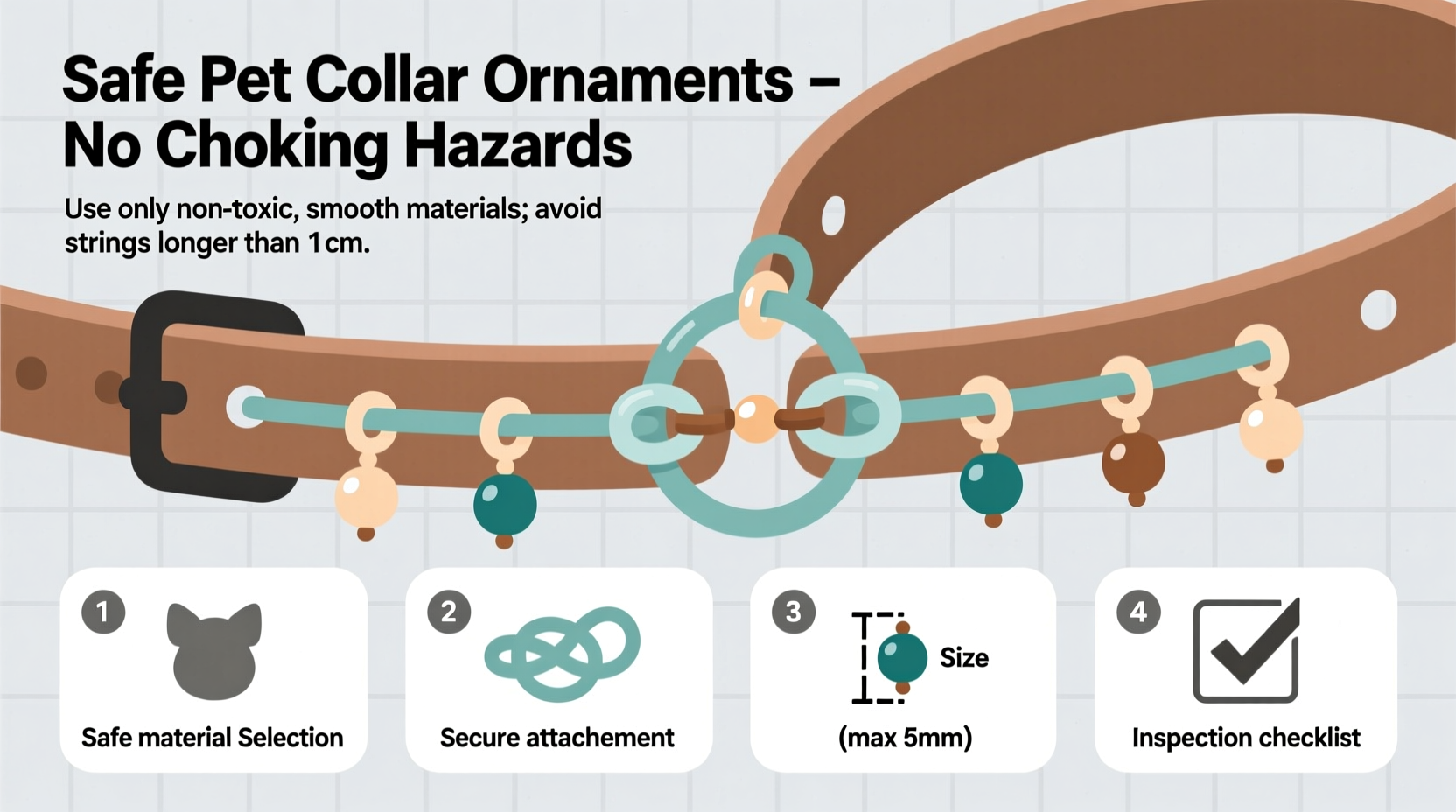
While a glittery charm or miniature holiday bell may seem harmless, size and durability are critical factors when pets are involved. A 2021 report from the American Veterinary Medical Association highlighted that foreign body ingestion accounts for over 12% of emergency veterinary visits in dogs under five years old—and many of these cases involve small household or accessory items.
Tiny ornaments pose three primary dangers:
- Choking: If an ornament detaches, it may be swallowed whole or broken into sharp fragments during chewing.
- Intestinal blockage: Even non-toxic materials like plastic or metal can obstruct digestive tracts if ingested.
- Chemical exposure: Low-quality metals or painted plastics may contain lead, phthalates, or other harmful substances that leach when chewed.
Cats and small dog breeds are especially vulnerable due to their size and natural curiosity. But even large dogs with strong jaws can destroy poorly attached items in minutes.
“Any accessory added to a pet’s collar must pass two tests: Can it withstand active play? And is it safe if accidentally ingested?” — Dr. Lena Patel, DVM, Small Animal Behavior & Safety Consultant
Choosing Safe Materials and Ornament Types
Not all decorations are created equal. The safest ornaments are those designed specifically for pet use, made from non-toxic, durable materials, and sized appropriately to prevent swallowing.
| Material | Safety Rating | Pros | Cons |
|---|---|---|---|
| Stainless Steel (polished) | ★★★★★ | Rust-resistant, durable, non-toxic, easy to clean | Can be heavy if oversized |
| Silicone (food-grade) | ★★★★☆ | Flexible, chew-safe, lightweight, available in fun colors | May degrade under UV light over time |
| Wood (sealed, untreated) | ★★★☆☆ | Natural look, biodegradable, lightweight | Can splinter; not suitable for aggressive chewers |
| Plastic (recycled, BPA-free) | ★★☆☆☆ | Inexpensive, colorful, widely available | Potential for breakage; some contain fillers |
| Painted Metal or Unknown Alloys | ★☆☆☆☆ | Decorative appeal | Risk of toxic coatings, rust, sharp edges |
Avoid anything with loose paint, hollow interiors (which can trap moisture or bacteria), or parts that rattle—indicating internal looseness. Opt for solid, one-piece designs whenever possible.
Step-by-Step: Secure Attachment Methods That Work
Even the safest ornament becomes hazardous if it's not properly secured. Use this six-step process to ensure lasting, reliable attachment:
- Select the right base collar: Choose a collar made from nylon, leather, or biothane with reinforced stitching. Avoid elastic or fabric bands that stretch or fray easily.
- Inspect for attachment points: Look for built-in D-rings, loops, or O-rings. These are stronger than threading directly through collar material.
- Choose secure fasteners: Use miniature stainless steel split rings (like those on keychains) or welded jump rings (common in jewelry-making). Never rely on glue alone.
- Attach via double-loop method: Open the jump ring with pliers, thread it through the collar’s D-ring, then through the ornament’s loop. Close tightly, ensuring no gap remains.
- Test for strength: Pull firmly on the ornament in multiple directions. It should not rotate freely or detach.
- Add a secondary check: For extra security, slip a clear heat-shrink tube over the closed ring joint and apply gentle heat to seal it in place (optional but recommended).
If you're adding multiple items, space them apart to avoid clumping, which increases snagging risk. No single section of the collar should bear more than 5% of your pet’s body weight in added accessories.
Real Example: A Holiday Bell Incident Prevented
Sarah, a poodle owner in Portland, wanted to add a set of tiny silver bells to her dog Milo’s holiday collar. She found charming $3 mini-bells online but noticed they came with thin, open wire loops. Before attaching them, she tugged lightly—and one bell detached instantly.
Instead of using them as-is, Sarah purchased 8mm stainless steel split rings and used chain-nose pliers to reattach each bell securely through the collar’s side D-rings. She also trimmed the original flimsy loops flush with wire cutters to eliminate sharp ends.
During a family gathering, Milo played under tables and brushed against chairs. Two days later, Sarah inspected the collar and found one split ring slightly bent—but still intact. The bell remained securely in place. “If I’d used the original wires,” she said, “that bell would’ve been gone in an hour. Milo loves chewing things he finds on the floor.”
This case underscores the importance of reinforcing mass-produced decorations before trusting them around pets.
Essential Checklist for Safe Ornament Attachment
Before putting a decorated collar on your pet, run through this verification list:
- ✅ Ornament is made from non-toxic, durable material
- ✅ No loose paint, sharp edges, or small detachable parts
- ✅ Attached using metal split or jump rings (not string, tape, or glue)
- ✅ Secured to a strong point on the collar (e.g., D-ring, not fabric)
- ✅ Passes tug test: won’t come off with firm pulling
- ✅ Lightweight enough not to weigh down the collar
- ✅ Inspected weekly for wear, corrosion, or loosening
- ✅ Removed during unsupervised time, sleep, or rough play
This checklist helps turn impulsive decoration into responsible customization.
When and How to Supervise Access
No matter how secure an attachment seems, supervision is non-negotiable during initial use. Follow this timeline for safe introduction:
- Day 1: Put the collar on for 15–30 minutes while you’re fully attentive. Watch for pawing, biting, or attempts to remove it.
- Days 2–3: Extend wear time to 1–2 hours in a controlled environment (e.g., living room, fenced yard).
- Day 4 onward: Allow normal daytime use, but remove the collar at night, during car rides, or when left alone.
- Ongoing: Perform a full inspection every 3–4 days. Replace any worn hardware immediately.
Never let your pet wear a decorated collar overnight or unattended. Even calm animals can get caught on furniture or bedding, leading to panic and potential injury.
Frequently Asked Questions
Can I use hot glue to attach small beads to a collar?
No. Hot glue may seem quick and strong, but it becomes brittle over time and fails under stress or temperature changes. Relying on adhesives alone creates a false sense of security. Always use mechanical fasteners like rings or clasps in combination with—never instead of—physical connectors.
Are charm bracelets safe to repurpose as pet collar decorations?
Generally, no. Human jewelry often contains small links, spring clasps, or dangling pieces that can break off easily. Additionally, many vintage or fashion bracelets use alloys with nickel or cadmium, which are toxic if ingested. Only use items explicitly made for pets or thoroughly vetted for safety.
What should I do if my pet swallows part of a collar ornament?
Remain calm but act quickly. Note the material, size, and shape of the ingested piece. Contact your veterinarian immediately—even if your pet seems fine. Some obstructions take hours to manifest symptoms. Do not induce vomiting unless instructed by a professional.
Final Thoughts: Style Meets Responsibility
Personalizing your pet’s collar can be a delightful form of bonding and expression. But aesthetics must never override safety. By selecting high-quality materials, using proven attachment methods, and maintaining vigilant oversight, you protect your pet while still enjoying creative freedom.
Remember: the best accessory a pet can wear is one that allows them to live comfortably, safely, and joyfully. Every charm, bead, or bell should enhance—not endanger—that experience.




 浙公网安备
33010002000092号
浙公网安备
33010002000092号 浙B2-20120091-4
Comments
No comments yet. Why don't you start the discussion?