
Traveling across time zones often comes with a hidden cost: jet lag. The fatigue, brain fog, and disrupted sleep aren’t just inconveniences—they can derail the first days of your trip or affect work performance after international flights. While many focus on hydration and melatonin, one of the most powerful tools for combating jet lag is surprisingly simple: light. Your body’s internal clock, or circadian rhythm, responds primarily to light cues. By strategically manipulating light exposure in the days before you travel, you can gradually shift your biological clock to align with your destination’s time zone—before you even board the plane.
This method, known as “phase advance” or “phase delay” depending on your direction of travel, is supported by chronobiology research and used by astronauts, pilots, and elite athletes. Unlike medications or supplements, it works with your body’s natural systems rather than overriding them. When done correctly, pre-travel light management can cut jet lag recovery time in half—or eliminate it entirely.
The Science Behind Light and Circadian Rhythms
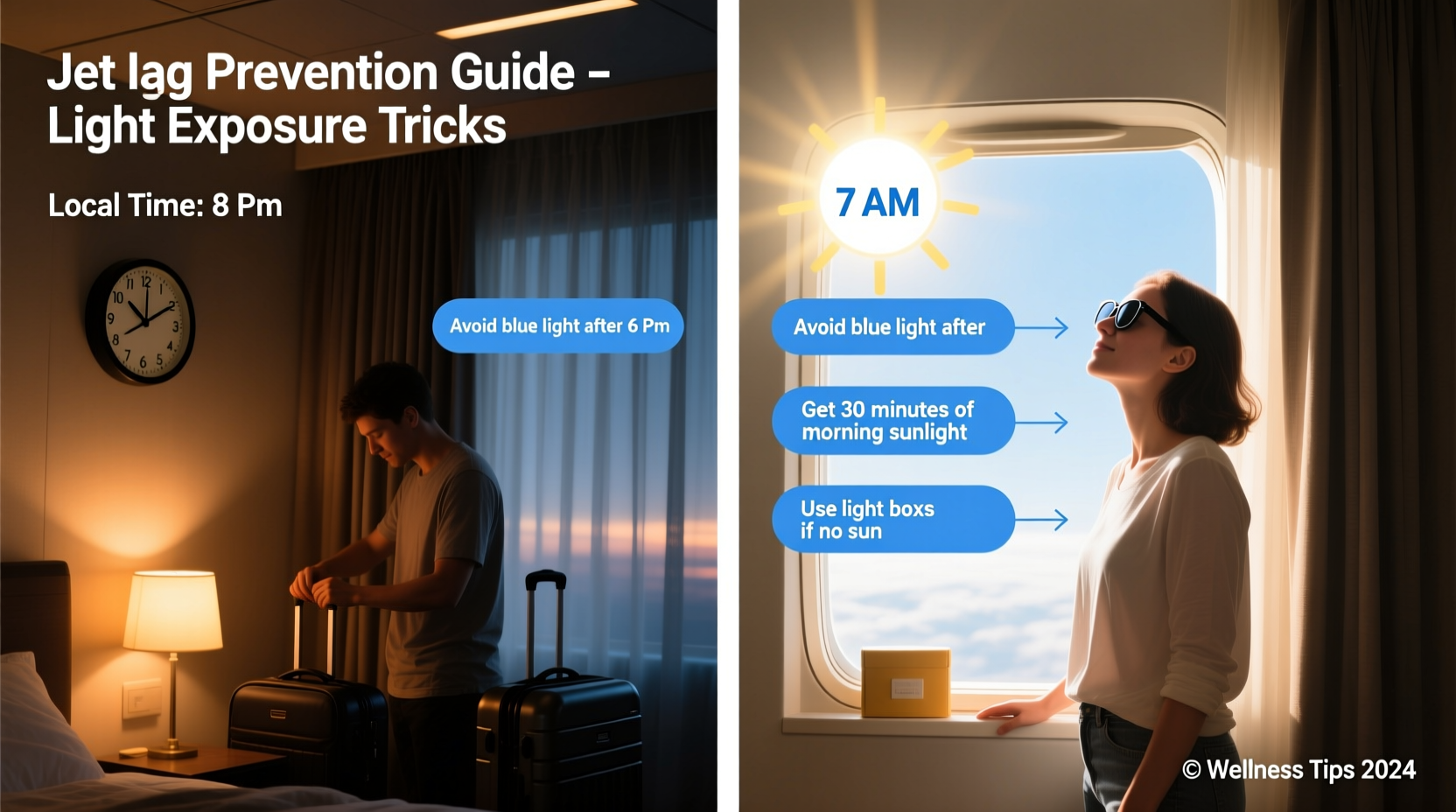
Your circadian rhythm governs not only when you feel sleepy or alert but also influences hormone release, digestion, body temperature, and cognitive performance. This 24-hour internal clock is regulated by the suprachiasmatic nucleus (SCN) in the brain, which uses signals from specialized cells in the eyes that detect light—especially blue-enriched light found in daylight.
When light hits these cells, it suppresses melatonin production, signaling to your body that it’s daytime. Conversely, darkness triggers melatonin release, preparing you for sleep. This system evolved to keep us synchronized with the sun. But rapid air travel disrupts this balance, leaving your body operating on “home time” while your environment runs on “destination time.”
Chronobiologists have long studied how timed light exposure can shift circadian rhythms. A landmark study by Dr. Charles Czeisler at Harvard Medical School demonstrated that controlled light schedules could reset the human biological clock by up to three hours per day. This means if you’re flying from New York to Tokyo—a 13-hour time difference—you could theoretically adjust within five days, simply by managing when you seek or avoid light.
“Light is the most potent environmental cue for resetting the human circadian pacemaker.” — Dr. Charles Czeisler, Harvard Medical School
Direction Matters: East vs. West Travel
The key to effective light-based jet lag prevention lies in understanding whether you need to advance or delay your circadian phase:
- Traveling east (e.g., New York to London): You lose hours. Your body must go to bed and wake up earlier than usual. This requires a phase advance.
- Traveling west (e.g., Los Angeles to Sydney): You gain hours. You’ll need to stay up later and wake up later. This requires a phase delay.
Phase advances are generally harder for humans because our natural circadian period is slightly longer than 24 hours. Most people find it easier to stay up later than to force themselves to fall asleep earlier. Therefore, eastward travel typically causes more severe jet lag and requires more careful preparation.
Step-by-Step Guide: Pre-Departure Light Adjustment Timeline
Below is a science-backed, four-day protocol to help realign your circadian rhythm based on your destination. This plan assumes morning light advances your clock and evening light delays it.
- Day -4 (Four Days Before Departure):
- If traveling east: Expose yourself to bright light (natural sunlight or artificial light box) for 30–60 minutes immediately upon waking. Avoid bright light in the evening.
- If traveling west: Delay your light exposure. Stay indoors or wear blue-blocking glasses in the morning. Seek bright light in the late afternoon or early evening.
- Day -3:
- Eastbound: Move wake-up time 30–60 minutes earlier. Get morning light at this new time. Keep evenings dim.
- Westbound: Push bedtime and wake time 30–60 minutes later. Use bright light 1–2 hours before your planned sunset.
- Day -2:
- Eastbound: Repeat morning light exposure. Consider using a dawn simulator alarm clock to ease early waking.
- Westbound: Continue delaying light exposure. Use indoor lighting to simulate extended daylight.
- Day -1 (Day Before Flight):
- Align your entire schedule—meals, sleep, and light exposure—as closely as possible to your destination’s time zone.
- For eastward flights: Be in bed by your destination’s bedtime, even if it feels early.
- For westward flights: Stay awake until your destination’s bedtime, using light to remain alert.
During the flight, continue reinforcing this schedule. Use an eye mask and earplugs to sleep if it’s nighttime at your destination. If it’s daytime there, stay awake and expose yourself to cabin light or use a personal light therapy device.
Optimizing Light Exposure: Practical Tips and Tools
Natural sunlight is the most effective source of circadian regulation, but modern travelers can leverage technology when outdoor access is limited.
| Light Source | Best For | Duration | Tips |
|---|---|---|---|
| Morning Sunlight | Phase Advance (Eastbound) | 30–60 min | Go outside within 30 minutes of waking. Face the sun without staring directly. |
| Evening Sunlight | Phase Delay (Westbound) | 60 min | Take a walk 2–3 hours before local sunset. |
| Light Therapy Box (10,000 lux) | All scenarios | 20–45 min | Use within 1 hour of waking. Sit 16–24 inches away, eyes open but not focused. |
| Dawn Simulator Alarm | Early rising for east travel | 30 min ramp-up | Set to match destination sunrise time. |
| Blue-Blocking Glasses | Evening light avoidance | 2–3 hours before bed | Wear amber lenses to prevent melatonin suppression. |
Real-World Example: A Business Traveler Flying from Chicago to Paris
Sarah, a marketing executive, has a critical client meeting in Paris at 9:00 AM on Monday. Her flight departs Chicago Sunday morning and arrives Sunday evening (local time). Without adjustment, her body will still be on Central Time—meaning she’ll feel like it’s 2:00 PM when it’s actually 8:00 PM in Paris, and she’ll struggle to fall asleep.
Starting Thursday (four days before departure), Sarah begins her light adjustment:
- Thursday & Friday: She wakes at 5:30 AM CT (11:30 AM in Paris) and spends 45 minutes outside with her coffee. She avoids screens after 7:00 PM and wears blue-blocking glasses from 8:00 PM onward.
- Saturday: She wakes at 4:30 AM CT (10:30 AM in Paris), gets immediate sunlight, and keeps her evening dark. She eats dinner at 5:00 PM CT (12:00 AM in Paris) to reinforce the time shift.
- Sunday (travel day): On the flight, she sets her watch to Paris time. Since it’s evening there, she uses a sleep mask, listens to calming music, and sleeps for six hours.
By Monday morning, Sarah wakes naturally around 6:00 AM Paris time, well-rested and mentally sharp for her meeting. Her colleagues, who didn’t prepare, report grogginess and difficulty concentrating.
Common Mistakes That Undermine Light-Based Adjustment
Even with the right intentions, travelers often sabotage their efforts. Here are frequent pitfalls:
- Inconsistent timing: Shifting wake-up time by only 15 minutes per day isn’t enough. Aim for 30–60 minute increments.
- Overlooking evening light: Using smartphones, tablets, or bright room lights after sunset delays melatonin onset and counteracts morning light benefits.
- Ignoring meal times: Eating meals sends secondary circadian signals. Align eating windows with destination times.
- Skipping weekends: If your trip starts Monday, don’t wait until Friday to begin. Start adjustment mid-week.
- Assuming all light is equal: Dim indoor lighting won’t trigger strong circadian shifts. Prioritize bright, full-spectrum light.
Pre-Travel Jet Lag Prevention Checklist
Use this checklist in the four days leading up to your flight:
- ☑ Determine your destination’s current time and calculate the time difference.
- ☑ Decide if you need to phase-advance (east) or phase-delay (west).
- ☑ Set alarms to wake up 30–60 minutes earlier (east) or later (west) each day.
- ☑ Schedule 30–60 minutes of bright light exposure immediately upon waking (east) or in the late afternoon (west).
- ☑ Avoid bright light in the evening if traveling east; avoid morning light if traveling west.
- ☑ Wear blue-blocking glasses 2–3 hours before target bedtime.
- ☑ Adjust meal times to match destination schedule.
- ☑ Pack a portable light therapy device or dawn simulator if needed.
- ☑ Inform family or roommates of your schedule changes to minimize disruptions.
Frequently Asked Questions
Can I use my phone or tablet instead of a light box?
No. While screens emit blue light, they are not intense enough (typically under 100 lux) to produce a significant circadian shift. A therapeutic light box delivers 10,000 lux, which is essential for reliable results. Additionally, screen use close to bedtime may interfere with sleep due to cognitive stimulation.
What if I can’t go outside in the morning?
If outdoor access is limited, use a high-quality light therapy lamp. Sit 16–24 inches away, angled slightly downward, for 20–45 minutes. Do not stare directly at the light, but keep your eyes open. Many users read, eat breakfast, or work during this time.
Does this work for children or older adults?
Yes, though sensitivity to light varies. Children often respond quickly to light cues, while older adults may require longer or more intense exposure due to age-related changes in the eye and circadian amplitude. Always consult a physician if underlying health conditions exist.
Conclusion: Take Control of Your Biological Clock
Jet lag doesn’t have to be an inevitable part of international travel. By understanding how light shapes your circadian rhythm and applying targeted exposure strategies before departure, you can arrive at your destination feeling alert, rested, and ready to engage. This method requires planning and consistency, but the payoff—a seamless transition across time zones—is well worth the effort.
Whether you're a frequent flyer, a vacationer, or someone attending a crucial meeting abroad, mastering light-based adjustment puts you in control of your biology. Start small: pick your next trip, calculate the time shift, and begin shifting your light exposure four days out. Track your results. You may find that with practice, jet lag becomes a thing of the past.




 浙公网安备
33010002000092号
浙公网安备
33010002000092号 浙B2-20120091-4
Comments
No comments yet. Why don't you start the discussion?