
In an era where digital memories are created with every tap of a smartphone screen, losing photos due to device failure, theft, or accidental deletion is more than inconvenient—it’s emotionally devastating. Relying on a single cloud storage provider may seem sufficient, but it introduces risk. Service outages, account breaches, or policy changes can leave your precious images vulnerable. The solution? Automating photo backups across multiple cloud platforms. This approach not only enhances redundancy but also ensures that your visual history remains accessible, secure, and resilient.
Automated multi-cloud photo backup isn’t just for tech enthusiasts. With the right tools and setup, anyone can implement a system that silently safeguards their images without daily intervention. This article explores practical strategies, reliable tools, and best practices to help you build a robust, automated photo preservation strategy across Google Photos, iCloud, Dropbox, OneDrive, and other major services.
Why Relying on One Cloud Is Risky
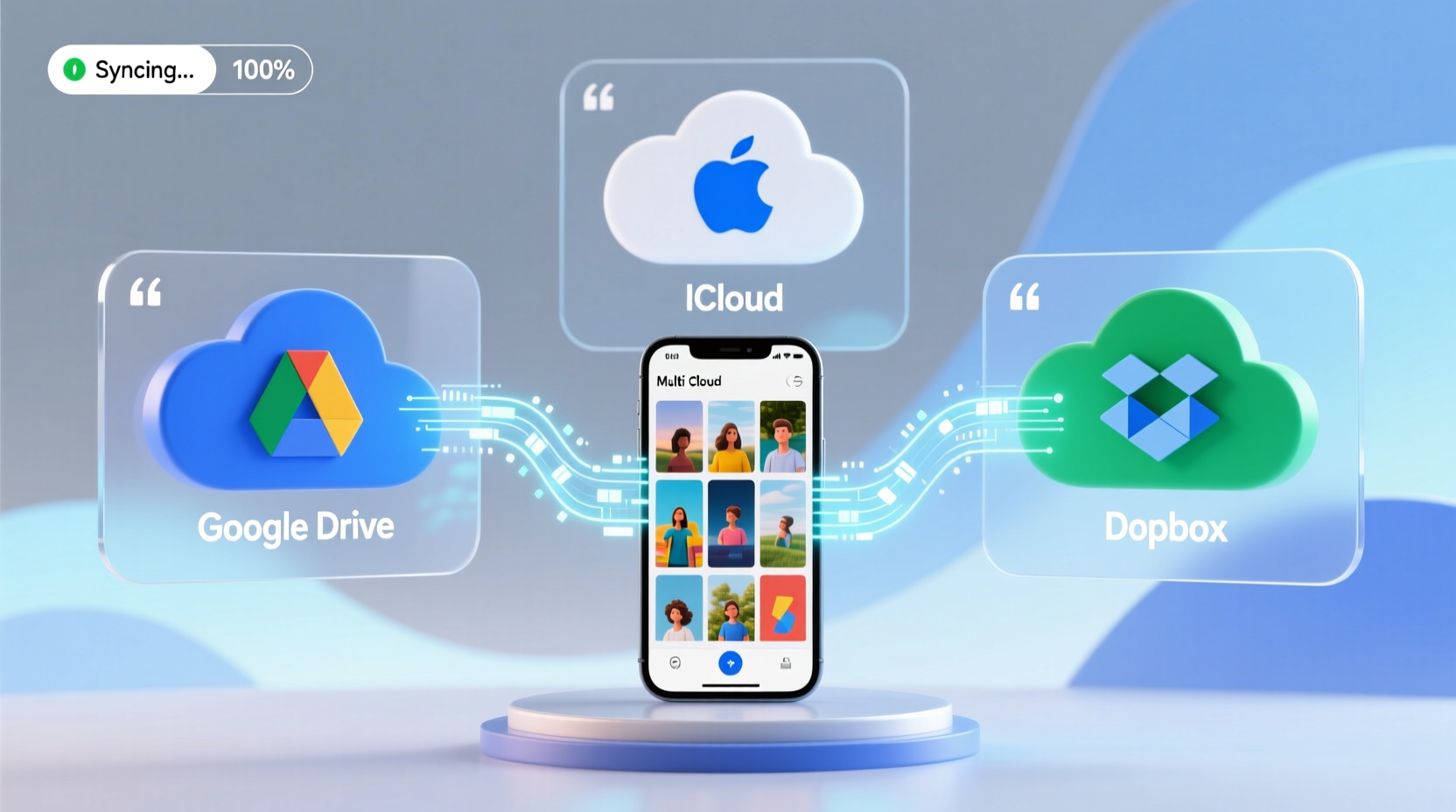
Storing all your photos in one cloud service—no matter how reputable—creates a single point of failure. Consider these real-world scenarios:
- A temporary sync error corrupts thousands of files during a software update.
- Your account is compromised, and an attacker deletes everything.
- The provider discontinues free storage or changes its terms, forcing migration under pressure.
- Regional outages prevent access for hours or days when you need photos urgently.
Diversifying across multiple clouds mitigates these risks. If one platform fails, others retain your data. This principle, known as the 3-2-1 backup rule (three copies, two media types, one offsite), applies perfectly here. By automating backups across at least two cloud providers, you achieve both geographic and vendor redundancy.
“Redundancy isn’t paranoia—it’s digital hygiene. Just as you wouldn’t keep all your cash in one wallet, don’t store all your memories in one cloud.” — Dr. Lena Torres, Data Preservation Researcher, MIT Media Lab
Choosing the Right Cloud Services
Not all cloud storage platforms are equally suited for photo backup. Some excel in mobile integration, while others offer superior APIs for automation. Below is a comparison of popular options based on key criteria for automatic cross-cloud syncing.
| Service | Free Storage | Auto Upload (Mobile) | API Access | Cross-Platform Sync | Best For |
|---|---|---|---|---|---|
| Google Photos | 15 GB (shared) | Yes | Limited (via Google Drive API) | Excellent | Android users, AI organization |
| iCloud | 5 GB | Yes (iOS only) | No public API | Fair (Apple ecosystem) | iOS users, seamless Apple integration |
| Dropbox | 2 GB (expandable) | Yes (with app) | Full API available | Excellent | Automation, third-party integrations |
| Microsoft OneDrive | 5 GB | Yes | Robust API | Good | Windows users, Office 365 subscribers |
| Mega | 20 GB | Yes | Full API | Good | Privacy-focused users, large free tier |
For maximum flexibility, pair a consumer-friendly service like Google Photos with a developer-accessible platform like Dropbox or Mega. This combination allows native auto-upload on your phone while enabling script-based replication to a secondary cloud.
Step-by-Step: Setting Up Automatic Cross-Cloud Backup
Implementing automated multi-cloud backup requires a clear sequence of actions. Follow this timeline to establish a reliable system within a few hours.
- Organize Your Photo Library: Before syncing, clean up duplicates, blurry shots, and screenshots you don’t need. This reduces storage load and speeds up initial upload.
- Enable Auto-Upload on Primary Cloud: Set up Google Photos or iCloud to back up all new photos instantly over Wi-Fi. This becomes your first line of defense.
- Select a Secondary Cloud Provider: Choose a service with strong API support—Dropbox is ideal for beginners.
- Install Automation Software: Use tools like rclone (command-line) or SyncThing with cloud connectors to mirror folders.
- Configure Sync Rules: Define which local folder (e.g., “/Photos/Backup”) should be copied to your secondary cloud. Exclude temporary files.
- Schedule Regular Transfers: Use cron jobs (macOS/Linux) or Task Scheduler (Windows) to run sync scripts daily at off-peak hours.
- Verify & Monitor: Check logs weekly. Confirm new photos appear in both clouds within 24 hours.
Example command using rclone to copy from Google Drive to Dropbox:
rclone copy /Users/name/Pictures/GooglePhotos remote:Dropbox/PhotoBackup --exclude '*cache*' --verbose
This runs silently in the background, triggered by a scheduled task. Over time, it builds a complete mirror without user input.
Tools That Enable Multi-Cloud Automation
Manual file transfers don’t scale. The following tools simplify automated syncing across platforms:
- rclone: Open-source command-line tool supporting over 70 cloud providers. Highly customizable with encryption and bandwidth limits.
- CloudMounter: macOS/Windows app that mounts cloud drives as local disks, allowing drag-and-drop or Finder-based automation via scripts.
- IFTTT (If This Then That): Useful for basic triggers, like saving Gmail attachments to Dropbox, though limited for full photo libraries.
- Make (formerly Integromat): Visual automation platform that can move files between clouds using conditional logic and filters.
- FreeFileSync: Real-time folder comparison and synchronization tool; works with mapped cloud drives.
For non-technical users, CloudMounter combined with FreeFileSync offers a GUI-driven path to automation. Advanced users gain precision with rclone scripts running on a home server or Raspberry Pi.
Mini Case Study: A Travel Photographer’s Redundant System
Sophie Chen, a freelance travel photographer based in Lisbon, lost four years of work when her laptop was stolen in Bangkok. After recovering, she rebuilt her workflow around automated multi-cloud backups. Her current system:
- iPhone set to auto-upload to Google Photos over Wi-Fi.
- MacBook Pro uses Photos.app to import and tag images.
- A dedicated “Master Archive” folder syncs hourly to Dropbox via rclone.
- Every Sunday night, a script pushes a compressed copy to Mega for long-term cold storage.
- All devices encrypted; two-factor authentication enabled on all accounts.
Last year, when Google Photos briefly restricted access due to a suspected policy violation, Sophie accessed her entire portfolio through Dropbox and continued client deliveries without delay. “I don’t stress about storage anymore,” she says. “The system works whether I remember to check it or not.”
Checklist: Building Your Automated Backup System
Use this checklist to ensure your implementation covers all critical steps:
- ✅ Audit existing photos and remove unnecessary files
- ✅ Enable auto-upload on primary cloud (e.g., Google Photos or iCloud)
- ✅ Choose at least one secondary cloud with API access (e.g., Dropbox, Mega)
- ✅ Install automation tool (rclone, CloudMounter, etc.)
- ✅ Designate a local sync folder for mirrored backups
- ✅ Configure sync frequency and network conditions (Wi-Fi only)
- ✅ Test with a small batch of photos before full rollout
- ✅ Set up monitoring (email alerts or log reviews weekly)
- ✅ Document your setup for future reference or recovery
- ✅ Review security settings: enable 2FA, use strong passwords
Common Pitfalls and How to Avoid Them
Even well-designed systems fail if common mistakes aren’t addressed:
- Ignoring File Naming Conflicts: Different clouds may alter filenames during sync. Use consistent naming conventions and avoid special characters.
- Overlooking Bandwidth Limits: Large photo libraries can consume data caps. Schedule uploads during off-peak times.
- Assuming Sync Means Backup: Syncing mirrors deletions. If you delete a photo locally, it may vanish everywhere. Use versioning or archive modes to preserve deleted files.
- Skipping Encryption: Sensitive personal photos should be encrypted before upload, especially on third-party clouds. Tools like Cryptomator create encrypted vaults compatible with any provider.
“Syncing is fragile. True backup means independence. Always ensure one copy exists outside your active sync chain.” — Arjun Patel, Cybersecurity Consultant
FAQ
Can I automate backups from my phone directly to multiple clouds?
Direct automation on mobile is limited. Most phones support auto-upload to one primary service (e.g., Google Photos). To reach a second cloud, you’ll need a computer or NAS device that pulls from the first cloud and forwards the data.
Is it safe to store photos across multiple clouds?
Yes, provided you use strong passwords, two-factor authentication, and encrypt sensitive albums. Distributing data reduces the impact of a single breach. Avoid storing unencrypted personal documents or IDs with photos.
What happens if my internet goes down during a backup?
Most automation tools resume where they left off once connectivity returns. rclone, for example, tracks progress and avoids re-uploading unchanged files using checksum verification.
Conclusion
Automatically backing up photos across multiple cloud services transforms digital preservation from a chore into a silent, reliable process. It’s not about preparing for disaster—it’s about ensuring peace of mind. Whether you’re a parent capturing milestones or a professional building a portfolio, redundancy is no longer optional. The tools exist, the methods are proven, and the cost of inaction grows with every photo taken.




 浙公网安备
33010002000092号
浙公网安备
33010002000092号 浙B2-20120091-4
Comments
No comments yet. Why don't you start the discussion?