
Many people assume that achieving crispy, golden-brown fries requires deep frying or at least a generous drizzle of oil. But it’s entirely possible—and surprisingly effective—to bake perfectly crisp fries in the oven with zero added oil. This method not only reduces calories but also eliminates greasiness while preserving that satisfying crunch. Whether you're following an oil-free diet, managing health concerns, or simply trying to eat cleaner, mastering this technique opens up a world of guilt-free snacking.
The secret lies in understanding the science of crisping, moisture control, and precise heat management. With the right potato variety, preparation steps, and baking strategy, you can produce fries that rival their fried counterparts—without ever touching a bottle of oil.
Why Skip the Oil? Health and Texture Benefits
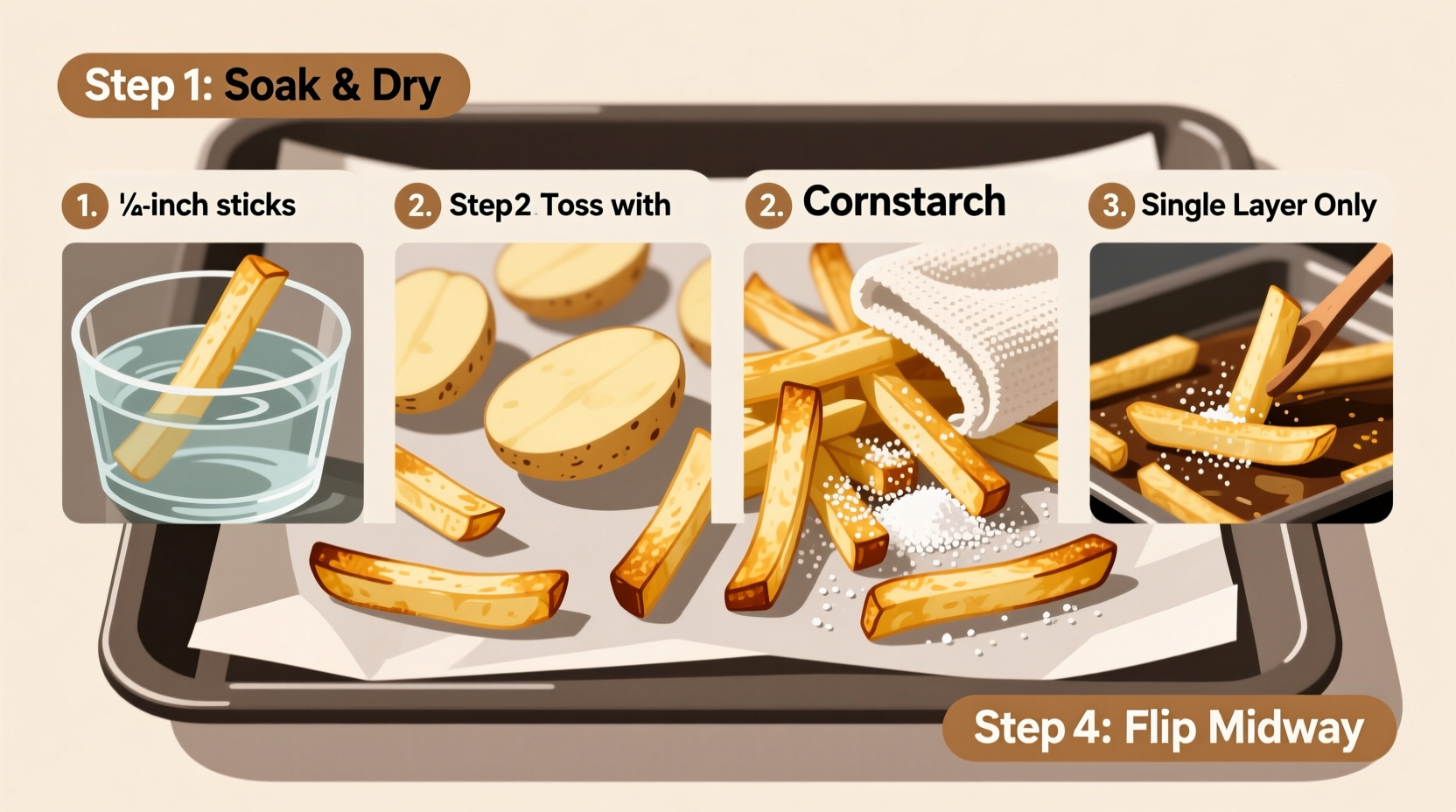
Eliminating oil from your oven fries might seem counterintuitive, but it offers tangible benefits beyond calorie reduction. Traditional oil-based roasting relies on fat to conduct heat and create browning. However, excess oil can lead to soggy fries if not used precisely, especially when overcrowding the pan or using low oven temperatures.
Oil-free baking forces reliance on dry heat and surface dehydration—key factors in achieving crispness. When moisture evaporates quickly from the surface of the potato, it allows the outer layer to harden into a crunchy shell while the inside remains fluffy. Additionally, skipping oil avoids oxidation and rancidity risks associated with reused cooking fats.
“Dry roasting starchy vegetables like potatoes can yield excellent texture when moisture is properly managed. The key is maximizing surface area and minimizing steam.” — Dr. Lena Torres, Food Scientist & Culinary Researcher
The Step-by-Step Process for Oil-Free Crispy Fries
Baking crispy fries without oil isn’t guesswork. It’s a repeatable process grounded in food chemistry and thermal dynamics. Follow these detailed steps to achieve consistent success every time.
- Select the Right Potatoes: Russet or Yukon Gold varieties work best due to their high starch and low moisture content. Starchy potatoes caramelize better and develop a firmer crust.
- Peel (Optional) and Cut Uniformly: Peel if desired, though leaving skins on adds fiber and structure. Cut into even sticks—about ¼ to ½ inch thick—to ensure uniform cooking. Inconsistent sizing leads to some fries burning while others remain soft.
- Soak in Cold Water: Submerge cut potatoes in cold water for at least 30 minutes, or up to 2 hours. This removes excess surface starch, which otherwise traps moisture and causes steaming instead of crisping.
- Dry Thoroughly: After soaking, drain and spread the fries on clean kitchen towels or paper towels. Pat them completely dry. Any residual moisture will turn to steam in the oven, preventing crispness.
- Preheat Oven to High Heat: Set your oven to 425°F (220°C). If using convection mode, drop to 400°F (200°C) to prevent over-browning. A fully preheated oven ensures immediate searing upon contact.
- Use a Wire Rack Over a Baking Sheet: Place a wire cooling rack on top of a rimmed baking sheet. Arrange fries in a single layer without touching. Elevation allows hot air to circulate around all sides, mimicking fryer-style airflow.
- Bake in Two Stages: First, bake for 20 minutes. Flip each fry carefully using tongs. Return to oven for another 15–25 minutes, watching closely after the 35-minute mark. Total time varies based on thickness and oven accuracy.
- Cool Briefly Before Serving: Let fries sit for 3–5 minutes after removal. This slight rest helps moisture retreat inward, enhancing crispness.
What Happens During Baking?
As the fries heat up, internal moisture migrates outward. Without oil to trap steam, rapid evaporation occurs at the surface. Simultaneously, the Maillard reaction—the chemical interaction between amino acids and sugars at high heat—begins around 300°F, producing golden color and savory flavor. Because there's no oil film, the surface dehydrates faster, forming a rigid, crunchy exterior. The interior gelatinizes starch, creating a soft, fluffy core.
Do’s and Don’ts of Oil-Free Frying
| Do’s | Don’ts |
|---|---|
| Soak cut potatoes to remove excess starch | Skimp on drying—wet fries won’t crisp |
| Use a wire rack for maximum airflow | Overcrowd the pan—this creates steam |
| Flip fries halfway through baking | Open the oven too often—heat loss slows crisping |
| Season after baking to avoid moisture attraction | Add salt or spices before baking—they draw out water |
| Let fries rest briefly post-bake | Serve immediately off the heat—wait for texture to set |
Flavor Without Fat: Seasoning Smartly
One concern with oil-free fries is flavor adherence. Without oil as a carrier, spices tend to fall off. The solution is timing and technique.
- Toss fries with seasonings immediately after baking, while they’re still hot and slightly porous from heat expansion.
- Use finely ground spices to maximize surface contact.
- Consider umami-rich powders like nutritional yeast, garlic powder, smoked paprika, or onion powder—they stick well and add depth.
- For a cheesy note without fat, sprinkle with a small amount of powdered parmesan or vegan cheese alternative.
A popular blend includes ¼ tsp garlic powder, ¼ tsp smoked paprika, ⅛ tsp black pepper, and a pinch of cayenne. Apply lightly—over-seasoning can overwhelm the natural potato taste.
Real Example: How Sarah Transformed Her Family’s Snack Habits
Sarah, a mother of two from Portland, had long avoided homemade fries due to concerns about her husband’s cholesterol levels. Store-bought frozen fries contained oils she didn’t trust, and deep frying felt irresponsible. After researching oil-free methods, she tried the soak-dry-rack technique described here.
Her first batch was promising but slightly underdone. She realized her oven ran cool, so she increased the temperature to 440°F and extended baking time by 10 minutes. On the second try, the fries came out golden and crisp—her kids didn’t believe they were oil-free. Now, her family enjoys oven-baked fries twice a week, seasoned with different spice blends. “They taste just like fair food,” her son said, “but I don’t feel sluggish afterward.”
“Switching to oil-free fries reduced our saturated fat intake significantly. We didn’t sacrifice enjoyment—we upgraded it.” — Sarah M., Home Cook & Wellness Advocate
Common Challenges and How to Solve Them
Even with careful execution, issues may arise. Here’s how to troubleshoot the most frequent problems:
- Soggy fries: Likely caused by inadequate drying or overcrowding. Always pat fries dry thoroughly and use a wire rack.
- Burnt tips: Thin ends cook faster. Cut uniformly and rotate the pan halfway through baking.
- No browning: Oven temperature may be too low. Use an oven thermometer to verify accuracy.
- Chewy texture: Fries removed too early. Extend baking time and allow final crisping phase.
- Sticking to the rack: Line the rack with parchment paper or use a silicone mat designed for high heat.
Frequently Asked Questions
Can I use sweet potatoes for oil-free baking?
Yes, but results differ. Sweet potatoes have higher moisture and sugar content, making them prone to sticking and uneven browning. They rarely achieve the same crunch as russets. For better texture, slice thinner and extend baking time, flipping frequently.
Is air frying a better option than conventional oven baking?
Air frying often works well for oil-free fries due to concentrated heat circulation. However, many people overestimate capacity. To get truly crisp results, cook in small batches. An oven with a wire rack can handle larger quantities evenly, making it more practical for families.
Do I need to preheat the baking sheet?
Not essential, but beneficial. Placing fries on a preheated metal tray gives an instant sear, jumpstarting the crisping process. Just be cautious when transferring—hot pans can cause burns.
Essential Checklist for Perfect Oil-Free Fries
- ☑ Choose starchy potatoes (Russet or Yukon Gold)
- ☑ Cut into uniform sticks
- ☑ Soak in cold water for 30+ minutes
- ☑ Dry thoroughly with towels
- ☑ Preheat oven to 425°F (220°C)
- ☑ Use a wire rack over a baking sheet
- ☑ Bake 20 minutes, flip, then bake 15–25 more minutes
- ☑ Season immediately after baking
- ☑ Rest 3–5 minutes before serving
Final Thoughts: Crispness Is Within Reach
Baking crispy fries without oil isn’t a compromise—it’s a smart evolution of home cooking. By leveraging natural starch, proper drying, and strategic heat application, you unlock a method that’s healthier, cleaner, and surprisingly effective. The initial effort pays off in consistent results and confidence in your kitchen skills.
You don’t need special equipment or exotic ingredients. Just attention to detail and a willingness to let time and heat do the work. Once mastered, this technique becomes a staple—ideal for weeknight dinners, game-day snacks, or meal prep with lasting texture.




 浙公网安备
33010002000092号
浙公网安备
33010002000092号 浙B2-20120091-4
Comments
No comments yet. Why don't you start the discussion?