
Blanching spinach is a simple yet transformative technique that preserves its vibrant green color, tender texture, and nutritional value. Whether you're preparing a side dish, building a quiche, or freezing greens for future use, proper blanching ensures optimal results. Many home cooks either skip this step or execute it incorrectly—leading to limp, dull, or overcooked spinach. Mastering the process takes less than five minutes and elevates both flavor and presentation. This guide explains exactly how to blanch spinach correctly, why timing matters, and how to apply the method across various culinary applications.
What Is Blanching?
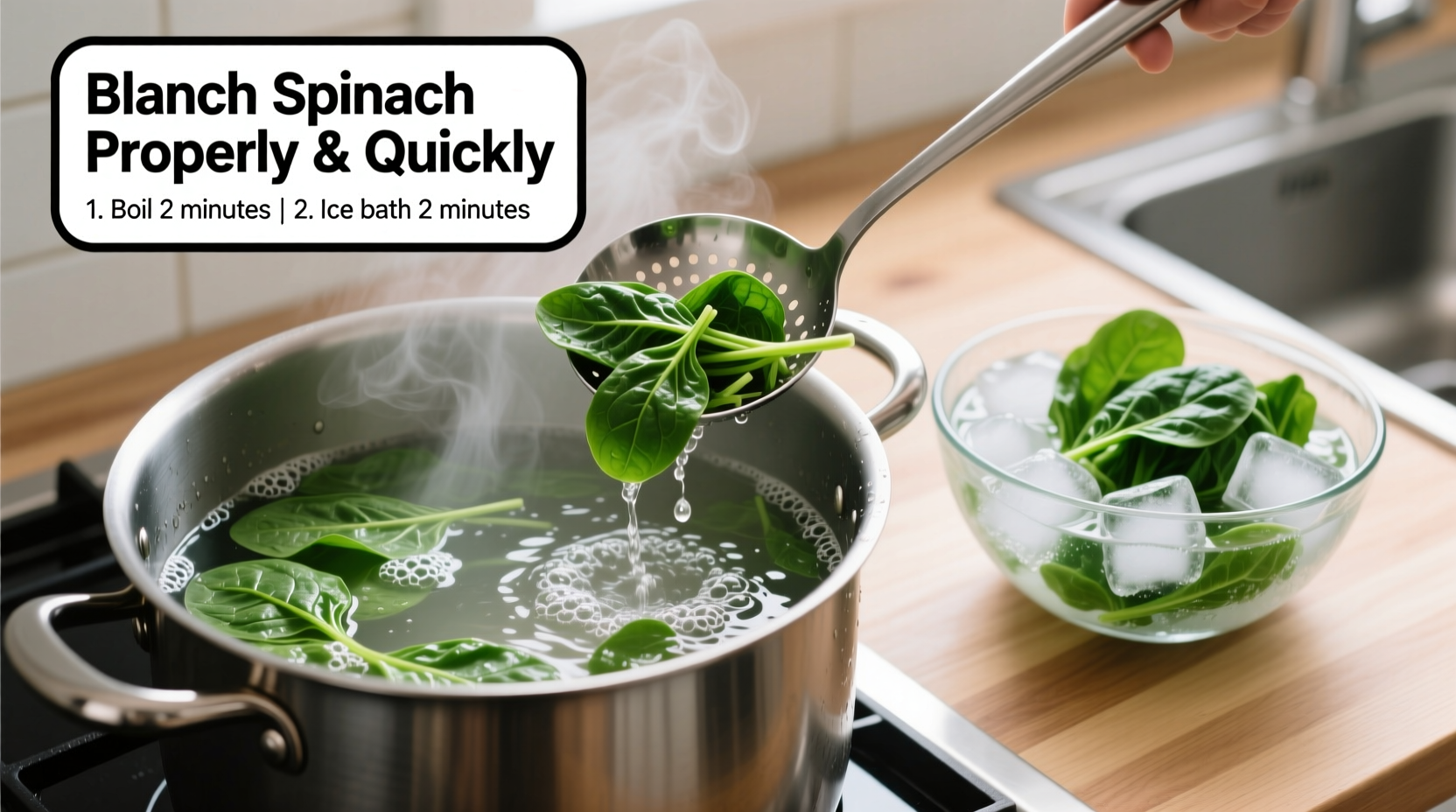
Blanching is a cooking technique that involves briefly immersing vegetables in boiling water, followed by an immediate plunge into ice-cold water to halt the cooking process. This method, known as \"shocking,\" preserves color, removes bitterness, reduces microbial load, and prepares delicate greens like spinach for storage or further preparation. For leafy greens, blanching softens their structure without sacrificing integrity, making them ideal for purees, fillings, or layered dishes.
Spinach, in particular, benefits from blanching due to its high water content and oxalic acid levels. The brief heat exposure breaks down cell walls gently, enhancing digestibility while preserving chlorophyll—the pigment responsible for its rich green hue. When done correctly, blanched spinach retains a fresh aroma, subtle sweetness, and silky mouthfeel.
Why Blanch Spinach?
There are several compelling reasons to blanch spinach before use:
- Color preservation: Prevents discoloration during storage or reheating.
- Texture control: Softens leaves just enough without turning them mushy.
- Nutrient retention: Locks in vitamins A, C, K, folate, and iron more effectively than prolonged cooking.
- Oxalate reduction: Partially leaches out naturally occurring oxalic acid, improving mineral absorption.
- Volume reduction: Shrinks bulk significantly, which is useful for freezing or stuffing recipes.
- Cleanliness: Removes surface dirt and potential contaminants more thoroughly than rinsing alone.
In professional kitchens, blanching is standard practice for any vegetable destined for cold service, sautéing, or long-term storage. It’s also essential when preparing spinach for dishes where appearance and consistency matter—such as spanakopita, lasagna, or smooth emulsions.
Key Characteristics of Blanchable Spinach
Not all spinach responds equally well to blanching. Understanding the type you’re working with affects timing, yield, and final outcome. Below are the primary characteristics relevant to successful blanching:
| Characteristic | Description |
|---|---|
| Leaf Type | Baby spinach (tender, small leaves); mature spinach (larger, thicker stems) |
| Flavor Profile | Mildly sweet when fresh; slightly bitter if overcooked or old |
| Aroma | Fresh, grassy, clean—intensifies slightly after blanching |
| Color Change | Bright green → deeper emerald after blanching; turns olive if overcooked |
| Heat Sensitivity | High—cooks rapidly due to thin cell structure |
| Culinary Function | Base for sautés, fillings, soups, purees, salads (when chilled) |
| Shelf Life (Blanched) | 3–5 days refrigerated; up to 12 months frozen |
Step-by-Step: How to Blanch Spinach Properly and Quickly
The success of blanching lies in precision—timing, temperature, and technique must align. Follow these steps for consistently excellent results.
- Wash thoroughly: Place spinach in a large bowl of cold water. Swirl to dislodge sand and debris. Drain and repeat until no grit remains. Use a salad spinner to remove excess moisture, but do not dry completely—some surface water aids even heating.
- Prepare the blanching station: Fill a large pot with 4–6 quarts of water. Add 1 tablespoon of kosher salt per quart to enhance flavor and firmness. Bring to a rolling boil over high heat. While water heats, prepare an ice bath: fill a second large bowl with equal parts ice and cold water.
- Blanch in batches: Do not overcrowd the pot. Submerge about 4 cups of loosely packed spinach at a time. Push down gently with a slotted spoon to ensure full immersion. Start timing only once the water returns to a boil.
- Time precisely: For baby spinach, blanch for 30–45 seconds. For mature spinach with thicker stems, extend to 60 seconds. Over-blanching leads to nutrient loss and sogginess.
- Shock immediately: Using tongs or a spider strainer, transfer spinach directly into the ice bath. Spread it out to cool evenly. Let sit for 1–2 minutes until completely cold throughout.
- Drain and press: Remove spinach from ice bath. Squeeze gently by hand or use a clean kitchen towel to wring out excess water. For purees or freezing, press firmly to extract as much liquid as possible.
Pro Tip: Reserve the blanching water for soups or sauces—it contains leached nutrients and mild flavor. Alternatively, compost it for garden enrichment.
Variants & Types of Spinach for Blanching
Different varieties respond differently to heat. Knowing your spinach helps adjust technique accordingly.
- Baby Spinach: Harvested early, with tender leaves and minimal stems. Requires shortest blanching time (30–45 seconds). Ideal for salads, omelets, and quick sautés.
- Savoy Spinach: Crinkly, dark green leaves with robust texture. Common in supermarkets. Needs 45–60 seconds; stems may require trimming pre-blanch.
- Flat- or Semi-Savoy Spinach: Smoother leaves, easier to clean. Holds shape better after blanching. Often used in commercial prep and canning.
- Malabar or Chinese Spinach (not true spinach): Heat-tolerant vines with thicker foliage. Requires longer cooking and is less suitable for standard blanching unless adapted.
For best results, choose fresh, crisp spinach with no yellowing or slime. Organic options may have more soil residue but offer fewer pesticide residues—a trade-off worth managing through thorough washing.
Comparison with Similar Leafy Greens
Spinach is often grouped with other dark leafy greens, but its behavior under heat differs significantly. Here's how blanching spinach compares to related vegetables:
| Green | Blanch Time | Texture After Blanching | Best Uses Post-Blanch |
|---|---|---|---|
| Spinach | 30–60 sec | Tender, silky, reduced volume | Purees, fillings, soups, freezing |
| Kale | 2–3 min | Chewy, resilient, slightly toughened | Sautés, chips, braises |
| Chard | 2–3 min (stems longer) | Firm stalks, soft leaves | Stir-fries, gratins, stuffed rolls |
| Collard Greens | 3–5 min | Very sturdy, toothsome | Slow-cooked dishes, Southern-style sides |
| Arugula | 15–20 sec (rarely blanched) | Delicate, almost dissolves | Quick wilts, garnishes |
Unlike kale or collards, spinach collapses dramatically upon heating due to its high moisture and low fiber density. This makes it unsuitable for dishes requiring structural integrity unless combined with binders like eggs or cheese.
Practical Applications in Cooking
Blanched spinach serves as a foundational ingredient in numerous cuisines. Its versatility spans from rustic home cooking to refined plating techniques.
Home Kitchen Uses
- Frittatas and Quiches: Mix cooled, squeezed spinach into egg mixtures to prevent excess moisture leakage during baking.
- Pasta Fillings: Combine with ricotta, nutmeg, and Parmesan for ravioli or manicotti.
- Smoothies: Freeze blanched, drained spinach in cubes to add nutrients without altering taste.
- Soups and Stews: Stir in near the end of cooking for color and nutrition boost.
- Grain Bowls: Toss chilled blanched spinach with warm farro or quinoa for a textural contrast.
Professional Techniques
In restaurant settings, chefs use blanched spinach for consistency and efficiency:
- Concassé Method: Finely chop blanched spinach and fold into beurre blanc or hollandaise for vibrant sauces.
- Layered Dishes: In moussaka or vegetarian lasagna, pre-blanching prevents sogginess and enhances layer definition.
- Flash-Pureeing: Blend blanched spinach with minimal liquid for vivid green pesto or coulis.
- Plating Accent: Serve chilled, dressed blanched spinach under seared fish or grilled chicken for elegance.
“Pre-blanching spinach is non-negotiable in our kitchen. It guarantees uniformity across hundreds of servings and extends shelf life without compromising quality.” — Chef Elena Torres, Executive Chef at Verdure Bistro
Storage & Shelf Life After Blanching
One of the greatest advantages of blanching is extended usability. Once processed, spinach can be stored safely and efficiently.
- Refrigeration: Store in an airtight container lined with paper towels. Keeps for 3–5 days. Ideal for meal prep.
- Freezing: Portion into 1-cup amounts, wrap tightly in plastic, and freeze flat in zip-top bags. Lasts 10–12 months. Thaw in refrigerator or microwave before use.
- Vacuum Sealing: Extends freezer life and prevents freezer burn. Recommended for bulk preparation.
Avoid storing blanched spinach in metal containers or acidic environments, as chlorophyll degradation accelerates. Glass or food-grade plastic is preferred.
Common Mistakes to Avoid
Even experienced cooks make errors that compromise results. Be mindful of the following pitfalls:
- Skipping the ice bath: Residual heat continues cooking, leading to grayish, overdone spinach.
- Overcrowding the pot: Lowers water temperature too quickly, resulting in uneven blanching.
- Under-salting the water: Fails to season the leaves internally, leaving them bland.
- Pressing too early: Squeezing before shocking damages cell structure and expels flavor.
- Using lukewarm water: Inadequate boiling fails to deactivate enzymes responsible for spoilage.
Warning: Never reheat blanched spinach multiple times, especially in protein-rich dishes. Repeated warming increases risk of bacterial growth and nitrate conversion, potentially causing digestive discomfort.
Substitutions & Alternatives
If spinach isn't available, consider substitutes—but understand their limitations:
- Swiss Chard Leaves: Milder flavor, holds shape better. Blanch 2 minutes. Best when stems are removed.
- Mustard Greens: Peppery bite. Blanch 1–2 minutes. Use sparingly in mixed blends.
- Arugula: Delicate; blanches in seconds. Best for raw applications or very quick wilt.
- Watercress: Crisp texture, pungent flavor. Blanch 30 seconds. Excellent in soups.
No substitute perfectly replicates spinach’s balance of sweetness, tenderness, and nutrient profile. However, blending greens can create complex textures and flavors in composite dishes.
FAQs: Blanching Spinach
Can I blanch frozen spinach?
No—frozen spinach has already been blanched and cooked. Thaw and drain thoroughly instead. Re-blanching will destroy texture and leach nutrients.
Does blanching remove nutrients?
Minimal losses occur, primarily water-soluble vitamins like vitamin C and some B vitamins. However, overall bioavailability improves due to softened cell walls and reduced oxalates, enhancing absorption of iron and calcium.
Is steaming a good alternative to blanching?
Steaming preserves more nutrients but does not stop enzyme activity as effectively. It also fails to reduce volume or extract bitterness as thoroughly. Blanching remains superior for preparation and preservation.
Can I reuse the blanching water?
Yes, within limits. Use once for soups, grains, or legume cooking. Discard if cloudy or contaminated with debris. Do not reuse repeatedly.
Should I blanch organic spinach?
Yes. Organic spinach may carry more soil and microbes. Blanching ensures safety and consistency regardless of farming method.
How much spinach should I start with?
One pound (16 oz) of raw spinach yields approximately 1 cup after blanching and squeezing. Plan accordingly for recipes requiring cooked volumes.
Summary & Key Takeaways
Blanching spinach properly and quickly is a fundamental skill that enhances both everyday meals and gourmet preparations. By following precise timing, using salted boiling water, and shocking immediately, cooks preserve color, improve texture, and extend shelf life. The entire process takes under five minutes but delivers lasting benefits in flavor, nutrition, and convenience.
Key points to remember:
- Always wash spinach before blanching to remove grit.
- Use a large volume of salted boiling water and work in batches.
- Blanch baby spinach for 30–45 seconds; mature for up to 60 seconds.
- Immediately shock in ice water to stop cooking.
- Squeeze out excess moisture only after chilling.
- Store refrigerated for short-term use or freeze for long-term preservation.
- Avoid reheating blanched spinach multiple times.




 浙公网安备
33010002000092号
浙公网安备
33010002000092号 浙B2-20120091-4
Comments
No comments yet. Why don't you start the discussion?