
Finding the perfect foundation match is challenging enough—until your skin tone shifts with the seasons. What worked flawlessly in winter may look ashy or too dark by summer. Instead of buying a new bottle every few months, a smarter, more cost-effective solution lies in blending multiple foundation shades. This technique allows you to adapt your makeup to subtle changes in your complexion throughout the year while maintaining a seamless, natural finish. With precision and practice, blending foundations isn’t just practical—it’s transformative.
Why Skin Tone Changes Across Seasons
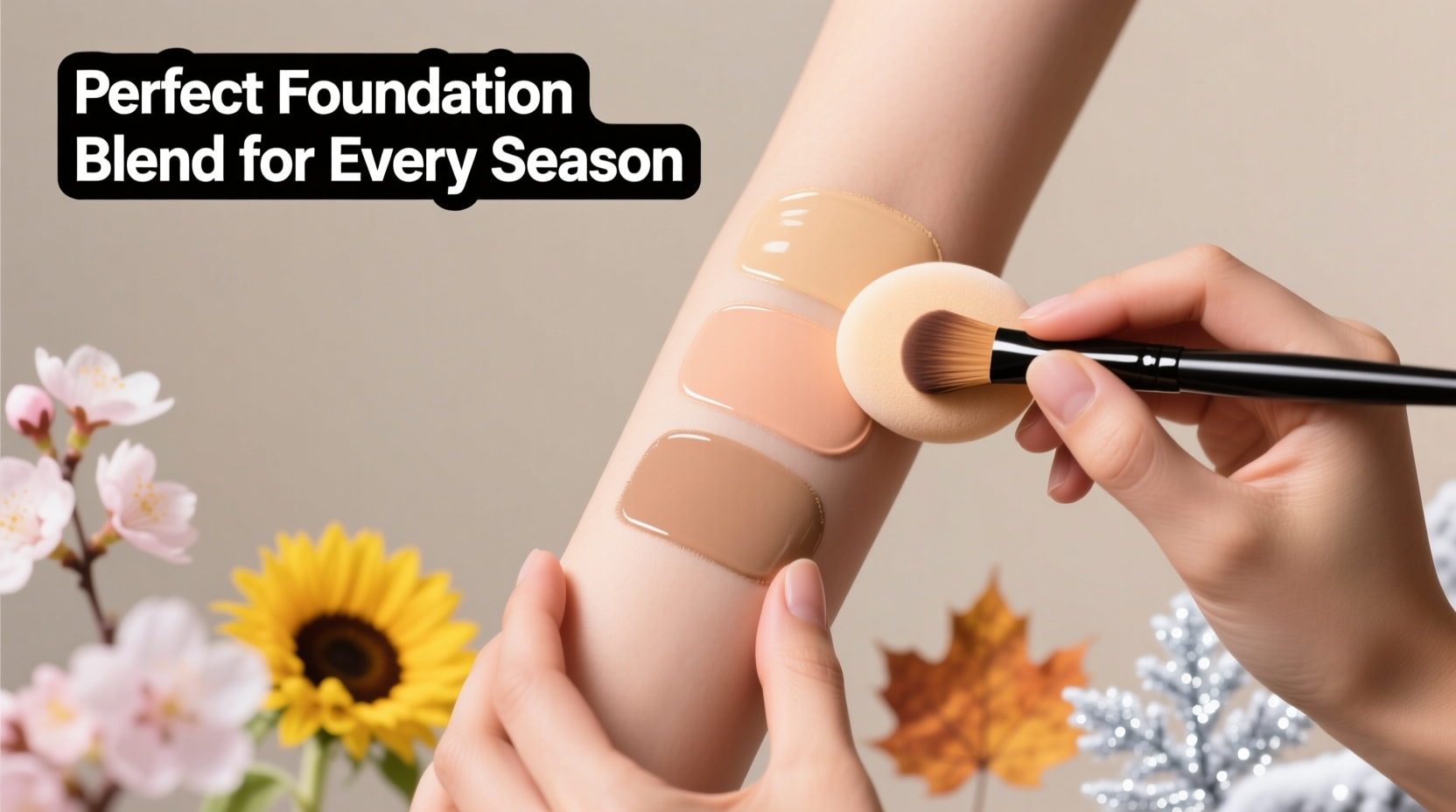
Your skin doesn’t stay static. Sun exposure, humidity, indoor heating, and lifestyle habits all influence pigmentation and texture. In winter, reduced sunlight often leads to paler, drier skin. Come spring and summer, increased UV exposure causes melanin production to rise, resulting in a deeper, warmer undertone. These transitions can make your once-perfect foundation appear mismatched—either too light, too orange, or uneven at the jawline.
Rather than chasing a single “perfect” shade, professionals recommend treating foundation like skincare: dynamic, adaptable, and season-responsive. Makeup artist Lena Torres explains:
“Skin is alive and reactive. A foundation that works in January might be completely off by June. Blending two or three shades gives you control over undertones and depth without compromising coverage.” — Lena Torres, Celebrity Makeup Artist
The Science Behind Foundation Blending
Foundation blending leverages color theory and skin chemistry. Most commercial foundations fall into three undertone categories: cool (pink), warm (yellow/golden), and neutral (balanced). As your skin’s undertone shifts with sun exposure, so should your base.
By mixing shades, you’re not just adjusting depth—you’re balancing warmth. For example, combining a lighter winter foundation with a slightly deeper, warmer formula creates a transitional tone ideal for spring. The same principle applies when moving into autumn, where fading tans require a cooler correction.
This method also helps avoid harsh lines of demarcation around the neck and hairline—common issues when switching bottles abruptly.
A Step-by-Step Guide to Blending Foundation Shades
Blending foundations effectively requires consistency in formulation. Mixing a matte liquid with a dewy cream can result in pilling or separation. Follow this timeline-based approach to master the technique seasonally.
- Assess Your Current Skin Tone Monthly: Stand near a window in natural daylight. Observe whether your skin appears pink, yellow, olive, or sallow. Note any redness or dullness.
- Identify Your Base Shade: Keep one foundation that matches your natural, un-tanned skin—the shade closest to your winter tone. This will serve as your anchor.
- Select a Secondary Shade: Choose a second foundation half a shade deeper with a complementary undertone. If your base is neutral-cool, opt for a warm-leaning deeper tone for summer use.
- Start with a 2:1 Ratio: Mix two drops of your base shade with one drop of the deeper shade. Apply to the face using a damp sponge or brush.
- Evaluate and Adjust: After 10 minutes, check for oxidation and blending at the jaw. If too dark, increase the base ratio. If too pale, add more of the deeper tone.
- Store Your Custom Blend (Optional): Use a small sterilized container to pre-mix your seasonal formula. Label it with the date and ratio used.
- Reassess Every 6–8 Weeks: As your tan fades or deepens, tweak the ratio accordingly.
This gradual adjustment ensures continuity and prevents jarring visual shifts in your complexion.
Choosing the Right Foundations to Blend
Not all foundations blend well together. To avoid texture conflicts or patchiness, follow these guidelines:
- Stick to the same brand and formula type (e.g., liquid-to-liquid, powder-to-powder).
- Avoid mixing silicone-based and water-based products unless tested first.
- Prioritize similar finishes—matte with matte, radiant with radiant.
- Test blends on a small area before full application.
If you don’t own multiple foundations yet, consider investing in sample sizes. Many high-end brands offer travel kits with varying shades, ideal for experimentation.
Best Foundation Types for Blending
| Formula Type | Blends Well With? | Seasonal Suitability | Caution |
|---|---|---|---|
| Liquid (medium coverage) | Liquid, cushion, serum | All seasons | Avoid mixing with heavy powders |
| Tinted Moisturizer | Serum, BB cream | Spring/Summer | Low coverage; not ideal for full correction |
| Cream (full coverage) | Cream, stick | Winter/Dry climates | Can feel heavy in heat |
| Mineral Powder | Loose powder, setting powder | Summer/Oily skin | May emphasize dry patches |
Real-Life Example: Seasonal Transition Routine
Take Sarah, a 32-year-old professional based in Chicago. Her natural skin tone is fair with neutral-pink undertones (Fenty Beauty 150). During winter, she uses this shade exclusively. But by late May, sun exposure during weekend hikes deepens her complexion to resemble Fenty 180—a warm medium-beige.
Instead of switching entirely, Sarah begins blending: two pumps of 150 with one pump of 180. The result? A soft, sun-kissed look without looking overly tanned or mismatched at the neckline. By August, she adjusts to a 1:1 ratio. When fall arrives and her tan fades, she reverses the process, gradually phasing out 180 until she returns to 150 alone by November.
Her routine saves money, reduces product waste, and maintains a consistent appearance for client meetings and social events.
Common Mistakes to Avoid
Even experienced users can misstep when blending foundations. Watch out for these pitfalls:
- Mixing incompatible formulas: Combining a long-wear matte foundation with a hydrating serum can cause separation.
- Ignoring undertones: A deeper shade with cool undertones won’t flatter a warm tan.
- Over-blending on the skin: Applying each shade separately and blending them together on the face leads to muddiness. Pre-mix when possible.
- Skipping sunscreen: Tanning accelerates uneven tone. Always apply SPF under foundation, even in winter.
Expert Tips for Long-Term Success
To refine your blending technique, consider these advanced strategies:
- Create a seasonal kit: Stock three shades—your lightest (winter), deepest (summer), and a mid-tone (spring/fall). Rotate ratios accordingly.
- Track your blends: Keep a small notebook logging dates, ratios, and results. Over time, you’ll predict transitions more accurately.
- Use correctors strategically: If blending doesn’t fully neutralize sallowness or redness, apply a color corrector underneath (peach for darkness, green for redness).
- Exfoliate regularly: Smooth skin accepts foundation more evenly. Use a gentle chemical exfoliant 2–3 times per week.
“The most polished makeup looks effortless because it adapts. Blending foundations is not a hack—it’s a discipline in understanding your skin’s rhythm.” — Marcus Reed, Editorial Makeup Director at Glow Magazine
Checklist: Mastering Foundation Blending Year-Round
Follow this checklist to maintain a flawless match through every season:
- ✅ Identify your baseline (untanned) foundation shade.
- ✅ Acquire a secondary shade 1–2 levels deeper with a matching or adjustable undertone.
- ✅ Test blend ratios monthly using natural light.
- ✅ Stick to compatible formulas and finishes.
- ✅ Pre-mix on a palette rather than on your face.
- ✅ Adjust ratios every 6–8 weeks based on skin changes.
- ✅ Store custom blends in clean, airtight containers if reusing.
- ✅ Always wear SPF to minimize uneven tanning.
- ✅ Re-evaluate your seasonal kit every spring and fall.
- ✅ Exfoliate and moisturize daily for optimal canvas prep.
Frequently Asked Questions
Can I mix different foundation brands?
It’s possible but risky. Different emulsifiers and bases can react poorly, causing pilling or separation. If you must mix brands, ensure they share the same base (e.g., water or silicone) and test thoroughly on a small area first.
How do I know if my blend has oxidized?
Oxidation occurs when foundation darkens after application due to reaction with skin oils or air. Wait 10–15 minutes post-application. If the color shifts significantly darker or warmer, try a more stable formula or adjust pH with a primer.
Is blending foundations suitable for oily skin?
Yes, but choose lightweight, oil-free liquids or mineral powders. Blending heavy creams can lead to caking. Use a mattifying primer and set with translucent powder for longevity.
Final Thoughts: Embrace Your Skin’s Evolution
Your skin is not meant to look the same all year. Embracing its seasonal evolution is not only realistic—it’s empowering. Blending foundation shades gives you the flexibility to honor your skin’s natural rhythm without sacrificing polish or professionalism. It reduces clutter, cuts costs, and elevates your makeup routine from reactive to intentional.
With a little observation and preparation, you can move seamlessly from winter’s porcelain glow to summer’s golden radiance—and every nuanced tone in between. Stop chasing perfection. Start creating it.




 浙公网安备
33010002000092号
浙公网安备
33010002000092号 浙B2-20120091-4
Comments
No comments yet. Why don't you start the discussion?