
In the quiet moments between tasks—waiting for a meeting to start, lying in bed before sleep, or taking a break from work—it’s easy to reach for your phone. What begins as a quick check often spirals into an hour of endless swiping through negative news, social media feeds, and algorithm-driven content. This behavior, known as \"doom scrolling,\" doesn't just waste time; it erodes attention, increases anxiety, and disrupts sleep. The good news is that breaking this cycle is possible with intentional, practical changes. You don’t need willpower alone—just awareness, structure, and small shifts that compound over time.
Understanding Doom Scrolling: Why It Happens
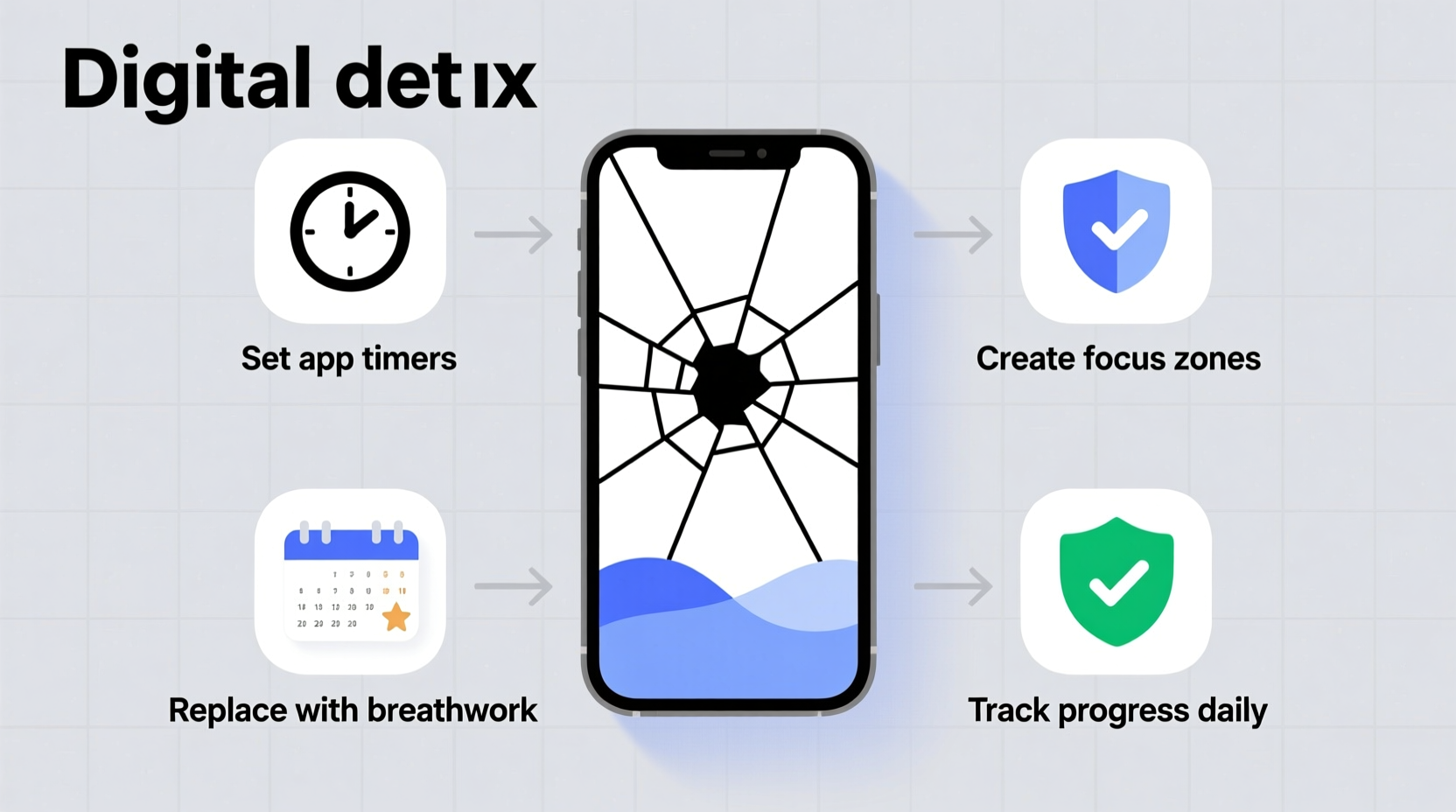
Doom scrolling refers to the compulsive consumption of negative or distressing online content, often on social media or news platforms. It typically occurs during periods of stress, boredom, or uncertainty, when the brain seeks distraction or stimulation. But unlike healthy digital breaks, doom scrolling leaves you feeling worse—not informed, but drained.
The reason it's so hard to stop lies in how digital platforms are designed. Algorithms prioritize emotionally charged content because it keeps users engaged longer. A 2023 study from the University of California found that negative headlines receive 38% more engagement than neutral ones, making them more likely to appear in your feed. Over time, repeated exposure conditions your brain to expect—and even crave—this kind of input.
Neurologically, doom scrolling activates the brain’s reward system through intermittent reinforcement: you don’t know what you’ll see next, but the possibility of something shocking or urgent keeps you scrolling. This creates a feedback loop similar to other compulsive behaviors, where short-term relief leads to long-term dissatisfaction.
“Doom scrolling isn’t laziness—it’s a behavioral response to design engineered to capture attention. The key to breaking it is not self-blame, but redesigning your environment.” — Dr. Lena Torres, Cognitive Psychologist & Digital Wellness Researcher
Step-by-Step Guide to Breaking the Cycle
Quitting doom scrolling cold turkey rarely works. Instead, use a gradual, structured approach that reduces dependency while building healthier habits. Follow this five-phase timeline over four weeks to reset your relationship with your devices.
- Week 1: Awareness & Tracking
For seven days, track every instance you pick up your phone with the intent to scroll. Use a notes app or paper journal to record:- Time of day
- Trigger (e.g., boredom, stress, waiting)
- Duration of session
- How you felt afterward
- Week 2: Set Boundaries
Based on your tracking, identify 2–3 high-risk times (e.g., bedtime, lunch break). For each, establish a rule:- No phones during meals
- First 30 minutes after waking = screen-free
- Phone out of bedroom by 9 PM
- Week 3: Replace, Don’t Just Remove
Every habit has a cue, routine, and reward. Replace the routine with a better one that satisfies the same need. For example:- If scrolling relieves stress → try 5 minutes of deep breathing or stretching
- If it fills boredom → keep a book or puzzle nearby
- If it’s a transition habit → listen to a podcast while walking
- Week 4: Optimize Your Environment
Make scrolling harder and alternatives easier:- Delete social media apps from your phone (use browser only, if needed)
- Turn off all non-essential notifications
- Place your charger outside the bedroom
- Keep a physical notebook for quick thoughts instead of opening Twitter or Notes app
- Ongoing: Weekly Reflection
Every Sunday, spend 10 minutes reviewing:- How many times did I scroll mindlessly?
- Did I use my replacement habits?
- What one change can I improve next week?
Practical Strategies to Regain Focus
Breaking doom scrolling isn’t just about stopping a bad habit—it’s about reclaiming your attention for meaningful activities. These strategies help rebuild focus and reduce digital dependency.
Create a “Scroll-Free” Zone
Designate at least one area or time of day as completely free from mindless scrolling. Examples include:
- The first hour after waking
- Dinner table
- One full day per weekend
Use the 10-Minute Rule
When you feel the urge to scroll, wait 10 minutes. During that time, do one of the following:
- Drink a glass of water
- Step outside for fresh air
- Write down what you’re feeling
Curate Your Feed Intentionally
You don’t have to quit social media entirely. Instead, reshape it:
- Unfollow accounts that make you anxious or inadequate
- Mute keywords like “crisis,” “outrage,” or “breaking”
- Follow creators who inspire, educate, or uplift
- Set a weekly theme (e.g., “learning,” “nature,” “art”) and tailor follows accordingly
Do’s and Don’ts of Managing Digital Consumption
| Do | Don’t |
|---|---|
| Check news once or twice daily from trusted sources | Refresh news sites constantly throughout the day |
| Use app timers to limit social media to 30 minutes/day | Rely on self-control without external boundaries |
| Keep a physical journal for thoughts instead of venting online | Use social media as your primary emotional outlet |
| Replace evening scrolling with reading or light stretching | Scroll in bed with bright screen exposure before sleep |
| Enable grayscale mode on your phone after 7 PM | Leave notifications enabled for all apps |
A Real Example: How Sarah Reduced Her Scroll Time by 80%
Sarah, a 34-year-old project manager, realized she was spending over three hours a day scrolling—mostly during work breaks and late at night. She felt sluggish, unfocused, and increasingly anxious about global events. After learning about doom scrolling, she decided to experiment.
She started by tracking her usage for a week using Screen Time. The data shocked her: 68% of her phone use was spent on two social media apps, mostly between 8 PM and midnight.
Her action plan:
- Deleted Instagram and TikTok from her phone (kept access via browser for rare use)
- Set a nightly alarm at 8:30 PM: “Put phone away, charge in kitchen”
- Bought a paperback novel and kept it on her nightstand
- Started a 5-minute evening journaling habit
Within three weeks, her average daily scroll time dropped to under 30 minutes. She reported better sleep, improved concentration at work, and a noticeable reduction in background anxiety. “I didn’t miss the apps as much as I thought,” she said. “Turns out, I was using them to avoid sitting with my own thoughts.”
Essential Checklist to Break Doom Scrolling
Use this checklist weekly to stay on track. Print it or save it in your notes:
- ✅ Track screen time for at least 3 days this week
- ✅ Delete or disable 1 social media app
- ✅ Set a bedtime phone curfew (e.g., no screens after 9 PM)
- ✅ Turn off non-essential notifications
- ✅ Identify your top trigger (boredom, stress, loneliness)
- ✅ Choose one replacement activity (reading, walking, doodling)
- ✅ Designate one scroll-free zone (e.g., dining table)
- ✅ Reflect on progress every Sunday
Frequently Asked Questions
Is doom scrolling really that harmful?
Yes. While occasional news checking is normal, chronic doom scrolling is linked to increased anxiety, poor sleep quality, reduced attention span, and decision fatigue. A 2022 study in Computers in Human Behavior found that participants who engaged in prolonged negative media consumption reported higher cortisol levels—the stress hormone—compared to those who limited exposure.
What if I need to stay informed for work or personal reasons?
Staying informed is important, but there’s a difference between intentional information gathering and passive, emotion-driven consumption. Set specific times (e.g., 15 minutes at noon) to check reliable sources. Avoid autoplay videos, infinite feeds, and emotionally charged headlines. Use RSS readers or newsletters to get curated updates without algorithmic manipulation.
How long does it take to break the habit?
Behavioral research suggests that meaningful habit change takes 21 to 30 days of consistent effort. However, many people notice improvements in mood and focus within the first week of reducing screen time. The key is not elimination, but control. You’re not trying to never scroll again—you’re aiming to make it a conscious choice, not an automatic reflex.
Reclaim Your Attention, Reclaim Your Life
Your attention is your most valuable resource. Every minute spent trapped in a loop of negative content is a minute stolen from creativity, connection, and calm. Breaking the doom scrolling habit isn’t about discipline—it’s about designing a life where healthier choices are the default.
Start small. Pick one strategy from this guide—whether it’s charging your phone outside the bedroom, setting a daily scroll limit, or replacing one session with a walk. Success isn’t measured by perfection, but by awareness and effort. Each time you choose presence over panic, clarity over chaos, you strengthen your ability to focus and feel grounded.




 浙公网安备
33010002000092号
浙公网安备
33010002000092号 浙B2-20120091-4
Comments
No comments yet. Why don't you start the discussion?