
We all have habits we’d like to change. Whether it’s hitting snooze one too many times, snacking late at night, or scrolling endlessly through social media, these behaviors can quietly erode our health, productivity, and confidence. The common belief is that breaking a bad habit requires willpower, drastic overhauls, or intense motivation. But research shows something different: sustainable change comes not from monumental efforts, but from small, consistent actions that compound over time.
The key isn’t in trying harder—it’s in starting smaller. Tiny behavior changes are more likely to stick because they require less resistance, create momentum, and rewire the brain gradually. When you focus on micro-shifts instead of massive transformations, you stop fighting yourself and start building systems that support long-term success.
The Science Behind Small Changes That Last
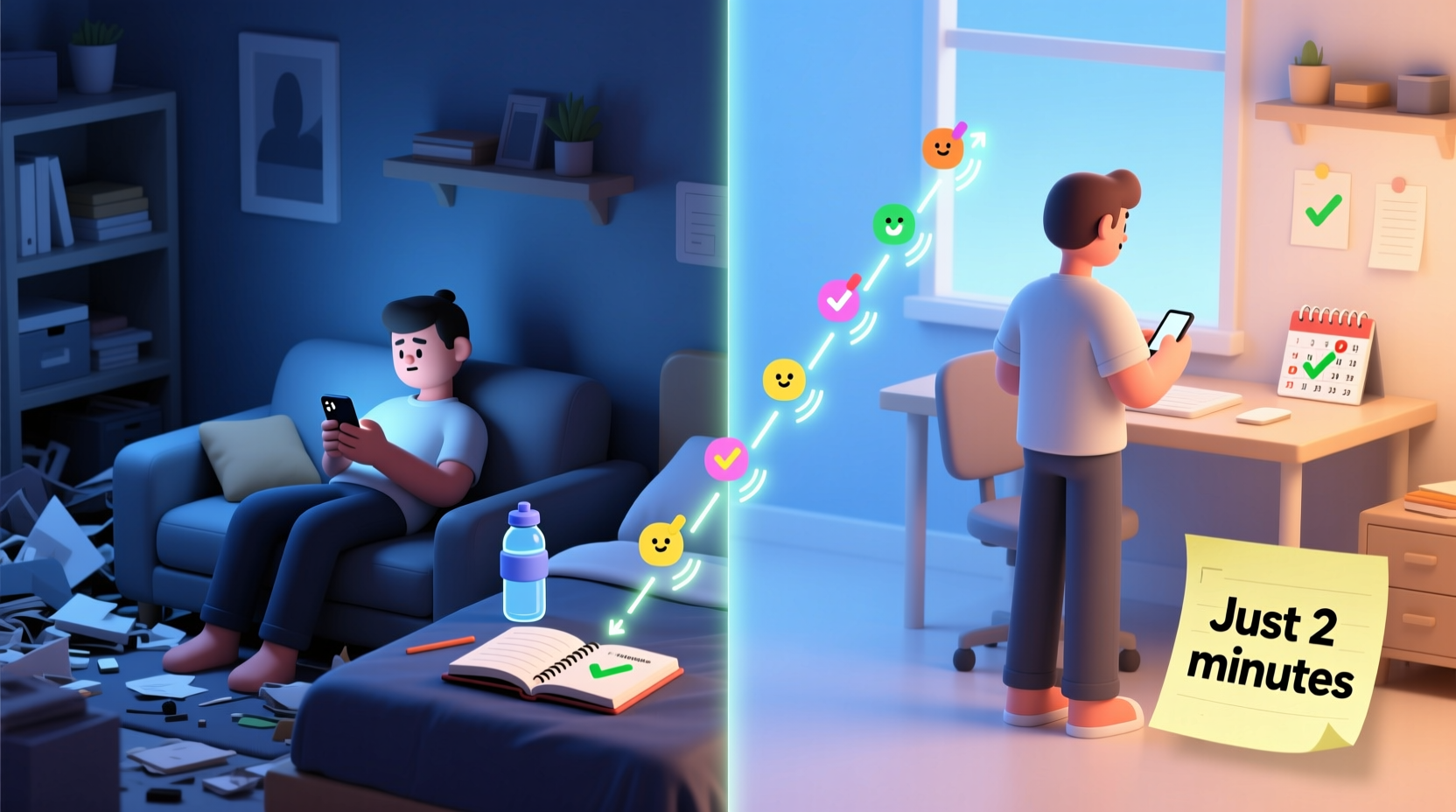
Habits are automatic behaviors formed through repetition and reinforced by rewards. They operate largely outside conscious thought, which is why willpower alone rarely works for lasting change. According to neuroscientists, habits live in the basal ganglia—the part of the brain responsible for routine and pattern-based actions. This means breaking a habit isn’t about thinking differently; it’s about doing differently—replacing the old loop with a new one.
Dr. BJ Fogg, founder of the Behavior Design Lab at Stanford University, developed the Tiny Habits® method based on decades of research. His model emphasizes that behavior change follows three conditions: Motivation, Ability, and Prompt. Crucially, he argues that ability (how easy the action is) matters more than motivation when creating lasting habits.
“Tiny behaviors are powerful because they change your self-image. You don’t need to be motivated to do something easy—you just do it.” — Dr. BJ Fogg
By making a new behavior so simple it feels effortless, you bypass resistance and build identity-based change. For example, flossing one tooth is easier than committing to an entire mouth. But once you start, you often do more—and over time, you begin to see yourself as someone who flosses regularly.
How to Replace Bad Habits With Micro-Wins
Breaking a bad habit doesn’t mean eliminating it overnight. It means replacing it with a better alternative through incremental steps. Here’s how:
- Identify the trigger. Every habit has a cue—time of day, emotional state, location, or preceding action. Notice what precedes the unwanted behavior.
- Design a substitute behavior. Choose a healthier action that satisfies the same need (e.g., stress relief, boredom, reward).
- Scale it down until it’s laughably easy. Make the new behavior so small it takes less than 30 seconds.
- Anchor it to an existing routine. Pair the new habit with something you already do consistently.
- Celebrate immediately. Positive emotion reinforces neural pathways and makes repetition more likely.
A Step-by-Step Guide to Building Sticky Micro-Habits
Follow this six-week timeline to turn tiny changes into permanent upgrades:
Week 1: Map Your Habit Loops
Spend seven days observing your target habit without judgment. Use a notebook or app to log:
- When it happens (time, day)
- Where you are
- What you were doing before
- How you felt emotionally
- What you got from it (e.g., distraction, comfort)
Week 2: Define Your Tiny Replacement
Create a micro-version of the desired behavior. Examples:
- Instead of “exercise daily,” try “put on workout clothes after brushing teeth.”
- Instead of “stop doomscrolling,” try “open book after unlocking phone.”
- Instead of “eat healthy,” try “wash one piece of fruit when I get home.”
Week 3: Anchor and Repeat
Link your tiny habit to an existing daily anchor—a stable routine like waking up, finishing lunch, or washing your face. Say: “After I [current habit], I will [tiny new habit].”
This creates a mental domino effect. Over time, the anchor becomes the trigger for the new behavior.
Week 4: Add Celebration
Each time you complete your tiny habit, celebrate with a positive gesture: smile, say “Nice job!”, or clap once. This wires the brain to associate the action with feeling good.
Week 5: Expand Gradually
Once the habit feels automatic (you do it without thinking), scale up slightly. If you’ve been doing two push-ups every morning, increase to three. Let progress follow consistency, not ambition.
Week 6: Stack and Multiply
Add a second tiny habit using the same method. Now you’re building a system—not chasing isolated goals.
Common Pitfalls and How to Avoid Them
Even with the best intentions, people stumble when trying to change habits. Here are frequent mistakes and practical fixes:
| Mistake | Why It Happens | How to Fix It |
|---|---|---|
| Starting too big | Overestimating motivation and underestimating friction | Make the habit so small it feels impossible to fail |
| Trying to change everything at once | Willpower is limited; cognitive load leads to burnout | Focus on one micro-habit at a time |
| Neglecting celebration | Focusing only on outcomes, not process | Add immediate positive feedback after each attempt |
| Skipping when life gets busy | Viewing habits as all-or-nothing | Keep the “minimum viable action”—even 10 seconds counts |
| Not tracking progress visually | Lack of visible reinforcement reduces motivation | Use a calendar checkmark or habit tracker app |
Real Example: From Late-Night Snacking to Better Sleep
Julie, a 38-year-old project manager, struggled with late-night eating. She’d finish dinner, work late, feel stressed, and end up eating cookies while watching TV. She tried cutting out sweets entirely, setting strict rules, and even locking the pantry—but nothing lasted.
Using the tiny habits method, she started by identifying her trigger: sitting on the couch after 9 PM. Instead of banning snacks, she replaced the behavior with a micro-action: “After I sit on the couch, I will drink a glass of water.”
She kept a filled glass ready on the coffee table. Each time she completed it, she said, “I’m taking care of myself.” Within two weeks, the water habit stuck. Then, she added another: “After I drink water, I will put on my sleep mask.”
These tiny shifts disrupted the old routine. Over time, the urge to snack faded—not because she forced it, but because a new pattern had taken root. Six months later, Julie no longer craved late-night food and was sleeping better than ever.
Checklist: Launch Your Tiny Habit Today
Ready to make a change that sticks? Follow this checklist to get started:
- ☑ Choose one specific bad habit you want to shift
- ☑ Observe its trigger (time, emotion, location) for 3–5 days
- ☑ Design a tiny version of the behavior you’d rather do
- ☑ Anchor it to an existing daily routine
- ☑ Practice it for seven days, celebrating each time
- ☑ Track your attempts with a simple checkmark system
- ☑ After it feels natural, consider expanding or adding another
FAQ: Tiny Habits Explained
Can tiny habits really lead to big results?
Yes—when repeated consistently, small actions compound. Flossing one tooth may seem trivial, but doing it daily reshapes identity and often leads to full routines. Research shows that people who start with micro-habits are more likely to maintain them long-term compared to those who aim for large changes.
What if I forget to do my tiny habit?
Forgetting is normal. Try placing a visual cue where the trigger occurs—a sticky note, a moved object, or a phone reminder. Also, pair it with something you never miss, like brushing your teeth or brewing coffee. The more tightly linked to an existing habit, the more automatic it becomes.
How long does it take for a tiny habit to stick?
There’s no fixed timeline, but most people report automaticity within 5 to 30 days. The critical factor isn’t duration—it’s repetition with positive reinforcement. Celebrating each success accelerates the process far more than sheer persistence.
Final Thoughts: Small Isn’t Weak—It’s Strategic
Breaking bad habits isn’t about discipline or deprivation. It’s about redesigning your environment, your routines, and your self-perception through actions so small they’re nearly invisible. Yet, over time, these invisible actions accumulate into visible transformation.
The power of tiny changes lies in their sustainability. They don’t rely on fleeting motivation. They don’t demand perfection. They simply ask you to show up, do a little thing, and acknowledge your effort. In doing so, they rebuild your relationship with yourself—one small win at a time.




 浙公网安备
33010002000092号
浙公网安备
33010002000092号 浙B2-20120091-4
Comments
No comments yet. Why don't you start the discussion?