
A well-curated capsule wardrobe centered on neutral tones is more than a fashion trend—it’s a strategic approach to personal style. By focusing on foundational pieces in shades like beige, gray, navy, black, and cream, you create a cohesive collection of clothing that effortlessly mix and match. The result? Outfits that look intentional, feel comfortable, and remain relevant across seasons and years. In an era of fast fashion and overflowing closets, building a minimalist yet functional wardrobe offers clarity, reduces decision fatigue, and supports sustainable consumption.
Neutral tones serve as the ultimate backdrop for both subtle elegance and quiet confidence. Unlike bold colors or seasonal prints, they don’t compete with one another. Instead, they harmonize, allowing textures, silhouettes, and accessories to take center stage. When done right, a neutral-based capsule becomes a personal uniform—reliable, refined, and ready for any occasion.
The Philosophy Behind a Neutral Capsule Wardrobe
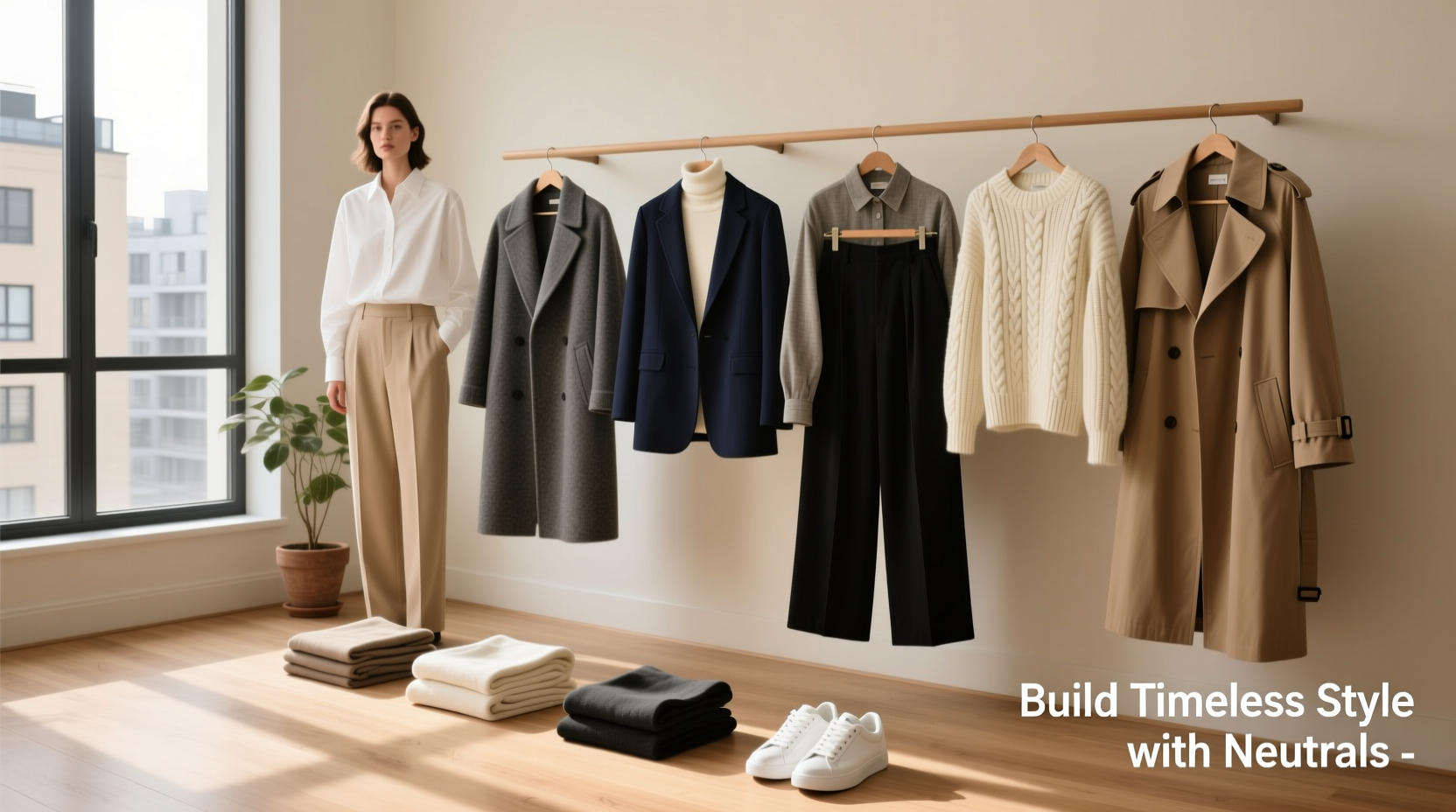
The concept of a capsule wardrobe originated in the 1970s with London boutique owner Susie Faux, who envisioned a small collection of interchangeable garments suitable for three months of wear. It was later popularized by designer Donna Karan’s “seven easy pieces” philosophy. Today, the idea has evolved into a lifestyle choice: owning fewer clothes but wearing them more intentionally.
Neutrals are the backbone of this system because they transcend trends. A camel coat from ten years ago still pairs seamlessly with today’s wide-leg trousers. A charcoal turtleneck works equally well under a blazer for work or with jeans for weekend errands. This longevity is not accidental—it’s built into the color palette.
“Simplicity is the keynote of all true elegance.” — Coco Chanel
When you eliminate visual noise, you gain clarity in self-expression. Neutrals aren’t dull; they’re deliberate. They allow your posture, grooming, and presence to speak louder than patterns ever could. And because they’re so adaptable, they support transitions—from casual to formal, urban to rural, summer to winter—with minimal effort.
Selecting Your Core Neutral Palette
Not all neutrals are created equal. Choosing the right combination depends on your skin tone, lifestyle, and climate. While black, white, and gray are classic, over-reliance on stark contrasts can feel harsh or overly severe. A balanced neutral palette includes depth, warmth, and variation.
Begin by identifying your undertones. If you look best in ivory rather than bright white, or warm browns instead of cool grays, you likely have warm undertones. Cool undertones favor silver over gold, navy over brown. Once determined, select four to five core neutrals that complement you and each other.
A typical harmonious palette might include:
- Cream or Oatmeal – softer alternative to white, adds warmth
- Charcoal or Mid-Gray – more dynamic than black, easier to pair
- Camel or Warm Taupe – rich earth tone, ideal for outerwear
- Navy – deeper than black, less harsh, universally flattering
- Black – use sparingly as an accent unless it suits your coloring
Avoid flat, lifeless shades. Look for fabrics with subtle texture—ribbed knits, brushed cotton, wool blends—that add dimension even in monochrome combinations.
Step-by-Step Guide to Building Your Capsule
Creating a capsule wardrobe isn’t about discarding everything and starting over. It’s a thoughtful process of editing, investing, and curating. Follow this timeline to build a functional, stylish collection in four weeks.
- Week 1: Audit & Edit
Pull every clothing item from your closet. Try each piece on. Keep only what fits well, feels good, and aligns with your current lifestyle. Set aside items in your target neutral palette that are in good condition. - Week 2: Define Use Cases
List your daily activities: office work, gym, social events, travel, etc. Assign outfit needs to each. For example, “3 professional tops,” “2 versatile dresses,” “1 weather-appropriate coat.” This prevents overbuying. - Week 3: Identify Gaps & Invest
Using your audit and use cases, note missing essentials. Prioritize high-quality basics from sustainable brands. Focus on natural fibers—cotton, wool, silk, linen—for durability and comfort. - Week 4: Assemble & Test
Create at least 15 complete outfits from your capsule. Wear them for a week. Adjust based on real-world feedback—what wrinkled too much? What didn’t layer well?
This methodical approach ensures your wardrobe reflects reality, not aspiration. You’re not building a closet for a different life—you’re optimizing for the one you live now.
Essential Pieces for a Neutral Capsule Wardrobe
A successful capsule contains a balance of layers, lengths, and functions. Below is a checklist of foundational items, all in neutral tones, that form the basis of countless combinations.
- 1 tailored blazer (navy or gray)
- 1 trench coat or wool coat (camel or charcoal)
- 2 sweaters (crewneck and turtleneck in complementary neutrals)
- 2 long-sleeve tops (merino wool or cotton blend)
- 2 short-sleeve tops (crew or V-neck)
- 1 button-down shirt (oatmeal or pale gray)
- 1 knit cardigan (mid-weight, open front)
- 1 pair dark wash jeans (near-neutral indigo)
- 1 pair black or gray trousers
- 1 pair wide-leg or straight-fit pants (beige or taupe)
- 1 midi skirt (pleated or A-line in navy)
- 1 little black dress or neutral sheath dress
- 1 jumpsuit or wrap dress (travel-friendly)
- 1 tailored vest (adds structure without bulk)
- Underwear, socks, sleepwear (in matching tones)
- Shoes: loafers, ankle boots, white sneakers, strappy sandals
- Bags: one structured tote, one crossbody (both in tan or black)
Each piece should serve multiple roles. For instance, the blazer works over a dress for dinner or with jeans for daytime. The turtleneck doubles as a base layer under shirts or worn solo. Versatility is the metric of value in a capsule wardrobe.
Do’s and Don’ts: Common Pitfalls to Avoid
Even with the best intentions, mistakes can undermine a capsule’s effectiveness. The following table outlines frequent errors and how to correct them.
| Do’s | Don’ts |
|---|---|
| Prioritize fit over size labels. Tailoring makes off-the-rack pieces feel custom. | Keep ill-fitting items “to lose weight” or “fix later.” If it doesn’t work now, it disrupts the system. |
| Choose natural fibers—they age better and breathe more comfortably. | Rely on synthetic blends that pill, stretch out, or trap odors. |
| Limit accessories to a few statement pieces in metal tones (gold, silver, gunmetal). | Add too many colorful scarves or patterned items that clash with neutrality. |
| Wash clothes gently and air dry when possible to extend lifespan. | Over-wash delicate items or use high heat, which degrades fabric over time. |
| Rotate seasonal layers—light knits in spring, heavier wools in winter. | Store off-season items haphazardly. Use breathable cotton bags and cedar blocks. |
Remember, a capsule is not static. It evolves with your body, job, and tastes. Reassess every six months. Remove worn-out pieces and replace them mindfully.
Real-Life Example: Sarah’s Transition to a Neutral Wardrobe
Sarah, a 38-year-old project manager in Portland, Oregon, spent years rotating through trendy pieces that never felt quite “her.” Her closet held 80+ items, yet she repeated the same three outfits weekly. After reading about capsule wardrobes, she committed to a 30-piece neutral collection.
She started by removing anything outside her chosen palette: soft gray, oatmeal, navy, and black. She kept only what fit perfectly or could be altered affordably. She invested in a high-quality camel coat and two merino wool sweaters—items she’d avoided due to cost but now wears nearly every week.
Within a month, Sarah reported spending 70% less time choosing outfits. Colleagues commented on her polished appearance. Most importantly, she felt more confident—not because she looked different, but because her clothes finally reflected her calm, capable personality.
“A neutral capsule didn’t change my style—it revealed it.” — Sarah T., via personal interview
Her experience underscores a key truth: simplicity doesn’t diminish individuality. It clarifies it.
Maintaining Cohesion Without Monotony
One common concern is that a neutral wardrobe will become boring. The secret lies in contrast and texture. Pair a smooth silk blouse with a chunky knit cardigan. Combine sleek trousers with rugged leather boots. Even within a single outfit, variation keeps the eye engaged.
Accessories are your allies. A brass belt buckle, a silk scarf in a muted print, or a pair of sculptural earrings can transform a simple ensemble. Stick to metallics or tonal accents—no need for neon pops.
Also consider footwear. White sneakers lift a gray-on-gray outfit. Brown ankle boots ground a camel coat. Shoes act as punctuation marks in your sartorial sentences.
Frequently Asked Questions
Can I include one or two colored pieces in a neutral capsule?
Yes—but do so sparingly. One burgundy sweater or olive jacket can work if it complements your neutrals and appears in no more than 10–15% of your outfits. The goal is cohesion, not rigidity.
How many pieces should a capsule wardrobe have?
There’s no fixed number. Typical ranges are 20–50 items, including shoes and outerwear. The right size depends on climate, laundry frequency, and lifestyle. Start small—30 pieces—and adjust as needed.
Is a neutral capsule suitable for all skin tones?
Absolutely. The key is selecting the right neutrals. Those with warm undertones thrive in creams, taupes, and deep browns. Cool-toned individuals often prefer ash gray, true black, and icy white. Test in daylight to find your ideal range.
Conclusion: Build With Purpose, Dress With Confidence
Building a capsule wardrobe around neutral tones is an act of self-respect. It says you value quality over quantity, intention over impulse, and timelessness over trend. Every garment earns its place not by how new it is, but by how well it serves you.
You don’t need a closet full of options to feel fully dressed. You need a handful of pieces that fit impeccably, feel luxurious, and work together seamlessly. When your wardrobe operates like a well-tuned instrument, getting dressed becomes less chore and more ritual—a quiet moment of alignment before facing the day.




 浙公网安备
33010002000092号
浙公网安备
33010002000092号 浙B2-20120091-4
Comments
No comments yet. Why don't you start the discussion?