
A well-designed capsule wardrobe simplifies daily dressing while maximizing versatility. The goal is not minimalism for its own sake, but intentional curation—choosing high-quality, timeless garments that serve multiple purposes across spring, summer, fall, and winter. When built thoughtfully, a seasonal-transitioning capsule reduces decision fatigue, saves money, and supports sustainable fashion choices. This guide walks through the principles, strategies, and practical steps to create a flexible, year-round wardrobe that adapts to changing weather and social needs without requiring constant overhauls.
Understanding the Capsule Wardrobe Philosophy
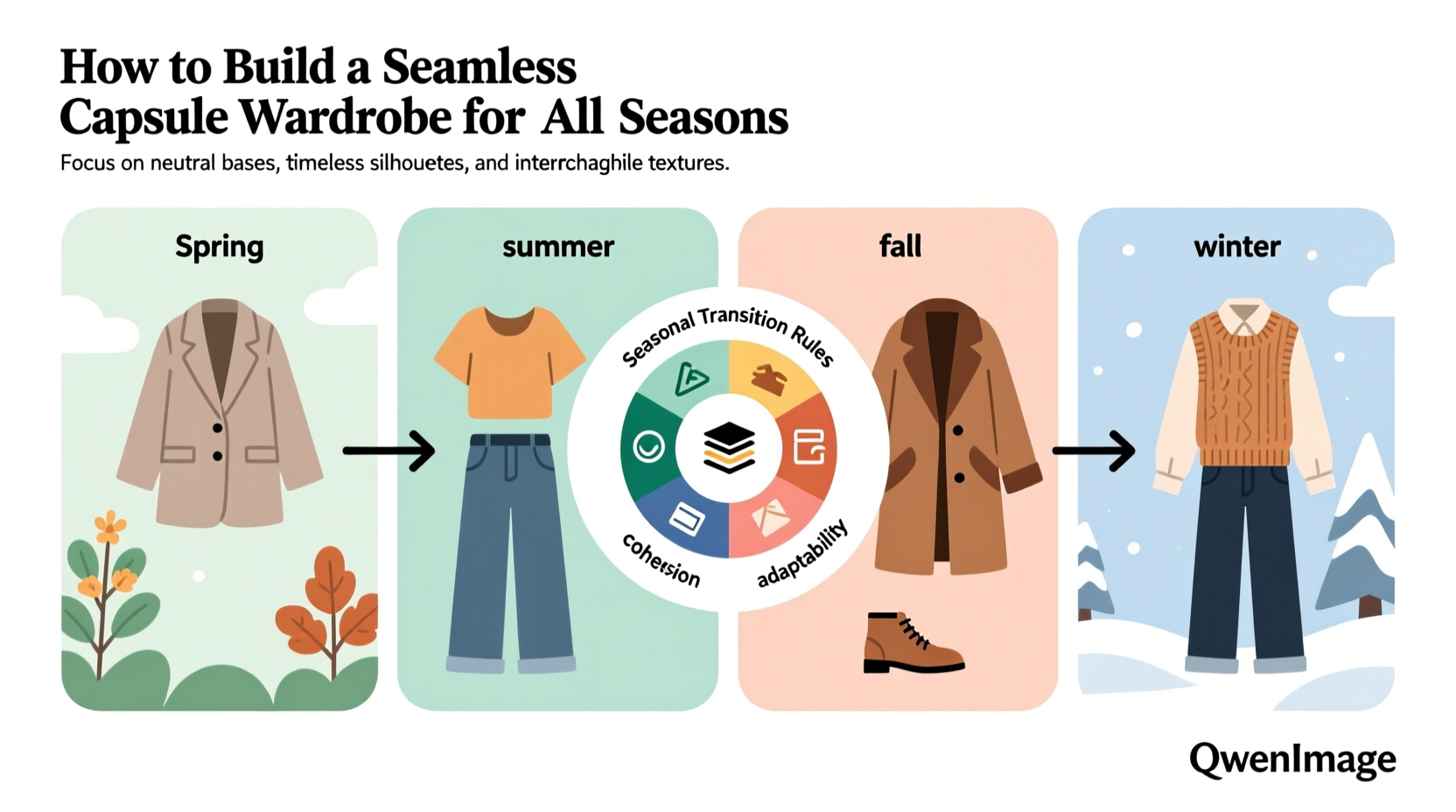
The concept of a capsule wardrobe originated in the 1970s with London boutique owner Susie Faux, who envisioned a small collection of interchangeable essentials that could be worn throughout the year. It was later popularized by designer Donna Karan’s “Seven Easy Pieces” line. At its core, the philosophy emphasizes quality over quantity, cohesion over clutter, and adaptability over trend-chasing.
A transitional capsule goes beyond a single-season minimalist set. Instead of storing half your clothes each season, you design a base of neutral, durable items that can be layered, accessorized, or swapped with just a few key additions to suit temperature shifts and style demands.
“Simplicity is the ultimate sophistication.” — Leonardo da Vinci While not a fashion expert, this principle holds true in wardrobe design: fewer, better-chosen pieces create more elegant outcomes.
Step-by-Step Guide to Building a Season-Adaptive Capsule
Creating a functional, season-spanning capsule requires deliberate planning. Follow this six-step process to build a wardrobe that evolves with the calendar—not against it.
- Assess Your Climate and Lifestyle: Begin by identifying your local weather patterns. Do you experience four distinct seasons? Mild winters? Hot, humid summers? Also consider your daily activities: office work, parenting, travel, or creative freelancing all demand different clothing functions.
- Define Your Core Color Palette: Choose 3–4 neutral base colors (e.g., navy, charcoal, beige, black) and 1–2 accent tones (like rust, olive, or burgundy) that complement your skin tone and existing accessories. A cohesive palette ensures every piece mixes effortlessly.
- Select Foundation Garments: These are your year-round anchors—items like tailored trousers, dark wash jeans, a white button-down, a black turtleneck, and a structured blazer. They should be made from mid-weight natural fabrics such as cotton, wool blends, or TENCEL™ that breathe yet provide moderate insulation.
- Incorporate Layering Pieces: Transitional success hinges on layering. Include cardigans, lightweight sweaters, vests, long-sleeve tees, and open-front knits. These allow you to adjust warmth without changing entire outfits.
- Add Seasonal Swaps (Limited Editions): Designate 4–6 rotating items per season—such as a down jacket in winter, linen shirt in summer, or trench coat in spring. Store these separately and swap them quarterly.
- Finalize with Footwear and Accessories: Choose 3–4 pairs of shoes (e.g., ankle boots, loafers, sneakers, sandals) and versatile accessories like scarves, belts, and jewelry that can shift aesthetics with minimal effort.
Key Clothing Materials for Year-Round Wear
Fabric choice is critical for thermal regulation and durability. Some textiles perform poorly in humidity or fail to insulate when damp. The right materials maintain comfort across temperatures and resist wear from frequent use.
| Material | Best For | Why It Works | Limitations |
|---|---|---|---|
| Merino Wool | Base layers, sweaters | Naturally temperature-regulating, odor-resistant, breathable | Pricier; hand-wash recommended |
| Cotton Twill | Trousers, jackets | Durable, softens over time, works in mild cold and heat | Can wrinkle easily; less insulating when wet |
| TENCEL™ (Lyocell) | Shirts, dresses | Moves moisture, drapes well, eco-friendly production | May require ironing; not ideal for heavy rain |
| Wool Blends (e.g., wool-polyester) | Blazers, coats, skirts | Retains shape, resists wrinkles, provides warmth without bulk | Check care labels—some blends aren’t machine washable |
| Recycled Polyester | Outerwear, activewear | Water-resistant, durable, sustainable alternative to virgin plastic | Can retain odors; microplastic shedding in wash |
Invest in garments made from these materials whenever possible. While initial costs may be higher, their longevity and performance reduce replacement frequency and support environmental responsibility.
Real Example: How Sarah Maintains One Wardrobe Across Four Seasons
Sarah lives in Portland, Oregon—a city known for unpredictable weather and mild but wet winters. As a graphic designer working remotely with occasional client meetings, she needed a practical yet polished wardrobe that didn’t require seasonal overhauls.
She started by defining her core palette: charcoal, cream, olive green, and deep plum. Her foundation includes:
- Two pairs of dark wash jeans
- A black wool-blend blazer
- Three neutral knit tops (merino and TENCEL™)
- One midi skirt in charcoal
- A tailored trench coat
- Ankle boots, loafers, and minimalist sandals
In winter, she layers a chunky merino cardigan under the blazer and adds opaque tights. Summer calls for rolling up sleeves, switching to sandals, and wearing a sleeveless dress over a tank. Spring and fall involve light scarves and swapping footwear. Her only seasonal additions are a puffer vest (stored Nov–Mar) and a linen shirt (used Jun–Aug).
By focusing on adaptable silhouettes and smart layering, Sarah wears 80% of her capsule year-round, reducing laundry load, shopping trips, and morning stress.
Do’s and Don’ts of Seasonal Transition Planning
Avoid common pitfalls that undermine capsule effectiveness. Use this checklist to stay aligned with best practices.
| Do | Don’t |
|---|---|
| Choose mid-weight fabrics that layer well | Buy heavy winter coats or flimsy summer dresses as core items |
| Use accessories to change the tone of an outfit | Rely solely on clothing swaps to signal seasonal change |
| Store off-season items in breathable cotton bags | Leave clothes in plastic bins where moisture can accumulate |
| Wash natural fibers gently and air-dry when possible | Dry-clean wool frequently—it degrades fibers over time |
| Repair small damages immediately (loose buttons, snags) | Wait until garments are unwearable before replacing them |
Expert Insight: Why Timelessness Outlasts Trends
Fashion historian Dr. Lena Moreau, author of *The Longevity of Style*, emphasizes that capsule wardrobes thrive on predictability, not novelty.
“A garment worn 30 times has a far lower environmental footprint than one worn three times, regardless of material. Capsules work because they force us to confront actual usage, not aspirational identity.” — Dr. Lena Moreau, Fashion Sustainability Researcher
This mindset shift—from buying what we think we should wear to choosing what we actually do wear—is central to building a lasting, functional wardrobe. She advises clients to ask: “Will I still want to wear this in six months, in a different season?” If the answer isn’t a clear yes, it doesn’t belong in the capsule.
Essential Checklist: Build Your Transitional Capsule
Use this actionable checklist to guide your wardrobe creation process:
- ☐ Audit current closet: Remove ill-fitting, damaged, or rarely worn items
- ☐ Identify 3–4 core colors that work with your complexion and lifestyle
- ☐ Select 10–15 core pieces made from seasonally adaptive fabrics
- ☐ Add 3–5 layering items (cardigans, vests, long-sleeve bases)
- ☐ Choose 3–4 pairs of shoes that span casual and professional settings
- ☐ Pick 2–3 accessories (scarves, belts, jewelry) to refresh looks
- ☐ Designate storage for 4–6 seasonal add-ons (coat, swimwear, etc.)
- ☐ Test 7 days of outfits using only capsule items
- ☐ Schedule biannual reviews to assess fit, wear, and relevance
Frequently Asked Questions
Can a capsule wardrobe work in extreme climates?
Yes, but with adjustments. In very cold regions, include insulated outerwear as a permanent layer and focus on thermals and mid-layers that integrate into your core system. In hot climates, prioritize breathable fabrics and UV protection. The capsule still centers on versatile inner layers—outer extremes are managed through limited, functional additions.
How many items should a transitional capsule include?
Most effective capsules range from 25–40 total pieces, including shoes and outerwear. The exact number depends on lifestyle complexity. A remote worker may need fewer outfits than someone attending frequent events. Focus on utility: if an item doesn’t combine with at least three others, reconsider its place.
What if my workplace has strict dress codes?
Build around compliance. If suits are required, select a navy or gray suit in a wool blend that resists wrinkling. Pair it with varied shirts, ties, or blouses to create distinction. Use pocket squares, shoes, or watches to express personality without violating policy.
Conclusion: Start Small, Think Long-Term
Building a capsule wardrobe that transitions between seasons isn’t about perfection—it’s about progress. You don’t need to overhaul everything overnight. Begin with your most-worn outfits, identify the common threads, and gradually replace outliers with purposeful alternatives. Over time, you’ll develop a wardrobe that feels effortless, aligns with your values, and serves you reliably in any weather.
The real benefit isn’t just fewer laundry loads or closet space saved. It’s the quiet confidence that comes from knowing what works, why it works, and how to adapt it fluidly. That clarity extends beyond fashion into decision-making, sustainability, and self-awareness.




 浙公网安备
33010002000092号
浙公网安备
33010002000092号 浙B2-20120091-4
Comments
No comments yet. Why don't you start the discussion?