
A capsule wardrobe is more than a minimalist trend—it’s a functional approach to fashion that emphasizes versatility, sustainability, and personal style. By curating a small collection of high-quality, interchangeable pieces, you reduce decision fatigue, save money, and minimize environmental impact. The best part? You don’t need to shop full-price designer labels to achieve it. With strategic sourcing from secondhand stores and savvy use of sales cycles, you can build a timeless wardrobe that reflects your identity without draining your wallet.
Thrifting and sale shopping require patience and precision. Unlike fast fashion retail, where trends dictate inventory, secondhand markets offer unpredictable variety. Success lies not in impulse buys but in intentionality. This guide walks through the process of building a complete capsule wardrobe—tops, bottoms, outerwear, shoes, and accessories—using only pre-owned items and discounted finds.
Define Your Style and Core Needs
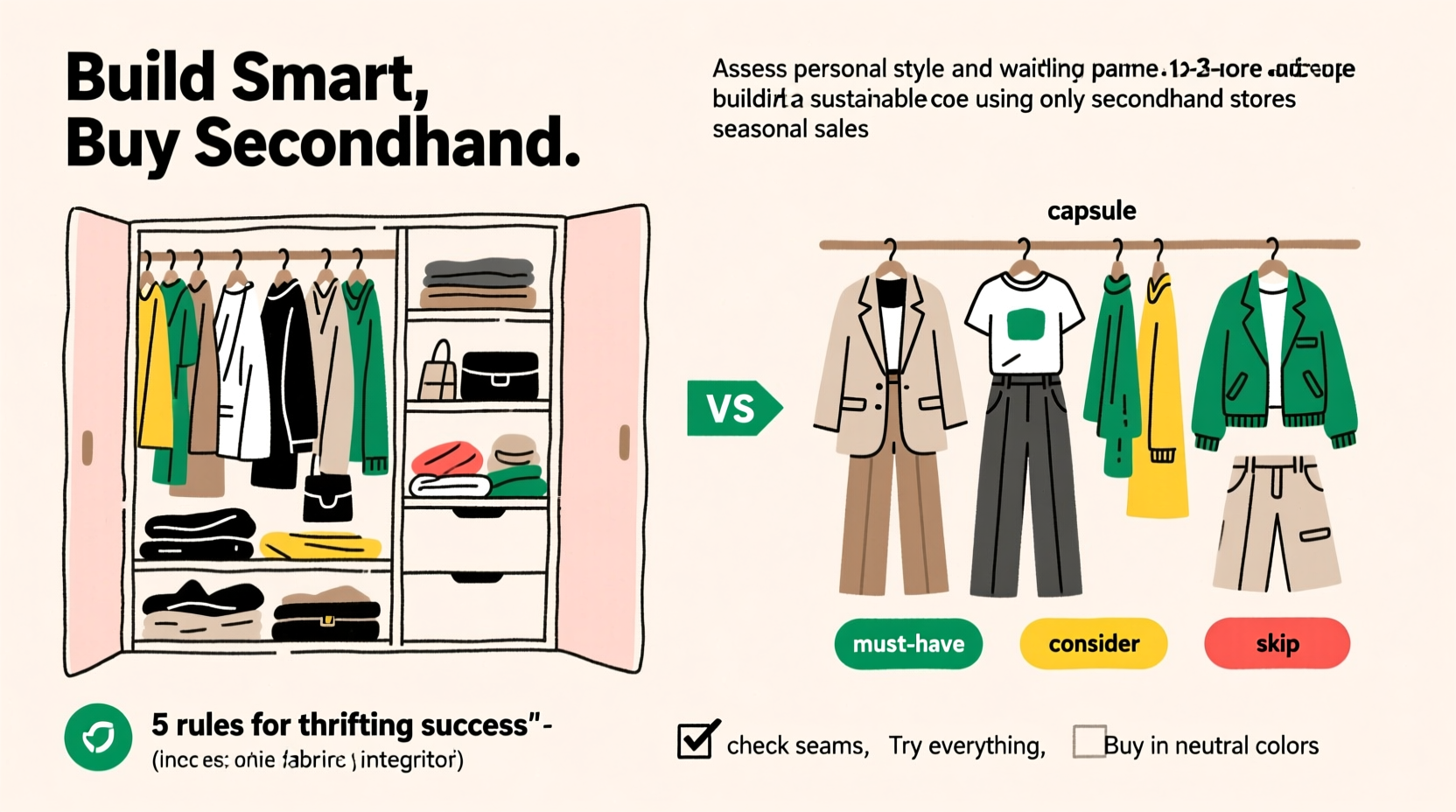
Before stepping into a thrift store or browsing online resale platforms, clarify what you truly need. A capsule wardrobe typically includes 30–40 pieces, including clothing and shoes, that work across seasons and occasions. Start by auditing your current wardrobe—not to judge past purchases, but to identify patterns: Which items do you reach for most often? What fits consistently well? What colors dominate your favorite outfits?
Next, consider your lifestyle. If you work remotely, your needs differ from someone in a corporate office or a parent managing school drop-offs and weekend errands. Break down your weekly routine into categories:
- Work (formal, business casual, remote)
- Social events (casual dinners, parties, gatherings)
- Active wear (walking, gym, yoga)
- Seasonal demands (layering for winter, breathability for summer)
This assessment helps define the foundation of your capsule. For example, a typical urban professional might need:
- Two tailored blazers
- Three neutral-toned tops (white, black, gray)
- One pair of dark wash jeans
- A midi skirt or dress for semi-formal occasions
- Comfortable walking shoes and one pair of dress flats
Master the Art of Secondhand Shopping
Thrift stores, consignment shops, and online marketplaces like Poshmark, ThredUp, and Depop are goldmines for high-quality garments at low prices. However, success depends on knowing where and when to look—and what to avoid.
Timing matters. Many brick-and-mortar thrift stores mark down items on specific days (e.g., “blue tag” discounts every Wednesday). Online platforms often see price drops after 30 days with no sale. Signing up for newsletters or following local stores on social media keeps you informed about promotions.
Know the brands worth hunting. Even in used condition, certain labels maintain durability and cut quality. Look for natural fibers like cotton, wool, silk, and linen. Avoid synthetic blends that pill or lose shape quickly. Time-tested brands include:
- Eileen Fisher (for relaxed yet polished silhouettes)
- J.Crew (classic cuts in durable fabrics)
- Patagonia (outerwear and layering pieces)
- Levi’s (denim that ages well)
- The North Face (functional outerwear)
Inspect each item carefully. Check seams for fraying, zippers for smooth operation, and underarms for stains. Turn garments inside out to assess overall wear. A small flaw—like a missing button—can be fixed; structural damage usually cannot.
“Secondhand doesn’t mean second-rate. Some of the best pieces I’ve styled were found in thrift bins. It’s about seeing potential beneath the surface.” — Lena Torres, Sustainable Fashion Stylist
Build Your Capsule: A Step-by-Step Guide
Creating a cohesive wardrobe from secondhand sources takes time. Treat it as a project, not a single shopping trip. Follow this timeline to build thoughtfully:
- Week 1–2: Define your palette and core items. Choose 3–5 base colors (e.g., navy, cream, charcoal) and 1–2 accent tones (burgundy, olive). These should mix and match easily. Write a list of essential pieces based on your lifestyle audit.
- Week 3–6: Begin targeted searches. Visit 2–3 thrift stores per week. Focus on one category at a time—start with bottoms, then move to tops, then outerwear. Use your checklist to stay focused. Skip anything outside your color scheme or fit parameters.
- Month 2: Leverage end-of-season sales. Retailers discount winter coats in March, swimwear in August. Buy off-season secondhand items at deep discounts, then store until needed. This applies both in-store and online.
- Month 3: Refine and edit. Try all acquired pieces together. Eliminate duplicates or ill-fitting items. Donate or resell what doesn’t make the cut.
- Ongoing: Maintain and rotate. Add one new piece per season only if necessary. Replace worn items with better secondhand versions.
Do’s and Don’ts of Secondhand Wardrobe Building
| Do | Don't |
|---|---|
| Focus on fabric quality over brand names | Assume vintage automatically means better construction |
| Buy slightly oversized items—you can tailor them | Purchase items that require extensive repairs unless you have skills/time |
| Shop during staff-only sales or discount days | Rush decisions due to fear of missing out |
| Use steam or gentle washing to refresh secondhand garments | Wear unwashed thrifted clothes without laundering first |
| Keep a digital mood board of outfit combinations | Ignore fit just because the price is low |
Real Example: Maya’s 36-Piece Capsule on a Budget
Maya, a 32-year-old teacher in Portland, wanted to simplify her mornings and reduce clutter. She set a $200 budget to build a full capsule wardrobe using only secondhand stores and clearance racks. Over eight weeks, she followed a structured plan:
- Defined a neutral palette: oatmeal, black, deep green, and denim blue
- Identified core needs: five tops, three bottoms, one dress, two sweaters, one coat, two pairs of shoes
- Visited Goodwill, Buffalo Exchange, and local consignment shops weekly
- Leveraged a 50% off all coats event in April to buy a wool blend trench
- Found a nearly-new J.Crew sweater on Poshmark for $12
- Replaced stained t-shirts with vintage band tees from a pop-up market
By month’s end, Maya had assembled 36 interchangeable pieces totaling $197. Her most expensive single item was a pair of Red Wing boots purchased at 30% off at a consignment shop ($65). She now dresses confidently, spends less time choosing outfits, and hasn’t bought new clothes in nine months.
Checklist: Building Your Secondhand Capsule
Use this actionable checklist to stay on track:
- ☐ Audit current wardrobe and identify gaps
- ☐ Define lifestyle-based clothing needs
- ☐ Choose a cohesive color palette (3–5 core colors)
- ☐ List essential items (e.g., 2 blazers, 3 long-sleeve tops)
- ☐ Research thrift store discount schedules in your area
- ☐ Set a realistic budget per category
- ☐ Inspect all secondhand items for wear, stains, and structure
- ☐ Wash or steam all new additions before wearing
- ☐ Test mix-and-match potential of all pieces
- ☐ Remove non-essential or poorly fitting items after trial period
- ☐ Schedule seasonal reviews to maintain cohesion
Frequently Asked Questions
Can I really find professional workwear at thrift stores?
Yes—especially in affluent neighborhoods or near business districts. Look for natural fiber blouses, wool trousers, and structured blazers. Consignment shops often carry gently used office attire from brands like Ann Taylor, Banana Republic, and Theory. Inspect collars and cuffs for shine or pilling, which indicate heavy wear.
How do I know if a secondhand item is priced fairly?
Compare the original retail value to the current asking price. A $200 jacket selling for $40 at a thrift store is a steal, even if lightly worn. On resale apps, check sold listings for similar items to gauge market value. Also consider repair costs—if replacing buttons or fixing a hem adds $20 in effort, factor that in.
What if my size isn’t available in secondhand stores?
Be patient. Stock fluctuates daily. Sign up for alerts on platforms like Poshmark or eBay. Follow smaller curated thrift accounts on Instagram. Some organizations specialize in plus-size or petite secondhand curation. Also consider tailoring—many men’s shirts or larger women’s items can be altered affordably.
Final Thoughts: Sustainability Meets Style
Building a capsule wardrobe from secondhand stores and sales isn’t just economical—it’s an act of conscious consumption. Every garment saved from landfill reduces textile waste and carbon emissions. More importantly, it shifts focus from quantity to quality, from trend-chasing to self-expression.
Your wardrobe should serve you, not overwhelm you. By investing time in selection and curation, you create a collection that feels authentic, functions seamlessly, and evolves with you. There’s pride in wearing a perfectly tailored blazer found for $15 or a dress that sparks conversation because of its unique history.
The process isn’t always instant. Some weeks yield nothing. Others bring unexpected treasures. But with clarity, discipline, and a bit of creativity, you can build a wardrobe that looks intentional, wears beautifully, and aligns with your values—all without spending full price.




 浙公网安备
33010002000092号
浙公网安备
33010002000092号 浙B2-20120091-4
Comments
No comments yet. Why don't you start the discussion?