
A minimalist approach to fashion doesn’t mean sacrificing style—it means refining it. The concept of a capsule wardrobe has gained traction for good reason: it reduces decision fatigue, saves money, and promotes sustainable consumption. But what if you could distill your entire wardrobe down to just ten essential pieces—each designed to work seamlessly with the others? This isn’t about deprivation; it’s about intentionality. By selecting high-quality, timeless garments in a cohesive color palette, you can create dozens of outfits from a compact collection. The goal is versatility, durability, and personal expression without clutter.
The Philosophy Behind a Ten-Piece Capsule
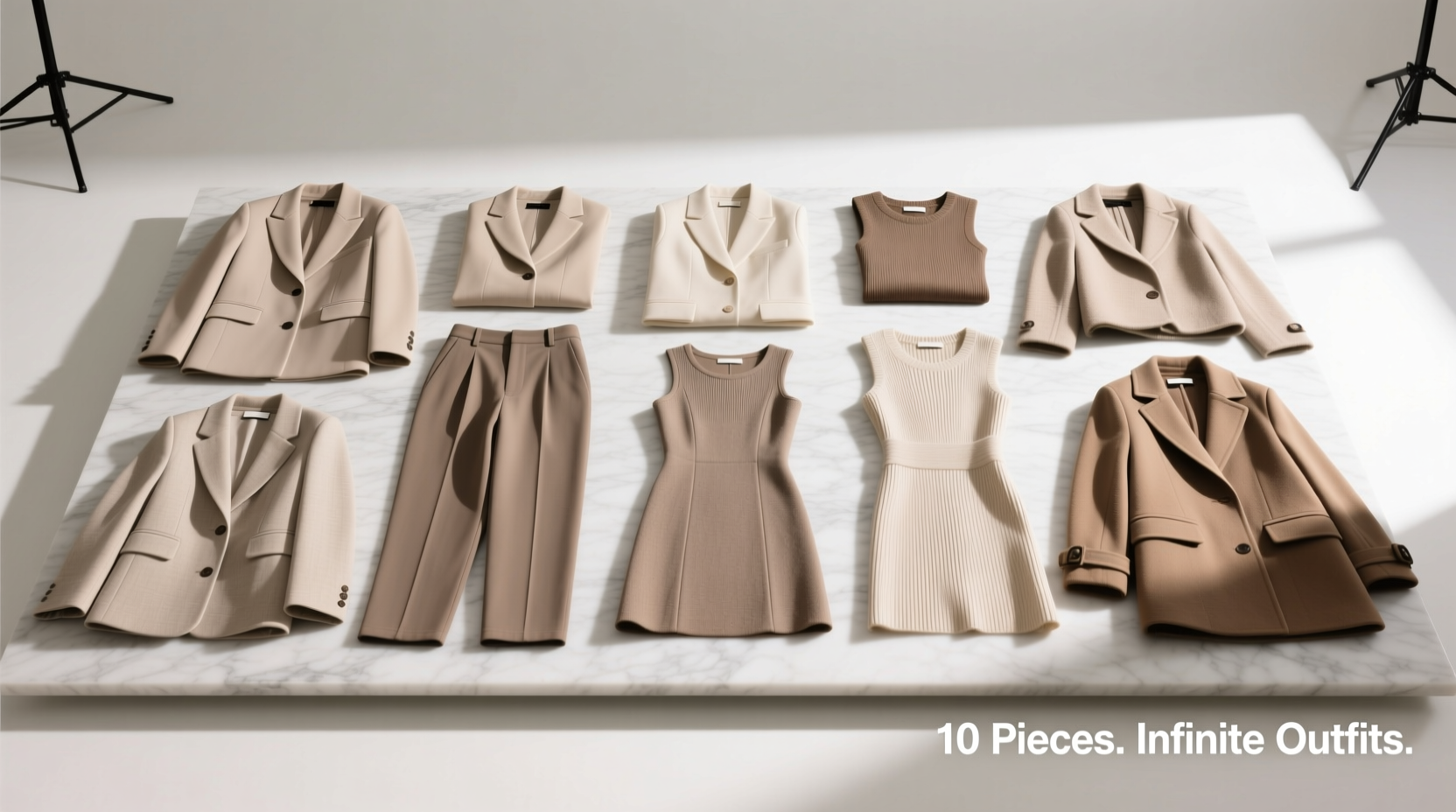
The idea of limiting your wardrobe to ten items challenges the norm of fast fashion and overconsumption. Originating in the 1970s with designer Susie Faux and later popularized by Donna Karan’s “seven easy pieces,” the capsule wardrobe emphasizes curated simplicity. Reducing your closet to ten core pieces forces clarity. You must ask: What do I actually wear? What makes me feel confident? Which fabrics and fits serve my lifestyle?
This minimalist framework works because it prioritizes compatibility. Each piece should pair effortlessly with at least three others. Neutral tones like black, navy, beige, or gray form the backbone, allowing for easy layering. Textures and subtle details—such as ribbed knits, tailored collars, or structured shoulders—add visual interest without compromising cohesion.
“Simplicity is the ultimate sophistication.” — Leonardo da Vinci
While ten may seem extreme, the constraint breeds creativity. When every garment must earn its place, you stop buying impulsively and start dressing purposefully.
Selecting Your Ten Pieces: A Strategic Approach
Building a ten-piece capsule requires careful planning. These are not random selections—they are strategic investments in your daily comfort and confidence. Below is a recommended structure for a balanced, functional wardrobe suitable for most temperate climates and urban lifestyles:
- Tailored trousers (e.g., wool-blend straight-leg)
- Dark wash jeans (mid-rise, slim or straight fit)
- White button-down shirt (crisp cotton or silk blend)
- Neutral knit sweater (crewneck or turtleneck)
- Blazer (navy or charcoal)
- Sheath dress (black or heather gray)
- Chambray or denim shirt (lightweight, unisex style)
- Midi skirt (A-line, neutral tone)
- Black turtleneck (fine-gauge merino or cashmere blend)
- Cashmere cardigan (open-front, mid-length)
Each item serves multiple roles. For example, the white shirt transitions from office wear under a blazer to weekend casual when paired with jeans and sneakers. The black turtleneck doubles as a base layer under the blazer or a standalone top with the midi skirt.
Color Coordination for Maximum Mixability
A successful capsule relies on a unified color scheme. Stick to a base palette of 2–3 neutrals (e.g., black, gray, beige) with one accent shade (like burgundy or olive) if desired. All ten pieces should fall within this spectrum. This ensures that any top pairs with any bottom, and layers complement each other without clashing.
Avoid trendy prints or overly bright colors unless they align perfectly with your existing palette. Solids are ideal; subtle textures (herringbone, cable knit, poplin) add depth without breaking harmony.
Outfit Combinations: How Ten Pieces Create Thirty+ Looks
With thoughtful selection, ten items generate far more than ten outfits. Let’s explore realistic combinations using the suggested capsule:
| Top | Bottom | Layer | Occasion |
|---|---|---|---|
| White button-down | Tailored trousers | Blazer | Office meeting |
| Black turtleneck | Dark jeans | Cashmere cardigan | Weekend brunch |
| Knit sweater | Midi skirt | — | Lunch date |
| Chambray shirt | Tailored trousers | Blazer | Business casual |
| Sheath dress | — | Cashmere cardigan | Dinner out |
| White button-down | Jeans | — | Casual day |
| Black turtleneck | Tailored trousers | Blazer | Presentation |
| Knit sweater | Dark jeans | — | Errands |
By adding accessories—belt, scarf, jewelry, shoes—you further diversify each look. The same sheath dress becomes professional with heels and a blazer, or relaxed with ankle boots and a cardigan. Layering multiplies possibilities exponentially.
“The best things in life are simple. The best wardrobes should be too.” — Matilda Kahl, minimalist stylist
Step-by-Step Guide to Building Your Capsule
Follow this seven-step process to assemble your ten-piece wardrobe with precision and confidence.
- Assess your lifestyle. Are you in an office, working remotely, or balancing both? Identify the activities you dress for most frequently.
- Empty your closet. Remove everything and lay it out. Sort into keep, donate, repair, and discard piles.
- Identify gaps. Note what you reach for daily. What’s missing? What don’t you wear? Look for patterns in fit, fabric, and function.
- Define your color palette. Choose 3–4 coordinating shades. Use a color wheel or app to test combinations.
- Select your anchor pieces. Start with the most versatile items: trousers, a blazer, a neutral top. Build outward from there.
- Shop intentionally. Buy one piece at a time, ensuring it matches at least three others. Try before you buy, or order samples.
- Test and refine. Wear your capsule for two weeks. Track what works and what doesn’t. Replace underperforming items gradually.
Real-Life Example: Maya’s Ten-Piece Transition
Maya, a 34-year-old project manager in Portland, struggled with morning indecision despite owning over 60 tops and 20 pairs of pants. Her closet was full, but nothing felt quite right. After reading about minimalism, she decided to try a ten-piece capsule for one month.
She began by identifying her core needs: business casual attire, comfort for remote days, and occasional evening wear. She chose a palette of charcoal, cream, and deep green. Her final ten included:
- Gray wool trousers
- Olive chinos
- Cream silk blouse
- Charcoal turtleneck
- Beige trench coat (counted as a key outerwear layer)
- Black wrap dress
- Denim shirt
- Gray cardigan
- Black tailored blazer
- White T-shirt (luxury cotton)
Within a week, Maya reported spending 70% less time choosing outfits. She wore the cream blouse with chinos and blazer for client calls, then swapped the blazer for the cardigan for a relaxed afternoon. The black dress, accessorized differently, served four events over the month. By the end, she extended the experiment indefinitely—only replacing worn items with equally versatile ones.
Common Pitfalls and How to Avoid Them
Even with the best intentions, building a ten-piece capsule can go wrong. Here are frequent missteps and how to navigate them:
| Pitfall | Solution |
|---|---|
| Choosing style over function. Loving a piece doesn’t mean it earns its place. | Evaluate based on wear frequency, not emotional attachment. Ask: “Have I worn this in the last 30 days?” |
| Ignoring climate needs. A wool coat might be essential in Minnesota but redundant in Miami. | Adjust materials and layers to your region. In warmer areas, swap heavy knits for lightweight linen or cotton blends. |
| Forgetting footwear and outerwear. Shoes and coats aren’t always counted but are critical. | Either include one pair of shoes and one jacket in your ten, or treat them as separate but coordinated elements. |
| Overlooking fit changes. Weight fluctuations or aging bodies alter how clothes sit. | Reassess fit quarterly. Tailoring can revive ill-fitting pieces and extend their life. |
Checklist: Building Your Capsule Successfully
- ☑ Define your daily activities and dress code
- ☑ Clean out your current wardrobe ruthlessly
- ☑ Choose a harmonious color palette (3–4 colors max)
- ☑ Prioritize natural, durable fabrics
- ☑ Select pieces that mix with at least three others
- ☑ Include varied textures to avoid monotony
- ☑ Test the capsule for two weeks before finalizing
- ☑ Allow for seasonal rotation (optional)
Frequently Asked Questions
Can I really live with only ten clothing items?
Yes—but with nuance. The “ten” typically refers to core garments, not including underwear, sleepwear, activewear, or outerwear. Many people rotate capsules seasonally (e.g., ten for winter, ten for summer). The number is symbolic of extreme curation, not literal restriction for all contexts.
What about shoes and accessories?
Shoes and accessories are often treated separately. A minimalist might own three pairs (e.g., loafers, ankle boots, sneakers) that coordinate with all ten pieces. Scarves, belts, and jewelry enhance variety without increasing garment count.
How do I handle special occasions?
Keep one or two non-capsule items for events like weddings or parties. Alternatively, design your capsule so the dressiest piece (e.g., a silk dress or blazer) can be elevated with accessories for formal settings.
Final Thoughts: Less Is More, Strategically
A ten-piece capsule wardrobe isn’t a trend—it’s a long-term strategy for mindful living. It shifts focus from consumption to curation, from quantity to quality. When every item is chosen for its utility, compatibility, and craftsmanship, getting dressed becomes effortless. You no longer face a closet full of “almost right” choices. Instead, you open it to clarity and confidence.
The real power lies in consistency. Once built, maintain your capsule by adopting a one-in, one-out rule. Before buying anything new, ask: Does this replace something? Does it work with at least three existing pieces? If not, it doesn’t belong.




 浙公网安备
33010002000092号
浙公网安备
33010002000092号 浙B2-20120091-4
Comments
No comments yet. Why don't you start the discussion?