
Transforming your living space into an engaging playground for pets during the holiday season doesn’t have to mean cluttered toys or unsafe setups. By combining festive Christmas lights with infrared (IR) sensors and programmable timing circuits, you can create a dynamic, responsive light maze that stimulates your cat or small dog mentally and physically. This project blends pet enrichment with smart electronics, offering a safe, low-voltage environment where animals interact with moving patterns of light activated only when they’re nearby.
The concept hinges on motion-triggered lighting sequences that simulate prey-like movement—ideal for triggering natural hunting instincts in cats. For dogs, especially smaller or high-energy breeds, the unpredictable flashes encourage exploration and focus. Unlike laser pointers, which can frustrate pets by never allowing a “catch,” this system offers clusters of reachable light zones that reward interaction.
Understanding the Core Components
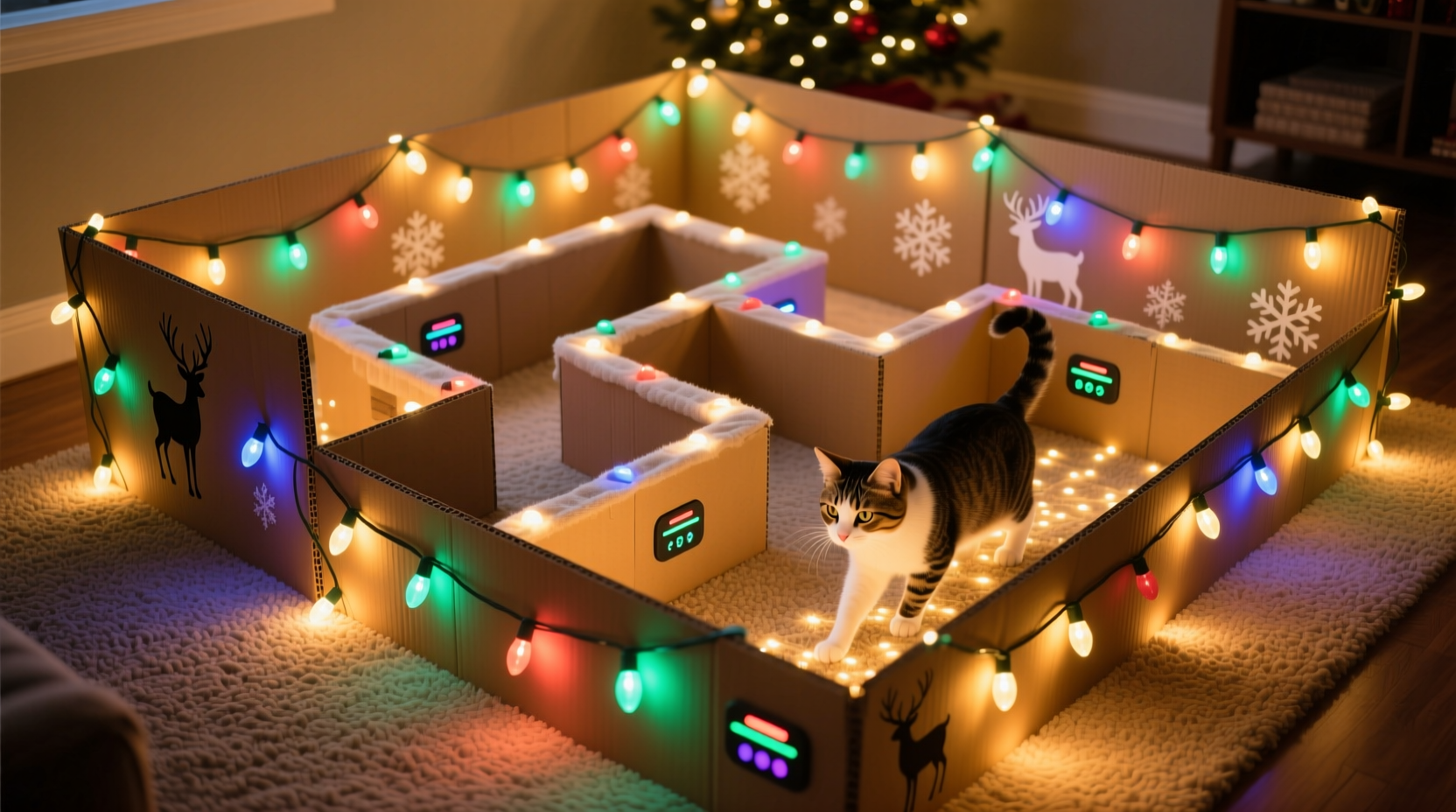
A functional Christmas light maze requires three primary elements: illumination sources, detection technology, and control logic. Each plays a distinct role in creating a responsive, energy-efficient play zone.
- Lights: Use LED string lights designed for indoor use, preferably warm white or red-toned to avoid overstimulation. Avoid strobing effects unless specifically tested for pet safety.
- IR Sensors: Passive Infrared (PIR) motion sensors detect body heat and movement. These are commonly used in security systems and automatic lighting.
- Microcontroller: An Arduino or ESP32 board manages input from sensors and controls output to lights based on timing rules.
Wiring is kept low-voltage (5V–12V DC), minimizing risk even if a pet chews through insulation. All components should be enclosed or elevated beyond paw reach, with power supplies isolated from floor level.
Step-by-Step Guide to Building the Maze
- Design the Layout
Create a floor plan sketch of the play area—hallway corners, under furniture edges, or around coffee tables work well. Mark zones where lights will activate sequentially upon detection. - Gather Materials
Collect:- LED string lights (cuttable, with individual node wiring)
- 2–3 PIR motion sensors (HC-SR501 recommended)
- Arduino Uno or ESP32 development board
- Breadboard and jumper wires
- Relay module (optional, for higher-power strings)
- USB power bank or wall adapter (5V)
- Electrical tape, zip ties, non-toxic adhesive clips
- Wire the Circuit
Connect each PIR sensor’s VCC to 5V, GND to ground, and OUT pin to a digital input on the microcontroller (e.g., D2, D3). Link the light strings’ positive leads to relay-controlled outputs or directly to PWM pins if current draw is low. - Program the Logic
Upload code that reads sensor inputs and triggers timed sequences. Example behavior: When Sensor A detects motion, Lights Zone 1 flash for 8 seconds, then transition to Zone 2 after a 2-second delay. After 30 seconds of no motion, all lights deactivate. - Install Safely
Mount lights along baseboards or under shelves using adhesive clips. Keep wires secured with zip ties behind furniture legs. Place sensors at pet-head height (~6–12 inches off ground) pointing toward approach paths. - Test and Adjust
Run trials without your pet first. Fine-tune retrigger delays and timeout durations. Then observe your pet’s response—adjust brightness or sequence speed if signs of stress appear (flattened ears, hiding).
Do’s and Don’ts: Installation Safety Table
| Do | Don't |
|---|---|
| Use battery-powered or USB-powered LED strings only | Plug mains-voltage holiday lights into open areas accessible to pets |
| Elevate wiring above floor level using clips or conduit | Leave loose cables where pets can chew or tangle |
| Limit active sessions to 15 minutes per hour | Run lights continuously overnight or unsupervised |
| Enclose circuit boards in ventilated plastic boxes | Expose bare electronics to fur, saliva, or dust |
| Monitor initial interactions closely | Assume all pets will enjoy fast-moving lights—some may feel threatened |
Real Example: The Jackson Family’s Cat Maze
The Jacksons built a U-shaped light path in their sunroom using three HC-SR501 sensors spaced six feet apart. Their two indoor cats, Milo and Luna, had shown declining interest in static toys. After installing the maze with staggered 6-second light pulses progressing from one end to the other, both cats began patrolling the zone daily.
Within a week, Milo was seen \"chasing\" the leading edge of illumination, pouncing at the final node before it turned off. The family programmed a cooldown period of 45 seconds between activations to prevent obsession. They also added a manual override switch so they could disable the system during movie nights.
Notably, they avoided blue or white LEDs after noticing Luna became over-aroused. Switching to amber tones reduced agitation while maintaining engagement.
“Pets thrive on novelty and predictability in balance. A light maze shouldn’t mimic chaos—it should offer solvable puzzles.” — Dr. Lena Torres, Veterinary Behavioral Specialist
Optimizing Play Patterns with Timed Activation
The real magic lies in programming intelligent timing sequences. Random blinking lacks purpose; instead, design pathways that simulate escape trajectories. For example:
- Chase Mode: Activate lights in a linear progression (A→B→C) lasting 10 seconds total.
- Flicker Hunt: Randomly illuminate isolated nodes every 3–7 seconds within a defined zone.
- Rest Period Lockout: Once triggered, allow play for up to 2 minutes, then enforce a 15-minute pause to prevent fixation.
Timers can be coded directly into Arduino's millis() function to avoid blocking delays. Below is a simplified logic snippet:
if (motionDetected && !gameActive && (currentMillis - lastActivation > cooldownPeriod)) {
  startLightSequence();
  gameActive = true;
  gameStartMillis = currentMillis;
}
This ensures the maze resets appropriately and avoids constant triggering during prolonged pet presence.
Checklist: Pre-Deployment Verification
- ✅ Confirm all electrical connections are insulated and secure
- ✅ Test each sensor’s range and angle independently
- ✅ Verify lights do not flicker at frequencies known to cause seizures (avoid 10–20 Hz)
- ✅ Ensure no reflections occur on mirrors or glass that might confuse pets
- ✅ Program maximum daily runtime (e.g., 45 minutes split into segments)
- ✅ Observe first session live; intervene if pet shows fear or hyperfixation
- ✅ Label power cutoff location clearly for household members
FAQ
Can this setup work for dogs?
Yes, particularly for small or herding breeds like Corgis or Terriers who enjoy tracking movement. Reduce light intensity and increase delay times compared to cat-focused designs. Supervise closely, as dogs are more likely to bite wiring.
Are IR sensors safe for pets?
Absolutely. Infrared sensors passively detect thermal radiation—they emit nothing harmful. They operate identically to automatic room lights and pose no health risk.
What if my pet ignores the lights?
Not all animals respond to visual stimuli alone. Try pairing the first few activations with a treat dropped near the final lit node. You can also temporarily attach feather toys to glowing sections to bridge interest.
Conclusion: Turn Holidays into Enrichment Opportunities
Building a Christmas light maze goes beyond seasonal decoration—it transforms passive downtime into mental exercise for pets confined indoors during winter months. With careful planning, affordable electronics, and attention to animal behavior, you can craft a stimulating environment that honors both festivity and welfare.
This project proves that technology, when applied thoughtfully, enhances companionship rather than replacing it. The time spent designing and observing your pet interact with the maze becomes its own form of bonding—one spark at a time.




 浙公网安备
33010002000092号
浙公网安备
33010002000092号 浙B2-20120091-4
Comments
No comments yet. Why don't you start the discussion?