
For many cat owners, the holiday season brings joy, warmth, and a familiar frustration: their cats can't resist climbing, batting, or chewing on the traditional Christmas tree. Instead of fighting feline instincts, why not embrace them? Building a dedicated Christmas tree for your cat—one made specifically for safe chewing, batting, and climbing—turns a potential hazard into a source of enrichment. This isn’t just about keeping your real tree intact; it’s about providing mental stimulation, physical activity, and sensory satisfaction tailored to your cat’s natural behaviors.
Cats are instinctive hunters and explorers. They crave vertical space, movement, and textures they can sink their teeth into. A well-designed cat Christmas tree satisfies all these needs while eliminating risks like toxic materials, falling decorations, or electrical cords. With the right structure and safe chewable toys, you create a festive centerpiece your cat won’t just tolerate—they’ll love.
Why Cats Need Their Own Holiday Tree
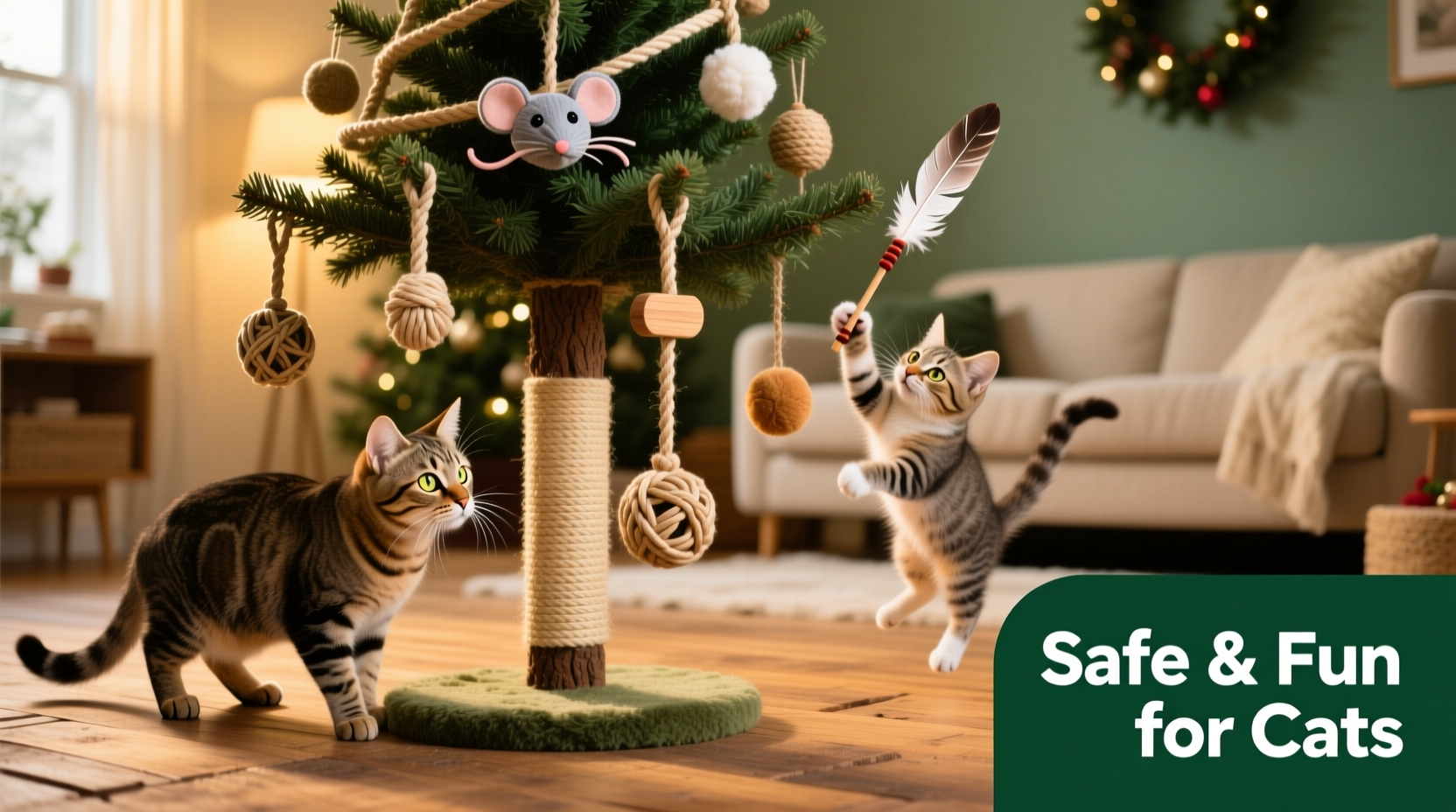
Cats don’t differentiate between a holiday decoration and a giant toy. To them, dangling ornaments, rustling tinsel, and swaying branches signal opportunity. Unfortunately, ingesting tinsel or breaking glass baubles can lead to emergency vet visits. Rather than scolding or restricting, redirect that curiosity into a purpose-built alternative.
A cat-specific Christmas tree mimics the visual and tactile appeal of a traditional tree but uses only non-toxic, durable, and interactive elements. It becomes a designated zone for exploration, reducing stress from environmental changes during the holidays. Veterinarians and feline behaviorists agree: when cats have appropriate outlets for their instincts, destructive behaviors decrease significantly.
“Providing species-appropriate enrichment like chewable structures helps prevent boredom-related issues such as over-grooming or aggression.” — Dr. Lena Torres, Feline Behavior Consultant
Choosing Safe Materials and Structure
The foundation of any cat Christmas tree is safety. Every material must be non-toxic, sturdy, and free of small detachable parts. The structure should be stable enough to withstand batting and light climbing without tipping over.
Start with a base that offers balance. A wooden platform or heavy-duty cardboard cone (reinforced) works well. Avoid plastic trees filled with synthetic materials—many release volatile compounds or contain phthalates, which are harmful if licked or chewed.
Natural fibers are ideal for texture variety. Consider using:
- Untreated sisal rope (great for wrapping trunks)
- Organic cotton ribbons (for gentle waving in air currents)
- Felted wool balls (non-fraying and soft on gums)
- Paper-based garlands (made from recycled paper strips)
Ensure all hanging elements are securely fastened. Use knots that tighten under tension, and test each attachment by gently pulling downward. If something comes loose easily, reinforce it with double knots or fabric loops sewn shut.
Step-by-Step Guide: Building the Tree
Constructing a cat-safe Christmas tree takes less than two hours and requires minimal tools. Follow this timeline to assemble a functional, festive structure your cat will interact with daily.
- Day 1 – Gather Supplies (30 minutes)
Select a conical frame (cardboard, wood, or wire mesh). Collect safe chewable toys, organic ribbons, and mounting hardware like clips or Velcro straps. - Day 1 – Assemble Base (45 minutes)
Secure the frame to a weighted base using non-toxic adhesive or screws. For cardboard cones, stack and glue multiple layers for stability. - Day 1 – Wrap Trunk (30 minutes)
Spiral-wrap untreated sisal rope around the central trunk. Secure ends with pet-safe glue or tucked knots. - Day 2 – Attach Hanging Elements (60 minutes)
Hang chew-safe toys at varying heights. Prioritize movement—cats respond to dangling items that sway slightly when touched. - Day 3 – Introduce & Observe (Ongoing)
Place the tree in a low-traffic area. Let your cat approach voluntarily. Reward interaction with praise or treats.
Patience matters. Some cats investigate immediately; others take days. Never force engagement. Allow curiosity to drive discovery.
Safe Chewable Toys: What Works and Why
Chewing is normal for cats—it cleans teeth, relieves gum irritation, and satisfies oral fixation, especially in teething kittens or senior cats with dental sensitivity. But not all “cat-safe” toys are truly safe to chew. Many marketed products contain dyes, glues, or plastics that degrade into sharp fragments.
Focus on whole, digestible-safe materials. These mimic prey texture and reduce choking risk. Below is a comparison of common options:
| Toys | Safe to Chew? | Benefits | Risks |
|---|---|---|---|
| Organic felt mice | Yes (if no plastic eyes) | Soft, pliable, mimics prey | May unravel if poorly stitched |
| Sisal pom-poms | Yes | Durable, fibrous texture | Can shed fibers—monitor ingestion |
| Recycled paper chains | Limited (supervised only) | Crinkly sound, easy to replace | Not digestible; remove after play |
| Rubber rings (natural latex) | Yes (if unlacquered) | Bouncy, grippable | Some cats allergic to latex |
| Plastic bells | No | Attracts attention | Choking hazard if cracked |
Always supervise initial interactions. Watch for aggressive chewing that could lead to swallowing large pieces. Remove any toy showing signs of wear.
Checklist: Building Your Cat's Christmas Tree Safely
Before introducing the tree, verify every component meets safety standards. Use this checklist to ensure completeness and security.
- ✅ Frame is stable and cannot tip when nudged
- ✅ All materials are non-toxic and labeled pet-safe
- ✅ No small parts (eyes, beads, bells) that can detach
- ✅ Hanging toys are secured at least 8 inches apart
- ✅ Chewable elements are made of digestible-safe fibers
- ✅ Located away from heat sources, water bowls, or foot traffic
- ✅ Easy to disassemble for cleaning or storage
Recheck the list weekly. Over time, ropes loosen, fabrics fray, and adhesives weaken. Regular maintenance prevents accidents.
Real Example: Milo’s Enrichment Transformation
Milo, a 3-year-old tabby living in a high-rise apartment, had developed a habit of chewing curtain cords and knocking over potted plants. His owner, Sarah, tried deterrent sprays and confinement but saw little improvement. After consulting a veterinary behaviorist, she built a DIY cat Christmas tree using a cardboard cone, organic cotton ribbons, and felted wool toys.
Within three days, Milo was interacting with the tree multiple times a day. He batted at ribbons, carried down pom-poms, and even napped beside the base. Over six weeks, his destructive behaviors dropped by 80%. The tree became a focal point of environmental enrichment—not just during the holidays, but year-round with seasonal toy rotations.
Sarah noted, “It wasn’t about the holidays. It was about giving him a place where he could be a cat without getting in trouble.”
FAQ: Common Questions About Cat Christmas Trees
Can I use my real Christmas tree instead?
You can, but only if it’s secured against tipping and decorated exclusively with cat-safe items. Avoid tinsel, glass ornaments, lights with exposed wires, or edible-looking decorations. Even then, many cats will still treat it as a toy. A separate cat tree reduces temptation and protects both your decor and your pet.
Are pine or fir scents dangerous for cats?
Yes. Natural tree oils (like those in pine, fir, and cedar) are toxic when ingested and can cause liver damage. Artificial scents may also irritate respiratory systems. Keep real trees out of reach and avoid using tree-scented sprays near your cat’s environment.
How often should I clean or replace the tree?
Wipe down surfaces weekly with a damp cloth and mild vinegar solution. Replace chewed or frayed toys immediately. Fully disassemble and inspect the structure every 3–4 months. Cardboard bases should be replaced annually due to wear and saliva buildup.
Final Tips for Long-Term Success
A cat Christmas tree isn’t a one-season project—it’s an investment in your cat’s ongoing well-being. To keep it effective, treat it like a dynamic enrichment tool. Rotate toys monthly, vary textures, and occasionally reposition the entire structure to spark renewed interest.
Consider seasonal themes: spring blossoms made from felt flowers, summer “fruit” from crinkle-paper orbs, autumn leaves from burlap scraps. The key is consistency in safety and change in stimulation.
Conclusion: Make the Holidays Fun—for You and Your Cat
Building a Christmas tree for cats with safe chewable hanging toys transforms a common household conflict into an opportunity for bonding and enrichment. It respects your cat’s instincts while protecting your home and peace of mind. More than a festive gesture, it’s a meaningful way to say: “This space is yours too.”
Start simple. Use what you have. Prioritize safety over aesthetics. Watch your cat explore, play, and relax in a space designed just for them. And when the holidays end, don’t dismantle it—adapt it. With thoughtful care, your cat’s tree can remain a year-round hub of joy, curiosity, and calm.




 浙公网安备
33010002000092号
浙公网安备
33010002000092号 浙B2-20120091-4
Comments
No comments yet. Why don't you start the discussion?