
A floating Christmas shelf transforms an ordinary wall into a festive display space, offering a stylish way to showcase miniature trees, vintage ornaments, snow globes, and holiday collectibles. Unlike traditional mantel decor or tabletop arrangements, a floating shelf draws the eye upward, maximizing vertical space and creating a gallery-like effect. With careful planning and basic carpentry skills, you can build a sturdy, attractive shelf that becomes a seasonal centerpiece in your home. This guide walks through every stage—from design to installation—ensuring your shelf is both functional and enchanting.
Design Considerations for Holiday Floating Shelves
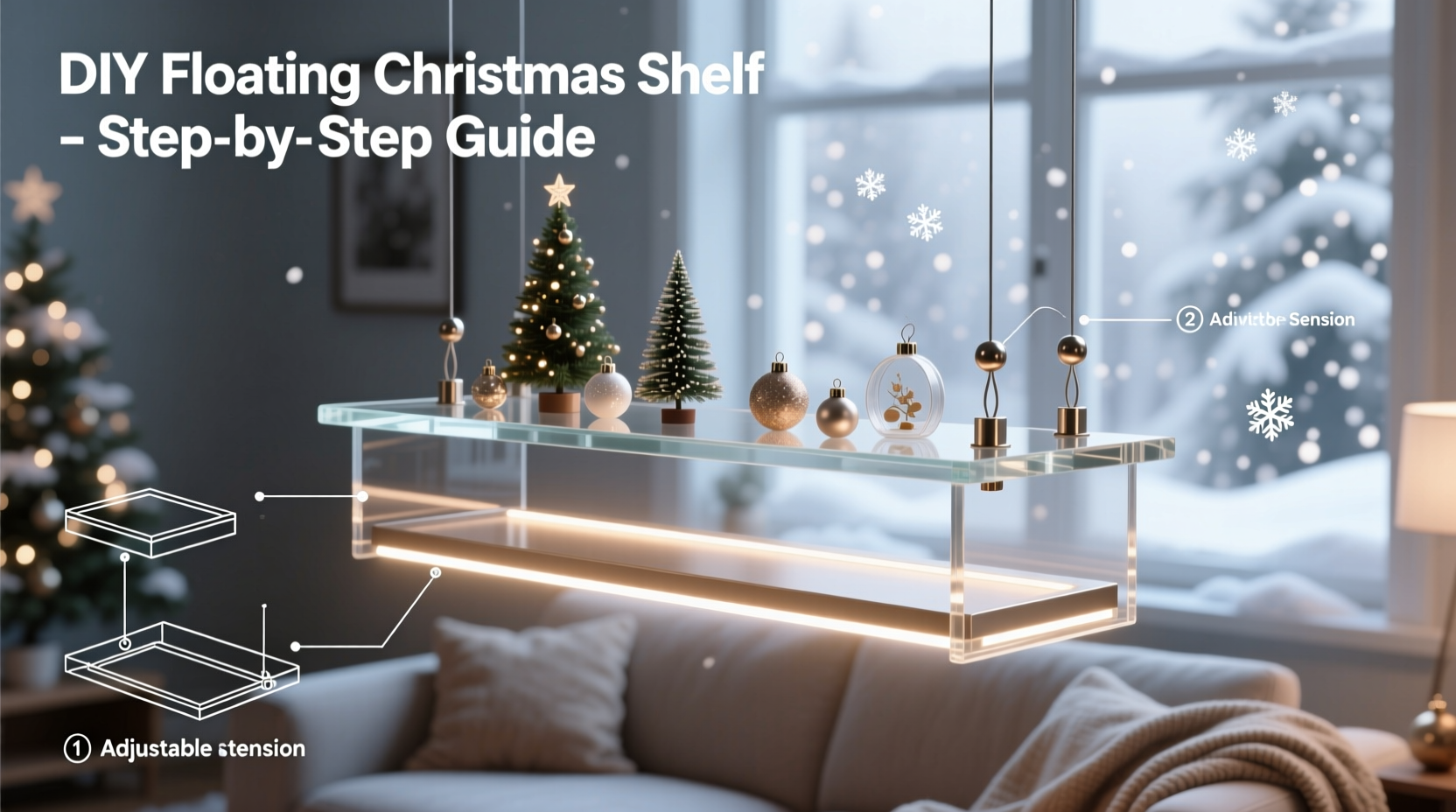
Before picking up tools, consider the purpose and placement of your shelf. A floating Christmas shelf should complement your room’s architecture while safely supporting decorative items. Most mini Christmas trees range from 6 to 18 inches in height and weigh between 1 and 5 pounds. Add collectibles like ceramic figurines, LED-lit villages, or glass ornaments, and total load can reach 15–20 pounds per linear foot. Design your shelf accordingly.
Choose a location near natural focal points: above a fireplace, along a staircase wall, or adjacent to a window where light enhances displays. Ensure the wall surface is solid—drywall alone won’t support weight without proper anchoring. Studs or masonry walls are ideal. If studs aren't aligned with your desired shelf position, use heavy-duty toggle bolts rated for at least 50 pounds per anchor.
Material choice affects both appearance and strength. Solid wood—such as pine, poplar, or oak—offers durability and a warm finish that pairs well with rustic or modern farmhouse decor. Plywood works for painted shelves but may require edge banding for a clean look. Avoid particleboard; it swells under moisture and lacks structural integrity over time.
Dimensions and Style Options
A typical floating Christmas shelf ranges from 24 to 48 inches long, 6 to 8 inches deep, and 1 to 1.5 inches thick. Depth allows room for small trees without crowding the wall. For multiple tiers, stagger shelves vertically by 12–18 inches to create visual rhythm.
Style influences ambiance. A reclaimed wood shelf with distressed edges suits cottage-core aesthetics. A sleek stained hardwood with hidden brackets fits minimalist interiors. You can also paint the shelf white, red, or green to match holiday themes—or leave it natural for timeless appeal.
Step-by-Step Guide to Building Your Shelf
Building a floating shelf requires precision and patience. Follow these steps to ensure safety, stability, and professional results.
- Measure and mark the wall area. Use a level and pencil to outline where the shelf will sit. Double-check horizontal alignment across the span.
- Cut the shelf board to size. Using a circular saw or table saw, cut your chosen wood to final dimensions. Sand all edges smooth with 120- then 220-grit sandpaper.
- Build or install internal bracing. Floating shelves rely on hidden supports. The most effective method uses a wooden cleat or metal rail mounted flush to the wall. Cut a support board (e.g., 1x4) to match shelf length and attach it horizontally to wall studs using 3-inch lag screws.
- Attach the outer shell. Slide the finished shelf board over the cleat. If using a two-piece design (a top cap over a base), secure them together with wood glue and finishing nails from underneath.
- Finish and seal. Apply stain or paint according to manufacturer instructions. Finish with a clear polyurethane coat to protect against dust and minor spills during display season.
- Mount and test. Once dry, reinstall the shelf onto the cleat. Gently press down along the front edge to confirm no flexing or separation.
Alternative Bracket Systems
If constructing a cleat seems complex, consider commercial floating shelf hardware kits. These include steel rods or L-brackets inserted into drilled holes in the shelf back. They offer clean lines and moderate weight capacity (up to 30 lbs). However, they work best on thinner shelves and may not handle dense arrangements of glass or ceramic collectibles.
Weight Capacity and Safety Best Practices
Safety is non-negotiable when mounting shelves above head height or near high-traffic areas. Even lightweight decorations gain momentum if dislodged. Always anchor into wall studs whenever possible. A single 3-inch lag screw driven into a stud can hold over 80 pounds. In contrast, drywall anchors vary widely—plastic anchors support only 10–15 pounds, while toggle bolts manage up to 50.
To determine stud locations, use a magnetic or electronic stud finder. Knock on the wall: studs produce a dull thud versus the hollow sound of empty drywall. Mark stud centers every 16 or 24 inches depending on your home’s framing.
| Support Type | Max Weight (per ft) | Best For | Avoid If |
|---|---|---|---|
| Wood Cleat + Studs | 50+ lbs | Heavy displays, large mini trees | Studs misaligned with shelf |
| Metal Rail System | 30–40 lbs | Medium loads, frequent changes | Exceeding listed capacity |
| Drywall Anchors (Toggle) | 20–30 lbs | Light decor, short spans | Children or pets nearby |
| Plastic Anchors | 10–15 lbs | Photos, small ornaments | Any shelf with trees or glass |
“Overestimating weight limits is one of the biggest mistakes homeowners make. Always derate by 30% for dynamic loads—like someone brushing against the shelf.” — Daniel Reeves, Residential Carpenter & Safety Consultant
Decorating Tips for Maximum Visual Impact
A well-built shelf deserves an equally thoughtful arrangement. Begin by grouping items in odd numbers—three mini trees, five snowmen—for balanced asymmetry. Place taller pieces toward the back or center, letting shorter collectibles frame them.
Incorporate lighting subtly. Battery-powered fairy lights woven around tree bases add warmth without cords. Small LED puck lights mounted under the shelf front illuminate objects without glare. Avoid halogen bulbs; they generate heat that may damage delicate materials over time.
Consider theme cohesion. A “vintage North Pole” setup might feature antique sleds, old-fashioned skiers, and mercury glass balls. A “modern Nordic” theme could use monochrome figures, geometric trees, and frosted pinecones. Rotate collections annually to keep the display fresh.
Real Example: The Hallway Holiday Gallery
Sarah M., a homeowner in Portland, transformed a narrow hallway into a festive journey using three staggered floating shelves. She installed a 36-inch oak shelf above each landing switchback on her staircase. Each holds a different theme: mid-century modern trees, Scandinavian folk art, and nostalgic 1950s ornaments. By using stud-mounted cleats and limiting weight to 18 pounds per shelf, she ensured safety while delighting guests. “It turns a forgotten space into a storytelling wall,” she says. “And my kids love spotting new details each year.”
Checklist: Building and Styling Your Floating Christmas Shelf
- ✅ Measure wall space and locate studs
- ✅ Choose wood type and finalize shelf dimensions
- ✅ Cut and sand shelf board to size
- ✅ Build or purchase internal support system (cleat or rail)
- ✅ Mount support securely into wall studs
- ✅ Attach shelf casing and finish with protective coating
- ✅ Test load stability with temporary weights
- ✅ Arrange mini trees and collectibles with balance in mind
- ✅ Add low-heat lighting for ambiance
- ✅ Secure fragile items with museum putty
Frequently Asked Questions
Can I install a floating Christmas shelf on tile or plaster walls?
Yes, but with precautions. Tile requires masonry bits and anchors designed for brittle surfaces to avoid cracking. Plaster often hides lath backing, which doesn’t support weight well. Drill test holes in inconspicuous areas first. Use toggle bolts and distribute load across multiple anchors.
How do I remove the shelf after the holidays without damaging the wall?
If mounted to studs, patching screw holes is simple: fill with spackle, sand, and touch up paint. For drywall anchors, snip plastic remnants flush and patch. To minimize future repairs, consider leaving the cleat in place behind a framed picture or artwork during off-seasons.
Are there fire risks with placing mini trees near lights on a shelf?
Realistic concerns exist, but modern pre-lit mini trees use LED bulbs that emit minimal heat. Still, maintain at least 6 inches between lights and flammable materials. Never leave decorative lighting unattended for long periods, and check cords for fraying before use.
Final Thoughts and Call to Action
A floating Christmas shelf is more than storage—it’s a canvas for holiday memory and creativity. Whether you’re highlighting heirloom ornaments or building a whimsical village scene, the right shelf elevates your decor from cluttered to curated. With sound construction, mindful styling, and attention to safety, your DIY project can become an annual tradition that family and guests look forward to.
The effort invested in planning and building pays lasting dividends. Not only does it free up floor space, but it also personalizes your home in a way mass-produced decor cannot. This season, take the leap: measure your wall, select your wood, and start crafting a display that tells your story.




 浙公网安备
33010002000092号
浙公网安备
33010002000092号 浙B2-20120091-4
Comments
No comments yet. Why don't you start the discussion?