
A floating Christmas tree is no longer just a fantasy seen in high-end department store displays or holiday films. With clever use of mirrors, strategic lighting, and discreet structural support, you can create the magical illusion that your Christmas tree is defying gravity—hovering mid-air in elegant suspension. This captivating centerpiece can transform any living room, entryway, or gallery space into a winter wonderland. While it may seem complex, the technique relies on principles of reflection, balance, and visual misdirection rather than advanced engineering. When executed correctly, the result is both mesmerizing and surprisingly achievable for DIY enthusiasts.
The Science Behind the Illusion
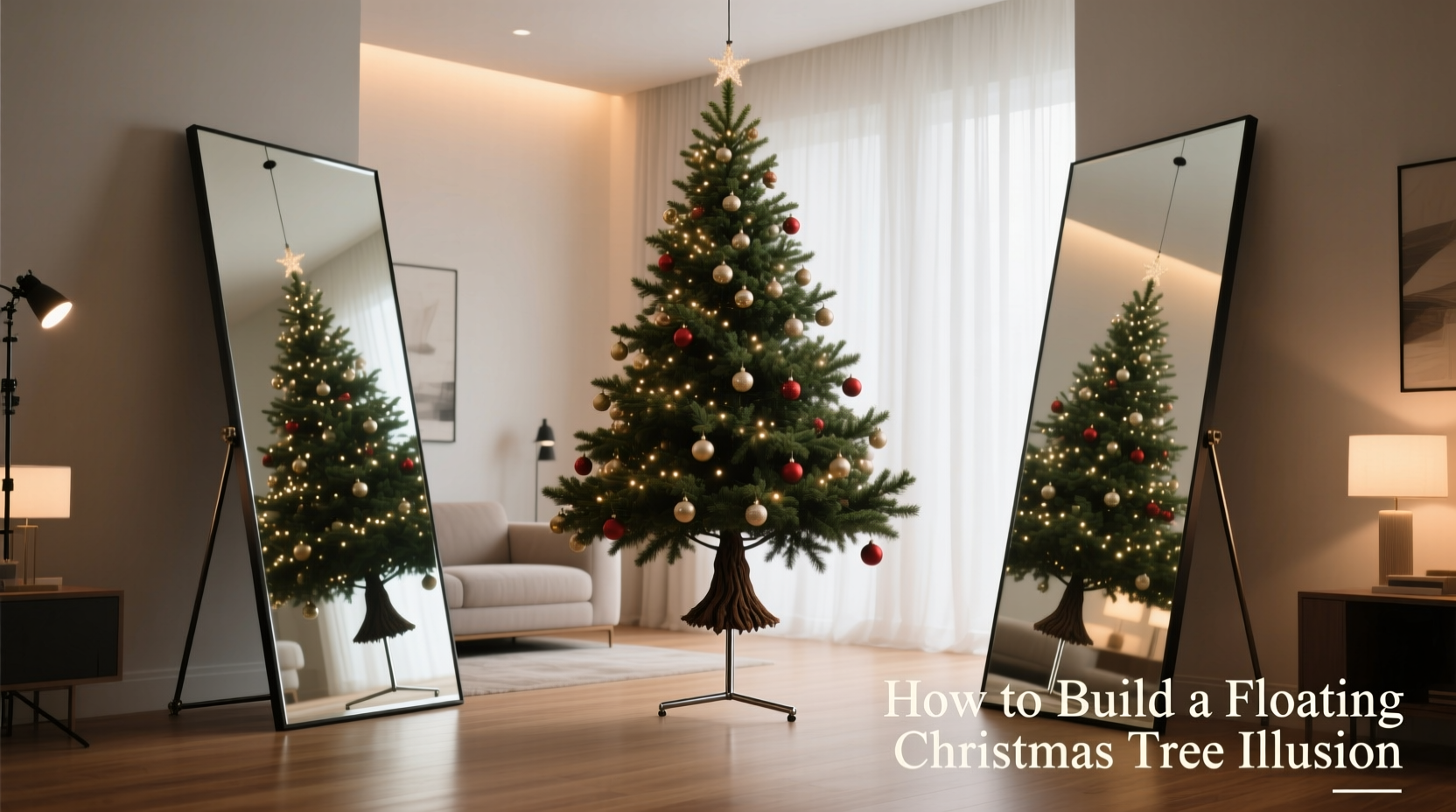
The floating Christmas tree effect is rooted in optical illusion, specifically the manipulation of light and reflection. The most common method uses a two-way mirror system or a single mirrored surface paired with precise positioning to conceal the physical supports holding the tree upright. The key lies in aligning the tree so that its base and supporting structure disappear into the mirror’s reflection, creating the appearance of levitation.
Mirrors reflect light at predictable angles, and when objects are placed at specific points relative to the reflective surface, they either blend into the background or vanish from view depending on the observer's perspective. In this case, the support rod—often made of clear acrylic, polished metal, or black anodized material—is aligned vertically along the mirror’s plane. Because the rod runs parallel to the mirror’s edge, it reflects directly onto itself, making it nearly invisible. The tree, attached to the top of the rod, appears unsupported.
“Optical illusions like the floating tree rely not on magic, but on precision. A deviation of even half an inch can break the spell.” — Dr. Alan Reeves, Optical Physicist and Display Designer
This principle has been used in museum installations, theater props, and retail window displays for decades. Now, with accessible materials and online tutorials, homeowners can replicate the effect for seasonal decor.
Materials and Tools Required
Before beginning construction, gather all necessary components. Precision in material selection ensures both safety and visual effectiveness. Below is a checklist of essential items:
- One flat, full-length mirror (preferably frameless or with a minimal bezel)
- Clear acrylic rod (1–1.5 inches in diameter, height matching desired tree clearance)
- Sturdy base plate (steel or heavy-duty plastic, painted matte black)
- Christmas tree (artificial recommended; under 4 feet tall for stability)
- Drill with acrylic-compatible bits
- Level and measuring tape
- Non-slip mat or adhesive pads
- Ornamental skirt or fabric drape (optional, for concealing base)
- LED string lights (battery-powered preferred for wire-free look)
The mirror should be large enough to extend beyond the tree’s base footprint by at least 6 inches on all sides. Larger mirrors offer more flexibility in viewing angles. Acrylic rods are ideal because they are strong, lightweight, and less reflective than metal. Avoid glass rods—they are fragile and pose a safety hazard.
Step-by-Step Construction Guide
Follow this detailed sequence to assemble your floating Christmas tree safely and effectively. Accuracy at each stage ensures a convincing illusion.
- Prepare the Mirror Surface: Place the mirror on a level floor against a wall or within a dedicated display alcove. Use a spirit level to confirm it stands perfectly vertical. Secure the bottom edge with non-slip pads to prevent shifting.
- Attach the Base Plate: Center the steel or plastic base plate at the bottom edge of the mirror. Fasten it securely using industrial-strength adhesive or discreet brackets underneath. Paint the plate matte black to reduce visibility.
- Install the Support Rod: Drill a hole through the center of the base plate that matches the diameter of the acrylic rod. Insert the rod vertically and secure it with epoxy resin for permanent fixation. Allow 24 hours for full curing. Ensure the rod stands perfectly perpendicular to the floor.
- Mount the Tree: Most artificial trees have a central pole. Remove it carefully. Drill a shallow hole into the bottom center of the tree trunk (or its base plug) to fit the top of the acrylic rod. Use a small set screw or adhesive to lock the tree in place. Test balance before final attachment.
- Position the Tree on the Rod: Carefully lower the tree onto the exposed end of the acrylic rod. Use a level to verify vertical alignment. Adjust if needed—any tilt will distort the mirror symmetry and reveal the support.
- Test the Viewing Angle: Stand directly in front of the mirror at eye level. The support rod should visually merge with its reflection. Move slightly left and right; the illusion should hold within a 30-degree arc. If the rod becomes visible, recheck alignment.
- Add Lighting and Decorations: Use battery-powered LED lights to avoid cords. Wrap them evenly around the branches. Hang lightweight ornaments, avoiding dense clustering near the base, which could cast revealing shadows.
- Conceal the Base (Optional): Drape a velvet or satin skirt around the mirror’s base to hide mechanical components. Choose dark colors like deep green, navy, or black to absorb ambient light and deepen the illusion.
Do’s and Don’ts: Common Pitfalls and How to Avoid Them
Even minor errors can compromise the floating effect. The table below outlines critical best practices and frequent mistakes.
| Do | Don't |
|---|---|
| Use a frameless or flush-mounted mirror for seamless reflection | Use a thick, ornate frame that interrupts the mirror line |
| Keep the support rod perfectly vertical and aligned with the mirror’s edge | Allow the rod to lean or shift during installation |
| Choose a lightweight tree (under 10 lbs) to reduce stress on the rod | Use a heavy, fully flocked tree that may topple or crack the support |
| Illuminate the tree with soft, diffused lighting to avoid harsh shadows | Use bright spotlights from below that expose the base structure |
| Test the illusion from multiple angles before final decoration | Assume the effect works from all viewpoints without verification |
Real-World Example: A Home Gallery Installation
In December 2023, interior designer Maria Tran created a floating tree display in the entry gallery of her suburban home. The space was narrow—only 4 feet wide—but featured a floor-to-ceiling mirrored closet door. She selected a 3.5-foot pre-lit artificial spruce with slender branches and removed its original stand. Using a 1-inch diameter acrylic rod anchored to a 12”x12” steel plate, she mounted the tree directly against the mirror’s edge.
To enhance the illusion, Tran painted the base plate matte black and covered it with a charcoal linen runner. She used warm white LEDs and avoided tinsel, which could catch reflections. During her holiday open house, over 70% of guests asked, “How is it staying up?” Many circled the display trying to find wires or legs. Only when viewed from behind—where the mirror ended—was the support visible.
“It became the centerpiece of the season,” Tran said. “People didn’t just look—they interacted. Kids tried to peek behind it, couples took selfies pretending to hold it up. That sense of wonder is what holiday magic is about.”
Alternative Methods and Creative Variations
While the mirror-and-rod technique is the most reliable, other approaches exist for different spaces and skill levels:
- Ceiling Suspension: For high-ceiling areas, suspend the tree upside down from a nearly invisible aircraft cable. Attach the trunk to the cable, then fluff the branches downward. This creates a true floating effect but requires overhead anchoring and professional rigging for safety.
- Transparent Platform: Mount the tree on a clear acrylic box filled with faux snow, fairy lights, or decorative elements. When lit from within, the platform appears weightless, especially on dark flooring.
- Dual-Mirror Setup: Place two mirrors facing each other with the tree centered between them. The infinite reflection gives the impression of multiple floating trees receding into space—a dramatic effect for larger rooms.
Each variation demands careful planning. Suspension methods require load calculations and fail-safes. Transparent platforms work best with minimalist trees to avoid cluttering the visual field.
Frequently Asked Questions
Can I use a real Christmas tree for this illusion?
It’s not recommended. Real trees are heavier, shed needles, and dry out quickly, increasing fire risk near electrical components. Their irregular shape also makes alignment more difficult. Artificial trees offer consistency, lighter weight, and reusability.
Is the floating tree safe around children and pets?
Yes, if properly secured. Anchor the base plate firmly and ensure the tree is balanced. Keep decorations above reach and avoid glass ornaments. Supervise young children around the mirror surface to prevent scratches or impacts.
What if my mirror isn’t big enough?
You can extend the reflective surface using adhesive mirror tiles along the base. Align them precisely to avoid seams. Alternatively, consider a smaller tabletop version using a 12”x12” mirror tile and a mini tree (12–18 inches tall).
Final Checklist Before Display
Before unveiling your floating Christmas tree, run through this verification list:
- Mirror is clean, vertical, and securely positioned
- Base plate is fixed and painted non-reflective black
- Acrylic rod is straight, centered, and fully cured
- Tree is balanced and firmly attached to the rod
- No visible gaps between tree base and mirror line
- Lighting is cord-free and evenly distributed
- Viewing test confirms invisibility of support from primary angles
- Safety check: no sharp edges, stable footing, no tripping hazards
Conclusion
The floating Christmas tree illusion blends art, physics, and craftsmanship into a single breathtaking display. It challenges the ordinary and invites awe during a season defined by wonder. By understanding the role of mirrors, committing to precise assembly, and respecting structural limits, you can bring this enchanting feature into your own home. More than just a decoration, it becomes a conversation piece—a symbol of creativity and joy. Whether you’re designing for family, guests, or personal delight, the effort invested returns tenfold in magic and memory.




 浙公网安备
33010002000092号
浙公网安备
33010002000092号 浙B2-20120091-4
Comments
No comments yet. Why don't you start the discussion?