
In cities where square footage comes at a premium, holiday decorating often takes a back seat. Floor space is limited, if not nonexistent, and traditional Christmas trees can dominate small living areas. Yet the desire for seasonal charm remains strong. The solution? A floating shelf Christmas tree display—a clever, vertical alternative that brings festive cheer without sacrificing precious floor room.
This approach transforms underused wall space into a functional holiday centerpiece. It’s ideal for studio apartments, micro-lofts, or any compact urban dwelling where every inch counts. More than just a workaround, this design offers a modern aesthetic, customizable layout, and year-round utility when repurposed post-holiday. With careful planning and simple materials, you can create a stunning tree-inspired display that captures the spirit of the season in minimal footprint.
Why a Floating Shelf Tree Makes Sense in Tight Spaces
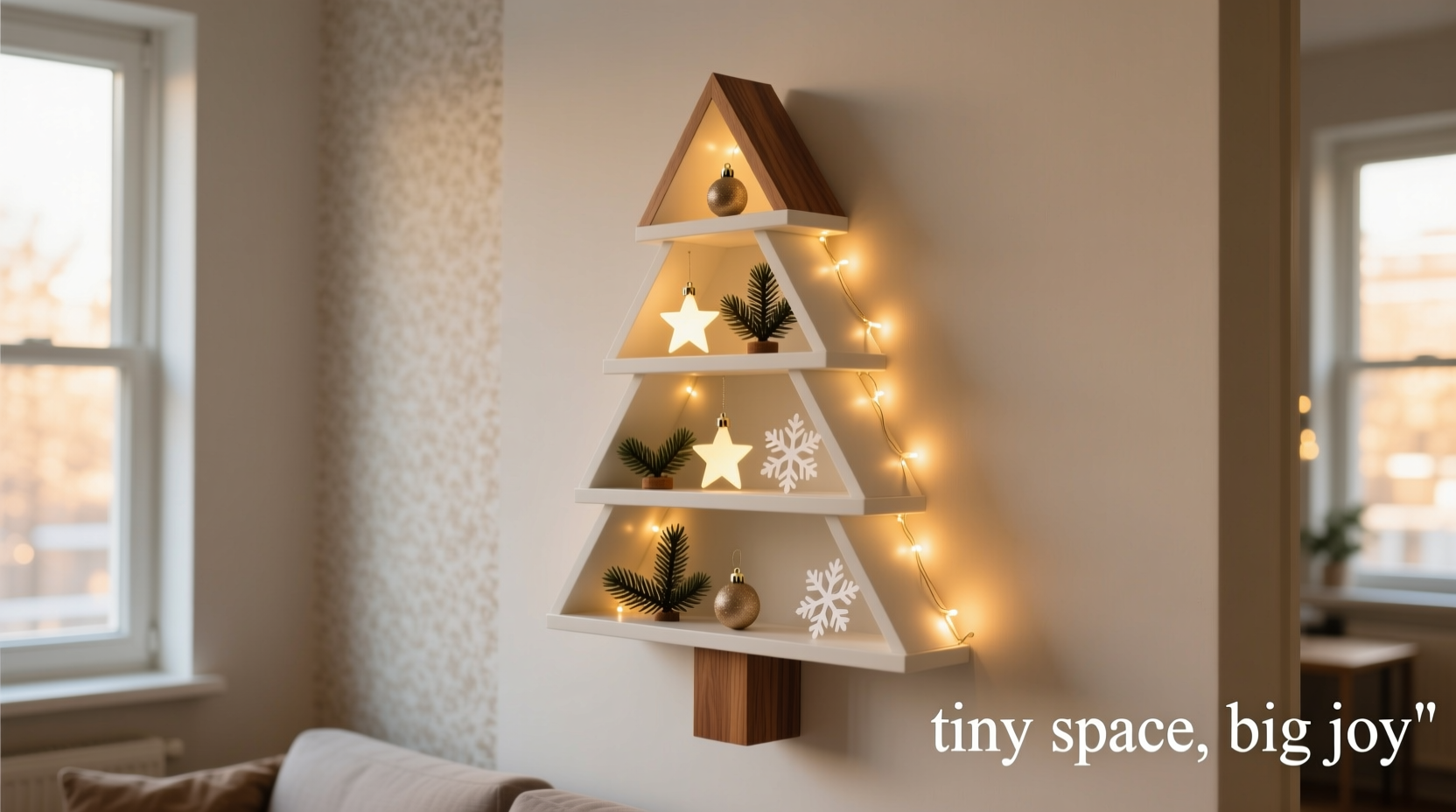
Traditional Christmas trees require stability, floor clearance, and often a stand that eats into already tight layouts. In spaces under 500 square feet, placing a six-foot tree may mean blocking pathways, reducing seating, or eliminating an entire piece of furniture. For renters or minimalist dwellers, cutting down or assembling large decor isn’t always practical—or permitted.
A floating shelf tree sidesteps these issues by using vertical real estate. Walls are typically the most underutilized surfaces in small homes. By anchoring shelves at varying heights and arranging greenery, lights, and ornaments along a defined shape—often triangular or conical—you simulate the silhouette of a tree without occupying floor area.
Additionally, this method supports modular decoration. You can adjust the size, density, and theme each year. One season it might be a rustic pinecone-and-lights setup; the next, a minimalist white LED array with geometric ornaments. Because it’s built on shelves, storage becomes easier: disassemble, pack flat, and store in a closet.
Materials and Tools You’ll Need
Constructing a floating shelf tree doesn’t require advanced carpentry skills, but attention to detail ensures safety and longevity. Most materials are available at hardware stores or online retailers. Choose based on your wall type (drywall, plaster, brick) and desired finish.
| Material/Tool | Purpose | Recommended Type |
|---|---|---|
| Floating shelf brackets | Support structure | Steel L-brackets rated for 30+ lbs per pair |
| Wooden boards | Shelf surface | Pine, birch, or reclaimed wood (1x6 to 1x8) |
| Wall anchors & screws | Secure mounting | Toggle bolts for drywall; masonry anchors for brick |
| Level & stud finder | Alignment and safety | Digital level recommended for precision |
| Drill & bits | Installation | Cordless drill with depth stopper |
| Faux greenery | Tree appearance | PVC or PE branch sections, pre-lit options |
| LED string lights | Illumination | Battery-operated or plug-in, warm white or multicolor |
| Ornaments & decor | Personalization | Lightweight glass, felt, or paper options |
For a cohesive look, select wood that matches existing furniture tones—walnut for warmth, white-washed pine for brightness. If you're renting, consider removable adhesive strips for lighter displays, though these are best suited for temporary setups under 10 pounds.
Step-by-Step Installation Guide
Follow this sequence to build a stable, visually balanced floating shelf tree. Plan for 3–5 hours depending on wall conditions and number of shelves.
- Design your tree outline. Sketch a triangle on graph paper. Standard dimensions: base shelf at 36\", second at 28\", third at 20\", top at 12\". Adjust based on ceiling height and eye level.
- Mark shelf positions. Use a laser level to project horizontal lines across the wall. Start from the bottom up. Ensure all lines are perfectly level and spaced 10–12 inches apart vertically.
- Locate studs. Scan each shelf line with a stud finder. Mark centers. If studs don’t align with bracket positions, use heavy-duty toggle bolts rated for your shelf load.
- Install brackets. Drill pilot holes, insert anchors, then screw in L-brackets. Double-check alignment with a level before tightening fully.
- Attach shelves. Place wooden boards on brackets. Secure from underneath with wood screws. Sand and finish edges if unfinished.
- Test weight capacity. Apply pressure gradually. Confirm no wobbling or shifting. Add corner braces if needed for long spans.
- Add greenery. Begin at the top. Drape pre-lit garland or attach branch clusters with floral wire. Overlap layers slightly to mimic fullness.
- Decorate. Hang lightweight ornaments with clear fishing line. Tuck in pinecones, berries, or mini stars. Avoid overcrowding to maintain airflow and visual clarity.
For electrical safety, route corded lights behind shelves using adhesive clips. Battery-powered sets eliminate cords entirely and offer more placement flexibility.
Design Variations and Creative Enhancements
The beauty of a floating shelf tree lies in its adaptability. Beyond mimicking a classic evergreen, you can reinterpret the concept through materials, lighting, and form.
- Mirrored shelves reflect light and amplify sparkle, ideal for dimly lit rooms.
- Asymmetrical layouts break from the triangle—try a spiral or staggered diagonal for contemporary flair.
- Natural elements like dried eucalyptus, cinnamon sticks, or burlap ribbons add texture without weight.
- Integrated storage allows non-holiday use: place books, plants, or photos on off-season shelves.
- Color themes let you personalize—silver and blue for icy elegance, red and gold for tradition, or all-white for Scandinavian minimalism.
One creative option is the “shadow box” tree: install deep shelves (8+ inches) and back them with festive wallpaper or fabric. This creates depth and makes ornaments pop. Another idea is adding motion with a small, silent fan to gently sway tinsel or ribbon streamers.
“Vertical holiday displays are the future for urban living. They combine functionality with emotional resonance—space-saving shouldn’t mean joy-sacrificing.” — Lena Torres, Interior Designer & Tiny Home Specialist
Real-World Example: A Studio Apartment Transformation
In a 420-square-foot Brooklyn studio, resident Maya Chen faced her third Christmas without a tree. \"My couch doubles as my guest bed, and my dining table folds against the wall,\" she said. \"There was literally nowhere to put a tree.\" After researching alternatives, she opted for a four-shelf floating design along her north-facing wall.
Using pre-cut pine boards and reinforced steel brackets, she installed shelves forming a 48-inch tall triangle. She chose a pre-lit garland with warm white LEDs and added handmade felt ornaments from her childhood collection. The total cost was $137, mostly spent on materials. \"It took me a weekend, but now my whole apartment feels festive,\" she shared. \"People think it’s a permanent art installation. I even left the shelves up in January with succulents on them.\"
Her success hinged on precise leveling and strategic lighting. By positioning the display near a window, natural daylight enhanced the glow during mornings, while evening illumination created a cozy focal point. Her cat couldn’t knock it over, and disassembly took under 20 minutes.
Safety, Maintenance, and Year-Round Use
Safety is paramount when anchoring shelves to walls, especially in older buildings. Always verify weight limits and avoid overloading. A typical artificial tree weighs 20–30 lbs; distribute that across multiple secure points. Never mount shelves above beds or seating areas unless professionally installed.
To maintain the display during the season:
- Dust shelves weekly with a microfiber cloth.
- Check light connections every few days for flickering or heat buildup.
- Rotate ornaments occasionally to prevent one-sided wear.
After the holidays, remove decor and assess shelf condition. Light sanding and re-staining can refresh the wood. Repurpose the structure as a bookshelf, plant stand, or photo gallery. This extends value beyond December and justifies the initial effort.
Essential Checklist Before You Begin
- Measure wall space and determine maximum tree height.
- Choose shelf material and confirm compatibility with wall type.
- Purchase brackets and anchors rated for expected load.
- Gather tools: drill, level, stud finder, tape measure, pencil.
- Sketch design with exact shelf dimensions and spacing.
- Buy greenery, lights, and ornaments (prioritize lightweight).
- Clear work area and protect floors during installation.
- Test all electrical components before mounting.
- Plan storage method for off-season.
- Take progress photos for future reference.
Frequently Asked Questions
Can I install this on drywall without studs?
Yes, but only with proper anchors. Use toggle bolts or snap toggles rated for at least twice the expected load. Avoid large or heavily decorated displays on drywall-only mounts.
What if I want a larger tree effect?
You can extend the design horizontally or add more tiers. Alternatively, incorporate a freestanding narrow base (like a ladder shelf) combined with upper floating shelves to create a hybrid display.
Are there fire risks with lights on wooden shelves?
Modern LED lights generate minimal heat and are generally safe. Always choose UL-listed products, avoid covering wires, and turn off lights when unattended or sleeping. Battery-operated sets further reduce risk.
Final Thoughts: Celebrate Without Compromise
Holiday joy shouldn’t be dictated by square footage. A floating shelf Christmas tree proves that creativity can overcome spatial constraints. It’s not a substitute for tradition—it’s a reinvention of it. By embracing vertical design, thoughtful materials, and smart engineering, even the smallest apartment can host a centerpiece that radiates warmth, memory, and festivity.
This project blends craftsmanship with personal expression. Whether you’re a seasoned DIYer or a first-time decorator, the process builds more than a tree—it builds confidence in making small spaces work beautifully. And when January arrives, you won’t just pack away decorations. You’ll retain a functional, attractive shelf system ready for everyday life.




 浙公网安备
33010002000092号
浙公网安备
33010002000092号 浙B2-20120091-4
Comments
No comments yet. Why don't you start the discussion?