
Every year, families search for ways to elevate their holiday decor. One of the most enchanting traditions is setting up a miniature train that circles beneath the Christmas tree. The gentle chug of the locomotive, the glow of tiny lights, and the nostalgic charm make it a centerpiece that captivates both children and adults. Building a working model train layout around your tree isn’t just decorative—it’s an experience. With careful planning and attention to detail, you can create a seamless, reliable system that runs smoothly throughout the season.
This guide walks through every stage: selecting the right scale and components, designing a stable layout, assembling the track, wiring the system safely, and troubleshooting common issues. Whether you're new to model railroading or expanding an existing setup, this project blends craftsmanship with holiday spirit.
Selecting the Right Scale and Components
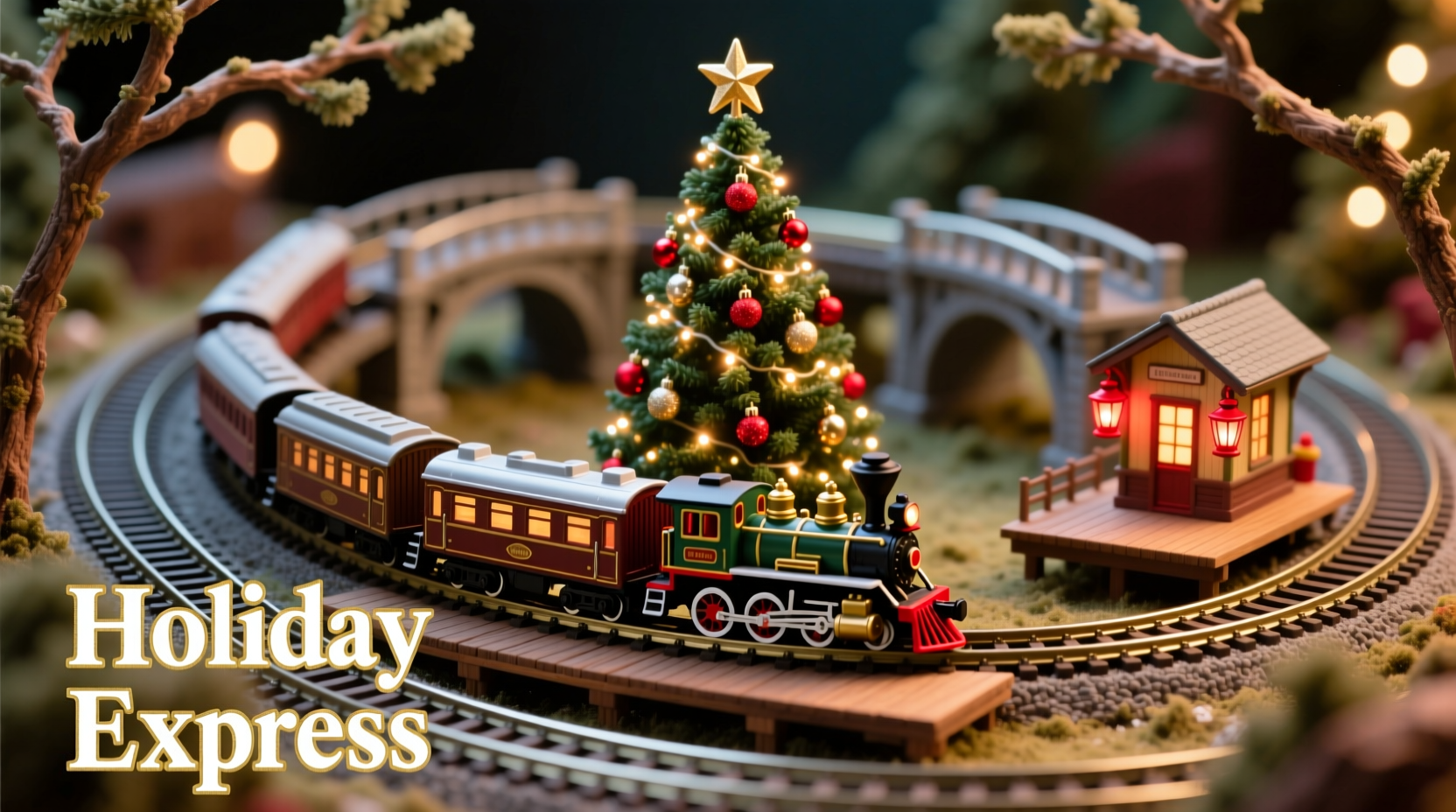
The first decision determines everything else: which model train scale fits best under your tree. The most popular choice for tree layouts is **O gauge**, known for its durability and classic look. O gauge trains run on 1.25-inch wide tracks, making them large enough to be visible but compact enough to circle a standard 6–7 foot tree. They’re also compatible with many traditional holiday-themed sets produced by companies like Lionel and MTH.
Alternatively, **HO scale** (1:87) offers more flexibility in tight spaces. Though smaller, HO requires finer handling and may not have the same nostalgic presence as O gauge. However, if space is limited or you prefer realism over size, HO can deliver impressive results.
When choosing components, prioritize reliability. Look for die-cast metal locomotives with built-in lighting and sound features. These tend to run more smoothly than plastic models. Track sections should be made from nickel-silver or brass for consistent conductivity. Avoid zinc-based tracks—they corrode faster and lead to power interruptions.
Designing a Stable and Functional Layout
Before laying any track, sketch a rough plan based on your tree’s footprint. Most Christmas trees sit on stands between 24” and 36” in diameter at the base. Measure this area precisely. Subtract about 6 inches from the radius to allow room for presents and prevent collisions.
A circular layout is ideal because it maximizes space and minimizes complexity. Use flexible track if available, or combine curved rigid sections to form a complete loop. For O gauge, standard curves typically have a 31” radius—too large for most living rooms. Instead, use “snap-together” sectional track designed for tighter turns, such as Lionel FasTrack or Atlas O Curved Sections with a 27” minimum radius.
Elevation matters. If your tree stand has legs or sits on carpet, ensure the track lies flat. Uneven surfaces cause derailments. Place a thin plywood base or interlocking foam tiles underneath to create a level foundation. This base also protects flooring from scratches and simplifies cleanup after the holidays.
“Stability starts from the ground up. A wobbly track means constant maintenance.” — Daniel Reeves, Model Railroad Enthusiast & DIY Holiday Display Designer
Step-by-Step Assembly Process
Follow this sequence to assemble your train loop efficiently and safely:
- Clear and prepare the area: Move furniture, vacuum debris, and lay down protective material like foam mats or cardboard.
- Lay the base layer: Cut a circular board or arrange modular tiles to match your planned diameter. Mark alignment points every 90 degrees using tape.
- Assemble the outer loop: Begin connecting curved track sections clockwise, snapping them together securely. For O gauge, eight 45-degree curves make a full circle. Check connections for snugness—gaps disrupt electrical flow.
- Add power feeders: Attach terminal pins or clip-on connectors to opposite sides of the loop. Run low-voltage wires back to the transformer, avoiding high-traffic zones.
- Test conductivity: Use a multimeter or small light tester across the rails to confirm continuous power delivery.
- Place the locomotive: Set the engine on the track, ensuring wheels align with rails. Turn on the controller gradually to check movement and direction.
- Incorporate scenery: Once operational, add faux snow, miniature buildings, or LED-lit trees around the track—but keep at least 3 inches clearance from moving parts.
After initial testing, run the train for at least 30 minutes to identify friction points, wobbles, or intermittent stops. Address these early to avoid frustration later.
Wiring and Power Management
Safety and performance depend heavily on proper wiring. Most indoor model trains operate on 12–18 volts AC, supplied by a regulated transformer. Choose one rated for your train’s amperage—typically 3–5 amps for a single locomotive. Overloading causes overheating; underpowering leads to stalling.
Route wires along the edge of the base, securing them with adhesive clips or tucked beneath scenery. Never run cords under rugs where they can overheat. Use polarized connectors so polarity remains consistent, especially if running multiple engines.
To reduce voltage drop around long loops, install additional feeder wires from the transformer to the far side of the track. Solder or clamp these directly to the rail for maximum contact. Clean rails weekly with a dedicated track cleaner or isopropyl alcohol and a lint-free cloth to maintain conductivity.
| Component | Recommended | Avoid |
|---|---|---|
| Track Material | Nickel-silver or brass | Zinc-coated or painted metal |
| Power Source | Regulated AC transformer (Lionel 1033, MTH Z500) | Unregulated wall adapters |
| Wire Gauge | 18–22 AWG stranded copper | Thin speaker wire or ribbon cable |
| Connection Type | Soldered joints or spring clamps | Tape or loose twisting |
Troubleshooting Common Issues
Even well-built layouts encounter problems. Here are frequent challenges and how to resolve them:
- Derailments at joints: Often caused by misaligned track pieces. Disassemble and reconnect, ensuring each section clicks firmly into place. File down any raised edges.
- Locomotive stalls mid-loop: Indicates poor power delivery. Check for dirty rails, loose feeders, or gaps in conductivity. Clean and re-solder connections if needed.
- Engine reverses unexpectedly: May stem from reversed polarity somewhere in the circuit. Verify all connectors follow the same orientation (usually red to outer rail).
- Noisy operation: Worn gears or unbalanced wheels create excessive sound. Apply a drop of lightweight oil (e.g., Labelle 108) to motor bushings annually.
- Smoke unit fails: Some vintage-style engines include smoke generators. If inactive, check fluid levels and heater element continuity.
“Half the joy of holiday trains is solving little puzzles. Each fix makes the display more personal.” — Margaret Lin, Seasonal Display Curator at the National Railway Historical Society
Mini Case Study: The Johnson Family Tree Layout
The Johnsons in Portland, Oregon, wanted to revive a family tradition after inheriting a 1950s Lionel locomotive from a grandfather. Their living room had limited floor space, and previous attempts ended in constant derailments.
They started by measuring the tree stand (30” diameter) and opting for Lionel FasTrack in O gauge with 27” radius curves. Instead of placing the track directly on hardwood, they built a removable 36” circular platform from birch plywood, painted green to mimic grass. They installed dual power feeds—one near the transformer, another diagonally opposite—and secured wires under the base with Velcro straps.
After assembly, the train ran unevenly. Investigation revealed oxidation on old track sections. They cleaned each segment with a track eraser and applied a protective coating of CAIG DeOxIT. The final result? A smooth-running Santa Fe diesel engine pulling three lighted passenger cars, circling the tree for five weeks without issue. The kids left notes for the engineer; neighbors stopped by just to watch it run.
Checklist: Build Your Tree Train Successfully
Use this checklist before powering up:
- ✅ Measured tree base and selected appropriate track radius
- ✅ Chosen durable locomotive with working lights and sound
- ✅ Prepared level, protected surface for track placement
- ✅ Assembled complete loop with secure, aligned connections
- ✅ Installed power feeders at multiple points
- ✅ Tested voltage across entire circuit
- ✅ Verified locomotive runs forward and reverse without stuttering
- ✅ Cleared path of obstacles and added safety buffer
- ✅ Added decorative elements without interfering with motion
- ✅ Stored spare parts and tools nearby for quick fixes
Frequently Asked Questions
Can I leave the train running overnight?
It's not recommended. While modern transformers have thermal protection, prolonged operation increases wear and fire risk. Use a timer to limit daily runs to 4–8 hours, especially when unattended.
What if my dog or toddler tries to touch the train?
Rails carry low voltage and are generally safe, but moving parts pose pinch hazards. Consider installing a low fence made of battery-powered LED rope lights or use motion-activated alerts. Supervise young children during operation.
How do I store everything after the holidays?
Disassemble carefully. Coil wires neatly, label track sections by position, and store in compartmentalized bins. Keep the locomotive in a padded case. Dust-proof covers help preserve finishes. Climate-controlled storage prevents corrosion.
Conclusion
Building a miniature working train track around your Christmas tree transforms a seasonal decoration into a living tradition. It combines engineering precision with heartfelt nostalgia, offering something few modern gadgets can match—a shared moment of wonder. With thoughtful planning, quality materials, and attention to detail, your layout can become the focal point of holiday gatherings for years to come.




 浙公网安备
33010002000092号
浙公网安备
33010002000092号 浙B2-20120091-4
Comments
No comments yet. Why don't you start the discussion?