
A cluttered nightstand often reflects a cluttered mind. In an age where digital distractions and lifestyle excess dominate, returning to simplicity can be revolutionary. The nightstand—positioned at the edge of waking and sleeping—is one of the most intimate spaces in your home. What you place there influences your bedtime routine, sleep quality, and morning mindset. A minimalist nightstand setup isn’t about deprivation; it’s about intentionality. By stripping away everything non-essential, you create space for calm, clarity, and consistency. This guide walks you through designing a functional yet serene nightstand that supports rest, not distraction.
The Philosophy Behind Minimalism at Your Bedside
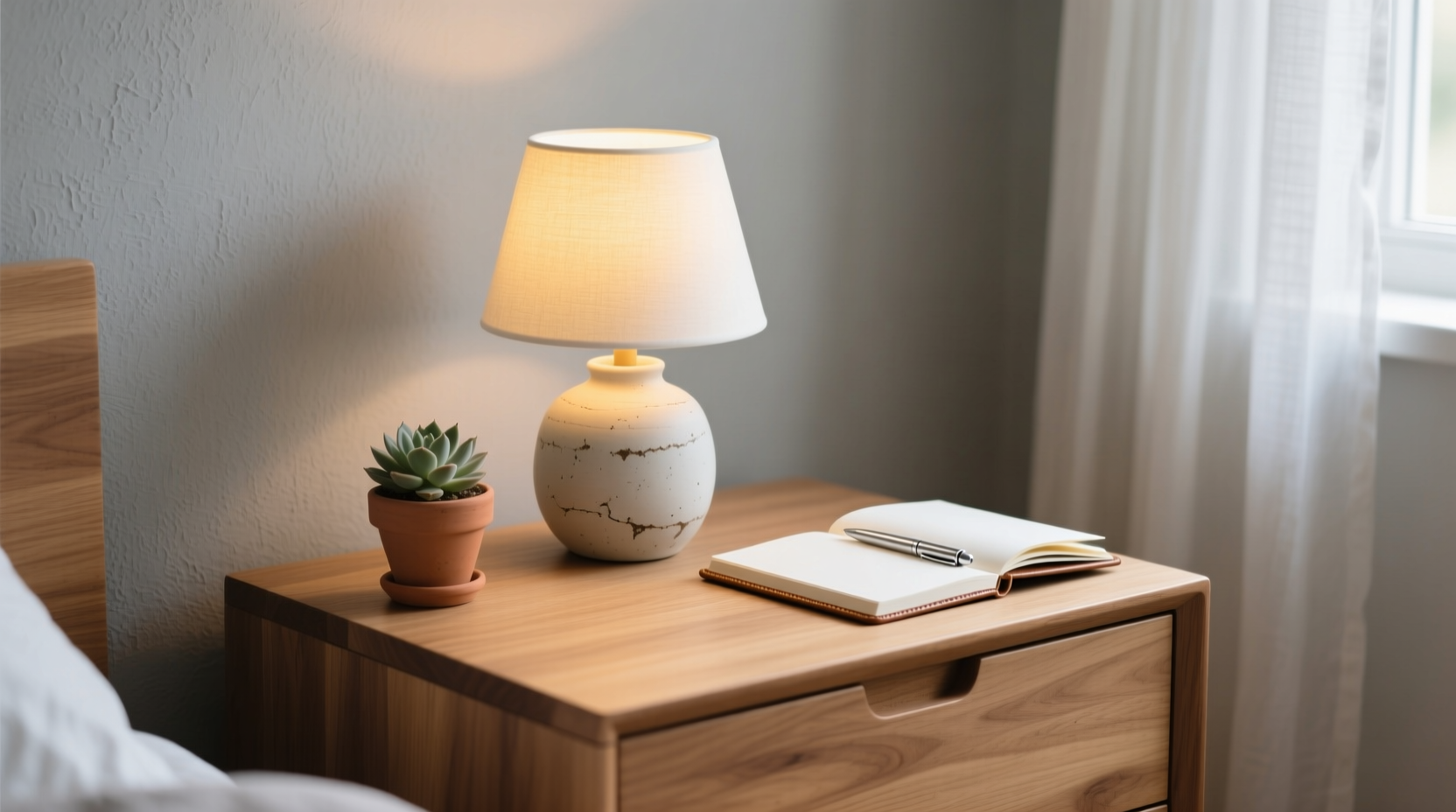
Minimalism is not just an aesthetic—it's a practice of mindful consumption. When applied to your nightstand, it becomes a ritual of preparation: preparing your body for sleep, your mind for stillness, and your environment for tranquility. The average person interacts with their nightstand during two of the most vulnerable transitions of the day: winding down at night and waking up in the morning. If this space is filled with loose papers, half-finished bottles, or charging cables tangled like vines, it subtly signals chaos rather than comfort.
According to designer and author Francine Jay, “The fewer decisions you have to make before bed, the easier it is to fall asleep.” A minimalist nightstand reduces cognitive load. There are no choices to make about what to pick up or put down because only what’s truly necessary remains. This simplicity fosters a sense of control and order, which research links to lower stress levels and improved sleep hygiene.
“Your bedroom should be a sanctuary, not a storage unit. The nightstand is its gatekeeper.” — Sarah Barnard, Wellness-Certified Interior Designer
Step-by-Step Guide to Building Your Minimalist Nightstand
Creating a minimalist nightstand isn’t about buying new things—it’s about removing the unnecessary and curating what stays. Follow these steps deliberately, giving each item thoughtful consideration.
- Clear everything off – Remove every object from your nightstand. Wipe down the surface. Start fresh.
- Sort items into categories – Group objects: reading material, electronics, skincare, medications, decorative pieces, etc.
- Evaluate each item – Ask: Do I use this daily? Does it support my health or rest? Could it live elsewhere?
- Select only essentials – Limit yourself to three to five core items maximum.
- Arrange intentionally – Place items so they’re easy to access but don’t dominate the surface.
- Maintain weekly – Once a week, reassess. Remove anything that has crept back onto the surface without purpose.
Essential Items Only: What Belongs on a Minimalist Nightstand?
Not all items are created equal. Some serve real function; others are emotional clutter disguised as utility. Below is a breakdown of commonly kept nightstand items—and whether they earn their place.
| Item | Keep? | Reasoning |
|---|---|---|
| Water glass or bottle | Yes | Hydration supports sleep quality. Use a simple, spill-proof vessel. |
| Smartphone | Limited | If used as alarm, enable grayscale mode and place face-down. Better: use a dedicated alarm clock. |
| Book or e-reader | Yes | Physical books promote screen-free wind-down. Keep only one title at a time. |
| Lamp | Yes | Warm, dimmable lighting supports circadian rhythm. Choose compact design. |
| Medications | Conditional | Only if taken nightly. Store in a small container, not loose bottles. |
| Candles or diffusers | No | Fire risk and potential allergens. Opt for battery-operated alternatives if scent is needed. |
| Photos or decor | Optional | One small, meaningful piece is acceptable. Avoid visual noise. |
| Chargers and cords | No | Store in drawer or behind furniture. Exposed wires disrupt visual calm. |
The goal is not emptiness, but harmony. Each remaining item should feel deliberate—not tolerated, not forgotten, but chosen.
Real Example: Transforming a Cluttered Nightstand
Consider Mark, a software developer in Portland. His nightstand once held seven items: a phone, tablet, water glass, prescription bottle, loose change, a novel he hadn’t opened in weeks, and a tangle of USB cables. He often woke feeling groggy and anxious, blaming work stress. After reading about minimalist sleep environments, he decided to experiment.
He removed the tablet (used only for late-night scrolling), relocated the medication to a labeled drawer, stored coins in a jar, and donated the unread book. He replaced his bright LED lamp with a warm-toned, touch-dimmable ceramic light and began using a dedicated alarm clock instead of his phone. He placed his phone in a drawer to charge overnight, retrieving it only in the morning.
Within ten days, Mark reported falling asleep faster and waking with greater clarity. “I didn’t realize how much mental noise came from that little table,” he said. “Now when I turn off the light, it feels like a signal: the day is done.”
Design Considerations for Function and Form
A minimalist setup demands thoughtful design. Even with few items, poor placement can create visual imbalance. Consider these principles:
- Symmetry – If you have two nightstands, mirror the arrangement. Balance promotes psychological calm.
- Height variation – Layer items by height: lamp at back, book in middle, glass in front. Avoid blocking sightlines.
- Material cohesion – Stick to one or two materials (e.g., wood, ceramic, linen) to unify the look.
- Negative space – Leave at least 40% of the surface empty. Empty space is not wasted—it’s breathing room.
For small nightstands, vertical organization helps. Use a wall-mounted shelf above for books or a magnetic strip for metal items like reading glasses. Drawer inserts can house chargers or supplements out of sight but within reach.
“The most peaceful rooms aren’t decorated—they’re edited.” — Emily Henderson, Interior Stylist and Author
Checklist: Build Your Minimalist Nightstand in One Evening
Ready to simplify? Use this checklist to complete your transformation tonight:
- ☐ Clear off your nightstand completely
- ☐ Wipe down the surface with a damp cloth
- ☐ Sort items into “keep,” “relocate,” and “discard” piles
- ☐ Choose up to five essential items to return
- ☐ Designate a home for cords and chargers (drawer, basket, behind furniture)
- ☐ Select a single light source with warm, adjustable brightness
- ☐ Place one reading item only (book or e-reader)
- ☐ Add a water container if needed (glass, carafe, or insulated bottle)
- ☐ Position items with space between them
- ☐ Step back and assess: does it feel calm and intentional?
Repeat this process monthly to prevent accumulation. Minimalism is maintenance, not a one-time purge.
Frequently Asked Questions
Can I have a plant on my minimalist nightstand?
A small, low-maintenance plant like a snake plant or zz plant can be included if it enhances your space without demanding attention. However, avoid large pots, watering trays, or drooping foliage that adds visual clutter. Remember: if it dies and you forget to remove it, it defeats the purpose. Choose resilience over aesthetics.
What if I need my phone nearby for emergencies?
If medical or caregiving needs require your phone to be accessible, keep it—but optimize its presence. Place it on silent, face-down, in a neutral-colored case. Consider enabling emergency contact shortcuts so it’s functional without being distracting. For added calm, use a physical “do not disturb” sign when safe to do so.
Is a minimalist nightstand suitable for shared bedrooms?
Absolutely—but coordination is key. Both partners should agree on the essentials. Use dual lamps, mirrored book choices, or shared water glasses to maintain balance. If needs differ (e.g., one person reads, the other doesn’t), assign zones: left side for reading, right for hydration. Unity comes from alignment of intent, not identical contents.
Conclusion: Less Is More When Sleep Is at Stake
A minimalist nightstand is more than a design choice—it’s a commitment to rest. In a world that glorifies busyness, choosing simplicity is an act of resistance. Every item you remove is a decision you won’t have to make at 11 p.m. when your energy is low and your willpower thinner. What remains should serve one purpose: to help you transition gently from day to night, and from sleep to wakefulness, with dignity and ease.
You don’t need a perfectly styled Instagram photo. You need a surface that supports silence, not stimulation. Start tonight. Take everything off. Ask what truly belongs. Then rebuild with care. Your future self—calmer, clearer, more rested—will thank you.




 浙公网安备
33010002000092号
浙公网安备
33010002000092号 浙B2-20120091-4
Comments
No comments yet. Why don't you start the discussion?