
A minimalist shoe collection isn’t about owning the fewest shoes possible—it’s about owning the right ones. The goal is to eliminate clutter while ensuring you’re prepared for any occasion, from work meetings to weekend hikes. Thoughtful selection reduces decision fatigue, saves money, and supports sustainable consumption. By focusing on versatility, quality, and fit, you can create a compact wardrobe of footwear that truly serves your lifestyle.
Define Your Lifestyle Needs First
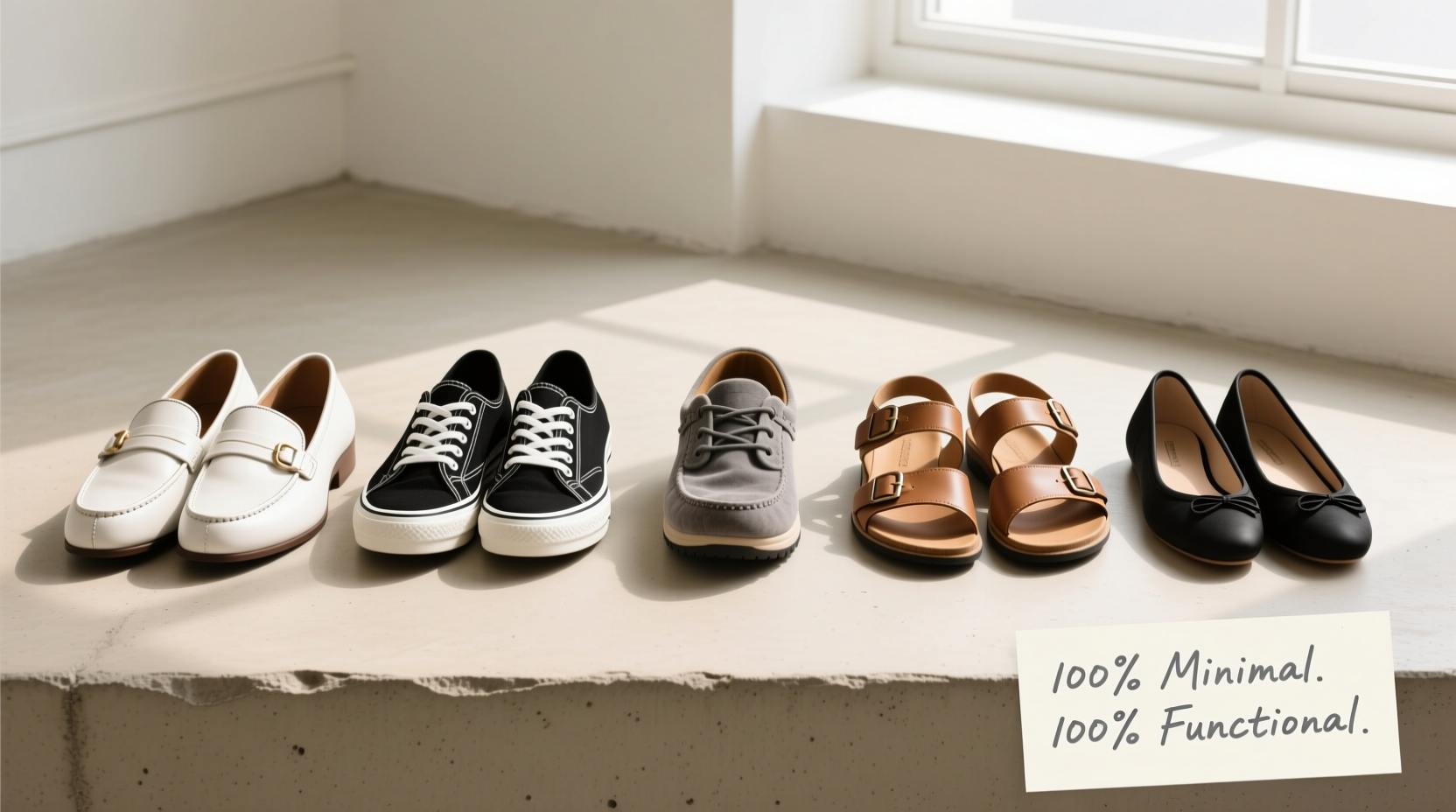
Before purchasing a single pair, assess how you spend your time. A corporate lawyer has different footwear demands than a landscape photographer. Start by mapping out your weekly routine: How many days do you work in an office? Do you walk more than five miles a week? Are formal events frequent? Answering these questions helps identify which shoe types are non-negotiable.
For most people, daily activities fall into four categories:
- Professional – Meetings, commuting, business travel
- Casual – Errands, social outings, relaxed weekends
- Active – Gym, hiking, running, or outdoor hobbies
- Formal – Weddings, dinners, ceremonies
Once categorized, assign one primary shoe type per category. This prevents overlap and redundancy. For example, owning three nearly identical black leather oxfords doesn’t add value unless each serves a distinct purpose (e.g., polished for client visits, scuffed for travel).
The Five Essential Shoe Types
A well-rounded minimalist collection typically includes five foundational pairs. These cover 95% of common scenarios when chosen wisely. Each should be high-quality, timeless in design, and compatible with multiple outfits.
- Neutral Sneakers – A clean white or gray leather sneaker pairs with jeans, chinos, and even some blazers. Ideal for casual days, travel, and light walking.
- Dress Oxfords or Derbies – Black or dark brown leather shoes that transition from office to dinner. Opt for Goodyear welted construction for longevity and resoling.
- Comfort Loafers or Monk Straps – A step between formal and casual. Works with suits on Fridays or dressed down with cropped pants.
- All-Terrain Walking Shoes – Designed for extended walking, light trails, or variable weather. Should support all-day wear without breaking in painfully.
- Dress Shoes for Formal Events – Polished black oxfords or patent pumps. Reserved for weddings, galas, or black-tie occasions.
Optional additions include seasonal items like waterproof boots or sandals, but only if your climate or routine demands them regularly.
Why Five Is the Sweet Spot
Research in behavioral psychology suggests that too many choices lead to dissatisfaction—a concept known as “choice overload.” Limiting your core collection to five pairs forces intentionality. It also simplifies maintenance, storage, and coordination with clothing.
“Minimalism in footwear isn’t deprivation—it’s precision. You stop buying for trends and start buying for function.” — Marcus Reed, Sustainable Footwear Designer
Quality Over Quantity: What to Look For
Minimalism fails when shoes wear out quickly. To ensure durability, focus on materials, construction, and brand reputation.
Materials That Last
- Leather (Full-Grain or Top-Grain): Breathable, moldable, and ages beautifully. Avoid bonded leather or synthetic uppers.
- Vibram or Rubber Outsoles: Provide grip and resist abrasion. Critical for walking and all-terrain shoes.
- Cork or Leather Insoles: Mold to your foot over time and wick moisture better than foam.
Construction Methods
The way a shoe is built determines its lifespan. Look for these techniques:
- Goodyear Welt: Stitched construction allowing repeated resoling. Adds weight but extends life by decades.
- Blake Stitch: Lighter than Goodyear, still repairable, common in Italian dress shoes.
- Cemented: Most common in sneakers; less durable but acceptable if replaced every 1–2 years.
Step-by-Step Guide to Building Your Collection
Follow this timeline to assemble your minimalist shoe wardrobe deliberately and affordably.
- Week 1: Audit Current Shoes
Remove all footwear from storage. Try each on. Discard or donate anything uncomfortable, worn out, or rarely worn. Keep only what fits well and serves a clear purpose. - Week 2: Identify Gaps
Compare your remaining shoes against the five essential types. Note missing categories. Prioritize replacing the most needed first—likely professional or walking shoes. - Week 3–4: Research & Test
Read reviews, visit stores, and test-fit top contenders. Don’t rush. Focus on brands known for durability: Allen Edmonds, Magnanni, Ecco, Blundstone, or On Running. - Month 2: Purchase First Pair
Buy the highest-priority shoe. Break it in gradually. Assess comfort and versatility before moving to the next. - Months 3–6: Fill Remaining Gaps
Add one pair every 4–6 weeks. Spread out costs and allow time to evaluate real-world performance. - Month 7+: Maintain & Rotate
Use shoe trees, rotate wear, and condition leather monthly. Repair instead of replace when possible.
Real Example: Sarah’s Transition to Minimalism
Sarah, a 34-year-old project manager in Portland, owned 17 pairs of shoes before adopting minimalism. Her closet was cramped, and she often wore the same two comfortable flats despite owning designer heels and seasonal boots.
After auditing her usage, she realized:
- She walked 7,000 steps daily but had no supportive walking shoe.
- Her three black pumps were uncomfortable and worn unevenly.
- She attended only two formal events per year.
She sold 12 pairs, kept one versatile ankle boot and her favorite sneakers, then invested in:
- A pair of dark brown Goodyear-welted oxfords
- A water-resistant hiking-inspired walking shoe
- A sleek loafer for smart-casual Fridays
Within six months, she reported less morning indecision, lower spending, and fewer foot aches. “I thought I needed variety,” she said. “But I just needed better options.”
Do’s and Don’ts: Common Pitfalls in Minimalist Shoe Selection
| Do | Don’t |
|---|---|
| Choose neutral colors (black, brown, white, gray) for maximum outfit compatibility | Select bold colors or patterns unless they match multiple key garments |
| Invest in resoleable construction for dress and walking shoes | Assume all leather shoes are durable—check stitching and sole attachment |
| Break in new shoes gradually over weekends or low-stakes days | Wear untested shoes for long events or important meetings |
| Use cedar shoe trees to maintain shape and absorb moisture | Store shoes flat or stacked without support, causing creasing and deformation |
| Limit collections to five core pairs, adding seasonals only if necessary | Keep “just in case” shoes that haven’t been worn in over a year |
Frequently Asked Questions
Can I really manage with only five pairs of shoes?
Yes—if they’re carefully selected. Most people overestimate their footwear needs. Five high-function, high-compatibility pairs cover nearly all scenarios. Seasonal exceptions (like snow boots) can be stored and rotated, keeping the active collection small.
What if my job requires changing shoes frequently?
If you work in healthcare, hospitality, or industrial settings, safety or hygiene may require dedicated footwear. In such cases, treat work shoes separately. Build your minimalist collection around off-duty needs, and accept that work gear is functional, not stylistic.
How do I justify the higher cost of quality shoes?
Calculate cost per wear. A $50 sneaker worn 20 times costs $2.50 per use. A $200 sneaker worn 200 times costs $1.00. High-quality shoes last longer, perform better, and reduce replacement frequency—saving money and waste over time.
Checklist: Building Your Minimalist Shoe Wardrobe
- ✅ Audit current shoe collection—keep only what fits and gets used
- ✅ Map lifestyle needs: professional, casual, active, formal
- ✅ Identify gaps using the five essential types
- ✅ Research brands with proven durability and repairability
- ✅ Buy one pair at a time, starting with the most needed
- ✅ Prioritize neutral colors and quality construction (e.g., Goodyear welt)
- ✅ Maintain shoes: use shoe trees, clean regularly, resole when needed
- ✅ Reassess annually—replace, rotate, or refine as lifestyle changes
Final Thoughts: Less Shoe, More Freedom
A minimalist shoe collection isn’t a constraint—it’s liberation. It frees you from clutter, confusion, and constant shopping. When every pair earns its place, getting dressed becomes faster, simpler, and more enjoyable. The discipline of selecting fewer, better shoes cultivates intentionality that often spreads to other areas of life.
Start small. Begin with one thoughtful purchase. Replace a worn-out favorite with something durable and versatile. Over time, your collection will reflect not just your style, but your values: clarity, sustainability, and self-awareness.




 浙公网安备
33010002000092号
浙公网安备
33010002000092号 浙B2-20120091-4
Comments
No comments yet. Why don't you start the discussion?