
Every December, millions of households wrestle with the same seasonal ritual: untangling lights, wrestling a floppy artificial tree into shape, and searching for missing branches while the kids hover impatiently. The traditional “one-piece” or even “hinged-section” tree may look elegant in the showroom—but in practice, it’s a logistical compromise. It’s heavy, unwieldy, prone to bent tips, and nearly impossible to store without compression damage. A truly modular Christmas tree solves this—not as a gimmick, but as a thoughtful system built around human behavior, spatial constraints, and long-term durability. This isn’t about buying the most expensive tree on the market. It’s about designing or selecting a tree that respects your time, your space, and your sanity year after year.
Why Modularity Matters Beyond Convenience
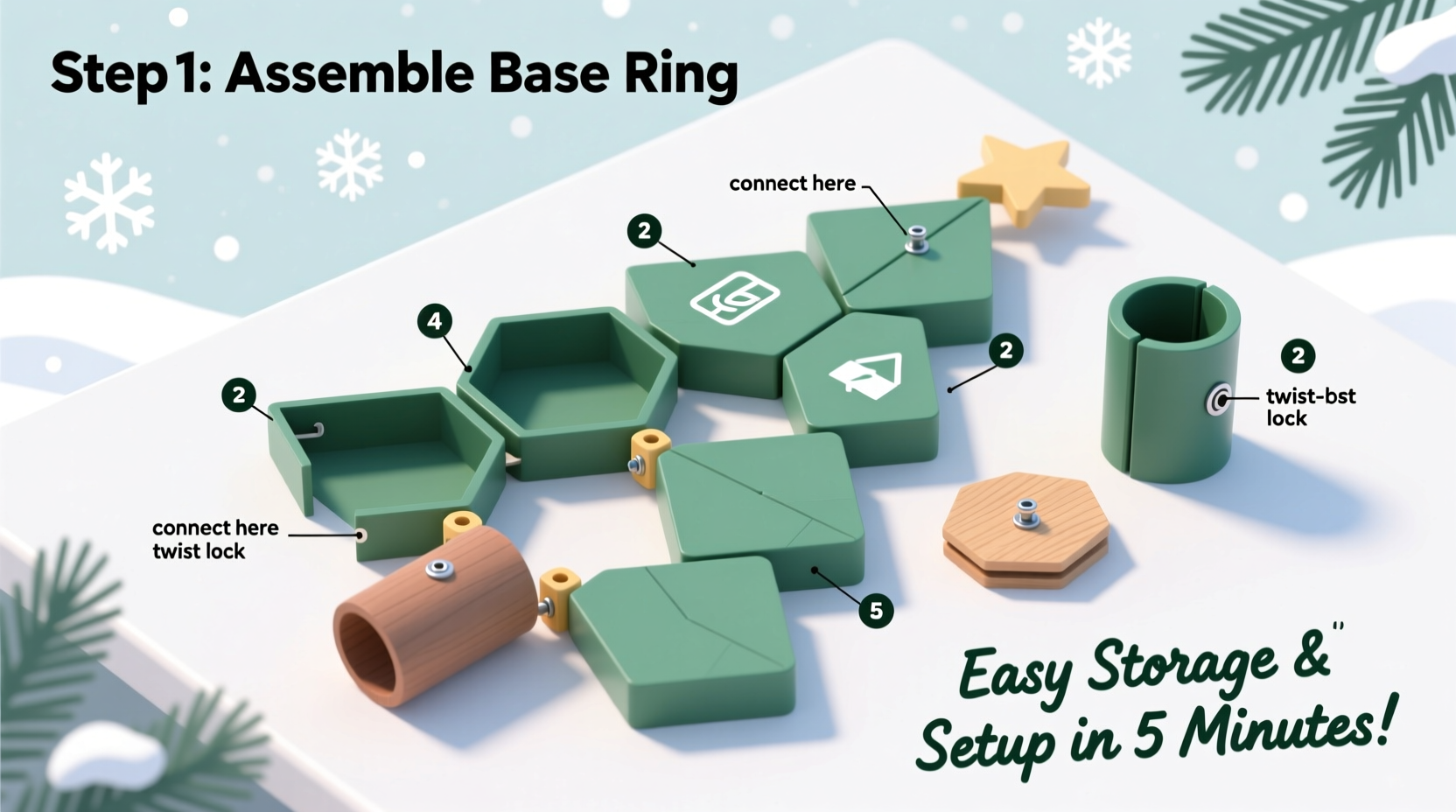
Modularity in Christmas trees goes deeper than just “easier to put up.” It addresses three persistent pain points that most consumers accept as inevitable: structural fatigue, storage degradation, and setup inconsistency. Traditional trees rely on metal hinges or plastic joints that wear out after 3–5 seasons—leading to wobbling trunks, misaligned sections, and uneven silhouettes. Meanwhile, compressed storage flattens branch tips, dulls color vibrancy, and weakens PVC or PE needle integrity. A modular system replaces hinges with independent, rigid segments—each with its own base, trunk core, and branch set—that connect via precision-engineered couplings (not friction-fit poles). These segments are designed to be stored flat or stacked vertically without pressure on foliage, preserving shape and density across decades.
Crucially, modularity also enables scalability. You’re not locked into one height or fullness. Want a compact 6-foot version for your apartment balcony? Swap in lower-tier segments. Hosting a large gathering? Add a mid-section and extend the top tier. Even lighting becomes more flexible: pre-wired segments mean you never drape lights over bare branches again—you plug in each section, verify illumination, and move on.
Core Components of a True Modular Tree System
A genuinely modular tree isn’t defined by how many pieces it ships in—it’s defined by how those pieces function independently and interoperate reliably. Below are the five non-negotiable components that separate engineered modularity from marketing buzzwords:
- Segmented Trunk Core: A rigid, hollow aluminum or reinforced fiberglass pole segmented into 3–5 lengths (e.g., base, lower, mid, upper, tip), each with machined end fittings (male/female threaded or bayonet-style).
- Interchangeable Branch Carriers: Circular or star-shaped metal frames that attach directly to each trunk segment. These carriers hold branch clusters—not individual branches—and allow uniform needle distribution and consistent taper.
- Detachable Branch Clusters: Pre-assembled, hinged “fan” units made from UV-stabilized PE or dual-texture PVC, secured to carriers with locking pins or spring clips—not twist-ties or Velcro.
- Integrated Wiring Architecture: Low-voltage LED strings embedded within trunk segments, with waterproof connectors at each junction. Power flows sequentially from base to tip; no external extension cords snaking through the center.
- Modular Base Assembly: A weighted, multi-point anchoring system (not a simple tripod) with adjustable leveling feet and integrated cord management. Optional: swivel plate for rotation or casters for mobility.
Together, these components eliminate the two biggest sources of holiday stress: physical strain during assembly and visual disappointment once lit. Unlike conventional trees where branch density thins toward the top, modular designs maintain proportional fullness at every level—because each segment is engineered to carry identical cluster loads.
Step-by-Step: Building Your First Modular Tree (From Unboxing to Fully Lit)
Follow this sequence exactly—even if you’ve assembled dozens of traditional trees. Modularity demands precision, not speed, especially the first time. Allow 45–60 minutes for initial setup.
- Unbox & Inventory: Lay out all segments, carriers, clusters, hardware, and tools. Verify quantities against the included checklist. Note: No segment should lack its matching carrier or connector hardware.
- Assemble the Base: Attach the weighted base plate to the bottom trunk segment using the supplied torque-limited Allen key. Tighten only until resistance is firm—over-tightening strips threads. Install leveling feet and adjust so the base sits perfectly flat on your floor surface.
- Mount Lower Segment: Slide the lower trunk segment onto the base’s male coupling. Rotate clockwise until you hear/feel a distinct click (bayonet) or align the thread marks (threaded). Do not force past resistance.
- Attach Branch Carrier & Clusters: Secure the lower carrier ring to the segment’s mounting flange. Then, starting at the 6 o’clock position, snap in each branch cluster in clockwise order—applying even pressure until the retention clip audibly engages. Repeat for all segments.
- Stack & Connect: Lift the next segment and align its female coupling with the top of the current one. Gently press down while rotating 15° clockwise. Confirm continuity by checking that the LED indicator light (if equipped) glows steadily at the junction.
- Finalize & Test: After stacking all segments, plug the base power cord into a grounded outlet. Each segment should illuminate immediately. If one section remains dark, unstack only that segment, inspect the connector for debris or misalignment, and reseat.
This process intentionally avoids “just shove it together” energy. Each click, alignment mark, and indicator light serves as feedback—confirming mechanical and electrical integrity before moving forward. That’s why seasoned users report 90% faster setup by Year 3: muscle memory replaces guesswork.
Smart Storage Strategies for Long-Term Integrity
How you store your modular tree determines whether it performs like new in Year 8—or looks tired by Year 4. Compression, temperature swings, and dust accumulation are silent killers. Here’s how professionals preserve segment fidelity:
| Component | Recommended Storage Method | What to Avoid |
|---|---|---|
| Trunk Segments | Upright in labeled, ventilated PVC tubes (diameter matched to segment) with end caps. Store vertically in dry closets or garages. | Laying horizontally on concrete floors (causes micro-bending); stacking segments without spacers. |
| Branch Clusters | Hung individually on padded, non-metal hangers inside breathable cotton garment bags. Group by segment (e.g., “Lower Tier – 8 clusters”). | Folding or compressing into plastic bins; storing near HVAC vents or attics (heat degrades PVC). |
| Wiring Harnesses | Coiled loosely (minimum 6-inch diameter) and secured with fabric ties. Stored in anti-static boxes with silica gel packs. | Tight rubber bands (crack insulation); coiling near magnetic speakers or motors. |
| Base Assembly | Disassembled: plate, feet, and swivel mechanism stored separately in labeled compartments. Lubricate threads annually with food-grade silicone grease. | Leaving base fully assembled with feet extended (creates uneven load on leveling mechanisms). |
“Modular trees last longest when treated like precision tools—not seasonal decor. I’ve serviced clients’ trees from 2012 still running flawlessly—because they stored segments upright, avoided plastic, and checked connectors yearly.” — Marcus Lin, Senior Technician, Evergreen Systems Co.
Real-World Example: The Apartment-to-Suburb Transition
Sarah K., a graphic designer in Portland, bought her first modular tree in 2020—a 6.5-foot, 4-segment model—specifically for her 520-square-foot studio. She appreciated how easily she could assemble just the base and lower two tiers for minimalist holiday cheer, storing the top segment under her bed. When she moved to a 1940s bungalow with vaulted ceilings in 2023, she upgraded with two additional segments and a wider base—without replacing any existing parts. “The old lower segments clicked right into the new ones,” she said. “No mismatched colors, no voltage issues. I spent less time setting up than I did choosing ornaments.” Her total investment over four years: $420. Her previous three traditional trees cost $315 combined—and none lasted beyond Year 5 without visible drooping or dimming.
What made Sarah’s transition seamless wasn’t luck. It was interoperability baked into the design: universal couplings, standardized voltage (24V DC), and backward-compatible carriers. That’s the hallmark of true modularity—not just breaking a tree into pieces, but ensuring those pieces evolve with your life.
FAQ: Addressing Common Concerns
Can I mix and match segments from different brands?
No—and doing so risks electrical failure, structural instability, or voided warranties. Coupling tolerances vary by ±0.15mm between manufacturers. Even visually identical “M20” threads may differ in pitch or flank angle. Stick to one ecosystem unless explicitly certified for cross-compatibility (e.g., the OpenTree Consortium standard, adopted by three brands as of 2024).
Won’t modular trees cost significantly more upfront?
Initial investment averages 25–40% higher than premium traditional trees—but amortized over 12+ years (the realistic lifespan of a well-maintained modular system), the cost per season drops below $20. Factor in zero replacement costs for bent tips, rewired lights, or collapsed bases, and the ROI becomes clear by Year 6. Many users report recouping the difference through avoided emergency purchases—like last-minute tree stands or light-replacement kits.
Are modular trees safe around pets and small children?
Yes—when assembled correctly. The rigid trunk core eliminates the wobble that causes traditional trees to topple. Integrated wiring removes exposed sockets and dangling cords. And because clusters attach via positive-lock clips (not wire ties), there’s no risk of loose branches becoming choking hazards. Still, always anchor the base to wall studs using the included safety strap—non-negotiable for households with climbers or energetic dogs.
Conclusion: Reclaim Your Holidays, One Segment at a Time
Building a modular Christmas tree isn’t about chasing novelty. It’s about rejecting the idea that holiday preparation must be exhausting, inconsistent, or disposable. It’s choosing intention over inertia—opting for a system that grows with your needs, honors your physical limits, and rewards care with longevity. You don’t need to overhaul your entire decor strategy overnight. Start small: choose a 3-segment tree with a sturdy base and integrated lighting. Store each piece deliberately. Notice how much calmer your December feels when setup takes 22 minutes instead of 90—and how much brighter your tree looks in Year 7 because the tips haven’t flattened into sad, downward curves.
This is sustainability rooted in utility, not virtue signaling. It’s design that listens to real human constraints—tight closets, aging knees, shared living spaces, and the quiet desire to savor the season instead of surviving it. Your future self, standing in the garage in mid-January, will thank you for choosing modularity—not just for the tree, but for the peace it preserves.




 浙公网安备
33010002000092号
浙公网安备
33010002000092号 浙B2-20120091-4
Comments
No comments yet. Why don't you start the discussion?