
Bringing holiday cheer to small spaces doesn’t require a full-sized evergreen. For students in dorms, frequent travelers, or anyone with limited room, a traditional tree isn’t practical. The solution? A modular Christmas tree designed to pack flat into a suitcase and assemble in minutes. This guide walks through building a lightweight, reusable, and stylish tree that maintains the spirit of the season without sacrificing space or convenience.
Why Go Modular?
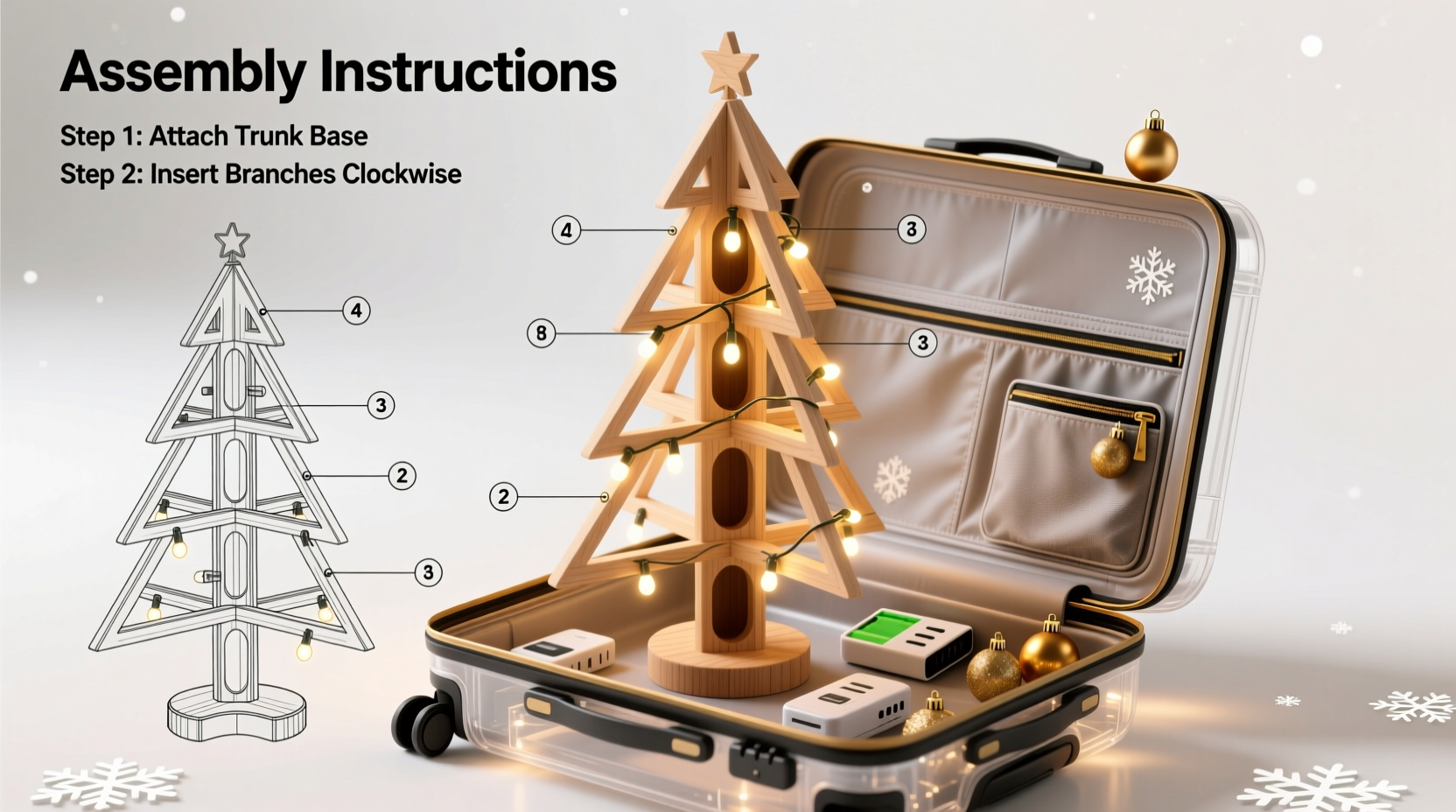
A standard pre-lit artificial tree can take up an entire corner and requires dedicated storage year-round. For those living in tight quarters or moving between locations during the holidays, this is impractical. A modular design solves these issues by breaking the tree into flat, stackable components that can be stored in a backpack, under a bed, or inside a carry-on bag.
The concept draws inspiration from origami, engineering, and sustainable design—focusing on minimalism, reusability, and ease of transport. Whether you're celebrating abroad, in a shared apartment, or at a temporary rental, a modular tree ensures you don’t miss out on one of the most iconic holiday traditions.
Materials and Tools You’ll Need
Building a modular tree starts with selecting materials that balance durability, weight, and cost. Unlike traditional trees made from PVC and metal frames, this version uses rigid yet lightweight substrates that can be cut precisely and assembled repeatedly.
- Foam board or corrugated plastic (Coroplast): Lightweight, weather-resistant, and easy to cut. Ideal for flat panel construction.
- Balsa wood or thin dowels: Used for central support and branch reinforcement.
- Hinges or fabric strips: Allow panels to fold together compactly.
- LED string lights (battery-powered): Safer for dorm use and eliminates cord clutter.
- Decorative elements: Mini ornaments, removable adhesive snowflakes, or magnetic tinsel.
- Utility knife, ruler, cutting mat: For precision cutting.
- Hot glue gun or waterproof tape: For secure but reversible assembly.
Choose materials based on availability and fire safety regulations—especially important in dormitories where open flames or high-wattage lighting may be prohibited.
“Modular design isn’t just about portability—it’s about intentionality. When every piece has a purpose and place, decoration becomes part of the ritual.” — Maya Tran, Sustainable Holiday Designer
Step-by-Step Assembly Guide
Follow this sequence to construct a conical, three-tiered tree approximately 3 feet tall when assembled. Each section nests within the next, allowing the entire structure to collapse into a rectangle no larger than 18” x 12”.
- Design the silhouette: Sketch a triangle divided into three progressively smaller trapezoidal sections (base, middle, top). Scale each so they stack concentrically.
- Cut the panels: Transfer the shapes onto foam board or Coroplast using a ruler and pencil. Cut carefully with a utility knife for clean edges.
- Create folding joints: Attach two 1-inch-wide fabric strips along the vertical edges of adjacent panels. These act as flexible hinges, allowing the tree to fold like a fan.
- Reinforce the spine: On the back of the tallest panel, glue a balsa wood strip vertically to serve as a stabilizing backbone.
- Add light channels: Score shallow horizontal grooves across each panel (¼ inch deep) to hold LED wires in place. Use clips made from folded cardboard if needed.
- String the lights: Begin at the base, weaving battery-powered micro-LEDs through the grooves in a spiral pattern. Secure ends with low-tack tape.
- Assemble and test: Fold panels outward into a cone shape. Support the base with a small weighted platform (e.g., a painted tin or book block).
- Pack for travel: Collapse the tree flat, wrap cords separately, and place inside a padded sleeve or folder before sliding into a suitcase.
Design Variations and Customization Options
One advantage of a DIY modular tree is complete creative control. You’re not limited to green triangles—experiment with colors, textures, and themes.
| Theme | Material Choice | Lighting Style | Ideal For |
|---|---|---|---|
| Classic Evergreen | Green foam board with textured finish | Warm white LEDs | Dorm rooms, family visits |
| Winter Wonderland | White Coroplast with glitter coating | Cool blue/purple LEDs | Apartments, minimalist decor |
| Retro Pop | Red, yellow, or teal foam core | Multicolor fairy lights | Travelers, hostels, Airbnb stays |
| Nordic Minimalist | Natural kraft paper over chipboard | Amber filament-style LEDs | Eco-conscious users, cabins |
You can also integrate functional upgrades: magnetic ornament hooks, hidden battery compartments, or even QR codes linking to a personalized holiday playlist. For added stability on uneven surfaces, attach non-slip pads to the bottom corners.
Real-World Example: A Student’s Dorm Room Transformation
Jessica, a sophomore at the University of Vermont, spent her first winter break away from home feeling disconnected from holiday traditions. Her dorm room measured just 10x12 feet, with no space for a traditional tree. After researching compact alternatives, she built a modular tree using recycled foam board from local signage shops.
She cut three triangular panels, hinged them with leftover ribbon, and embedded warm-white LED strings powered by a USB-rechargeable battery pack. The finished tree stood 32 inches tall and folded into a portfolio case she already used for art class. She decorated it with tiny paper cranes made by her roommate and a handmade star crafted from gold foil.
When she flew home for Thanksgiving, she packed the tree in her carry-on. “It took less space than my shoes,” she said. “And seeing it lit up in my room instantly made it feel like Christmas.”
Do’s and Don’ts of Travel-Friendly Tree Care
To ensure your tree lasts for multiple seasons, follow best practices for maintenance and handling.
| Do | Don't |
|---|---|
| Use battery-powered or USB lights to comply with fire codes | Plug into outlets without surge protection |
| Store in a rigid folder or document box to prevent bending | Leave assembled under heavy objects |
| Clean dust with a soft brush or compressed air | Use water or chemical cleaners on foam surfaces |
| Label connection points for faster setup | Force misaligned hinges—repair or replace instead |
| Test lights before each season | Overload circuits with additional electronics |
FAQ: Common Questions About Modular Trees
Can I make a modular tree fire-safe for dorm use?
Yes. Choose non-flammable materials like Coroplast or treated foam board. Always use low-heat, battery-operated LED lights and avoid placing near heaters or flammable curtains. Check with your housing authority for specific electrical guidelines.
How long does it take to assemble?
Once familiar with the process, most people set up their tree in 5–7 minutes. First-time assembly may take 15–20 minutes, especially when routing lights and securing supports.
Can kids help build or decorate it?
Absolutely. The flat-panel design is safe for children to paint, sticker, or personalize. Just supervise any cutting or gluing steps. Many families now make building the modular tree an annual craft activity before the holidays.
Checklist: Building Your Suitcase-Ready Tree
Before starting your project, review this checklist to ensure all components are accounted for:
- ☐ Measure available space and determine ideal tree height
- ☐ Select material (foam board, Coroplast, or eco-cardboard)
- ☐ Sketch and scale triangle segments for nesting design
- ☐ Gather cutting tools and protective gear (gloves, eye protection)
- ☐ Purchase battery-powered LED string lights (preferably with timer)
- ☐ Acquire flexible hinges (fabric strips, vinyl tape, or snap buttons)
- ☐ Prepare lightweight base or stand for stability
- ☐ Test light placement and battery life before final attachment
- ☐ Create a labeled storage sleeve or case for transport
- ☐ Pack a repair kit: spare bulbs, tape, spare fasteners
Conclusion: Bring the Holidays With You, Anywhere
A Christmas tree shouldn’t be a burden of space or logistics. By embracing modularity, you reclaim the joy of decoration without compromise. Whether you're studying abroad, staying in a short-term rental, or simply want a clutter-free celebration, a suitcase-friendly tree offers flexibility, creativity, and continuity of tradition.
This isn’t just about saving space—it’s about making room for meaning. Every time you unfold your tree, thread the lights, and hang a familiar ornament, you’re not just assembling branches. You’re rebuilding a moment of warmth, memory, and belonging. And that’s something worth carrying with you, wherever you go.




 浙公网安备
33010002000092号
浙公网安备
33010002000092号 浙B2-20120091-4
Comments
No comments yet. Why don't you start the discussion?