
A rustic cabin themed Christmas tree evokes the quiet magic of snow-dusted pines, crackling hearths, and hand-stitched wool blankets. It’s not about perfection—it’s about presence: the scent of dried orange slices baking in the oven, the weight of a pinecone gathered from your backyard, the soft rustle of burlap ribbon unspooling like old twine. This aesthetic rejects synthetic shine in favor of texture, warmth, and tactile authenticity. More than decor, it’s a sensory return—to simplicity, seasonality, and slow-making. Whether you live in a mountain lodge or a city apartment with a single windowsill, this approach is deeply adaptable, sustainable, and rooted in what’s already around you.
Why Natural Elements Elevate the Rustic Cabin Aesthetic
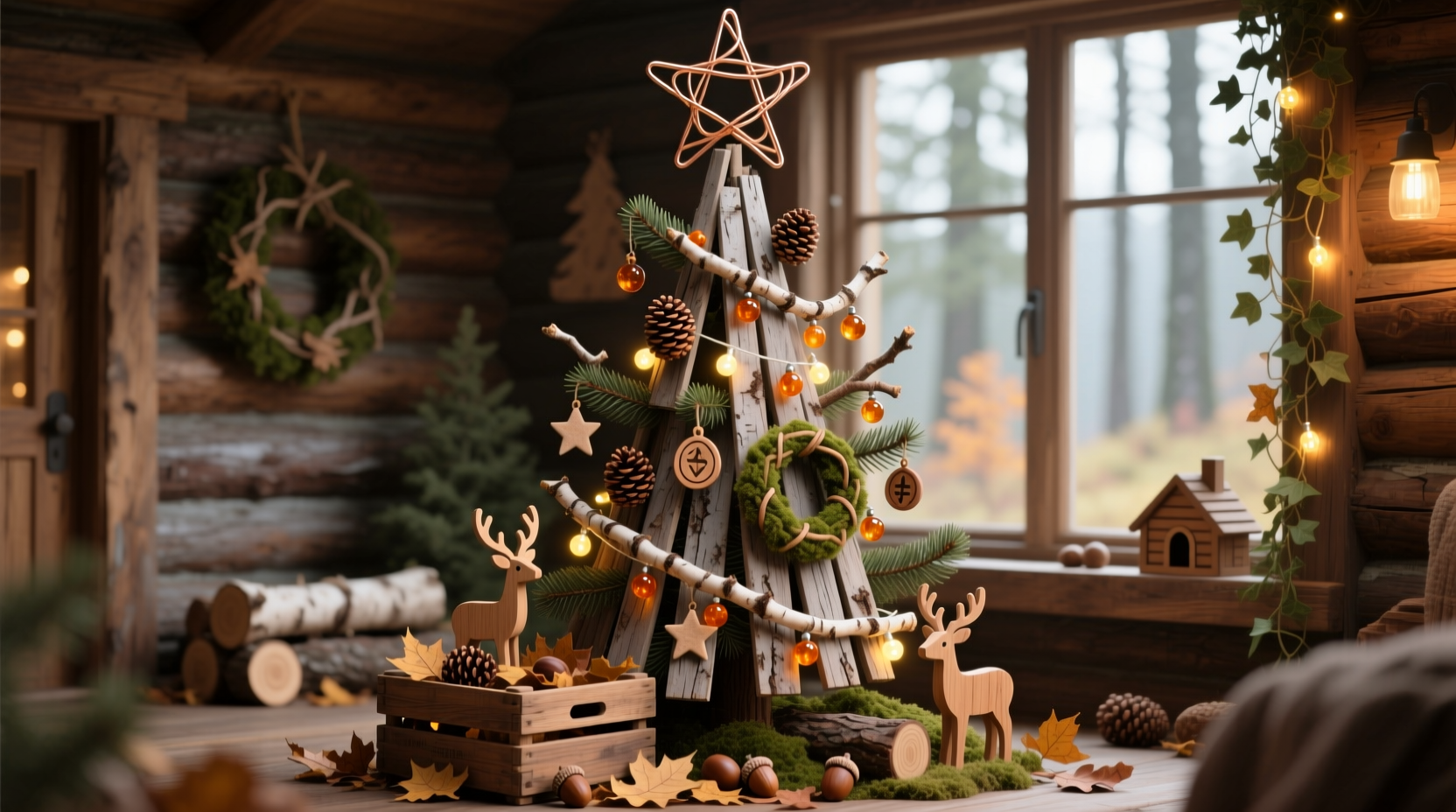
The rustic cabin theme thrives on imperfection, patina, and provenance. Plastic ornaments lack history; a weathered birch branch carries the memory of wind and rain. Natural materials bring layered sensory depth: the crisp citrus tang of dried orange garlands, the resinous whisper of fresh-cut cedar boughs, the earthy musk of dried lavender tucked into pinecone clusters. Unlike mass-produced decor, each element tells a story—of where it grew, how it was gathered, and how it was prepared by hand. This isn’t just decoration—it’s curation. Botanist and sustainable design educator Dr. Lena Torres notes:
“When we use foraged or food-grade natural elements, we reconnect holiday traditions to ecological cycles—not consumer calendars. A pinecone isn’t ‘just an ornament’; it’s a seed vessel, a habitat remnant, a piece of local forest ecology brought indoors.”That intentionality transforms the tree from backdrop to centerpiece—a living archive of place and season.
Core Materials: Sourcing With Integrity and Practicality
Authentic rustic charm begins long before assembly—with thoughtful, low-impact sourcing. Prioritize what’s accessible, seasonal, and safe for indoor use. Avoid rare or protected species (e.g., mistletoe from endangered host trees, lichens stripped from live oaks). Forage only with landowner permission and never harvest more than 10% of any wild population. When in doubt, grow or buy sustainably: organic citrus, untreated pinecones from tree farms, or reclaimed wood slices from local carpenters.
Below is a practical sourcing checklist—designed for realism, not idealism:
Rustic Cabin Tree Sourcing Checklist
- ✅ Pinecones: Gather locally (white pine, eastern red cedar, or spruce), or order untreated, kiln-dried varieties online.
- ✅ Dried Citrus: Slice organic oranges, lemons, or grapefruits ¼\" thick; bake at 200°F for 2–3 hours until leathery but not brittle.
- ✅ Burlap & Linen: Use remnants from craft stores or repurpose old grain sacks—avoid synthetic “burlap-look” polyester.
- ✅ Wood Elements: Reclaimed birch bark, fallen cedar branches, or 1\"-thick hardwood slices (sanded smooth, edges sealed with food-grade walnut oil).
- ✅ Natural Twine: Jute or hemp cord—never nylon or polypropylene, which shed microplastics when handled.
- ✅ Botanical Accents: Dried lavender, rosemary sprigs, cinnamon sticks, star anise, or whole nutmeg—food-grade and unsprayed.
Step-by-Step Assembly: Building Texture, Depth, and Warmth
Building a rustic cabin tree is less about symmetry and more about rhythm—repeating textures at varying scales to mimic the layered complexity of a real forest floor or log wall. Work from the trunk outward, anchoring heavier elements first, then layering lighter, fragrant accents last. Allow at least three hours for full assembly—this is meant to be meditative, not rushed.
- Start with the Base Structure: Choose a real or high-quality faux fir, spruce, or cedar tree. Real trees offer unmatched scent and biodegradability; if using faux, select one with matte, irregular needles (no metallic sheen) and brown-tinted branch tips. Secure it in a sturdy wooden stand filled with water (if real) or weighted with river stones (if faux).
- Add Layer One – The Woodland Backdrop: Wrap the trunk loosely with 2\"-wide burlap strips, overlapping by ⅓ each wrap. Tuck ends under previous layers—no staples or glue. Then, weave in thin, flexible cedar or white pine branches (3–5\" long) between burlap folds, securing with jute ties. These create subtle vertical lines reminiscent of log cabin chinking.
- Layer Two – Weighted Anchors: Hang 8–12 medium-to-large pinecones (2.5–4\" tall) using 18\" lengths of jute. Tie one end securely around the cone’s base scale, then loop the other end over a sturdy lower branch. Vary hang points—some near the trunk, others extending outward—to avoid uniformity. Add 3–5 small hardwood slices (3–4\" diameter) hung similarly, angled slightly downward like rustic shingles.
- Layer Three – Fragrant & Textural Weaves: String dried citrus slices onto jute cord (use a large-eye needle), spacing them 2–3\" apart. Drape three 48\"-long garlands asymmetrically—one near the top third, one mid-canopy, one low and sweeping. Interweave with 12–15 short rosemary sprigs (3\" long) tied directly to branches with tiny jute knots. Their piney aroma deepens as they warm near lights.
- Final Layer – Intimate Details: Hand-tie miniature bundles: 3 cinnamon sticks + 1 star anise + 1 clove, wrapped in linen scrap and secured with jute. Hang 7–9 of these at eye level, clustered in threes. Tuck dried lavender sprigs deep into branch forks for hidden fragrance. Finish with 5–7 small birch bark “candles”—rolled bark cylinders (2\" tall × 1\" wide), placed upright in branch cradles like forest stumps.
Design Principles & Common Pitfalls: What Works (and What Doesn’t)
Rustic cabin styling succeeds through restraint—not abundance. Overloading with natural elements can quickly shift from cozy to cluttered. The goal is curated scarcity: each piece should earn its place through texture, scent, or narrative resonance. Below is a concise comparison of intentional choices versus common missteps.
| Principle | Do | Don’t |
|---|---|---|
| Color Palette | Stick to forest neutrals: bark browns, pine green, dried citrus amber, oatmeal burlap, cream linen. Add one accent—like deep burgundy dried hibiscus or charcoal-dyed eucalyptus—if desired. | Introduce bright reds, metallic gold, or neon accents—even “natural-looking” plastic berries break the illusion. |
| Lighting | Use warm-white LED fairy lights (2700K color temp) with fabric-covered cords. Wind them *under* branches, not over—so light glows softly upward like embers. | Use cool-white bulbs, blinking modes, or exposed plastic cords. Avoid battery packs taped visibly to trunks. |
| Scale & Proportion | Mix sizes intentionally: large pinecones low, medium citrus mid, tiny cinnamon bundles high. Keep largest element no bigger than 1/10th the tree’s height. | Hang identical ornaments at even intervals. Cluster all large items at the bottom or top. |
| Fragrance Balance | Layer scents intentionally: citrus (bright/top note), rosemary (green/middle), cedar (woody/base). Rotate dried botanicals every 7–10 days to refresh aroma. | Use essential oil diffusers near the tree or spray-on “woodsy” fragrances—they coat natural surfaces and dull textures. |
| Longevity Planning | Accept that citrus will darken, lavender will fade, and pinecones may shed minor scales. Embrace these changes as part of the season’s story. | Try to “preserve” elements with lacquer, varnish, or hairspray—these yellow, stiffen, or emit VOCs indoors. |
Real-World Example: The Mountain Lodge Tree in Asheville, NC
When interior designer Maya Chen renovated a 1930s stone cabin in the Blue Ridge Mountains, her client requested a tree that “felt like stepping into the woods at dawn.” With no budget for custom fabrication, Maya sourced everything within 15 miles: fallen cedar limbs from a neighbor’s storm cleanup, pinecones gathered during a family hike at Max Patch Bald, and organic blood oranges from a Hendersonville orchard. She baked citrus slices in her studio oven while playing vinyl records—“the scent of caramelizing fruit mixed with the crackle of the record felt like time travel,” she recalls. For lighting, she rewired vintage brass candle holders with warm LEDs and suspended them from ceiling beams above the tree, casting dappled shadows like sunlight through pines. The result wasn’t polished—it was alive. Guests commented on how the tree “smelled like childhood memories,” and how the uneven burlap wrapping made the trunk feel like rough-hewn timber. Most telling? The client kept the dried citrus and pinecones in a glass jar on their mantel long after New Year’s, refilling it each December with new foraged pieces. That’s the hallmark of successful rustic design: it doesn’t end with the season—it becomes ritual.
FAQ: Practical Questions Answered
Can I use fresh greenery instead of dried elements?
Yes—and highly recommended for the lower third of the tree, where moisture retention matters most. Fresh cedar, fir, or holly lasts 2–3 weeks indoors when cut at an angle and kept in water. Avoid eucalyptus or magnolia unless you’re in a humid climate—they dry too fast and drop leaves. Always remove any berries or seeds before bringing indoors if pets or children are present.
How do I keep dried citrus from molding in humid climates?
Thorough dehydration is key: bake until slices are completely leathery and snap cleanly—not bendy or sticky. Store unused slices in an airtight container with a silica gel packet (available at craft stores). If humidity exceeds 60%, limit citrus to the upper canopy where air circulation is best, and replace any softening pieces after 5 days.
Is it safe to use real candles near a natural tree?
No. Even flameless LED “candles” pose risk if placed inside dense greenery—heat buildup can damage wiring or ignite dry botanicals. Instead, use battery-operated tea lights nestled in hollowed-out hardwood slices (lined with aluminum foil for reflectivity) or embedded in birch bark rolls. Always test heat output with your hand before final placement.
Conclusion: Your Tree Is a Threshold, Not a Trophy
A rustic cabin themed Christmas tree is never truly “finished.” It breathes, darkens, sheds, and softens—just as a real cabin does over decades of snowmelt and sun exposure. Its beauty lies in its refusal to be static, perfect, or disposable. Every pinecone you gathered, every citrus slice you baked, every knot you tied in jute is a quiet act of resistance against homogenized holiday culture. It says: I value what grows here. I honor what falls naturally. I choose warmth over wattage, scent over sparkle, story over stock. You don’t need a mountain view or a wood stove to embody this spirit. You need only attention—to the curve of a twig, the grit of bark, the patience of drying fruit. Start small: bake one orange slice. Tie one pinecone. Wrap one branch in burlap. Let the rest unfold like a trail leading deeper into the woods. Your tree won’t just decorate a room—it will hold space. For memory. For stillness. For the deep, slow joy of making something wholly, unapologetically real.




 浙公网安备
33010002000092号
浙公网安备
33010002000092号 浙B2-20120091-4
Comments
No comments yet. Why don't you start the discussion?