
Perfume is more than a finishing touch—it’s an extension of identity. While many people settle for a single fragrance, those who master the art of scent layering create something far more personal: a signature aroma that evolves throughout the day and reflects their complexity. Layering perfumes isn’t just about applying multiple scents; it’s a deliberate practice of harmony, contrast, and balance. Done well, it results in a unique olfactory fingerprint no off-the-shelf bottle can replicate.
The key lies in understanding fragrance families, projection, longevity, and skin chemistry. With thoughtful selection and technique, anyone can craft a layered scent that feels intentional, sophisticated, and unmistakably theirs.
Understanding Fragrance Families and Compatibility
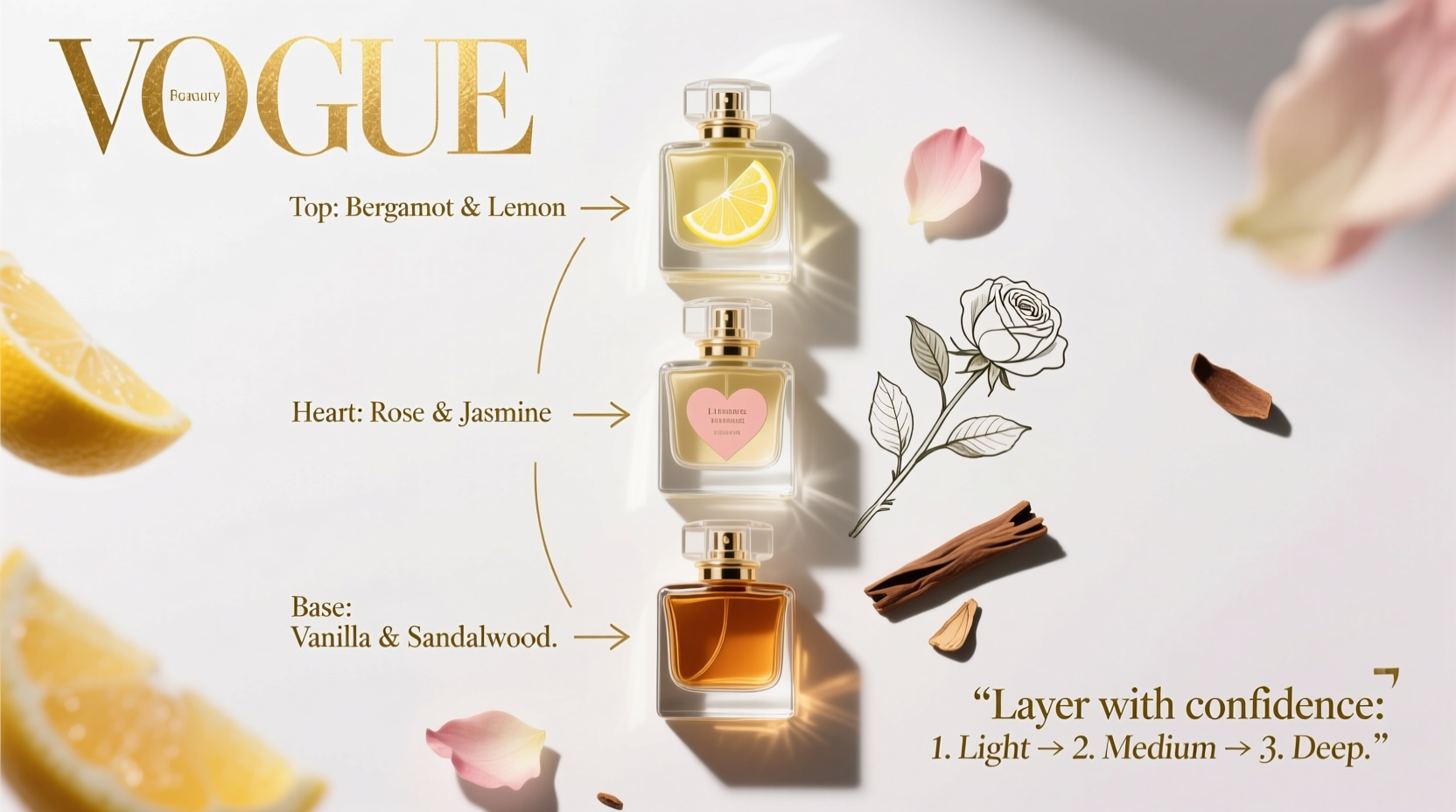
Before combining scents, you must understand what each one brings to the table. Perfumes are categorized into families based on their dominant notes and overall character. The main fragrance families include:
- Floral – Rose, jasmine, peony, gardenia
- Woody – Sandalwood, cedar, patchouli
- Citrus – Bergamot, lemon, grapefruit, orange
- Oriental/Amber – Vanilla, amber, spices, incense
- Fougère – Lavender, oakmoss, coumarin (common in masculine scents)
- Gourmand – Caramel, chocolate, tonka bean
- Green/Chypre – Fresh leaves, galbanum, mossy undertones
Successful layering begins with choosing complementary families. For instance, citrus blends beautifully with woody or aromatic scents, while florals often harmonize with oriental or gourmand bases. Avoid clashing profiles—pairing a bright citrus cologne with a heavy leather chypre may result in dissonance unless carefully balanced.
“Fragrance layering is like composing music. You need a base note that grounds the experience, a heart that carries emotion, and a top note that announces your presence.” — Luca Turin, perfume critic and co-author of *Perfumes: The Guide*
The Science of Skin Chemistry and Scent Longevity
No two people smell the same—even when wearing identical perfumes. Skin chemistry alters how fragrance molecules interact with the body. Factors such as pH levels, oil production, diet, and medications influence how a scent develops and lasts.
This variability makes layering both challenging and rewarding. A combination that works for one person might turn sharp or overly sweet on another. Always test layered scents directly on your skin, not just on blotter strips.
Consider the longevity of each fragrance. Top notes evaporate within minutes, heart notes emerge after 15–30 minutes, and base notes linger for hours. When layering, aim for structural cohesion:
- Base Layer: Long-lasting, deep scent (e.g., sandalwood, musk, amber)
- Middle Layer: Heart-driven fragrance (e.g., rose, lavender, fig)
- Top Layer: Bright, fleeting accent (e.g., citrus, green apple, mint)
This structure ensures your scent evolves gracefully over time rather than collapsing into a muddled mess.
Step-by-Step Guide to Effective Perfume Layering
Creating a signature scent through layering requires patience and precision. Follow this timeline to develop a personalized fragrance profile:
- Step 1: Assess Your Collection
Gather perfumes you already own. Identify their primary notes and families. Discard any that have soured or changed significantly over time. - Step 2: Choose a Base Scent
Select a long-lasting, low-sillage fragrance with warm or deep base notes. This will anchor your blend. Apply it to pulse points: wrists, inner elbows, neck. - Step 3: Wait 10 Minutes
Allow the base scent to settle into your skin. Rushing the next step can trap volatile top notes and distort the final impression. - Step 4: Add a Complementary Middle Note
Choose a fragrance with strong heart notes that bridge the base and top. Spray once—less is more. Focus on different pulse points to prevent over-concentration. - Step 5: Introduce a Top Accent (Optional)
If desired, apply a third, lighter scent with crisp opening notes. Use sparingly—a single spritz behind the ears or at the collarbone adds dimension without overwhelming. - Step 6: Observe and Adjust
Wear the combination for several hours. Note how it changes. Does it fade too quickly? Become cloying? Refine ratios and timing accordingly.
Do’s and Don’ts of Fragrance Layering
| Do’s | Don’ts |
|---|---|
| Start with scents you already love individually | Layer two overpowering fragrances (e.g., both with strong sillage) |
| Use unscented moisturizer or matching body lotion as a base | Apply all perfumes at once—allow each to dry before adding the next |
| Test combinations in cool, neutral environments | Layer expired or oxidized perfumes (they can smell metallic or sour) |
| Keep a journal of successful pairings | Assume a daytime combo works at night—lighter layers suit mornings, deeper ones evenings |
| Experiment seasonally (citrus + wood in summer, vanilla + spice in winter) | Ignore your environment—office settings require subtlety, events allow bolder expressions |
Real Example: Crafting a Personal Signature Scent
Sophie, a graphic designer in Portland, wanted a scent that felt both creative and grounded. She loved her Diptyque Philosykos for its creamy fig and coconut but found it faded too quickly. Her Le Labo Santal 33 had incredible longevity but felt too bold for daily wear.
She began layering: applying Philosykos first to her wrists and décolletage, waiting ten minutes, then lightly misting Santal 33 at her neck and behind her knees. The result was transformative—the green freshness of fig softened the smoky leather of the santal, while the sandalwood extended the fig’s lifespan from four to nearly eight hours.
Over time, Sophie refined the ratio, using only half a spray of Santal 33. Colleagues began commenting, “You always smell amazing—what do you wear?” She smiled, knowing the answer wasn’t a single bottle, but a composition uniquely hers.
Expert Tips and Pro Techniques
Professional perfumers and niche fragrance consultants use advanced methods to achieve seamless blends. Here are insights adapted for everyday use:
- Match Concentrations: Pair Eau de Parfum with Eau de Parfum. Layering an EDT over an EDP may cause the lighter scent to vanish instantly.
- Use Fragrance-Free Base Products: Apply unscented body oil or a matching scented lotion before perfumes. Oily skin holds scent longer, and hydrated skin diffuses more evenly.
- Reverse Layering: Try applying a stronger scent first, then a lighter one over it. Sometimes the “top” note needs space to breathe above the base.
- Seasonal Rotation: Summer calls for airy, aquatic, or citrus layers; winter benefits from resins, spices, and deep woods.
- Gender-Neutral Blending: Don’t be confined by marketing. A floral can ground a spicy amber, and a vetiver can add intrigue to a fruity accord.
“The most memorable scents aren’t the loudest—they’re the ones that invite people to lean in and ask, ‘What are you wearing?’ That intimacy is born from careful layering.” — Anya Peterson, Independent Perfumer & Founder of Petrichor Atelier
Frequently Asked Questions
Can I layer perfumes from different brands?
Absolutely. In fact, cross-brand layering is where true creativity happens. Just ensure the notes and concentrations align. A Tom Ford Black Orchid layered under Byredo Mojave Ghost can create a hauntingly beautiful earth-floral fusion—if balanced correctly.
How do I avoid smelling overwhelming?
Use fewer sprays per layer—ideally one per fragrance. Focus on pulse points rather than dousing clothing. Remember, if you can smell your perfume strongly after 30 minutes, it’s likely too much for others nearby. Let the scent unfold subtly.
Is it safe to layer with body mists or room sprays?
Proceed with caution. Body mists are often lower in concentration and may contain different solvents. Room sprays are not designed for skin and can cause irritation. Stick to skin-safe products labeled for personal use.
Checklist: Building Your Signature Scent
Follow this checklist to confidently experiment and refine your layered fragrance:
- ☐ Audit your current perfume collection and identify their core notes
- ☐ Select one long-lasting base fragrance (woody, musky, or amber-rich)
- ☐ Choose a complementary middle note (floral, green, or aromatic)
- ☐ Pick a light top accent (citrus, ozonic, or herbal) if desired
- ☐ Test combinations on skin, not paper
- ☐ Allow 10–15 minutes between layers
- ☐ Wear the blend for 4+ hours to assess evolution
- ☐ Record successful pairings in a notebook or app
- ☐ Adjust ratios based on season, occasion, and environment
- ☐ Re-evaluate every few months—your preferences may evolve
Conclusion: Make Your Scent Unmistakably Yours
Building a signature scent through perfume layering is an act of self-expression. It transforms fragrance from a routine into a ritual—one that rewards curiosity, attention, and patience. There’s no universal formula, only principles to guide your exploration. Whether you’re blending a zesty bergamot with warm tonka for daytime energy, or fusing oud with violet for evening depth, the goal remains the same: to wear a scent that feels like home, even when you’re miles away.
Your nose is your best tool. Trust it. Experiment boldly, document wisely, and refine relentlessly. The perfect layered fragrance isn’t found—it’s built.




 浙公网安备
33010002000092号
浙公网安备
33010002000092号 浙B2-20120091-4
Comments
No comments yet. Why don't you start the discussion?