
Confidence isn’t just how you feel inside—it’s what you project outward. The way you stand, move, and interact with others sends silent signals about your self-assurance, competence, and presence. What most people don’t realize is that body language doesn’t just reflect confidence; it can actually create it. By consciously adjusting your posture, gestures, and expressions, you can trigger real psychological shifts that make you feel more capable, calm, and in control—even when you’re not.
This isn’t about faking it until you make it. It’s about using scientifically supported techniques to rewire your nervous system, reduce stress hormones, and increase the chemicals associated with power and assertiveness. These are practical, evidence-based body language hacks that anyone can learn, practice, and apply immediately—in job interviews, public speaking, social events, or even daily conversations.
The Science Behind Body Language and Confidence
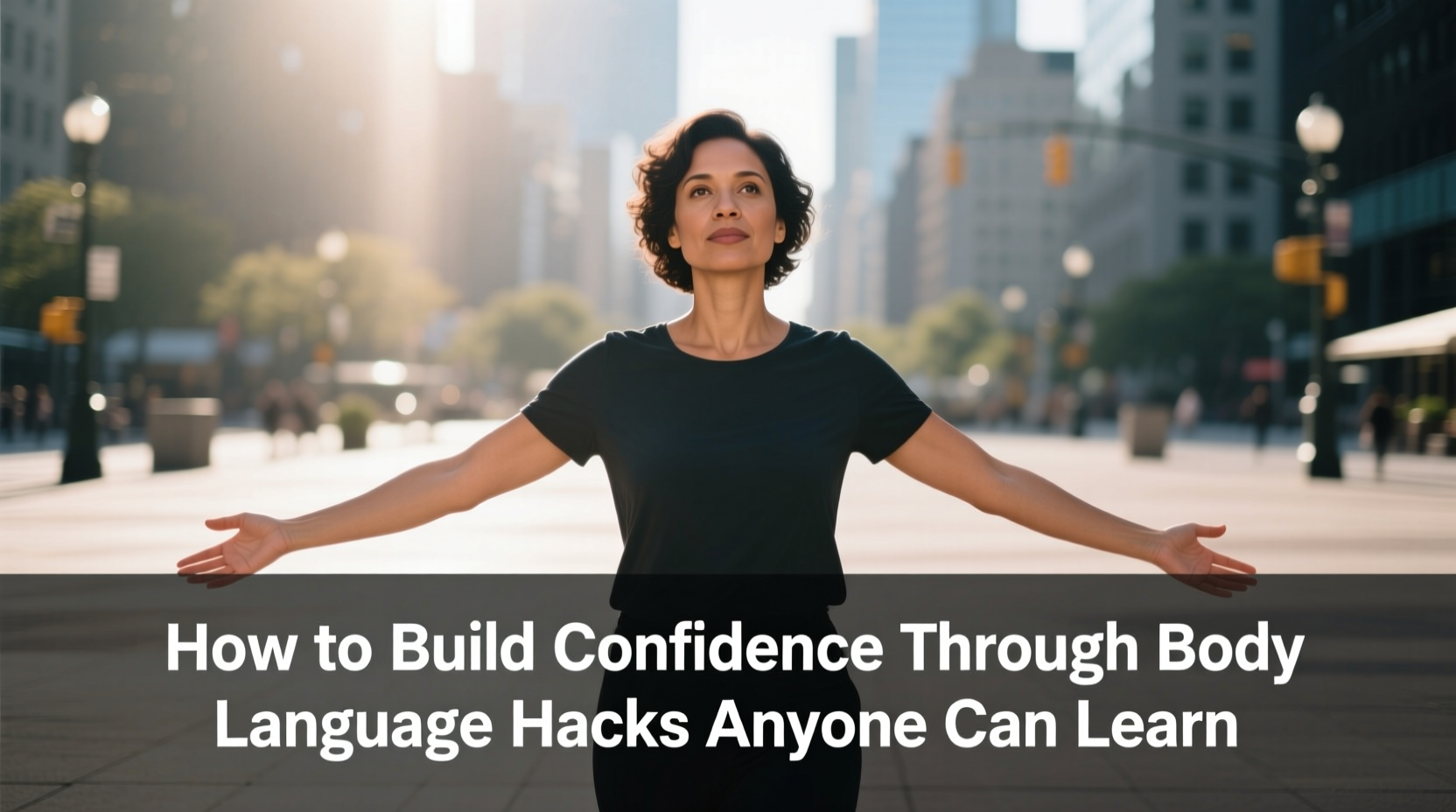
Research shows that nonverbal behavior influences both how others perceive us and how we perceive ourselves. In a landmark study by Harvard psychologist Amy Cuddy, participants who held “high-power poses” for just two minutes experienced a 20% increase in testosterone (linked to dominance and confidence) and a 25% decrease in cortisol (the stress hormone). Those in “low-power poses” showed the opposite effect.
“We don’t just fake it till we make it. We fake it till we become it.” — Amy Cuddy, Social Psychologist
This phenomenon is known as “embodied cognition”—the idea that our physical states influence our mental states. When you adopt confident postures, your brain interprets the signals from your body and adjusts your emotional state accordingly. Over time, these small adjustments compound into lasting self-assurance.
The good news? You don’t need years of therapy or intense self-work to start benefiting. Simple, repeatable body language habits can begin shifting your mindset today.
5 Powerful Body Language Hacks to Build Real Confidence
1. Master the Power Pose (Even in Private)
Before entering a high-pressure situation—a meeting, presentation, or difficult conversation—spend 90 seconds in a high-power pose. Stand tall with your feet shoulder-width apart, hands on hips (like Wonder Woman), chest open, and chin slightly lifted. Alternatively, sit back in a chair with arms spread wide across the armrests.
This posture increases spatial dominance, which your brain interprets as safety and control. Studies show it reduces anxiety and improves performance under pressure. The key is consistency: use this ritual before any event where you want to feel more grounded and self-assured.
2. Control Your Eye Contact—But Keep It Natural
Eye contact is one of the most potent tools for conveying confidence. However, too little suggests avoidance; too much can feel aggressive. The goal is balanced, steady eye contact that says, “I’m present and engaged.”
Aim for 60–70% eye contact during conversations. That means looking at the other person most of the time, but allowing natural breaks to glance away thoughtfully. This rhythm feels comfortable and authentic, avoiding the intensity of a stare-down.
In group settings, rotate your gaze evenly among participants. This signals inclusivity and leadership presence. If direct eye contact feels intimidating, focus just above the eyes or on the bridge of the nose—it looks the same from the outside.
3. Slow Down Your Movements and Speech
Nervousness speeds everything up—your breathing, your gestures, your voice. Confident people, in contrast, operate at a slower, more deliberate pace. They don’t rush their words or fidget unnecessarily. They take pauses. They breathe deeply.
To emulate this, practice grounding yourself physically. Before speaking, take a full breath and plant your feet firmly. Speak at a measured pace, emphasizing key words. Use hand gestures purposefully, not frantically. Even walking slowly and deliberately into a room changes how you’re perceived—and how you feel.
“Speed is the enemy of authority. Calmness is power.” — Mark Bowden, Body Language Expert
4. Open Up Your Physical Space
Confident individuals naturally occupy more space. They spread out, lean back, and avoid folding themselves inward. Nervous or insecure people do the opposite—they shrink, cross limbs, and minimize their presence.
You can reverse this pattern intentionally. Uncross your arms. Keep your legs slightly apart when standing. Rest your hands openly on the table in meetings. Avoid clutching bags or objects in front of your body like shields.
These small expansions signal ownership of space, which over time reinforces internal feelings of worthiness and capability. The more you allow yourself to take up room, the more entitled you’ll feel to be heard and respected.
5. Smile Strategically—Not Excessively
Smiling can enhance likability, but over-smiling—especially in stressful or assertive situations—can undermine authority. Women, in particular, are often conditioned to smile to appease or soften their presence, which can unintentionally project uncertainty.
Use smiling as a tool, not a reflex. Smile warmly when greeting someone or expressing appreciation. But in moments requiring seriousness—giving feedback, stating boundaries, or making decisions—maintain a neutral, composed expression. This projects clarity and resolve.
Do’s and Don’ts of Confident Body Language
| Do | Don’t |
|---|---|
| Maintain upright posture with shoulders back | Slouch or hunch forward |
| Use slow, deliberate hand gestures | Fidget, tap fingers, or play with hair/jewelry |
| Stand with feet planted firmly | Shift weight from foot to foot or turn body away |
| Hold eye contact with warmth and consistency | Stare intensely or avoid looking altogether |
| Take up appropriate space (uncross arms, spread out) | Make yourself small or hide behind objects |
Step-by-Step Guide: Building a Daily Confidence Ritual
Confidence isn’t built in a single moment—it’s cultivated through repetition. Integrate these steps into your routine to create lasting change:
- Morning Power Reset (2 minutes): Before starting your day, stand in front of a mirror and hold a power pose. Breathe deeply. Say one affirming statement aloud (“I am capable,” “I belong here”).
- Pre-Meeting Prep (90 seconds): Before any important interaction, step into a private space and assume a high-power stance. Focus on your breathing and visualize success.
- Posture Check-Ins (Every 2 hours): Set a reminder to assess your posture. Are your shoulders rounded? Is your head forward? Adjust: roll shoulders back, lift your chest, relax your jaw.
- Evening Reflection (5 minutes): Review one interaction where you used confident body language. What worked? What felt awkward? Note progress, not perfection.
- Weekly Practice (10 minutes): Record yourself speaking on video. Watch playback focusing only on nonverbal cues. Identify one habit to improve.
Within two weeks of consistent practice, most people report feeling more poised and less reactive in challenging situations. After a month, the behaviors start to feel automatic.
Real Example: From Nervous New Hire to Team Leader
Sarah joined her marketing firm as a junior analyst. Despite strong qualifications, she struggled to speak up in meetings. She often crossed her arms, spoke quickly, and avoided eye contact—habits that made her seem disengaged, even though she was highly attentive.
After reading about power posing, she began practicing before team calls. She started uncrossing her arms and placing her notebook on the table instead of holding it like a barrier. She practiced pausing before answering questions, using a slower tone.
Within six weeks, colleagues began asking for her input. Her manager noted her “increased presence.” Eight months later, Sarah led her first major client presentation—calm, clear, and commanding. She credits the shift not to a change in knowledge, but in physical presence.
“I didn’t feel confident at first,” she said. “But acting confident every day taught my body—and my mind—that I belonged.”
Your Confidence Checklist
- ✅ Practice a power pose for 90 seconds before high-stakes moments
- ✅ Keep shoulders back and spine straight throughout the day
- ✅ Maintain 60–70% eye contact in conversations
- ✅ Eliminate fidgeting (pen clicking, hair twisting, leg bouncing)
- ✅ Speak at a slightly slower pace than usual
- ✅ Use open hand gestures when making key points
- ✅ Take up space—avoid shrinking or hiding behind objects
- ✅ Replace nervous smiles with composed, neutral expressions when needed
- ✅ Record yourself weekly to track nonverbal progress
- ✅ Reflect daily on one confident interaction
Frequently Asked Questions
Can body language really change how I feel?
Yes. Numerous studies confirm that adopting confident postures triggers neurochemical changes in the brain. Holding a power pose for as little as two minutes can increase testosterone and reduce cortisol, leading to measurable improvements in self-perception and performance.
What if I feel silly doing power poses?
Most people do at first. The key is privacy. Do them in your car, bathroom, or bedroom—anywhere you won’t be seen. Remember, this isn’t about performance; it’s about preparation. Athletes, performers, and executives use these techniques because they work, even if they feel awkward initially.
How long does it take to see results?
Many notice subtle shifts within days—feeling calmer before meetings or receiving more positive responses. Lasting change typically emerges after 2–4 weeks of consistent practice. Like building muscle, confidence grows with repetition.
Conclusion: Start Small, Stand Tall
Confidence isn’t reserved for the naturally charismatic or extroverted. It’s a skill shaped by behavior, and body language is one of the fastest levers you can pull. You don’t need to transform overnight. Start with one hack—a power pose, a posture correction, a deliberate pause before speaking. Master it. Then add another.
Each small adjustment sends a message to your brain: *I am safe. I am capable. I belong here.* Over time, those messages become beliefs. And beliefs shape reality.




 浙公网安备
33010002000092号
浙公网安备
33010002000092号 浙B2-20120091-4
Comments
No comments yet. Why don't you start the discussion?