
Decorating a Christmas tree is one of the most cherished traditions of the holiday season. Yet, few things are more frustrating than stringing lights halfway up your tree only to realize you’ve run out—leaving half the branches in darkness. The key to avoiding this common mistake lies in accurate planning: knowing exactly how many strings of lights you need based on your tree’s size. While it may seem like guesswork, there’s actually a reliable method to calculate light density per foot of tree height and circumference. By understanding a few core principles—light spacing, bulb count, tree dimensions, and personal preference—you can achieve a lush, evenly lit display every time.
Understanding Light Density and Tree Coverage
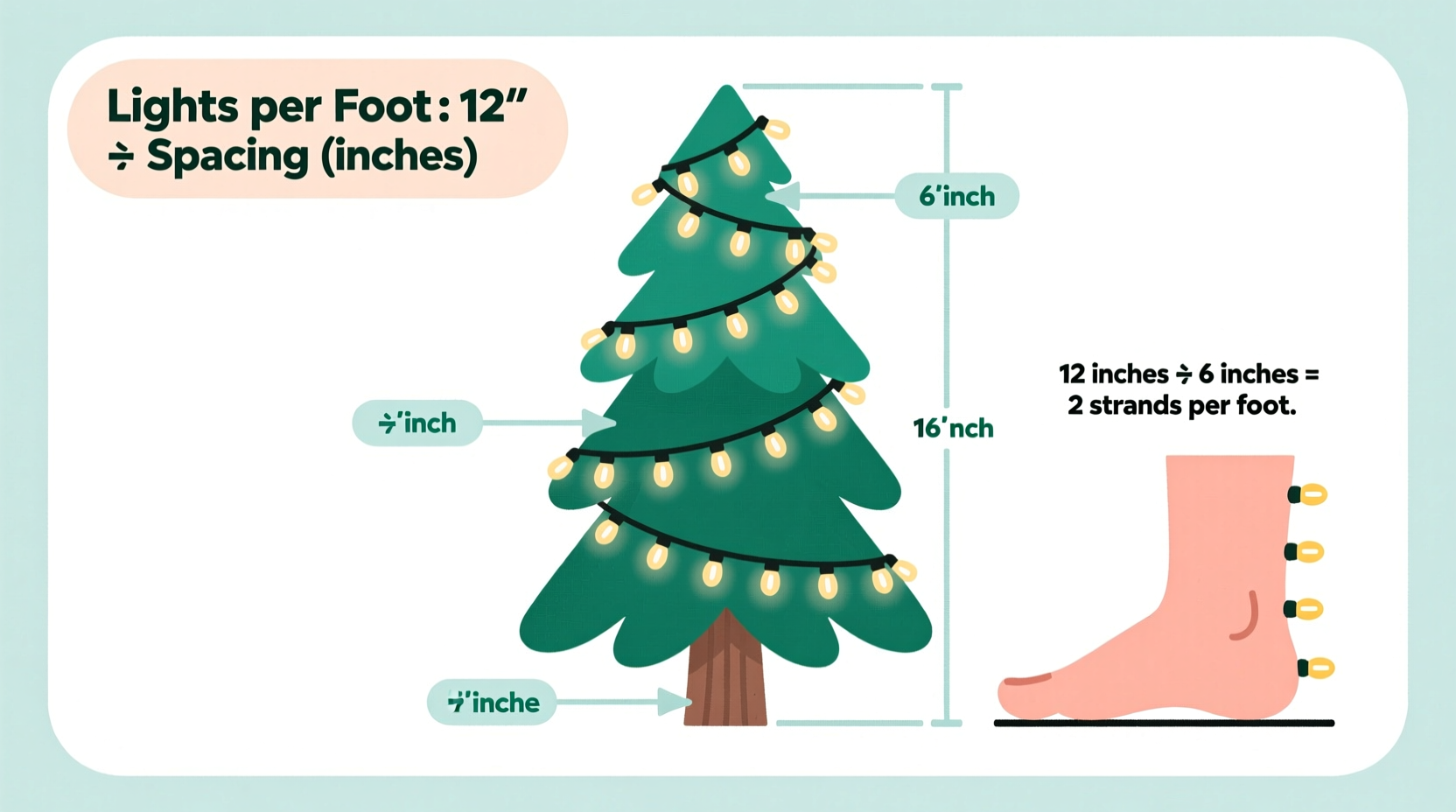
The number of light strings required isn’t arbitrary. It depends on how densely you want your tree illuminated. A sparsely lit tree might use just enough lights to outline the shape, while a professionally decorated tree often glows from within due to high-density coverage. The industry standard, supported by professional decorators and retailers alike, suggests using 100 lights per foot of tree height. This means a 6-foot tree would ideally require around 600 lights for balanced illumination.
However, this rule applies primarily to incandescent mini-lights, which are typically sold in 100-light strands. LED strings vary—they may pack 50, 100, or even 200 bulbs per strand—so always check packaging. Additionally, tree fullness matters. A slim pencil tree needs fewer lights than a wide Douglas fir with deep layers of branches. For fuller trees, consider increasing density to 150–200 lights per foot to ensure inner branches aren’t left in shadow.
Step-by-Step Guide to Calculating Lights Per Foot
Follow this five-step process to determine exactly how many strings you’ll need for any tree.
- Measure the tree height in feet. Use a measuring tape from base to tip. Round up if between sizes (e.g., 7.5 ft → 8 ft).
- Multiply height by 100. This gives the baseline number of bulbs needed. Example: 7 ft × 100 = 700 bulbs.
- Adjust for tree fullness. Multiply the result by a factor:
- Slender tree: ×0.75 (700 × 0.75 = 525 bulbs)
- Medium-full tree: ×1.0 (700 bulbs)
- Voluminous tree: ×1.5 (700 × 1.5 = 1,050 bulbs)
- Determine bulb count per string. Check your lights: common counts are 50, 100, or 200 bulbs per strand.
- Divide total bulbs by bulbs per string. Round up to the nearest whole number. Example: 1,050 ÷ 100 = 10.5 → 11 strings needed.
This method ensures proportional lighting whether you're decorating a tabletop spruce or a towering 12-footer.
Comparing Light Types and String Efficiency
Not all light strings are created equal. Bulb type, spacing, and technology affect how many strings you need. The table below compares common options.
| Light Type | Bulbs per String | Spacing Between Bulbs | Recommended Strings per Foot |
|---|---|---|---|
| Mini Incandescent (Traditional) | 100 | 4 inches | 1 per foot |
| LED Mini Lights | 100 or 200 | 4–6 inches | 1 per foot (or 1 per 2 feet if 200-bulb) |
| Patio/String Lights (Large Bulb) | 25 | 12 inches | 3–4 per foot (not recommended for trees) |
| Net Lights | Varies (50–150) | Grid pattern | Best for bushes; not ideal for conical trees |
LEDs are more energy-efficient and longer-lasting but often emit directional light. To compensate, wrap them spirally from trunk outward to diffuse brightness. Incandescents offer warmer, omnidirectional glow but consume more power and generate heat.
Real-World Example: Lighting a 7-Foot Pre-Lit Tree
Sarah in Denver bought a 7-foot pre-lit artificial tree labeled with 700 built-in LEDs. Excited, she set it up—only to find the top third looked sparse. She decided to supplement with additional strings.
Using the calculation method:
- Tree height: 7 feet
- Baseline: 7 × 100 = 700 bulbs
- Tree type: Full-bodied (Douglas fir style) → multiplier 1.5
- Total needed: 7 × 100 × 1.5 = 1,050 bulbs
- Existing lights: 700
- Deficit: 350 bulbs
Sarah purchased three extra 100-bulb LED strands (300 bulbs) and added one 50-bulb warm-white string for the crown. After weaving them into the upper branches, her tree achieved uniform brilliance. She also used clips to secure strands, preventing sagging.
This case illustrates that even pre-lit trees often fall short of ideal density. Supplemental lighting is common—and smart.
Expert Insight: Professional Decorators Weigh In
Seasoned decorators follow refined rules beyond basic math. Their experience adds nuance to the formula.
“Many people focus only on height, but girth determines light volume. Wrap your tree in a spiral, placing one strand every 4 to 6 inches vertically. That spacing ensures no dark zones.” — Marcus Reed, Lead Holiday Designer at Evergreen Displays
“I always recommend warm white over cool white for trees. It mimics candlelight and makes ornaments pop. And never underestimate the power of dimmers—soft lighting creates intimacy.” — Lena Choi, Interior Stylist & Seasonal Decor Consultant
These insights reinforce that lighting is both science and art. Math gets you close; taste and technique make it magical.
Checklist: How to Buy and Install Tree Lights Like a Pro
Before you start wrapping, follow this actionable checklist.
- ✅ Measure tree height and approximate width at widest point
- ✅ Decide on light density: subtle (75–100 bulbs/ft), standard (100), or lavish (150+)
- ✅ Choose bulb type: LED (efficient, cool) or incandescent (warm, classic)
- ✅ Calculate total bulbs needed using the formula: height × density × fullness factor
- ✅ Divide total by bulbs per string; round up
- ✅ Buy 1–2 extra strings for backup
- ✅ Inspect all strings for damage before installation
- ✅ Start wiring from the bottom, working upward in a spiral
- ✅ Use twist ties or dedicated light clips to secure strands to branches
- ✅ Plug into a surge-protected extension cord; avoid daisy-chaining more than 3–4 sets (check manufacturer limits)
Frequently Asked Questions
How many strings of lights do I need for a 6-foot tree?
A standard 6-foot tree requires about 600 bulbs. If using 100-light strands, that’s 6 strings. For a fuller look, increase to 900–1,000 bulbs (9–10 strings). Adjust based on tree shape and desired brightness.
Can I mix different types of lights on one tree?
Yes, but with caution. Mixing colors (e.g., warm and cool white) can create visual discord. If combining, keep color temperature consistent. You can layer effects—such as using steady whites as base and adding twinkle or color-changing strands sparingly for accent.
Do pre-lit trees eliminate the need for extra lights?
Not always. Many pre-lit trees meet minimum standards but lack density for a luxurious look. Most professionals add supplemental strings, especially near the top and interior where built-in wires rarely reach. Always assess coverage after assembly.
Final Tips for Flawless Tree Lighting
Beyond calculations, technique plays a crucial role. Begin at the base with the plug end tucked into the stand or secured behind the tree. Wind lights upward in a spiral, moving inward toward the trunk every few inches to illuminate deeper branches. Avoid horizontal rows—they create stripes rather than glow.
Use multiple small strings instead of one long chain. This reduces electrical load and allows better control over placement. If using clear cords, they blend well with most trees. Green cords work best on natural or green-tinted artificial trees.
Finally, step back frequently during installation. View the tree from multiple angles and distances. What looks bright up close may appear dim from across the room. Adjust spacing as needed.
Conclusion
Knowing how to calculate how many strings of lights you need per foot of tree transforms holiday decorating from stressful to satisfying. With a simple formula—height times 100, adjusted for fullness and bulb count—you can plan precisely and avoid last-minute store runs. Whether you prefer a soft ambient glow or a radiant centerpiece, the right amount of light elevates your tree from ordinary to extraordinary. Combine smart math with thoughtful placement, and your tree won’t just shine—it will inspire.




 浙公网安备
33010002000092号
浙公网安备
33010002000092号 浙B2-20120091-4
Comments
No comments yet. Why don't you start the discussion?