
Tracking macronutrients—proteins, fats, and carbohydrates—can be a powerful tool for reaching fitness goals, managing energy levels, or improving overall health. But for many beginners, the idea of calculating macros feels overwhelming, time-consuming, and all too close to developing an unhealthy relationship with food. The good news? You don’t need to log every bite or stress over exact numbers to benefit from macro awareness. With a balanced, flexible approach, you can use macros as a guide rather than a rulebook.
This guide breaks down how to calculate your macros in a way that supports long-term habits—not short-term restriction. It focuses on simplicity, sustainability, and mental well-being, so you can make informed choices without losing your joy around meals.
Understanding Macros: What They Are and Why They Matter
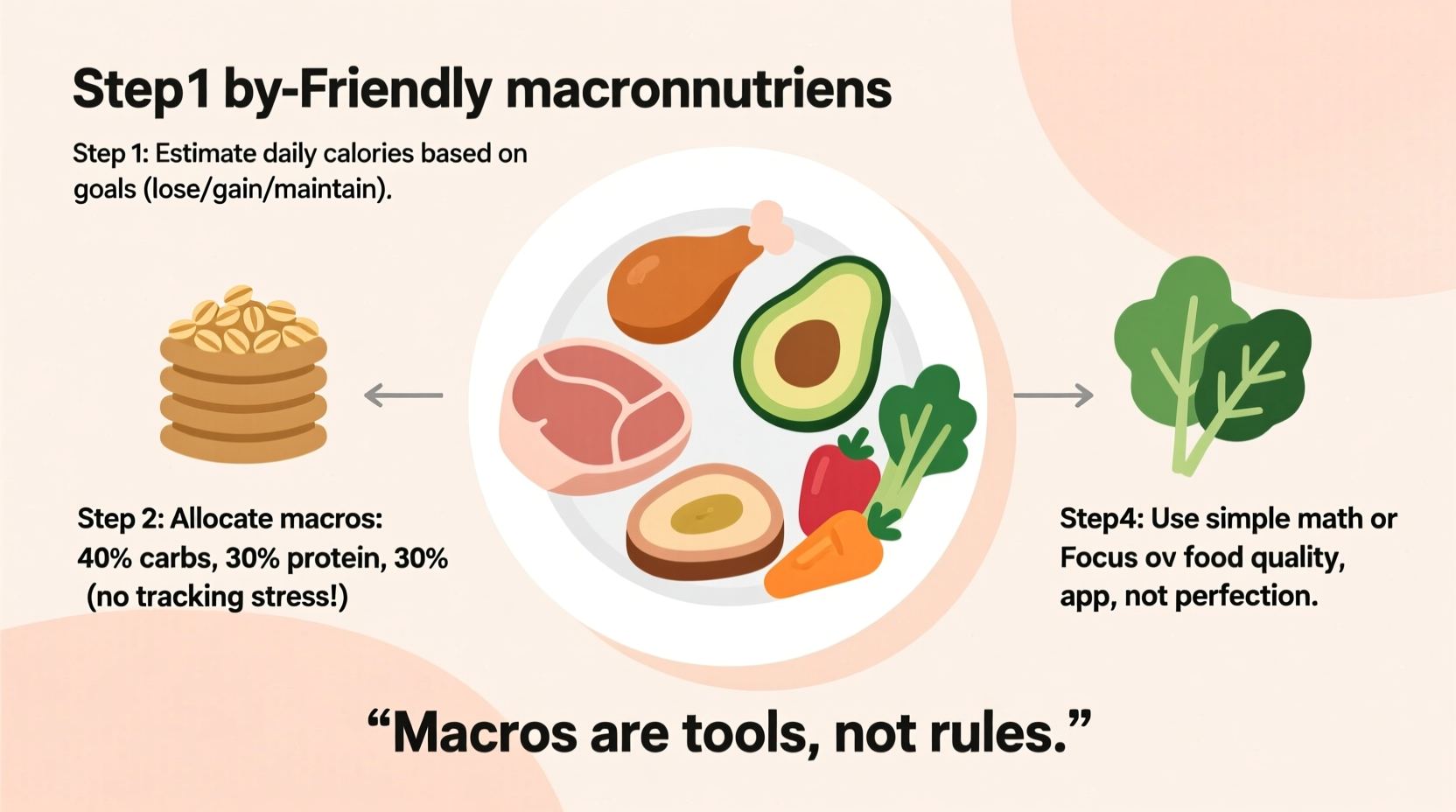
Macronutrients are the three primary nutrients your body needs in large amounts: protein, fat, and carbohydrates. Each plays a unique role in how you feel, perform, and recover.
- Protein: Supports muscle repair, immune function, and satiety. Found in meat, dairy, legumes, and plant-based sources like tofu and tempeh.
- Fat: Essential for hormone production, brain health, and absorbing vitamins. Healthy sources include avocados, nuts, seeds, olive oil, and fatty fish.
- Carbohydrates: Your body’s preferred energy source, especially during physical activity. Whole grains, fruits, vegetables, and legumes are nutrient-dense options.
Unlike fad diets that eliminate entire food groups, macro tracking encourages balance. Instead of asking “Is this food allowed?” you shift to “How does this fit my energy and nutrition needs?” That subtle change fosters a more intuitive, less restrictive mindset.
“Macro counting isn’t about perfection—it’s about proportion. When people focus on balance instead of restriction, they’re more likely to stick with healthy habits long-term.” — Dr. Lisa Mann, Registered Dietitian and Sports Nutrition Specialist
A Simple Step-by-Step Guide to Calculating Your Macros
You don’t need advanced math or premium apps to get started. Follow these steps to estimate your macros based on your lifestyle and goals.
- Determine your daily calorie needs. Start with your Basal Metabolic Rate (BMR), which is how many calories your body burns at rest. A simple estimation is to multiply your weight in pounds by 14–16, depending on activity level:
- Sedentary: 14 cal/lb
- Moderately active: 15 cal/lb
- Very active: 16 cal/lb
- Set your macro ratio based on goals. Common starting points:
- General health: 40% carbs, 30% protein, 30% fat
- Weight loss: 40% protein, 30% carbs, 30% fat
- Endurance training: 50% carbs, 25% protein, 25% fat
- Muscle gain: 40% carbs, 30% protein, 30% fat (with higher total calories)
- Convert percentages to grams. Remember: protein and carbs provide 4 calories per gram; fat provides 9 calories per gram.
- Using the 2,250-calorie example with a 40/30/30 split:
- Protein: 40% of 2,250 = 900 calories → 900 ÷ 4 = 225g
- Carbs: 30% of 2,250 = 675 calories → 675 ÷ 4 = 169g
- Fat: 30% of 2,250 = 675 calories → 675 ÷ 9 = 75g
- Using the 2,250-calorie example with a 40/30/30 split:
- Use hand-size portioning as a shortcut. If numbers feel stressful, try visual cues:
- Protein: palm-sized portion per meal (~20–30g)
- Vegetables: two handfuls
- Carbs: cupped handful (~30g carbs)
- Fats: thumb-sized portion (~7–10g fat)
Balancing Accuracy with Flexibility
The biggest mistake beginners make is treating macro targets like strict limits. Going over by 5g of carbs isn’t failure—it’s normal. Food labels aren’t perfect, scales vary, and natural foods differ in size and ripeness. Aim for consistency, not perfection.
Think of your daily macros as a loose framework. If you eat more carbs at lunch, adjust slightly at dinner. Or simply accept that some days will be higher in fat or lower in protein—and that’s okay. Your body adapts to your weekly average, not single meals.
Instead of logging every condiment or obsessing over trace ingredients, prioritize whole, minimally processed foods. A diet rich in vegetables, lean proteins, healthy fats, and complex carbs naturally aligns with balanced macro ratios. When most of your plate is nutrient-dense, small deviations won’t derail progress.
| Approach | Do | Don’t |
|---|---|---|
| Flexible Tracking | Hit targets 80% of the time, focus on food quality | Punish yourself for minor overages |
| Rigorous Logging | Use for short-term learning phases | Maintain indefinitely if it causes stress |
| Intuitive Eating | Listen to hunger and fullness cues | Ignore nutritional needs completely |
Real Example: Sarah’s Balanced Macro Journey
Sarah, a 32-year-old teacher and occasional runner, wanted to lose 10 pounds without feeling deprived. She’d tried low-carb diets before but always regained the weight. This time, she decided to learn her macros—but with boundaries.
She calculated her maintenance calories at ~2,100 and aimed for 1,900 to create a gentle deficit. Her target macros were 180g protein, 150g carbs, and 60g fat. For the first two weeks, she logged meals using a free app, mostly to understand portion sizes. She noticed she was under-eating protein and overdoing refined carbs.
After gaining confidence, she switched to a hybrid method: tracking only dinners and snacks—the times she tended to overeat. At breakfast and lunch, she used hand portions. She allowed herself one unplanned meal each weekend, no questions asked.
Within three months, Sarah lost 8 pounds, gained strength, and reported better sleep and mood. More importantly, she didn’t dread social events or feel guilty after eating cake at a birthday party. “I finally stopped seeing food as ‘good’ or ‘bad,’” she said. “Now I see it as fuel, celebration, and connection.”
Checklist: How to Start Macros Without Obsession
Follow this checklist to begin your macro journey mindfully:
- ✅ Calculate your estimated daily calorie needs using weight and activity level
- ✅ Choose a macro split that matches your goal (e.g., higher protein for satiety)
- ✅ Convert percentages to grams using calorie-to-gram math
- ✅ Try hand-portion sizing instead of constant weighing
- ✅ Track only 2–3 days per week to check alignment, not daily
- ✅ Prioritize whole foods—macros from real food come with fiber, vitamins, and phytonutrients
- ✅ Schedule regular “no-log” days to reduce dependency on tracking
- ✅ Reassess every 4–6 weeks based on energy, performance, and progress
Frequently Asked Questions
Do I need to hit my macros exactly every day?
No. Consistency over time matters more than daily precision. Aim to be within 10–15% of your targets most days. Occasional deviations are normal and expected. Your body responds to patterns, not single data points.
What if I don’t like counting or tracking?
That’s perfectly fine. Many people succeed using habit-based approaches. Focus on including a protein source at each meal, filling half your plate with vegetables, choosing whole grains, and adding healthy fats. These habits naturally balance your macros without numbers.
Can I drink alcohol while tracking macros?
Yes, but plan for it. Alcohol contains 7 calories per gram and can interfere with fat metabolism. One glass of wine (~120 calories) might replace a carb or fat serving. Enjoy in moderation, and avoid drinking on an empty stomach to prevent overeating later.
Building a Sustainable Relationship with Food
The goal of macro tracking shouldn’t be control—it should be awareness. When used wisely, macros help you understand how different foods affect your energy, mood, and performance. But when overused, they can become a source of anxiety, rigidity, and disconnection from natural hunger cues.
To avoid obsession, set boundaries early. Decide in advance how often you’ll track, whether you’ll weigh foods, and when you’ll take breaks. Some people find value in logging consistently for 4–6 weeks, then transitioning to visual estimates. Others prefer seasonal check-ins—tracking for a week every few months to recalibrate.
Also, remember that food is more than fuel. It’s culture, comfort, celebration, and connection. A slice of pie at Thanksgiving or a beer with friends has intangible value that no macro calculator can measure. Make room for those moments without guilt.
Conclusion: Use Macros as a Tool, Not a Tyrant
Calculating macros doesn’t have to mean hours spent in food logs or fearing deviation. For beginners, the real win isn’t hitting 100% accuracy—it’s understanding how food works in your body and making choices that support your health and happiness.
Start simple. Use rough estimates. Focus on progress, not perfection. Let go of the idea that every gram must be accounted for. Over time, you’ll develop an internal compass that guides your eating—without needing to pull out your phone at every meal.
If you’ve been curious about macros but afraid of falling into obsessive habits, now is the time to try a gentler approach. Take what serves you, leave what doesn’t, and keep food joyful.




 浙公网安备
33010002000092号
浙公网安备
33010002000092号 浙B2-20120091-4
Comments
No comments yet. Why don't you start the discussion?