
In an age where personal information is increasingly exposed, maintaining privacy during phone calls has become essential. Whether you're reporting suspicious activity, protecting yourself from harassment, or simply valuing your anonymity, knowing how to make anonymous calls from a cell phone can be a powerful tool. This guide outlines practical, legal, and secure methods to conceal your number and protect your identity—without compromising safety or breaking regulations.
Why Call Anonymously?
There are numerous legitimate reasons someone might want to place a call without revealing their identity. Journalists may need to contact sources discreetly. Victims of stalking or domestic abuse often require communication methods that don’t expose their location or number. Whistleblowers, activists, and even everyday consumers dealing with aggressive companies may benefit from temporary anonymity.
However, it's important to emphasize that anonymity should never be used to harass, threaten, or deceive. Responsible use ensures both personal safety and ethical conduct.
“Anonymity isn't about hiding wrongdoing—it's about protecting vulnerable individuals from retaliation.” — Dr. Lena Torres, Digital Privacy Researcher at the Center for Secure Communication
Step-by-Step Methods to Call Anonymously
Below are several reliable ways to make anonymous calls from a mobile device. Each method varies in permanence, ease of use, and level of privacy protection.
Method 1: Use *67 Before Dialing (Temporary Caller ID Block)
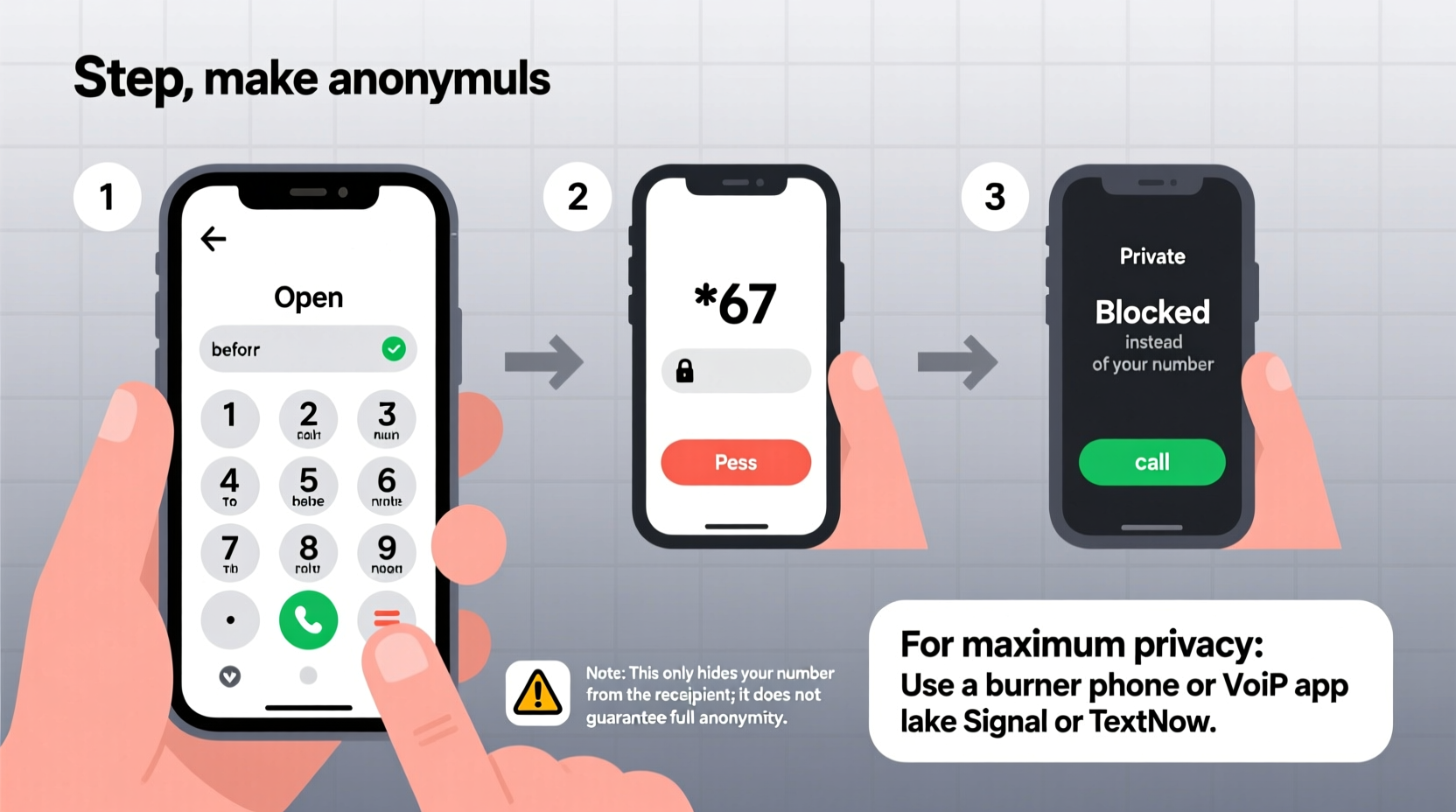
The simplest way to hide your number on a per-call basis is using the *67 prefix. This works on most U.S. carriers and many international networks.
- Open your phone’s dialer app.
- Type *67 before the full 10-digit phone number (e.g., *67-555-123-4567).
- Press call.
- The recipient will see “Private Number,” “Blocked,” or “Unknown Caller” instead of your digits.
Method 2: Disable Caller ID Through Carrier Settings
For consistent anonymity, disable caller ID through your mobile carrier. This setting applies to all outgoing calls unless manually overridden.
- Contact your carrier’s customer service (e.g., Verizon, AT&T, T-Mobile).
- Request to activate “Caller ID Blocking” or “Anonymous Call Rejection” settings.
- Some carriers allow this via text command (e.g., *77 to enable anonymous call rejection; *82 to unblock temporarily).
- Verify the change by making a test call to another phone.
Note: Emergency services (911) will still receive your number even if caller ID is blocked for safety compliance.
Method 3: Use Third-Party Calling Apps
Dedicated apps offer enhanced privacy features beyond simple number masking. These tools assign you a temporary or virtual number, allowing complete separation between your real identity and outgoing calls.
- Google Voice: Offers a free U.S. number linked to your Google account. Calls made through the app display your Google Voice number, not your real one.
- Burner: Provides disposable phone numbers that expire after use. Ideal for short-term interactions like online dating or classified ads.
- TextNow: Grants a permanent free number usable over Wi-Fi or data. No SIM required.
- Signal: While primarily encrypted messaging, Signal allows private calling with optional number masking when used alongside secondary accounts.
To set up Google Voice as an example:
- Create a Google account (or use an existing one).
- Visit voice.google.com and sign in.
- Select “Go to Google Voice.”
- Choose a city-based number or area code.
- Verify your current phone number (this remains private from recipients).
- Install the Google Voice app on your smartphone.
- Make calls directly from the app—your real number stays hidden.
Method 4: Use Prepaid Phones (Burner Phones)
A physical burner phone offers the highest degree of isolation. Purchased with cash and used without registration, these devices leave minimal digital traces.
- Buy an unlocked GSM phone from a retail store or online.
- Purchase a prepaid SIM card without providing personal details.
- Activate the SIM using public Wi-Fi (avoid home or work networks).
- Use the phone solely for anonymous purposes.
- Dispose of or deactivate the device after use.
Method 5: VoIP Services with Encrypted Calling
Voice over Internet Protocol (VoIP) platforms route calls through the internet, enabling encryption and geographic masking. Examples include:
- Skype: Purchase a Skype Number to receive calls and make outgoing ones under a different identity.
- Wire: End-to-end encrypted voice calls with optional pseudonymous profiles.
- Jitsi Meet: Open-source video and voice conferencing with no account needed.
These services are especially useful for international calls while avoiding traditional telecom metadata collection.
Comparison of Anonymous Calling Methods
| Method | Privacy Level | Cost | Setup Time | Best For |
|---|---|---|---|---|
| *67 Prefix | Low | Free | Instant | One-time sensitive calls |
| Carrier Caller ID Block | Moderate | Free | 1–2 Days | Ongoing privacy needs |
| Google Voice / Burner Apps | High | $0–$10/month | 10 Minutes | Regular anonymous use |
| Burner Phone + Prepaid SIM | Very High | $30–$80 (one-time) | 1 Hour | Maximum security scenarios |
| Encrypted VoIP (Signal, Wire) | Very High | Free–$5/month | 15 Minutes | Secure communications |
Common Mistakes That Compromise Anonymity
Even with the right tools, small oversights can reveal your identity. Avoid these pitfalls:
- Using your real name or voice clues: Speaking with identifiable vocal patterns or mentioning personal details negates technical anonymity.
- Calling from home network: Wi-Fi routers have MAC addresses that can be traced back to you.
- Syncing contacts: Linking anonymous apps to your primary Google or Apple account exposes metadata.
- Leaving voicemails: Background noises or emotional tone can help identify you.
- Reusing burner numbers: The more a number is used, the higher the chance of linkage across contexts.
Mini Case Study: Reporting Workplace Harassment Safely
Sarah, a mid-level employee at a corporate firm, noticed unethical accounting practices involving her supervisor. Fearing retaliation, she wanted to report the issue to HR without exposing her identity immediately.
She downloaded the Burner app and purchased a temporary number for $5. Using this number, she called the internal ethics hotline, speaking in a calm but neutral tone, avoiding any mention of names or departments beyond what was necessary. She also disabled location services and used mobile data instead of office Wi-Fi.
The investigation proceeded, and corrective action was taken—without HR ever tracing the call back to her device. Sarah later deleted the app and kept her job secure, demonstrating how smart anonymity tools empower ethical behavior without risk.
Frequently Asked Questions
Can someone trace an anonymous call?
While basic caller ID blocking prevents casual lookup, determined entities like law enforcement or telecom providers may access logs with proper authorization. True untraceability requires encrypted VoIP, burner phones, and strict operational security.
Is it legal to make anonymous calls?
Yes, in most countries, making anonymous calls is legal as long as they are not used for threats, fraud, or harassment. Always comply with local laws such as the U.S. Truth in Caller ID Act, which prohibits spoofing with intent to defraud.
Will *67 work internationally?
No. The *67 code is North America-specific. Other regions use different codes—e.g., #31# in many European countries. Check your local carrier’s guidelines before traveling.
Essential Checklist for Anonymous Calling
- ✅ Disable location services before calling
- ✅ Use mobile data or public Wi-Fi (not home network)
- ✅ Avoid using your normal voice pattern or background sounds
- ✅ Don’t provide personal details unless absolutely necessary
- ✅ Use a verified anonymous calling method (app, *67, or burner)
- ✅ Delete call logs or app history afterward if possible
- ✅ Test the method beforehand with a trusted contact
Conclusion: Take Control of Your Communication Privacy
Your right to privacy shouldn’t vanish every time you make a phone call. With accessible tools and informed habits, you can communicate safely and anonymously when the situation demands it. From quick fixes like *67 to robust solutions like encrypted VoIP and burner phones, there’s a method suited to every need and threat level.




 浙公网安备
33010002000092号
浙公网安备
33010002000092号 浙B2-20120091-4
Comments
No comments yet. Why don't you start the discussion?