
Thunderstorms can be terrifying for dogs. The sudden cracks of thunder, flashes of lightning, and changes in barometric pressure trigger anxiety in many pets—sometimes leading to pacing, trembling, barking, or destructive behavior. While no single solution works for every dog, one of the most effective and accessible tools is sound masking. By altering the auditory environment, pet owners can significantly reduce their dog’s stress response. Unlike sedatives or behavioral therapy alone, sound masking is non-invasive, immediate, and can be implemented at home with minimal cost.
Sound masking doesn’t eliminate the storm, but it reduces the perceived intensity of thunder by overlaying it with more predictable, soothing frequencies. When done correctly, this technique helps shift your dog’s focus away from unpredictable loud noises and toward calming auditory stimuli. This article explores the science behind canine sound sensitivity, practical methods for sound masking, and real-world strategies to create a safe sensory environment during storms.
Understanding Canine Noise Sensitivity
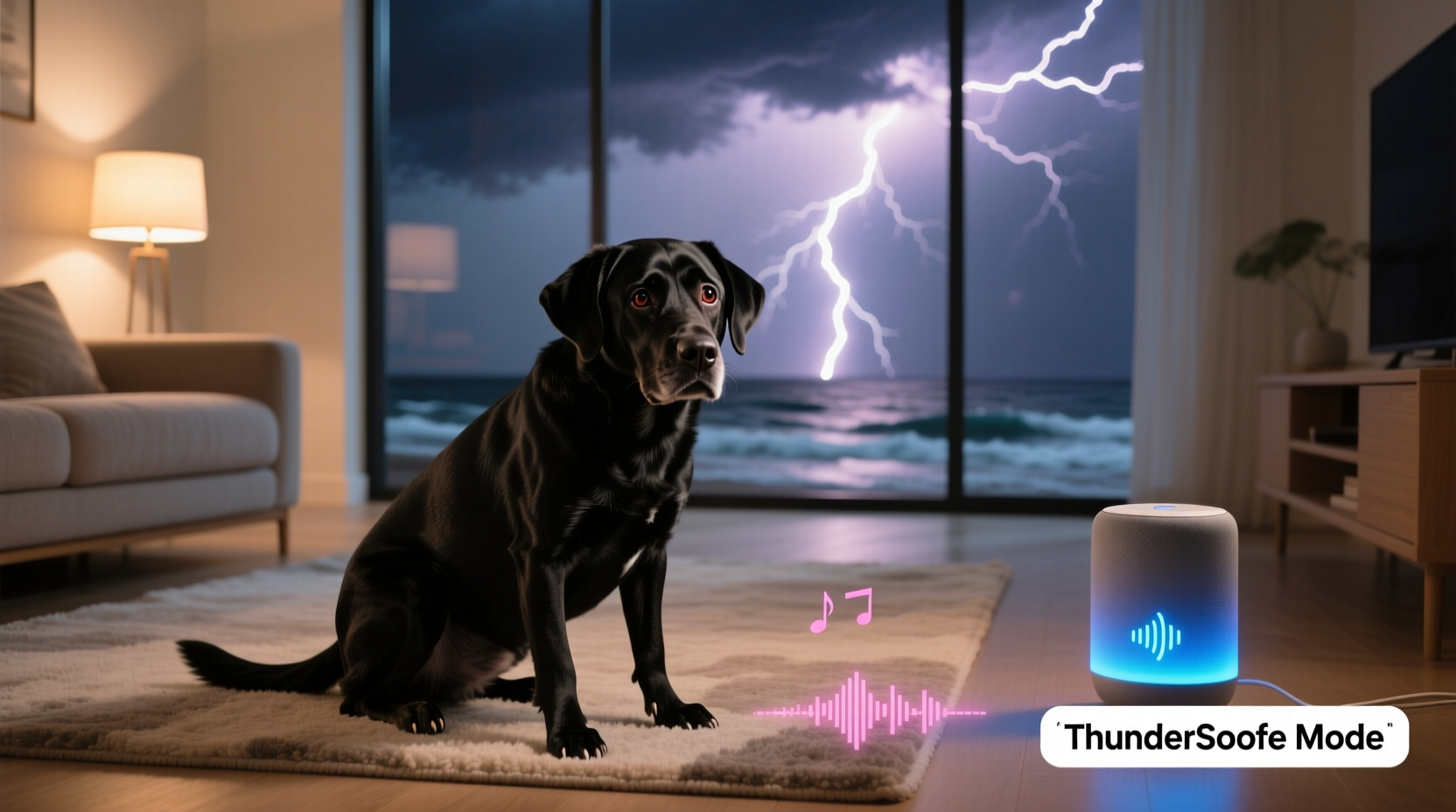
Dogs have hearing that’s four times more sensitive than humans. They detect frequencies up to 65,000 Hz (compared to our 20,000 Hz limit) and can hear sounds from much farther distances. This heightened auditory perception makes them especially vulnerable to sudden, high-decibel events like thunder. A clap of thunder can reach 120 decibels—equivalent to a rock concert or chainsaw—which is painful even for human ears.
For dogs, thunder isn't just loud—it's unpredictable. The irregular timing and varying intensity prevent habituation. Over time, repeated exposure without relief can lead to noise aversion disorders. According to the American Veterinary Medical Association (AVMA), nearly 30% of dogs show some level of noise-related anxiety, with thunderstorms ranking among the top triggers.
Behavioral signs of thunderstorm anxiety include:
- Panting and drooling
- Trembling or shaking
- Whining or barking
- Attempting to hide or escape
- Destructive chewing or scratching
- Refusing food or water
Because anxiety compounds over time, early intervention is crucial. Sound masking offers a proactive way to disrupt the fear cycle before it escalates.
How Sound Masking Works for Dogs
Sound masking operates on the principle of auditory occlusion: introducing a consistent background sound to cover or \"mask\" disruptive external noises. It’s not about volume, but about frequency overlap and predictability. Thunder produces low-frequency rumbles (below 100 Hz) followed by sharp, high-pitched cracks. Effective masking uses broadband sounds that span these frequencies, reducing the contrast between silence and sudden noise.
White noise, pink noise, and brown noise are commonly used because they distribute energy across the audible spectrum. Brown noise, which emphasizes lower frequencies, is often most effective for thunder due to its deep, rumbling quality that mimics distant thunder without the jarring peaks.
Unlike music, which has dynamic shifts in tempo and volume, steady-state noise provides a stable auditory backdrop. This stability helps the dog’s nervous system remain regulated. Think of it as creating an acoustic “blanket” that softens the edges of the storm.
“Dogs don’t process sound the way we do—they react to changes in amplitude and frequency almost instantly. Consistent masking sound reduces the startle reflex and gives their brain a chance to relax.” — Dr. Karen Overall, Veterinary Behaviorist
Effective Sound Masking Techniques
Not all sounds work equally well. The key is choosing audio that matches your dog’s temperament and the nature of the storm. Below are proven options ranked by effectiveness and ease of use.
1. Brown Noise and Low-Frequency White Noise
Brown noise (also called red noise) emphasizes lower frequencies, making it ideal for masking thunder rumbles. It sounds like a strong waterfall or wind gust—deep and continuous. Apps like myNoise, Noisli, or Simply Noise offer brown noise generators optimized for pets.
2. Calming Music Designed for Dogs
Research from the University of Glasgow found that classical music played at low volumes reduced stress behaviors in shelter dogs. Specialized playlists, such as those from “Through a Dog’s Ear,” use simplified arrangements, slower tempos, and lower registers tailored to canine hearing.
3. Household Appliances
Fans, air purifiers, and HVAC systems produce natural white noise. Placing a fan near your dog’s safe space adds both auditory masking and airflow, which can soothe through tactile stimulation (air movement on skin).
4. TV or Radio at Low Volume
A television tuned to a nature documentary or talk radio can provide layered background sound. Avoid channels with sudden loud effects or commercials. Streaming services like YouTube offer 24/7 “rainy café” or “forest ambiance” videos with continuous audio.
5. Thunder-Specific Sound Therapy Tracks
Some audiologists and veterinary behaviorists recommend desensitization recordings that gradually introduce thunder sounds under masking layers. These are used long-term to build tolerance, not during active storms.
| Sound Type | Best For | Volume Level | Device Needed |
|---|---|---|---|
| Brown Noise | Immediate thunder masking | Moderate (60–65 dB) | Smartphone, speaker |
| Canine Calming Music | Longer storms, anxiety reduction | Low to moderate | Bluetooth speaker |
| Fan or AC Unit | Passive, always-on masking | Natural output | Household appliance |
| TV/Radio | Distraction + masking | Low (avoid spikes) | Television, radio |
| Desensitization Tracks | Long-term training (not acute storms) | Controlled, gradual | Speaker, app |
Step-by-Step Guide to Implement Sound Masking During a Storm
Reacting in panic mode rarely helps. A structured approach ensures consistency and maximizes effectiveness. Follow this timeline-based method:
- Monitor Weather Forecasts (24–48 hours ahead): Use apps like Weather Underground or AccuWeather to anticipate storms. Knowing in advance allows preparation.
- Prepare Your Dog’s Safe Space (Before Storm Season): Designate a quiet interior room—preferably windowless—like a closet or bathroom. Add a comfortable bed, familiar toys, and water.
- Introduce Masking Sounds Early (At First Sign of Storm): As soon as thunder is heard or predicted within an hour, activate your chosen sound source. Start at low volume and increase gradually if needed.
- Combine with Other Calming Tools: Pair sound masking with a Thundershirt, pheromone diffuser (Adaptil), or treat-dispensing toy to engage multiple senses.
- Maintain Consistency Until Storm Passes: Keep the sound running for 15–30 minutes after the last thunderclap. Sudden silence can restart anxiety.
- Debrief and Reward (Post-Storm): Once calm, offer praise or treats. Avoid reinforcing fearful behavior by overly coddling during the storm.
“Routine is everything. Dogs thrive on predictability. If they learn that ‘sound turns on = safe zone,’ they’ll begin to self-soothe faster over time.” — Dr. Sophia Yin, Animal Behavior Specialist
Mini Case Study: Max, the German Shepherd with Storm Phobia
Max, a 4-year-old German Shepherd from Ohio, began showing extreme fear of thunderstorms at age two. His symptoms included howling, digging at the carpet, and attempting to bolt out the back door. His owner, Lisa, tried medications prescribed by her vet, but disliked the drowsiness side effects.
After consulting a veterinary behaviorist, she implemented a multi-layered sound masking strategy. She placed a box fan in her walk-in closet—the designated safe space—and paired it with a Bluetooth speaker playing brown noise at a moderate volume. She also used an Adaptil diffuser in the hallway and gave Max a stuffed Kong before storms began.
Within three storm seasons, Max’s reaction time improved dramatically. Instead of panicking immediately, he now walks into the closet when he hears the fan turn on. The sound cue has become a conditioned signal of safety. While he still tenses at loud claps, he no longer attempts escape or vocalizes excessively.
“It wasn’t one thing that fixed it,” Lisa said. “But sound was the foundation. Once the noise wasn’t so sharp, everything else—his shirt, his toy, the routine—started working better.”
Common Mistakes to Avoid
Even well-intentioned efforts can backfire. Here are frequent errors in sound masking:
- Using headphones or earbuds on dogs: This is unsafe and causes additional stress. Never force audio devices onto a pet.
- Playing sound too loudly: Excessive volume increases anxiety. Aim for a level that masks thunder without dominating the room.
- Relying solely on sound: Combine auditory support with environmental and emotional cues for best results.
- Starting too late: Waiting until your dog is already panicked reduces the effectiveness of masking.
- Using erratic music or podcasts: Dynamic content with sudden volume changes can worsen fear responses.
Checklist: Preparing for Storm Season
Stay ready with this actionable checklist:
- ✅ Identify a quiet, interior room for your dog’s safe zone
- ✅ Purchase or test a reliable sound source (speaker, app, fan)
- ✅ Download brown noise or calming dog music playlists
- ✅ Install a pheromone diffuser (optional but helpful)
- ✅ Introduce the safe space and sounds during calm weather
- ✅ Monitor weather alerts weekly during storm season
- ✅ Keep a storm kit ready: leash, blanket, favorite toy, treats
FAQ
Can I use regular white noise machines for my dog?
Yes, but choose models that allow control over frequency. Many standard white noise machines emphasize mid-to-high frequencies, which may not effectively mask low rumbles. Look for units with “deep tone” or “nature sound” settings, or supplement with a fan for lower frequencies.
Is it safe to leave music or noise playing for hours?
Yes, as long as the volume remains moderate (under 65 dB). Prolonged exposure to loud sounds can damage hearing, but typical household levels used for masking are safe. Always position speakers at a distance from your dog’s resting area.
Will sound masking cure my dog’s storm anxiety?
It won’t cure the condition, but it can significantly reduce symptoms and improve quality of life. For severe cases, combine sound masking with behavior modification training or consult a veterinary behaviorist for medication options.
Conclusion
Helping a thunderstorm-anxious dog doesn’t require expensive treatments or drastic measures. Sound masking is a simple, science-backed method that leverages your dog’s own senses to create comfort. By understanding their auditory sensitivity and applying consistent, low-frequency background noise, you can transform a night of fear into one of relative calm. The goal isn’t to eliminate the storm, but to change how your dog experiences it. With patience, preparation, and the right sound strategy, you can give your pet the peace they deserve—even when the skies roar.




 浙公网安备
33010002000092号
浙公网安备
33010002000092号 浙B2-20120091-4
Comments
No comments yet. Why don't you start the discussion?