
Thunderstorms can be terrifying—not just for children or dogs, but for cats as well. While some felines remain indifferent to booming skies and flickering lights, others react with panic: hiding, trembling, vocalizing, or even urinating outside the litter box. Unlike humans, cats don’t understand what thunder is. To them, it’s a sudden, unpredictable threat. The good news? You don’t need medication to help your cat cope. With natural, science-informed strategies, you can significantly reduce their fear and create a safe emotional environment during storms.
Cat anxiety during thunderstorms stems from sensory overload. The loud booms of thunder, changes in barometric pressure, static electricity buildup, and flashing lightning all contribute to a heightened state of alertness. Since cats are both predators and prey animals, their nervous systems are finely tuned to detect danger. This makes them especially sensitive to environmental disruptions. The key to calming them lies not in suppression, but in prevention, distraction, and comfort.
Create a Safe Indoor Sanctuary
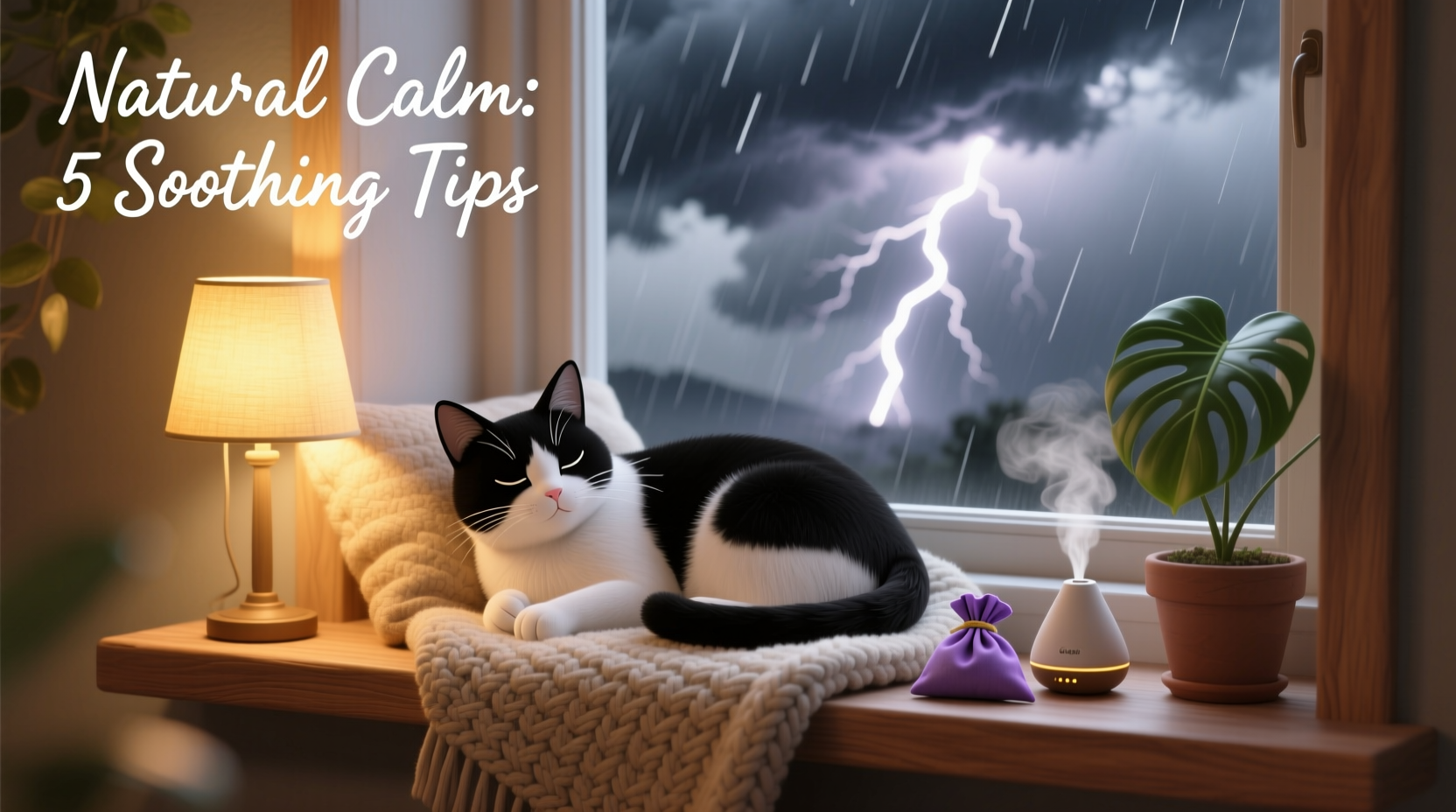
The first step in managing storm-related anxiety is establishing a secure space where your cat feels protected. This should be a quiet, interior room with minimal windows—such as a closet, bathroom, or spare bedroom. The goal is to muffle sound and reduce visual stimuli like lightning flashes.
Line the space with familiar items: their favorite blanket, bed, toys, and a piece of your worn clothing (the scent provides reassurance). Consider adding a covered cat bed or igloo-style hideout to simulate a den-like environment, which taps into their instinctual need for enclosed safety.
Natural Sound Buffering Techniques
Sound plays a major role in feline anxiety during storms. Thunderclaps can reach 120 decibels—louder than a rock concert—and cats have hearing that’s far more acute than ours. Reducing auditory stress is essential.
White noise is one of the most effective tools. Use a fan, air purifier, or a white noise machine set to a consistent frequency. Alternatively, play calming music designed specifically for cats. Studies show that classical music adapted to feline auditory ranges—slower tempos, species-specific frequencies—can lower heart rates and reduce agitation.
A 2015 study published in the *Journal of Feline Medicine and Surgery* found that cats exposed to species-appropriate music exhibited reduced stress behaviors during veterinary visits. The same principle applies at home during storms.
“Cats respond best to sounds that mimic purring or suckling noises—rhythmic, low-frequency tones that signal safety.” — Dr. Karen Sueda, Veterinary Behaviorist, VCA Animal Hospitals
Use Calming Pheromone Diffusers
Feliway is one of the most researched and trusted natural solutions for cat anxiety. It replicates the feline facial pheromone that cats release when they rub their cheeks on objects—a signal of security and familiarity.
When used consistently in your cat’s primary living area or safe room, Feliway diffusers can reduce stress-related behaviors by up to 90% over several days of use, according to clinical trials. Plug-in diffusers work best for whole-room coverage, while sprays can be applied to bedding or carriers 15–30 minutes before a storm hits.
Important: Allow 24–48 hours of continuous diffusion before the storm for optimal effect. Pheromones are preventative, not instant fixes.
| Method | How It Works | Best For |
|---|---|---|
| Feliway Diffuser | Releases synthetic facial pheromones continuously | Chronic anxiety, recurring storms |
| Feliway Spray | Targeted application on bedding or enclosures | Immediate pre-storm preparation |
| Adaptil (for dogs) | Dog-specific pheromone—ineffective for cats | Not recommended |
Gentle Pressure Therapy: The \"Thundershirt\" Approach
Many cats respond positively to gentle, constant pressure—similar to swaddling an infant. Thundershirts and similar snug-fitting garments apply light compression around the torso, which can have a calming neurological effect.
While research on cats is limited compared to dogs, anecdotal evidence and owner reports suggest significant improvement in 60–70% of cases. The mechanism may involve stimulating the parasympathetic nervous system, which helps counteract the fight-or-flight response.
Fit is crucial. The garment should be snug but not restrictive—two fingers should fit underneath. Introduce it gradually during calm periods to avoid creating new stress.
Natural Supplements and Herbal Support
For cats with moderate to severe storm anxiety, natural supplements can provide additional support. Always consult your veterinarian before introducing any new product, especially if your cat has underlying health conditions.
Commonly used options include:
- L-theanine: An amino acid found in green tea that promotes relaxation without drowsiness.
- Colostrum-derived milk peptides: Mimic calming proteins in maternal milk.
- Chamomile and valerian root: Mild herbal sedatives; often combined in feline calming chews.
- Omega-3 fatty acids: Support brain health and may reduce baseline anxiety over time.
Products like Zylkène (derived from milk protein) and Composure Pro have been clinically evaluated and shown to reduce stress markers in cats. They are typically administered daily in the weeks leading up to storm season for cumulative benefit.
Mini Case Study: Luna, the Storm-Fearing Siamese
Luna, a 4-year-old Siamese, began panicking during summer thunderstorms after a particularly intense lightning strike near her home. She would scream, hide under the bed for hours, and refuse food until the next day.
Her owner, Maria, worked with her vet to implement a multi-pronged natural approach:
- Set up a dedicated safe room with a Feliway diffuser running continuously.
- Played cat-calming music (iCalmCat) during forecasts.
- Introduced a Thundershirt during calm weather with treat rewards.
- Began daily supplementation with Zylkène four weeks before peak storm season.
Within two months, Luna’s reactions improved dramatically. During the next major storm, she retreated to her safe room but remained relaxed, curled up on her blanket, and purred softly while the music played. No screaming, no hiding under furniture. Maria reported a “night-and-day difference.”
Step-by-Step Guide: Preparing for a Storm (72 Hours Before)
Natural calming methods work best when implemented proactively. Reacting only when the storm hits is often too late. Follow this timeline to prepare effectively:
- 72 hours before forecasted storm: Begin playing calming music for 1–2 hours daily in your cat’s main area. Start or continue daily supplements if using.
- 48 hours before: Ensure the Feliway diffuser is active in the safe room. Confirm the space is clean, warm, and stocked with water, litter, and comforting items.
- 24 hours before: Practice short “safe room” visits with treats or meals to reinforce positive associations.
- 1 hour before: Close windows and curtains. Turn on white noise or calming music. Spray Feliway on bedding if not using a diffuser.
- During the storm: Stay calm yourself. Avoid excessive petting, which can reinforce anxious behavior. Offer quiet companionship if your cat seeks it.
- After the storm: Reward calm behavior with treats or affection. Clean any accidents gently and odor-free to prevent future avoidance.
Common Mistakes That Worsen Anxiety
Even with the best intentions, some actions can unintentionally escalate your cat’s fear:
- Forcing interaction: Picking up or cuddling a panicked cat can increase stress. Let them choose when to engage.
- Punishing hiding or vocalizing: These are fear responses, not defiance. Discipline creates more anxiety.
- Ignoring signs of distress: Early intervention prevents long-term phobias.
- Relying solely on treats during the storm: Food motivation often disappears during high stress. Prevention is better than distraction.
“Anxiety in cats is often misunderstood as stubbornness. In reality, it’s a physiological response. Our job is to make them feel safe, not to correct them.” — Dr. Mikel Delgado, PhD, Certified Cat Behavior Consultant
Checklist: Natural Calming Protocol for Thunderstorms
Use this checklist to ensure you’re fully prepared:
- ✅ Identify and prepare a quiet, windowless safe room
- ✅ Install a Feliway diffuser at least 24 hours before expected storms
- ✅ Stock the safe space with familiar scents, bedding, and litter
- ✅ Test and set up white noise or cat-specific calming music
- ✅ Introduce Thundershirt or calming wrap during calm periods
- ✅ Consult vet about natural supplements (e.g., L-theanine, Zylkène)
- ✅ Monitor weather forecasts and begin prep 2–3 days in advance
- ✅ Remain calm and composed—your energy affects your cat
Frequently Asked Questions
Can I give my cat CBD oil for storm anxiety?
CBD oil for pets is a developing area with limited regulation. While some studies suggest potential benefits, dosage and purity vary widely. Most veterinarians advise caution due to lack of FDA oversight. Always consult your vet before using CBD products.
Why does my cat hide in the bathtub during storms?
Cats may seek out bathtubs or sinks because these porcelain fixtures can ground static electricity, which builds up in the air before and during thunderstorms. The cool, enclosed space also mimics a den. If this is their preferred spot, consider placing a soft mat and blanket there to make it more comfortable.
Will my kitten grow out of storm fear?
Some kittens do become less reactive with age, especially if fears aren’t reinforced. However, untreated anxiety can worsen over time. Early intervention with calming techniques increases the likelihood of resilience in adulthood.
Final Thoughts: Patience and Consistency Are Key
Calming an anxious cat during thunderstorms isn’t about quick fixes—it’s about building trust and predictability. Natural methods work best when applied consistently and with empathy. Every cat is different; what soothes one may not work for another. Observe your cat’s preferences, track what helps, and refine your approach over time.
Remember, your presence matters. Even if your cat hides and won’t come out, speaking in a soft, steady voice nearby signals that you’re present and in control. Over months, with patience and the right tools, many cats learn to tolerate—or even ignore—stormy skies.




 浙公网安备
33010002000092号
浙公网安备
33010002000092号 浙B2-20120091-4
Comments
No comments yet. Why don't you start the discussion?