
Public speaking consistently ranks among the top fears people face—often even above fear of death. Yet, it’s a skill nearly everyone must confront at some point, whether in meetings, presentations, or formal speeches. The good news is that anxiety before public speaking isn’t a life sentence. With deliberate breathing techniques and strategic mindset shifts, you can transform nervous energy into focused presence. These tools don’t just mask symptoms—they rewire your body’s response to pressure.
Anxiety manifests physically: racing heart, shallow breath, trembling hands, dry mouth. These are signs of your sympathetic nervous system activating—the “fight-or-flight” response. But you’re not in danger. You’re simply stepping into the spotlight. The key is signaling safety to your body before you speak. That starts with breath and ends with belief.
Breathe to Reset Your Nervous System
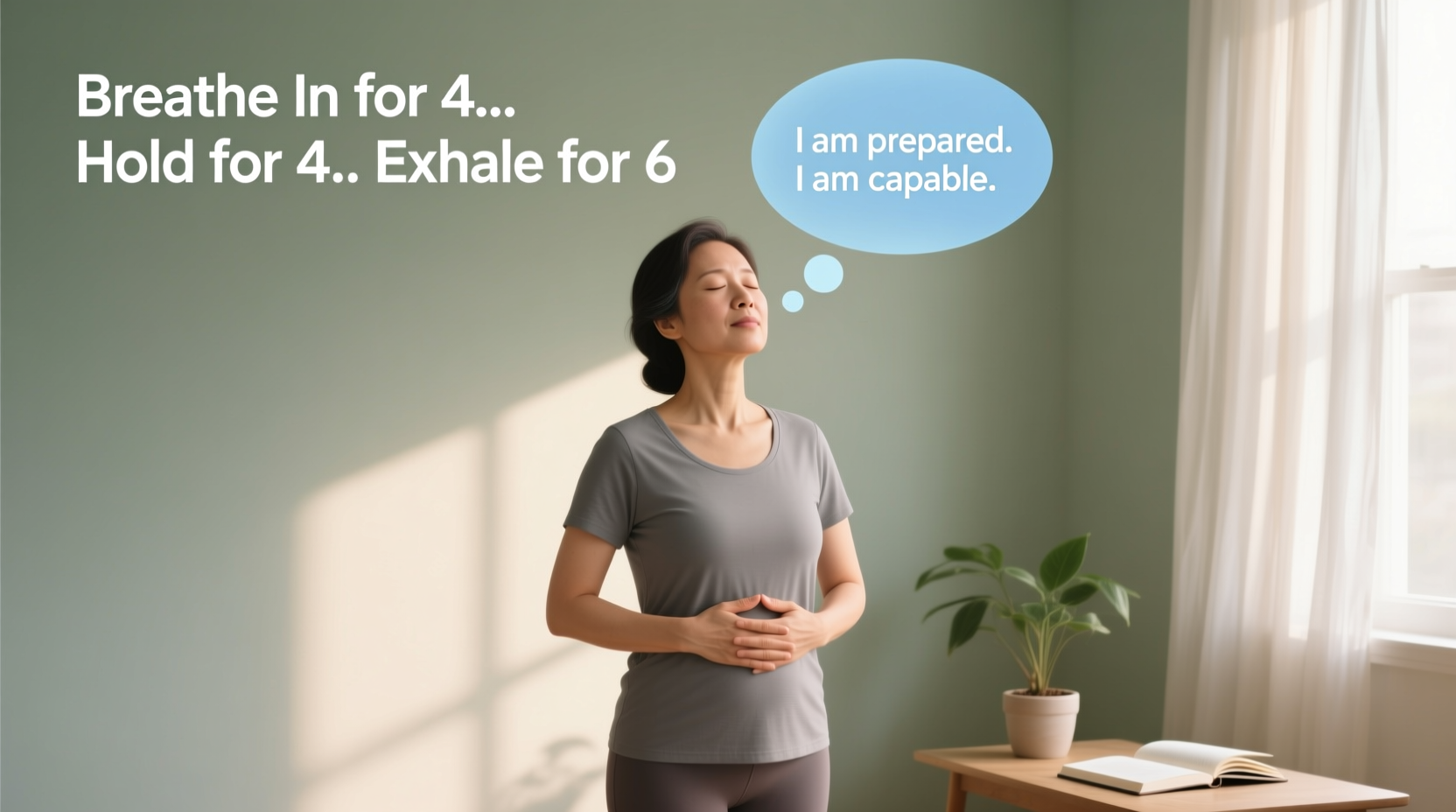
Your breath is the only part of your autonomic nervous system you can consciously control. By manipulating your breathing pattern, you directly influence your heart rate, blood pressure, and stress hormone levels. Deep, rhythmic breathing activates the vagus nerve, which triggers the parasympathetic nervous system—the “rest-and-digest” mode that counteracts anxiety.
One of the most effective techniques is **diaphragmatic breathing**, also known as belly breathing. Unlike chest breathing (shallow and rapid), diaphragmatic breathing uses the full capacity of your lungs, increasing oxygen flow and calming your mind.
The 4-7-8 Breathing Method
Developed by Dr. Andrew Weil, this technique is rooted in ancient pranayama practices and backed by modern physiology. It works by extending the exhale, which naturally slows the heart rate.
- Inhale quietly through your nose for 4 seconds.
- Hold your breath for 7 seconds.
- Exhale completely through your mouth for 8 seconds, making a whooshing sound.
- Repeat for 4 cycles.
This ratio increases carbon dioxide in the bloodstream slightly, promoting relaxation. Use it 10–15 minutes before speaking, or discreetly during pauses if needed.
Box Breathing for Focus Under Pressure
Favored by Navy SEALs and executives alike, box breathing stabilizes attention and reduces mental chatter. It’s especially useful when you need clarity under time pressure.
| Step | Action | Duration |
|---|---|---|
| 1 | Inhale through the nose | 4 seconds |
| 2 | Hold the breath | 4 seconds |
| 3 | Exhale slowly through the mouth | 4 seconds |
| 4 | Hold the lungs empty | 4 seconds |
Repeat for 3–5 minutes. This method creates mental space between stimulus and response, allowing you to step into your role deliberately rather than reactively.
Reframe Your Mindset: From Threat to Challenge
How you interpret anxiety determines its impact. Viewing nerves as a sign of weakness amplifies fear. But seeing them as energy—your body preparing for peak performance—transforms the experience.
Dr. Alison Wood Brooks, a Harvard Business professor, conducted studies showing that individuals who said “I am excited” before a speech performed significantly better than those who said “I am calm.” Why? Because excitement and anxiety share similar physiological markers—increased heart rate, adrenaline—but different cognitive framing. One is energizing; the other is draining.
“We don’t need to eliminate anxiety. We need to reinterpret it. The same surge of adrenaline that makes you tremble can also sharpen your focus.” — Dr. Susan David, psychologist and author of *Emotional Agility*
Adopt the “Performance Mindset”
Athletes and performers don’t aim for perfection—they aim for expression. Shift from “What if I mess up?” to “How can I serve the audience?” This subtle pivot moves your focus outward, reducing self-consciousness.
- Replace “They’re judging me” with “They want me to succeed.”
- Replace “I must be flawless” with “I’m sharing something valuable.”
- Replace “This is threatening” with “This is an opportunity to grow.”
Mindset isn’t positive thinking. It’s intentional reframing based on evidence. Remind yourself: you’ve prepared. You’re capable. And the audience is on your side.
Step-by-Step: A 10-Minute Pre-Speech Routine
Consistency beats intensity. A short, repeatable routine builds confidence over time. Follow this sequence exactly 10 minutes before taking the stage or joining the call.
- Physically release tension (2 min): Shake out your limbs, roll your shoulders, stretch your neck. Do a quick power pose—stand tall, hands on hips—for 30 seconds to boost testosterone and lower cortisol.
- Diaphragmatic breathing (3 min): Lie down or sit upright. Place one hand on your chest, one on your belly. Inhale deeply through your nose, letting your abdomen rise. Exhale slowly. Aim for 6 breaths per minute.
- Reframe your state (2 min): Say aloud: “I am excited. My body is helping me perform.” Repeat three times. Smile—even forced smiling reduces stress hormones.
- Visualize success (3 min): Close your eyes and imagine walking confidently to the front. See yourself speaking clearly. Hear the audience nodding, engaged. Feel the satisfaction of finishing strong.
Real Example: From Panic to Poise
Maya, a project manager at a tech firm, was scheduled to present quarterly results to company leadership. For weeks, she lost sleep, rehearsed obsessively, and avoided eye contact during practice runs. Two days before the presentation, her anxiety spiked—racing thoughts, nausea, shaky voice.
She applied the 4-7-8 breathing method each morning and night. She replaced “What if they think I’m incompetent?” with “They invited me because they trust my insights.” On presentation day, she used the 10-minute pre-speech routine in a quiet conference room.
The result? Her voice remained steady. She made eye contact. Midway through, she paused, smiled, and said, “Let me emphasize why this matters.” Afterward, two executives approached her to commend her clarity. Maya didn’t eliminate anxiety—she channeled it. Within months, she volunteered for more speaking opportunities, now viewing them as chances to lead.
Avoid Common Mental Traps
Even seasoned speakers fall into cognitive distortions under pressure. Recognize these patterns—and how to counter them.
| Mental Trap | Reality Check |
|---|---|
| “I must be perfect.” | No one expects flawlessness. Authenticity builds connection more than polish. |
| “If I make a mistake, it’s ruined.” | Mistakes are normal. Recovery demonstrates resilience. |
| “They can see how nervous I am.” | You feel your anxiety more intensely than others perceive it. Most physical signs are invisible. |
| “I’m not a natural speaker.” | Confidence is built, not born. Every expert was once a beginner. |
Keep a journal of past speaking experiences. Note what went well—not just errors. Over time, evidence accumulates that you are capable, improving, and resilient.
Checklist: Calm Before the Storm
Use this checklist in the hour before your next speaking engagement:
- ✅ Hydrate—sip water, avoid caffeine.
- ✅ Arrive early to acclimate to the space.
- ✅ Do light movement: walk, stretch, shake out hands.
- ✅ Practice 4-7-8 or box breathing for 3–5 minutes.
- ✅ Reframe: say “I am excited” or “I am ready” aloud.
- ✅ Visualize a smooth delivery and positive audience reaction.
- ✅ Review your opening lines—know how you’ll begin.
- ✅ Breathe deeply during transitions, not just before starting.
FAQ
Can deep breathing really reduce public speaking anxiety?
Yes. Clinical studies confirm that controlled breathing reduces cortisol levels and heart rate variability associated with stress. It’s not a placebo—it’s physiology. Regular practice enhances long-term resilience.
What if I forget my lines even after breathing and reframing?
Pause and take a slow breath. Silence feels longer to you than to the audience. Keep notes on index cards or slides. Most listeners appreciate authenticity over memorized perfection. A brief pause shows composure, not failure.
How long does it take to see improvement?
With consistent practice, noticeable changes occur within 2–3 weeks. Daily breathing for 5 minutes and mindset journaling can shift your baseline anxiety. Real mastery comes with repeated exposure—each speech builds neural confidence.
Conclusion: Speak With Presence, Not Perfection
Calming anxiety before public speaking isn’t about eliminating nerves—it’s about changing your relationship with them. Breathing techniques give you immediate control over your physiology. Mindset shifts restore agency over your psychology. Together, they form a foundation of authentic confidence.
You don’t need to become someone else to speak well. You need to return to yourself—grounded, prepared, and willing to show up. The next time your pulse quickens before a talk, welcome it. That energy is not your enemy. It’s your ally, ready to fuel clarity, passion, and connection.




 浙公网安备
33010002000092号
浙公网安备
33010002000092号 浙B2-20120091-4
Comments
No comments yet. Why don't you start the discussion?